Downtown
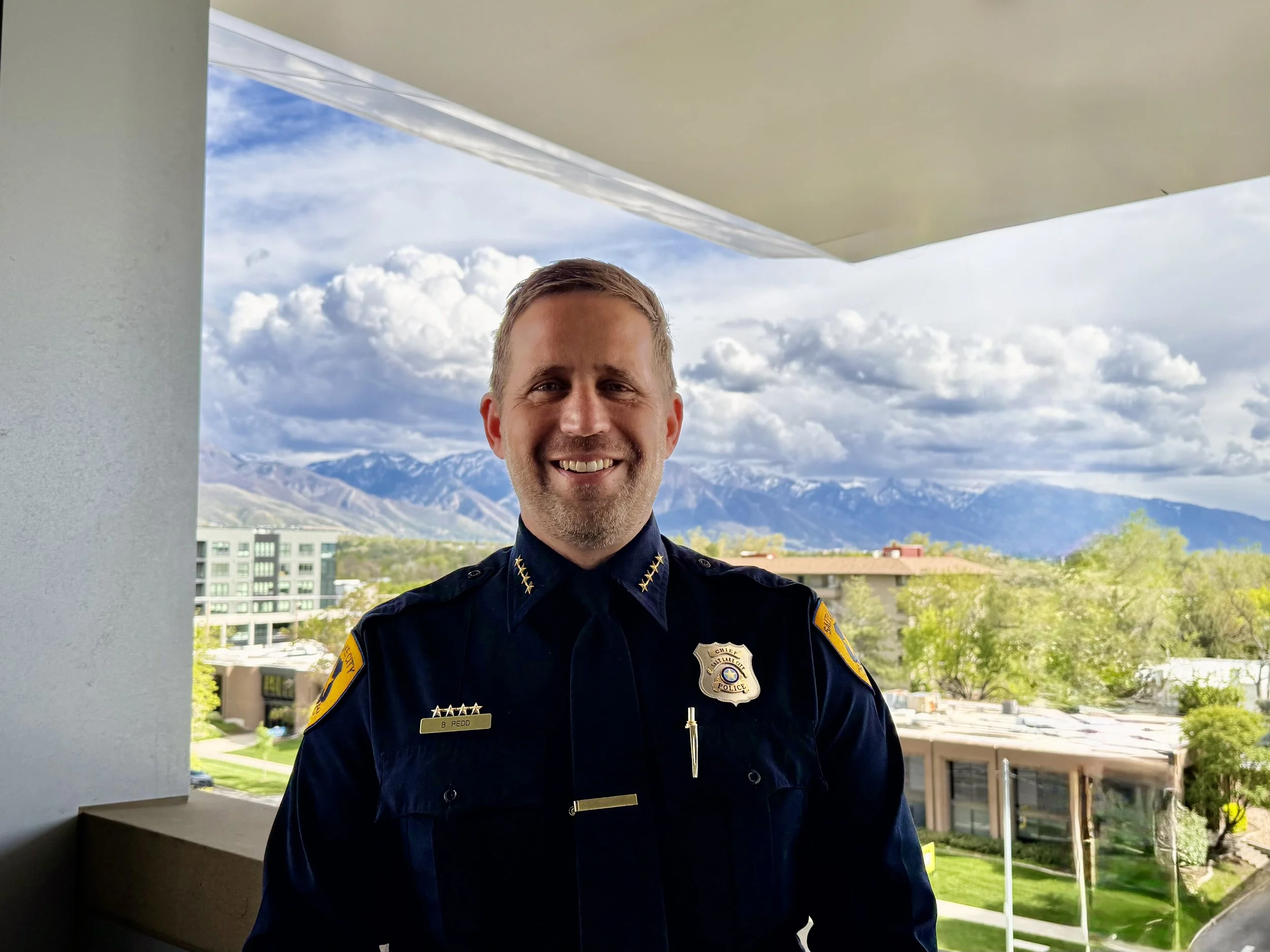
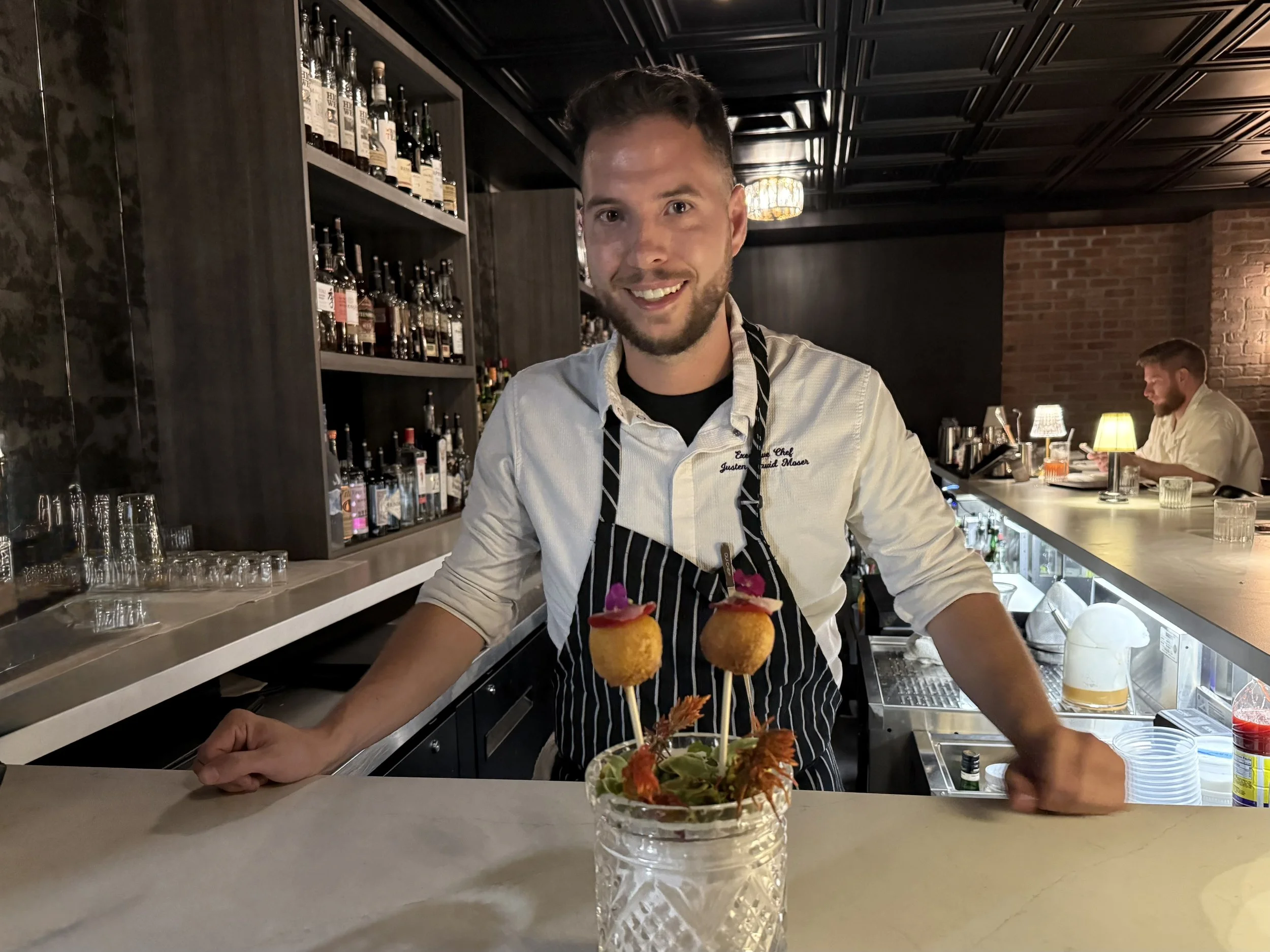
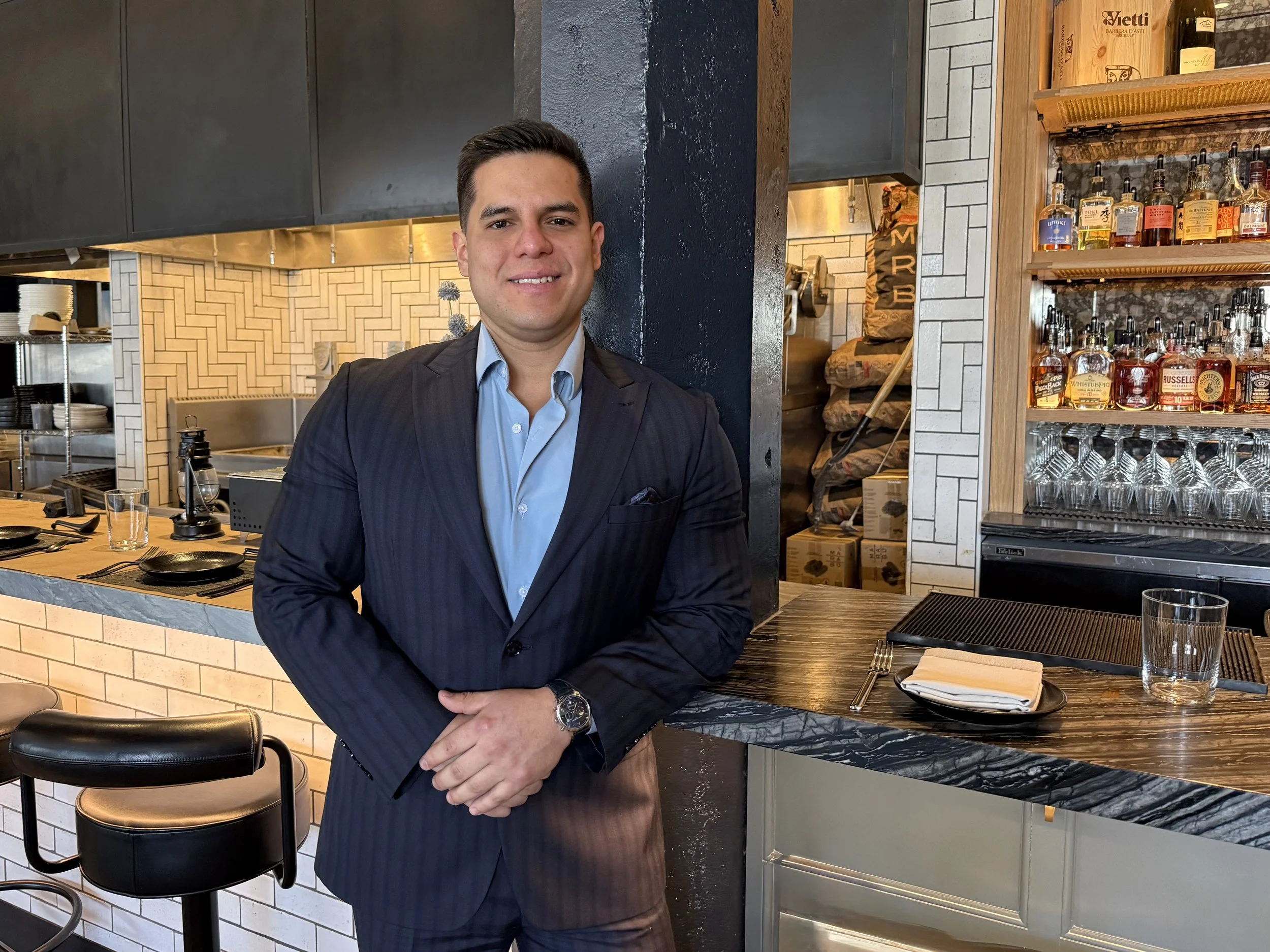
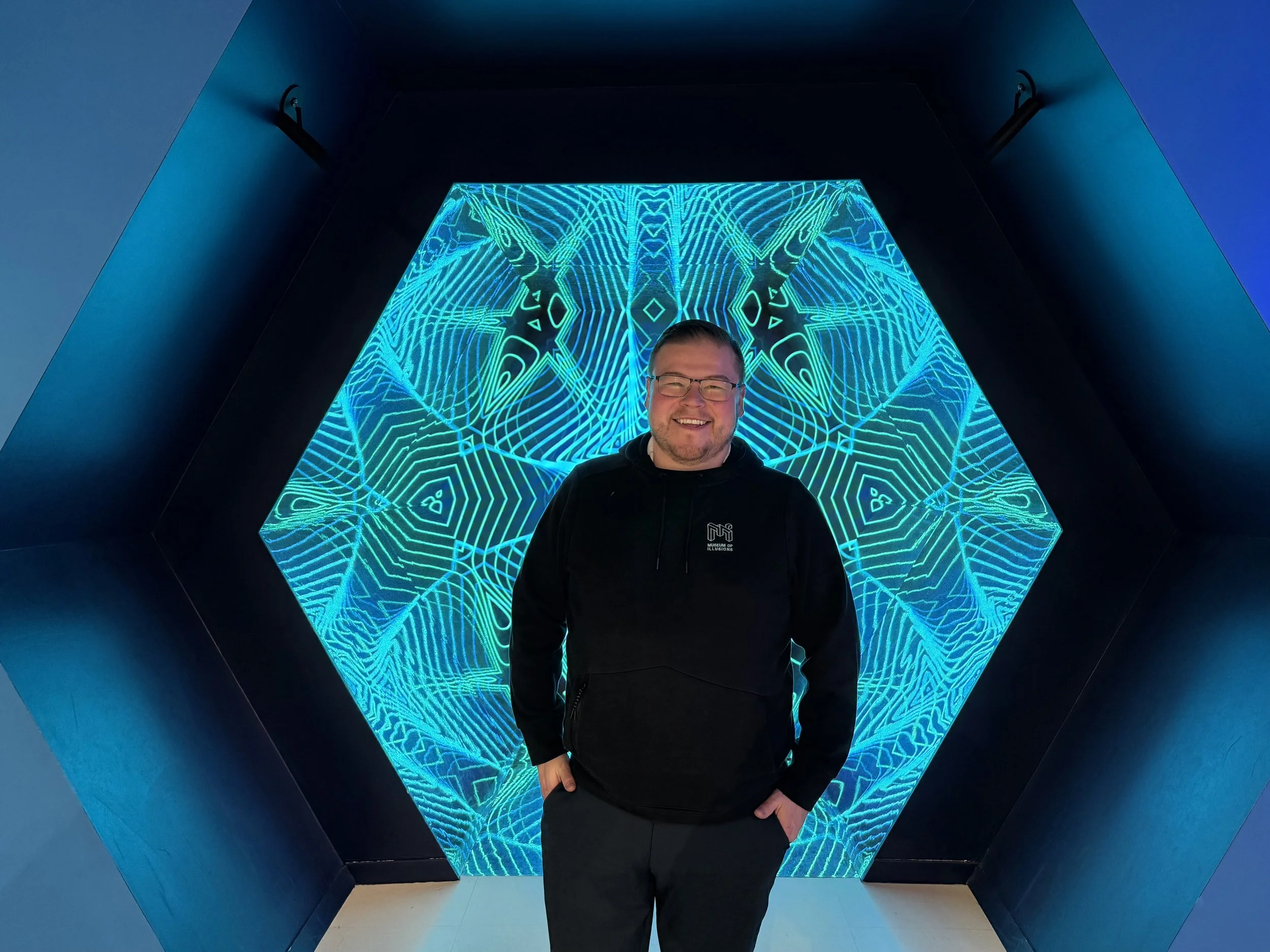
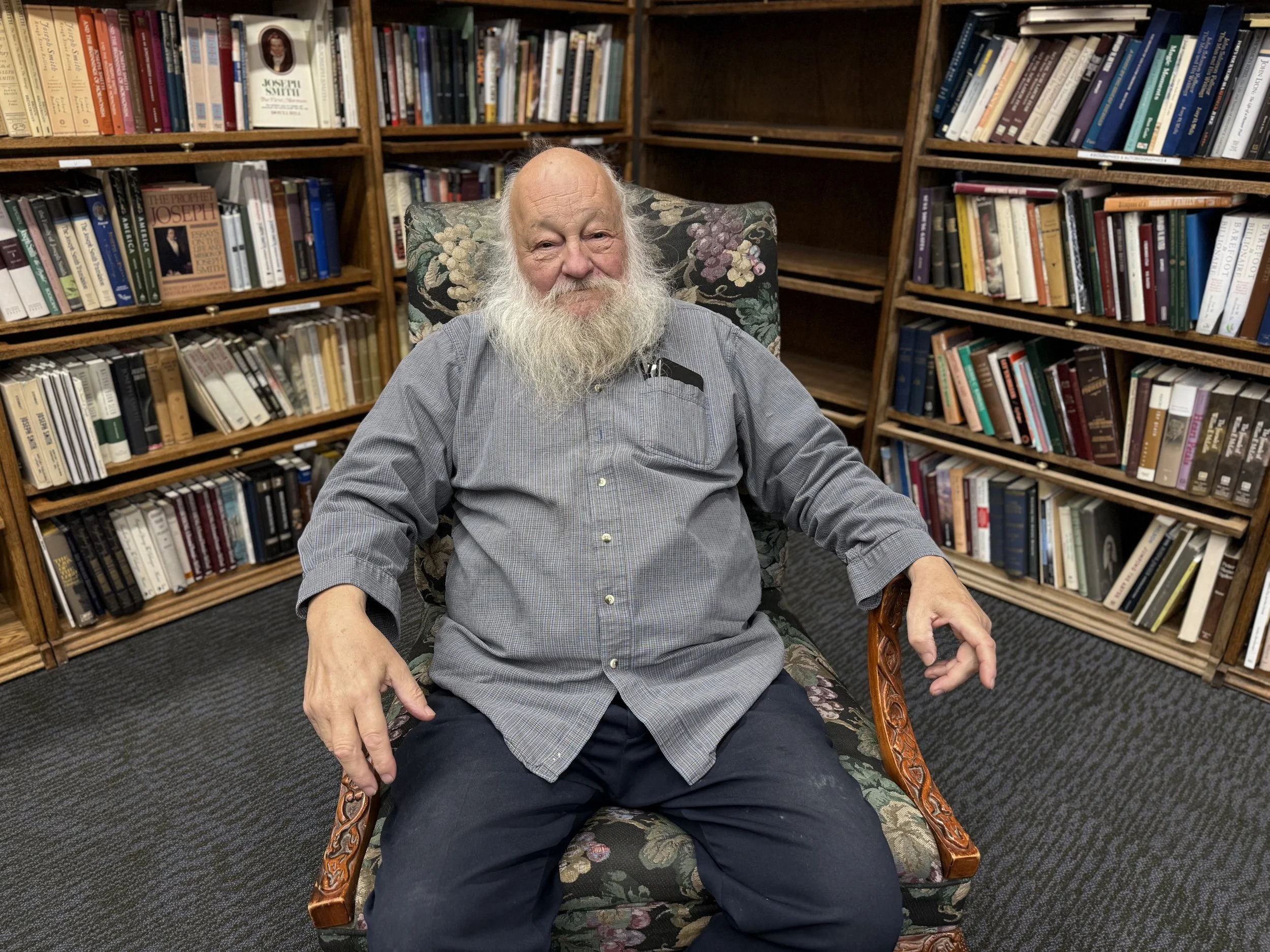
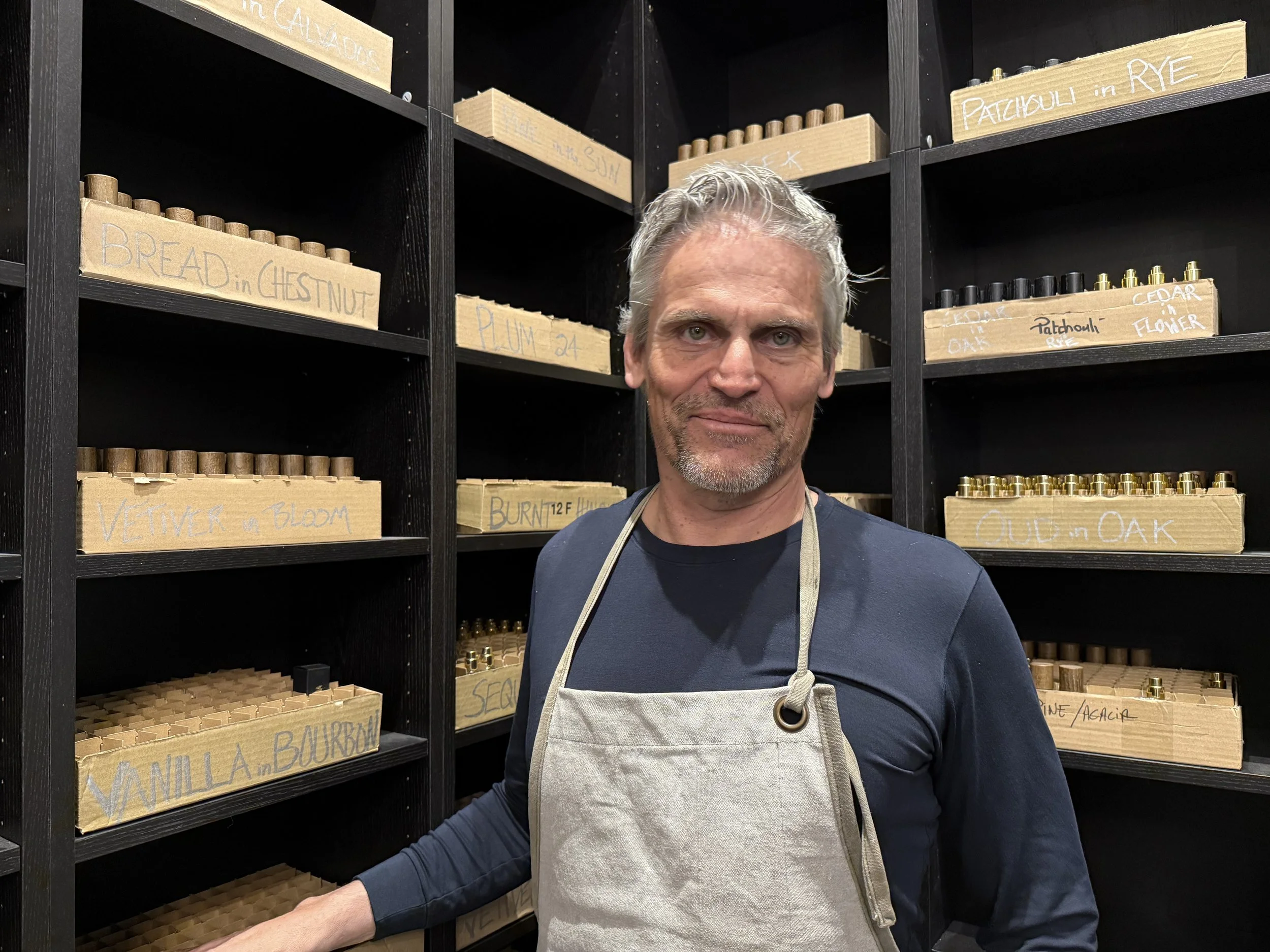
Chief Brian Redd
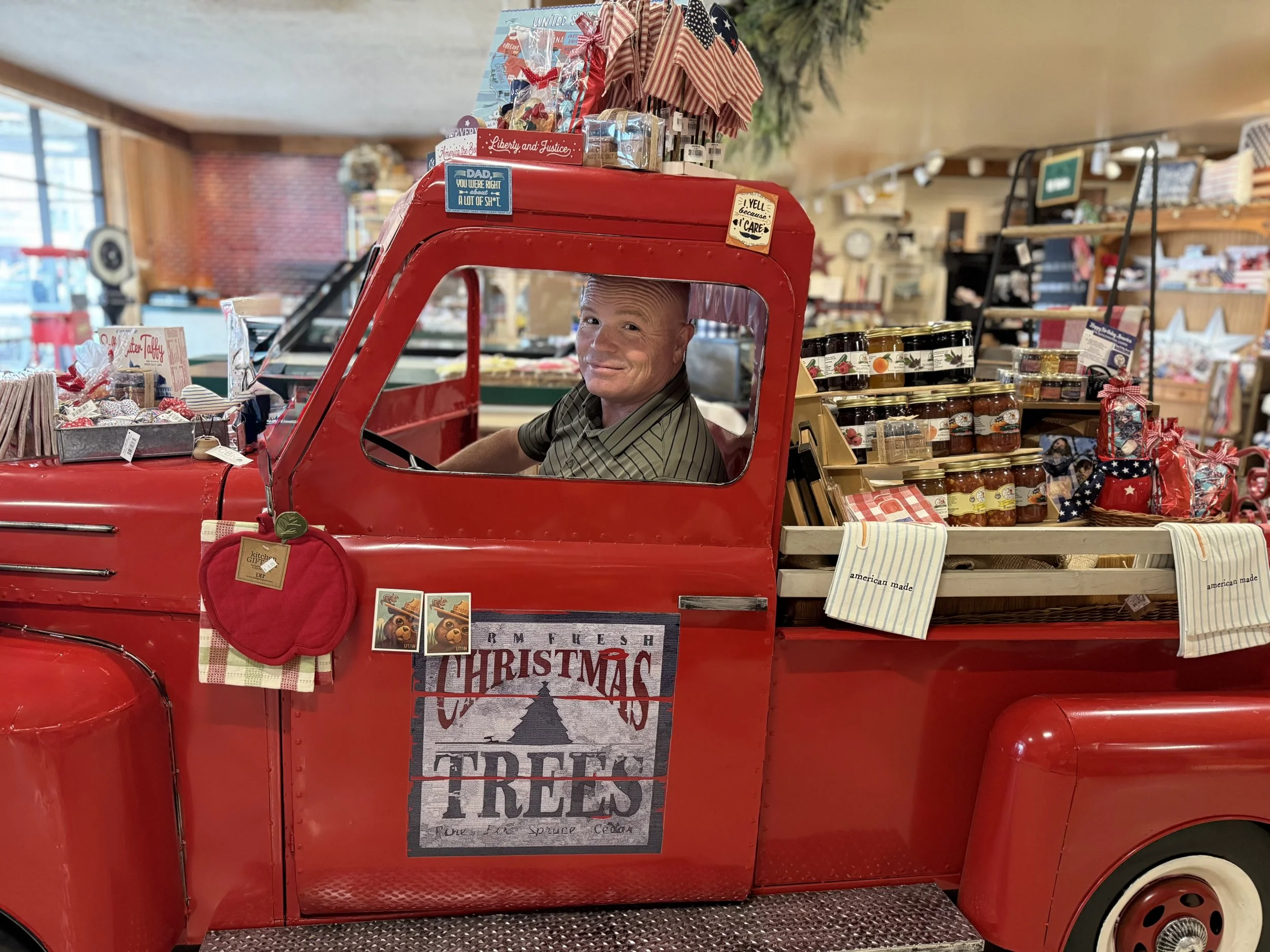
“I grew up in Monticello, down in the Four Corners. It’s a small farming community of about 2,000 people.” For Salt Lake City Police Chief Brian Redd, everything begins there.
Monticello is a town where both sets of grandparents lived nearby, and where cousins were always around. It was a community where people looked out for one another, not because they had to, but because that is simply how life worked. It was a place shaped by land, family, and history - his own stretching back generations to Mormon pioneers who came through the Hole-in-the-Rock, settling San Juan County under conditions almost impossible to imagine today.
Life for Brian was full. His father ran a hardware store, a tire shop, and a fast-food restaurant housed in an old Dairy Queen. There were rental properties to manage, snow to plow for local businesses, and a farm to tend - dry land, irrigated alfalfa, and cattle. His mother, whose roots trace back to a coal camp in Carbon County, met his father while working at that very restaurant as a teenager. “I loved it. I loved growing up on a farm.”
It was a childhood grounded in responsibility and rhythm: early mornings, hard work, and the understanding that everyone contributes. “In high school, I played football, basketball, and was also involved in student government.”
In 1993, Brian left Monticello to attend Utah State University, studying business and agribusiness with the intention of returning to take over the family farm and businesses. He earned a place on the President’s Leadership Council, representing the university and working closely with leadership and donors. In the middle of it all, he stepped away to serve a mission in Los Angeles - an experience that, like many things in his life, deepened his understanding of people.
Brian graduated in 1998 and moved to Salt Lake City, taking a job with First Security Bank. It was here that life began to shift in ways he could not have predicted. He married the woman that he had met at Utah State, and together they bought a home near Liberty Park, beginning their life as a young family. But the pull of home remained strong.
In 2000, they returned to southern Utah. Instead of stepping fully into farming, Brian made a decision that would shape the rest of his life. He joined the Utah Highway Patrol, part of the Department of Public Safety, following in the footsteps of his father, who had served as a deputy sheriff. That decision placed him on a path he never originally intended, but one that, in many ways, mirrored everything he had been raised to value.
Brian was stationed in Moab for five years, working both patrol and investigations, surrounded by some of the most extraordinary landscapes in the country. It was there that he and his wife began raising their family - welcoming children into a life that, while very different from his own upbringing, still carried the same core values.
A promotion took them to St. George where they spent another four years, continuing to build both his career and their family. Eventually, another opportunity brought them back to Salt Lake City. Over the years, Brian’s roles expanded, his leadership skills grew, and his responsibilities deepened. By the time he retired from the Department of Public Safety in 2021, he had spent more than two decades in public service.
Brian stepped briefly into the private sector with Goldman Sachs. Even there, however, his focus remained tied to people. He served on nonprofit boards and continued work around some of the most complex issues facing communities, particularly the intersection of homelessness, addiction, and mental health. This work had taken root years earlier during Operation Rio Grande in Salt Lake City.
It was that experience that drew Brian back. In 2023, he was asked by the governor to lead the Utah Department of Corrections, an organization facing significant challenges at the time. It was not an easy role, nor one most would rush toward. He took it anyway. And not long after, another call came, this time from the mayor of Salt Lake City.
Today, in 2026, Chief Brian Redd serves as head of the Salt Lake City Police Department, stepping into yet another role at a moment when leadership, trust, and direction mattered deeply.
“Chief made a name for himself in how he can turn a department around - everyone has a voice and should be heard.” That observation, shared by his Chief of Staff, Glen Mills, is not offered lightly. It reflects a leadership style that is both deliberate and deeply personal. Because for Brian, the work has never been about control from the top down. It begins with listening.
Inside the department, that means creating space for every voice - officers, staff, civilians - to be heard and understood. It means building trust where there may have been uncertainty, improving communication where there were gaps, and aligning people around a shared purpose that they helped define. “If we take care of our people well, they’ll take care of the community well.” That philosophy shapes everything.
The department itself is expansive - more than 640 sworn officers and over 800 total staff, including social workers, victim advocates, communications teams, and civilian response units who handle situations where a traditional police presence may not be necessary. It is a system designed not just to respond, but to support.
Training is constant. Leadership is cultivated at every level, not just within rank. Community engagement is not a program; it is an expectation.
And it all takes place within one of the most striking public buildings in the city. The Salt Lake City Public Safety Building, opened in 2012, stands in the heart of downtown as a shared space for both police and fire departments, a physical reflection of collaboration. Designed to be earthquake-resistant and community-centered, it houses not only operations, but also a museum filled with artifacts dating back to the department’s earliest days in the 1800s.
It is not just a place of work, but a place where the community is invited. Town halls are held here. Community groups gather. Families attend events. Each May, the fallen officer memorial honors those who have given their lives. During the year, training sessions, outreach programs, and even holiday events open the doors further. “It is the community’s building.”
And outside of it all, Chief Brian Redd remains who he has always been - a man who still loves the land, who grows hot peppers in his garden and makes his own salsa. He enjoys walking the trails near his home, sometimes with his cat following behind him.
The Chief is a devoted husband and father who spends weekends watching wrestling matches with his kids, hosting family dinners, and showing up for his children’s lives in the same steady way his parents once showed up for him.
The farm may no longer be the Chief's daily work, but it never really left him. Because at the core of everything - every role, every decision, every challenge - is something remarkably simple. “I just like people. I really like them.”
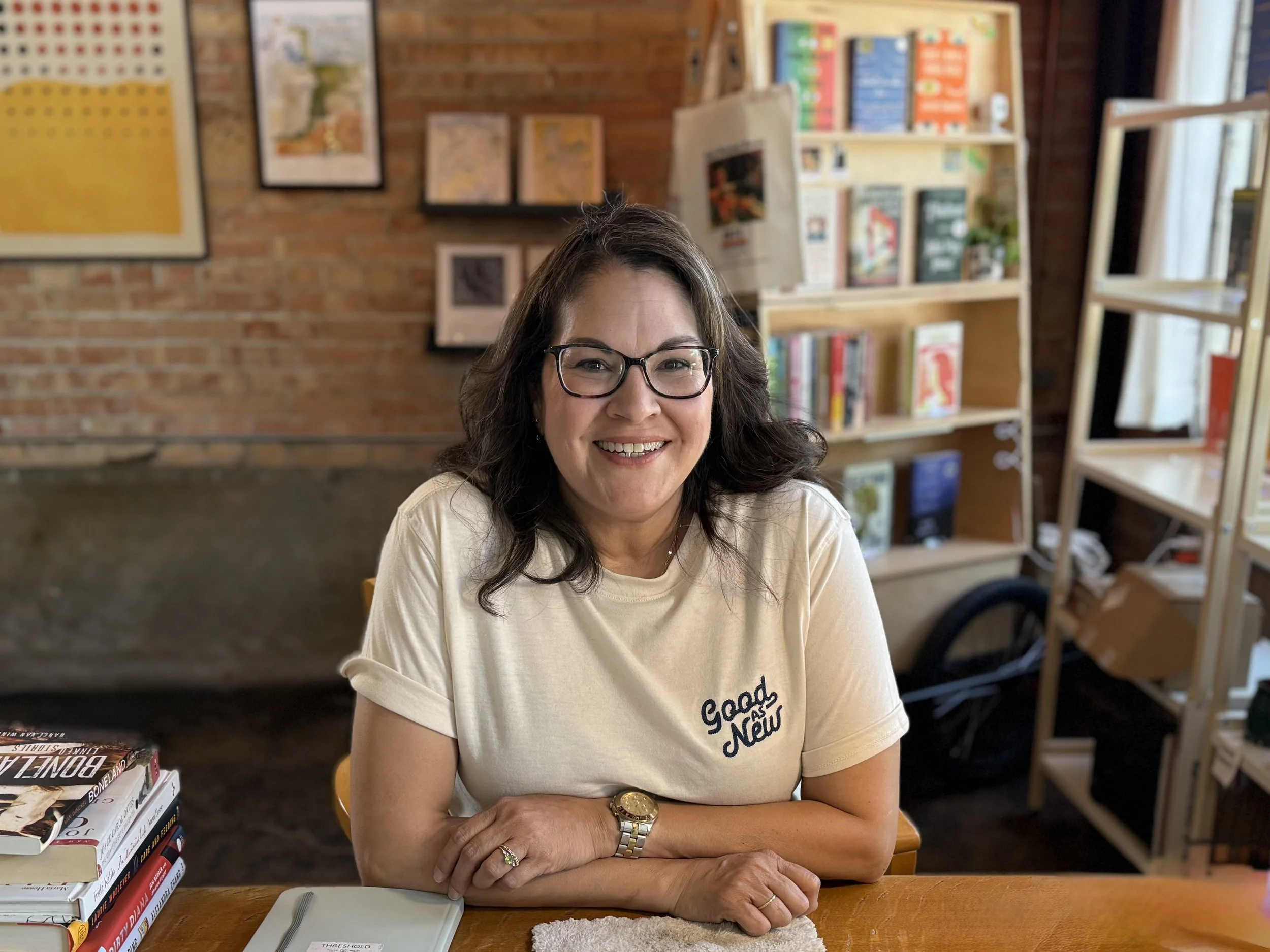
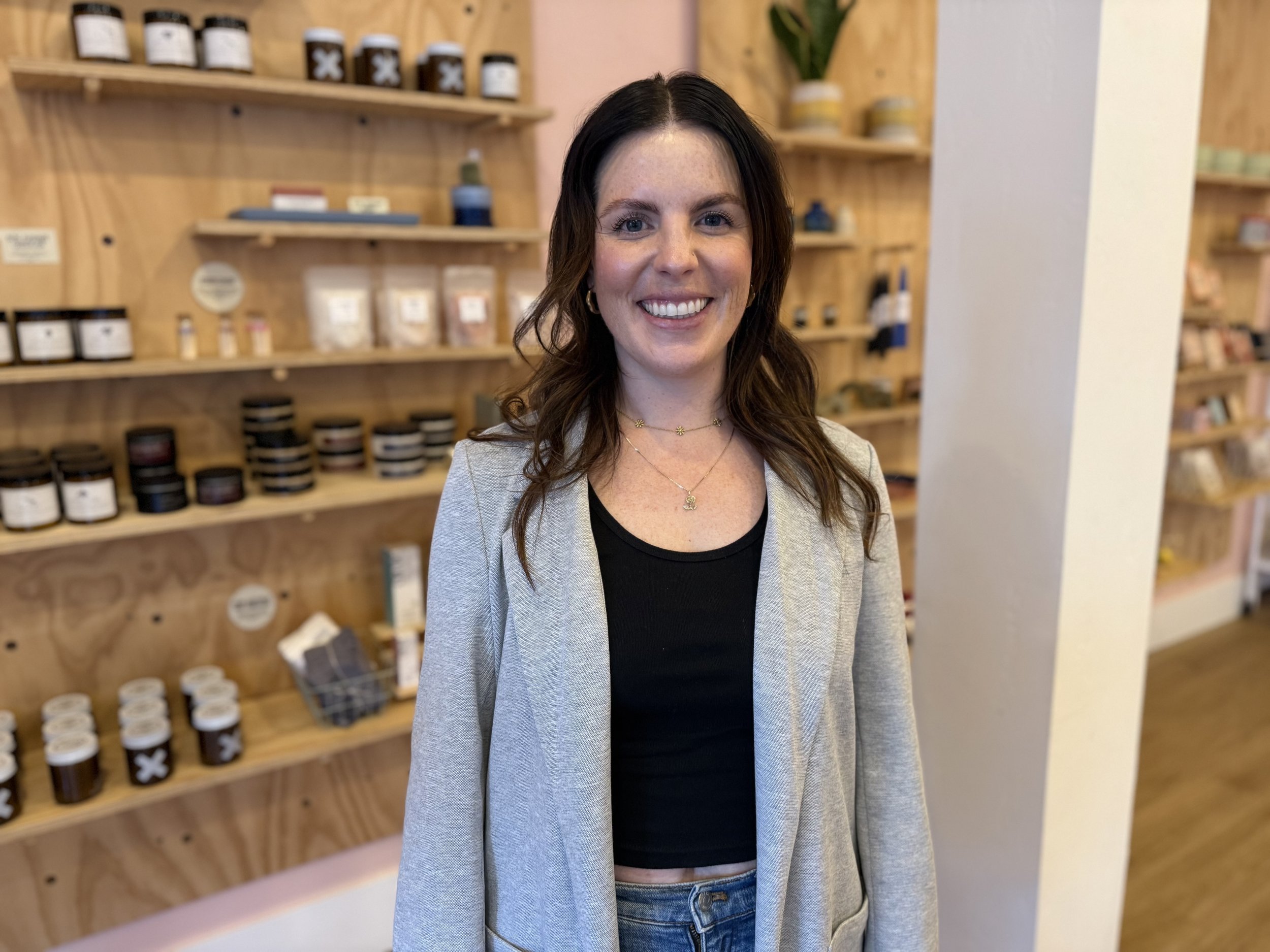
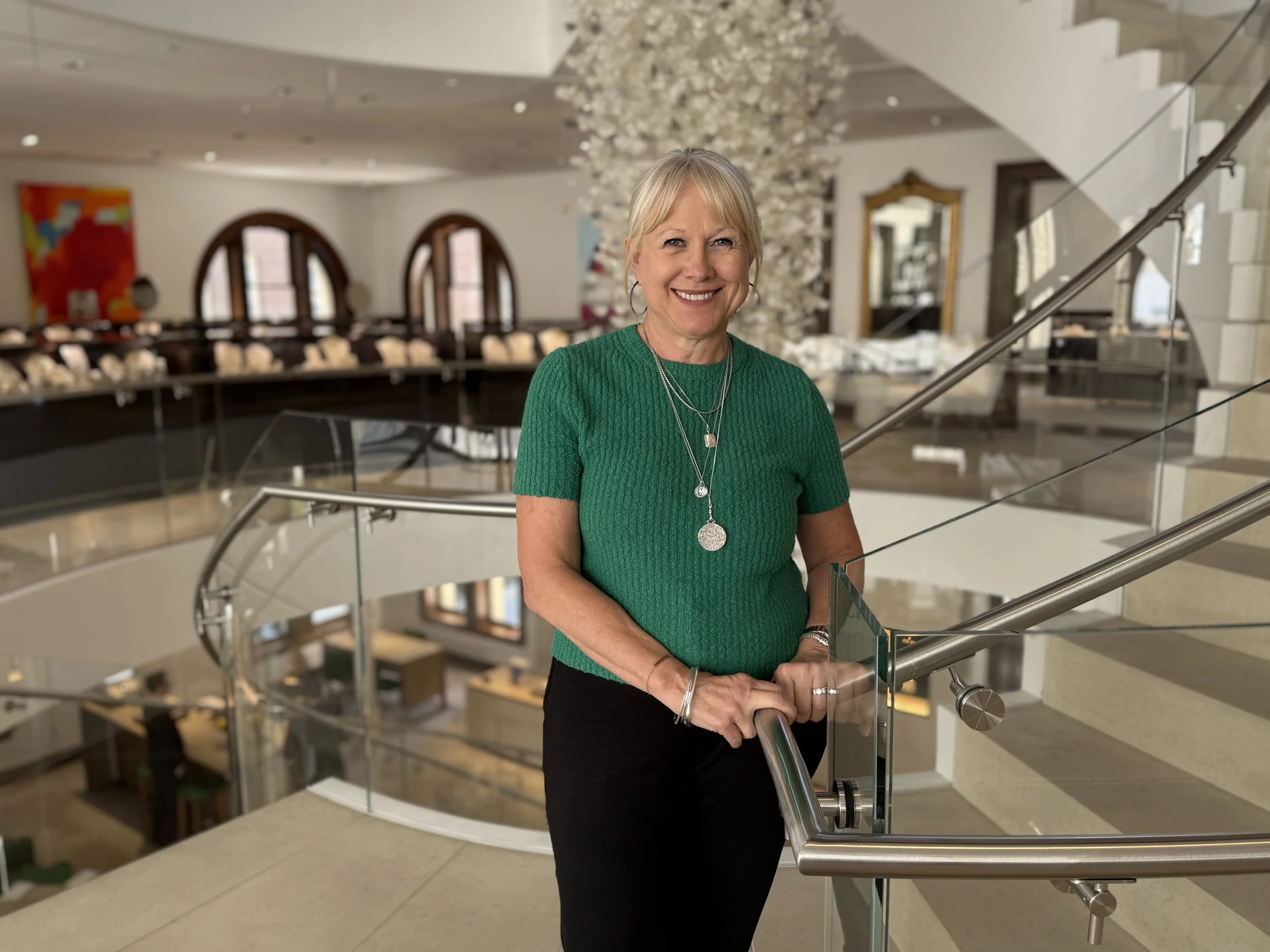
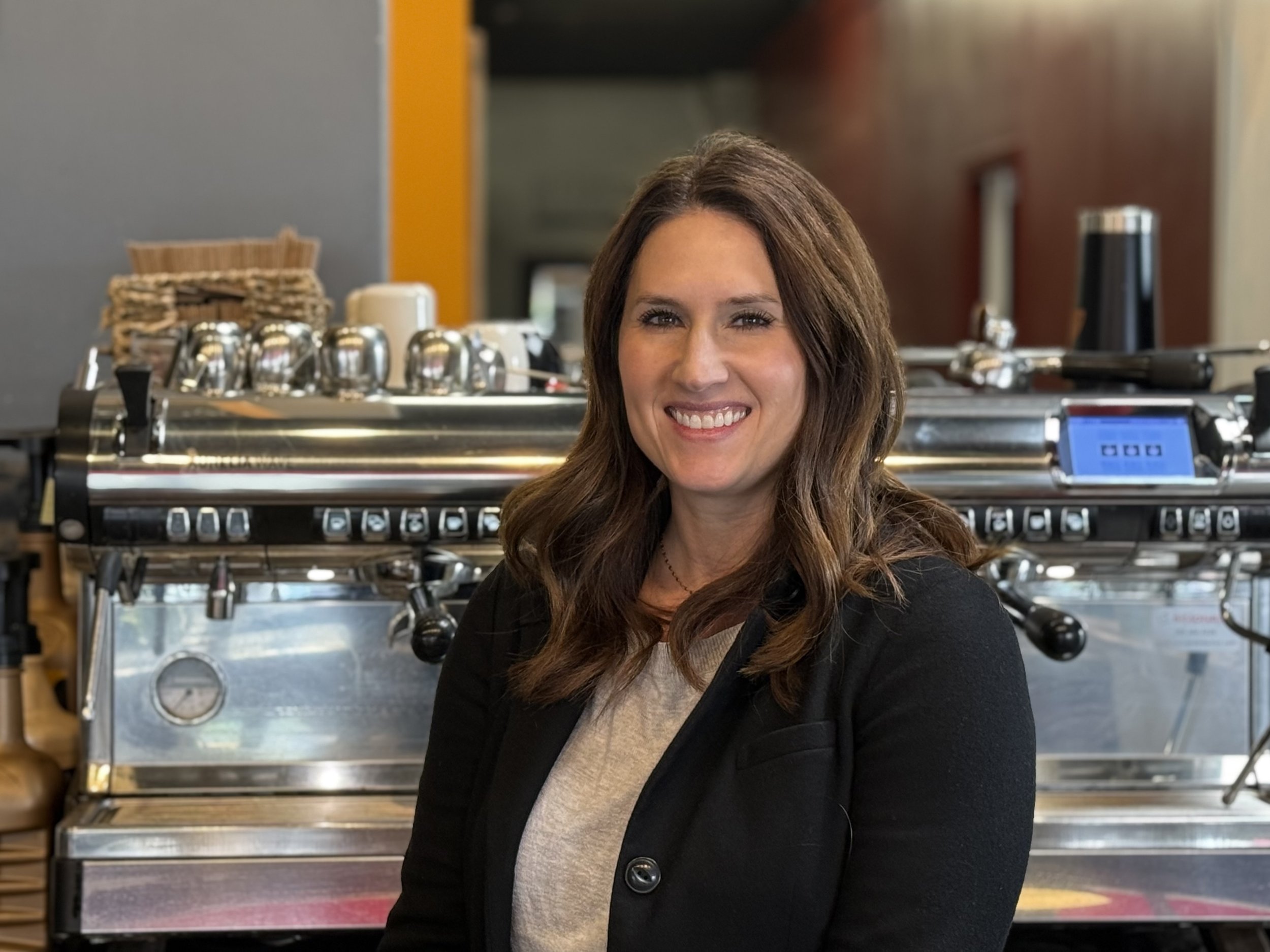
Carly Gillespie
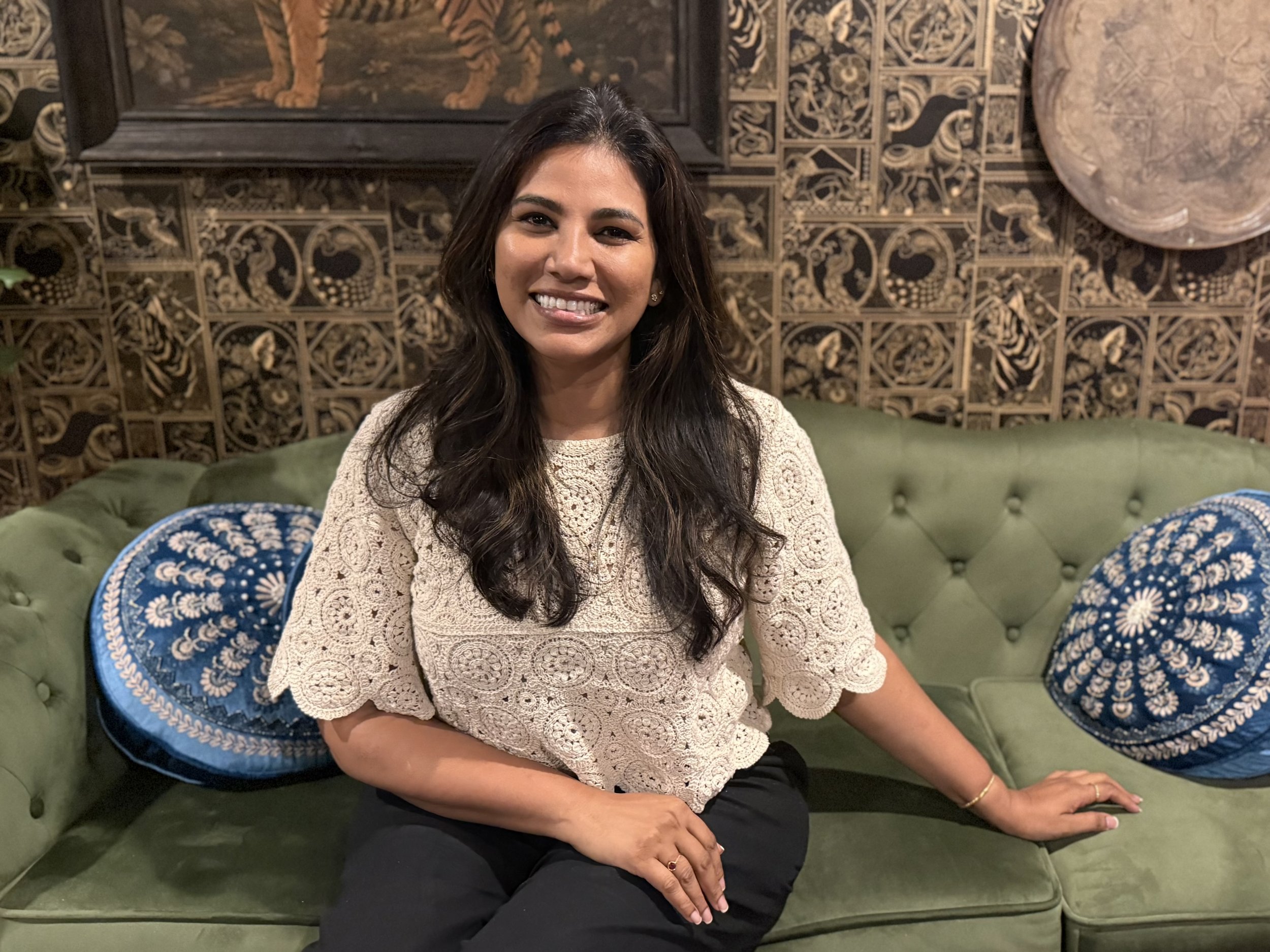
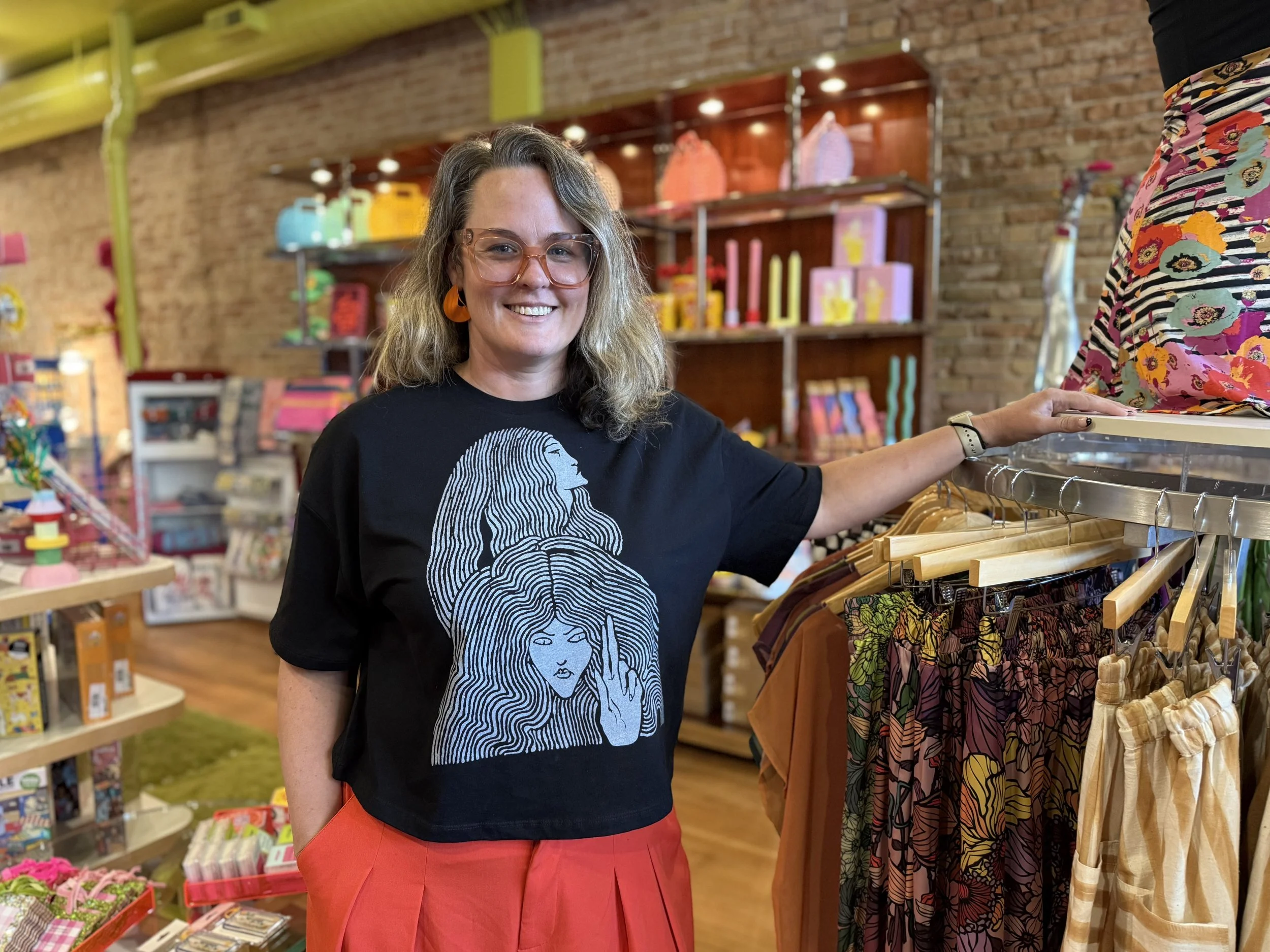
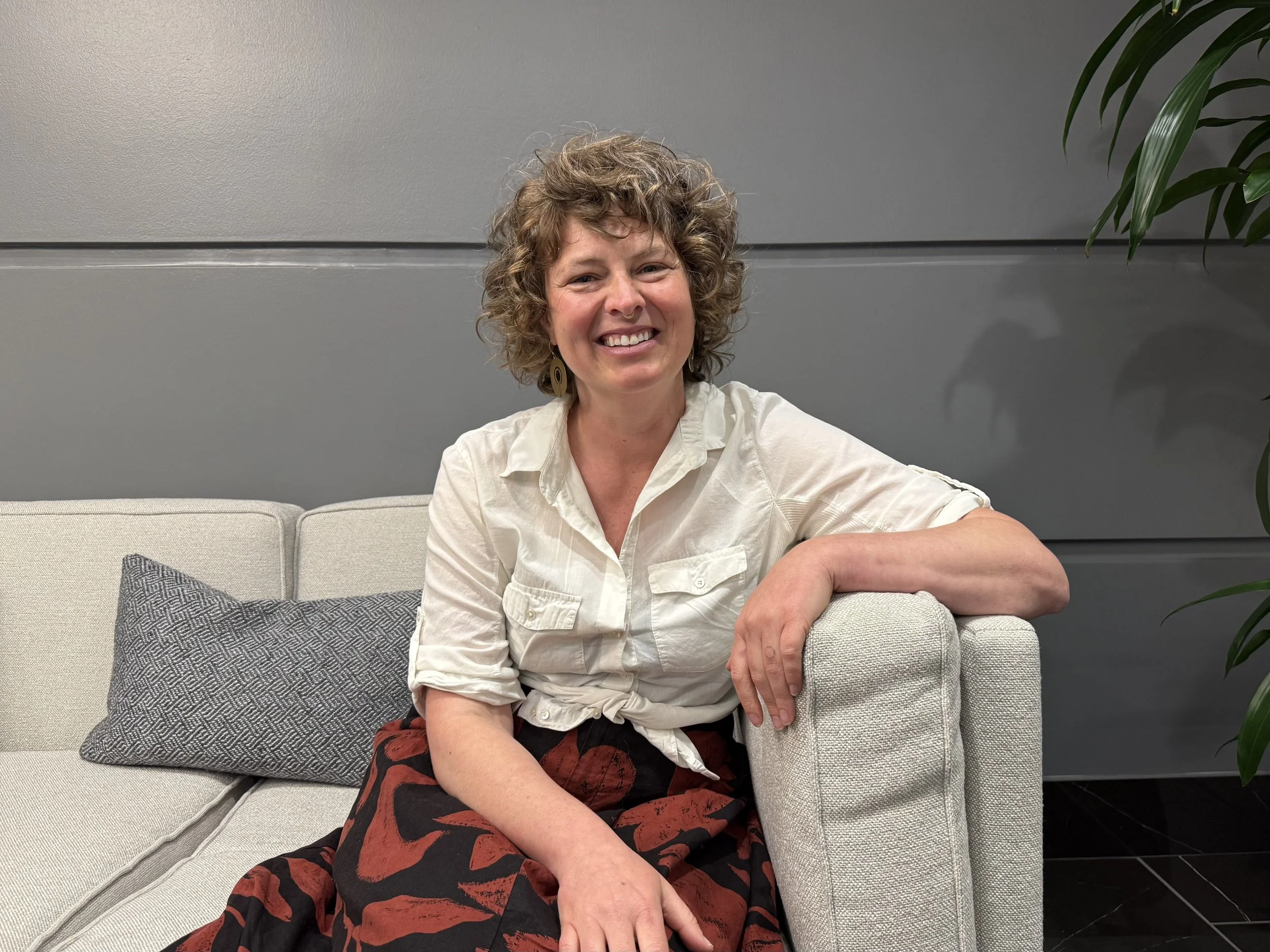
““We get to vote with our dollars. And I know we hear that all the time. But it is very much true that we can create the community we want by financially supporting these small businesses as they are coming up, as they are incubating at the market.” That belief sits at the heart of Director, Carly Gillespie’s work with the Downtown Alliance and the Downtown Farmers Market, but it began long before she found her way into nonprofit leadership.
Carly, who grew up in Cottonwood Heights near the mouth of Big Cottonwood Canyon, did not come from a childhood steeped in farming or homesteading. Her father died when she was four, and she was raised by her mother alongside her sister. Life, by her description, felt fairly typical. Yet, there were small seeds being planted early on, even if no one could have guessed where they would lead. Her paternal grandparents were an important part of her life, and her grandmother kept a small garden. Carly watched, absorbed, and enjoyed it, not realizing that plants, soil, and growing things would one day shape nearly every major chapter of her adult life.
Her first real turning point came at age fifteen, around 1997, when she got a job at Neff Floral, the beloved Salt Lake florist that had already been around for some eighty years. Her aunt, who was the company’s accountant, helped her get in the door. A teenage job quickly became something much more meaningful. Surrounded by flowers and greenery, Carly discovered an early passion for plants and for the quiet, grounding world they opened up. She stayed at Neff Floral through her teenage years, and by then, something had already taken hold.
After graduating from high school in 2000, Carly moved to Phoenix where her mother had relocated with her new husband. Carly thought she might go to school there, but the reality did not match the plan. Instead, she found herself working as a receptionist and trying to settle into a city that never felt right. Phoenix, she recalled, felt too hot, too indoor, too disconnected from the kind of life she wanted. She lasted less than a year, returning to Salt Lake in 2001, at age nineteen, before the desert heat could fully settle in.
Back home in Salt Lake, Carly returned to Neff Floral, but not for long. The family-owned business soon closed after decades in the community, a painful end for a shop that had been deeply loved. Carly then moved to another formative workplace, Cactus & Tropicals, where she began working in 2001, just before Karen and Scott Anderson took over the business from its founder, Lorraine Miller. Carly speaks with enormous admiration for Lorraine, describing her as an inspiring force, a woman who built something remarkable from her home and grew it into a flourishing business. For Carly, Cactus & Tropicals was not simply a nursery job. It was an education. She worked in the greenhouse, then the nursery, then landscaping, then seasonal holiday work. She learned every corner of the business, and with each step, her fascination with plants deepened.
It was during those years that a bigger dream started to form, even if it was still rough around the edges. “I want to grow things, I want to be a farmer,” Carly remembered thinking, and more specifically, “I want to be an organic farmer,” without yet fully understanding what that life would actually demand. She knew ornamental plants. She knew how much she loved the work. But farming, real farming, still existed more as an idea than a lived reality.
By 2007, when she was twenty-five, Carly felt ready for a leap. Friends had moved to the Oregon coast to open a bonsai and crystal shop. After visiting them, she fell in love with the landscape and decided to move. It was a spontaneous choice, made more from instinct than research. She imagined she would find work on an organic farm. Instead, she discovered there were not many opportunities on the Oregon coast. A stretch of hard, lonely, physically demanding work followed that tested her in ways she had not expected.
Carly took a job in landscape contracting, driving a dump truck, operating heavy machinery, and working in a fifty-acre native plant nursery deep in the woods. Often, she was out there alone, digging up plants, potting them, moving them, and encountering the sort of wildness that makes a person question every life choice that led them there. There were snakes. There were oversized fir trees. There was an old Vietnam veteran for a boss who was not especially interested in comforting a young woman in tears. Carly laughed about it later, but at the time it was intense. Still, she stayed with it for about six months, longer than she had expected, and in the process proved something to herself.
Eventually, another opportunity appeared. Friends who owned a glass shop needed someone to curate their art gallery. The arrangement came with a bonus - if Carly worked there, she could learn to blow glass. At twenty-seven, she found herself living in a cabin in the woods with a wood-burning stove and well water, spending winters on the Oregon coast where ninety inches of rain a year could make daily life feel isolated and rugged. When the 2008 economic crisis slowed tourism, the gallery’s business fell with it. Carly practically begged to be laid off for the winter, intending to return in the spring.
Instead, a friend sent her a posting for a ten-week AmeriCorps internship with Wasatch Community Gardens in Salt Lake City. The timing felt perfect. She could come home briefly, do meaningful work, and then head back to Oregon. That was the plan. But the minute she stepped into the world of Wasatch Community Gardens in 2009, something shifted.
A short AmeriCorps term turned into nearly five years and became one of the most defining experiences of Carly's life. At first, she and another young woman were growing food for youth programs, working with service-oriented groups and young people from detention facilities, helping them get their hands into the dirt and watching what that contact with the natural world could unlock. Then Carly took on a second AmeriCorps term and began running the organization’s community education program.
There, everything seemed to come together. Carly was no longer simply learning about plants. She helped others reconnect with food, with skills, and with self-sufficiency. Under her leadership, the workshop program expanded dramatically. A small offering grew to roughly sixty workshops a year, attracting more than one thousand attendees annually. The topics reflected the whole ecosystem Carly had come to love - beginning organic gardening, chicken keeping, beekeeping, food preservation, seasonal cooking, foraging. She met fascinating people, learned from them, and built a deep understanding of how hungry people were for this kind of knowledge.
Carly also saw something larger. During times of economic uncertainty, she noticed, people return to basics. They want to know how to grow food, preserve it, source it, understand it. Those instincts cut across political and cultural lines. In her classes, urban liberals and deeply conservative Utahns would find themselves side by side because they all wanted to learn how to raise chickens or can tomatoes or provide more directly for their families. Carly came to see this world as one of the great connectors, a place where ideology fell away and the fundamental question became the same for everyone - how do we care for ourselves and the people we love?
Those years also deepened her own personal commitment. Carly got chickens, gardened in a community plot, and threw herself into a world of practical knowledge that felt at once ancient and urgent. An abstract desire to “grow things” became a real and lived identity.
By 2014, now in her early thirties, Carly thought she might finally use her AmeriCorps education award and go to college. She had a plan to study ethnobotany at Weber State University and had already enrolled. But life, once again, had another route in mind.
The woman Carly had originally started with at Wasatch Community Gardens, Sharon, had created Backyard Urban Garden Farms, known as BUG Farms, a business built on an unconventional model - farming food on scattered plots of urban land throughout Salt Lake City. At first, Carly thought it was, in her words, “the dumbest idea” she had ever heard. To her, farming meant putting down roots, literally and figuratively. It meant land, soil-building, and continuity. Sharon’s vision of farming small pieces of donated land across the city seemed chaotic and unsustainable.
Then Carly found herself between jobs, reconsidering everything. She offered to run Sharon’s booth at the farmers market, and from there, slowly, she began helping with the farm itself. Sharon was easing away from day-to-day operations, and soon Carly and three others were essentially running it. At the end of 2014, she and her friend Coleman bought the business, and instead of going to college, Carly became a farm owner.
From 2015 through 2019, Carly and Coleman ran BUG Farms together. It was a partnership that worked because each brought different strengths. Coleman focused on the growing itself, the rhythms, and decisions of the land. Carly handled the business side while also farming alongside him. The model remained unusual but surprisingly effective. They grew food on multiple urban plots, many in Salt Lake’s Glendale neighborhood, where homeowners with large lots were willing to let the farm use part of their property in exchange for a share of the harvest. The business ran largely on a CSA (Community Supported Agriculture) model, with customers subscribing in advance for twenty weeks of vegetables. Any surplus often went to the farmers market.
That experience taught Carly not only how to farm, but how important the market could be as a marketing and community-building tool. It allowed the farm to become visible, to build trust, to reach enough people that eventually the CSA grew strong enough to carry most of the harvest without relying on weekly market sales.
It also tied her more deeply to the city itself. In one of those remarkable twists that seem to happen often in Carly’s story, she later discovered that two of the plots she had been farming had once belonged to her own great-uncle and his brother, who had farmed there years before. That kind of connection, between family history, land, and the larger farming community, meant a great deal to her. It confirmed what she had come to believe over and over again - in this world, everything is connected.
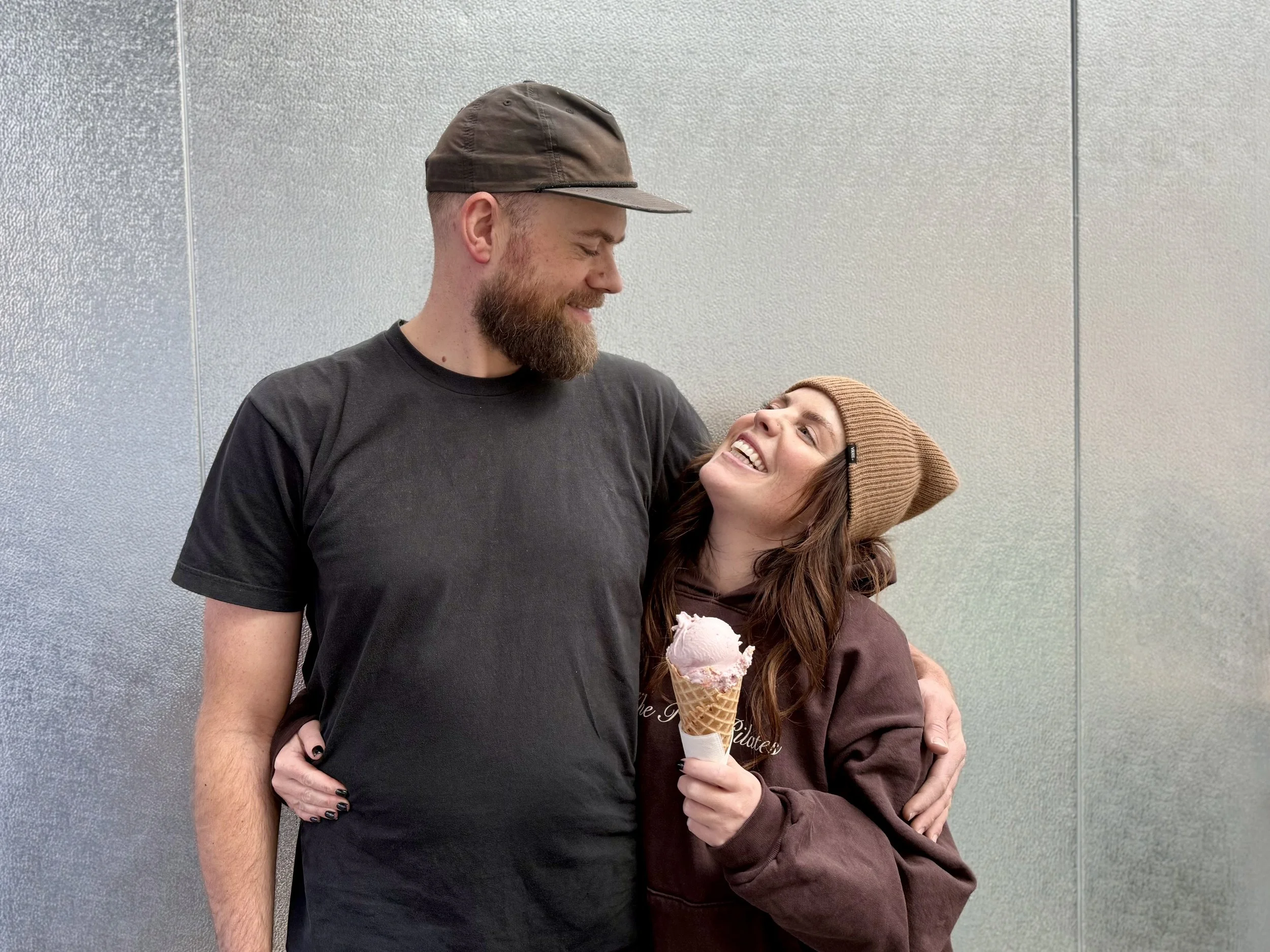
During those years, life was changing personally as well. Carly had met her future husband, Kyle, through Wasatch Community Gardens where he had volunteered before later working on the farm. Kyle became a wildland firefighter, and together they built a life that reflected so many of the values Carly had been teaching and living. They bought a home when Salt Lake was still remotely affordable, kept chickens, and leaned fully into a kind of urban homesteading spirit. Later, they bought three acres outside Heber with dreams of turning it into a more substantial farm. At various points, they had sheep, and, by Carly’s count, around one hundred birds, including chickens, ducks, geese, and turkeys. They even tried growing hemp after it became legal, taking on the massive labor of harvest, drying, curing, and processing with help from friends and borrowed space.
But farming, as Carly knew better than most, is not romantic when it comes time to pay the bills. When she became pregnant unexpectedly, and later had children to support, the financial reality of small-scale farming became harder to ignore. She was not interested in becoming a stay-at-home mother, but she also could not keep farming for so little while paying for childcare. Coleman and his wife were entering a similar stage of life. By 2019, it was clear that their time with BUG Farms was ending. That year, they transitioned the farm to Kristen and Zach, a hardworking couple who were ready to carry it forward.
Around that same period, Carly took a job at Overstock.com, commuting from Heber to Midvale to grow vegetables for staff in an elaborate greenhouse. The work was stable, and after years of small business uncertainty, the regular paycheck mattered. She was grateful for it. But emotionally, it was not where her heart lived. Beautiful heirloom tomatoes would wind up in the refrigerator without ceremony. Tiny, sweet bananas from twenty-foot trees were ignored because they did not look like grocery store fruit. The project felt disconnected from the deeper values that had drawn her to growing food in the first place.
Then came 2020, a year that changed nearly everything. Carly was pregnant with her second child. The pandemic hit. She and Kyle, already beginning to feel culturally and politically out of place in Heber, realized they wanted to be closer to their community in Salt Lake. At almost the exact same time, an opportunity opened up at the Downtown Farmers Market, a place Carly had known for years as a vendor, collaborator, and longtime believer.
Carly’s relationship with the market ran deep. Even before selling there with BUG Farms, she had partnered with the organization while running food preservation and seasonal cooking workshops through Wasatch Community Gardens. She knew former leadership, knew the community, knew how important the market was to local food systems. So, when a position opened up in late January 2020, she told the director that she would love to come on board. After the corporate world, she wanted work that felt like it mattered again.
What she walked into was one of the most difficult moments in the market’s history. The Downtown Farmers Market, operated by the nonprofit Urban Food Connections of Utah under the umbrella of the Downtown Alliance, has been part of Pioneer Park since 1992. It began as a bold idea from Bob Farrington, the Downtown Alliance’s original executive director, who saw the park as an underused space with a troubled reputation and believed a farmers market could help transform it. He drove north on Highway 89, the Fruit Highway, knocking on farmers’ doors and asking them to come sell in downtown Salt Lake. A handful said yes. From that tiny beginning, the market grew.
Over time, it expanded from a few farmers to a full-scale community institution. When unlicensed “rogue” vendors began setting up on the other side of Pioneer Park in the early 2000s, the city asked the organization to formalize that side as well, leading to the creation of the art and craft market and eventually bringing the entire park under a single permitted operation. Today the market has grown to more than 300 vendors in peak seasons and is celebrating its thirty-fifth season in 2026.
The market standards are strict and central to its identity. To sell there, vendors must make, raise, or grow what they are offering. Food and goods must come from within 250 miles of the market, which includes most of Utah and small portions of Idaho and western Colorado. Carly takes that integrity seriously. If there is concern that a farmer is reselling produce they did not grow, the market investigates, inspects farms, and takes action. She understands how hard it is for farmers to survive, but she also knows trust is everything. Customers come expecting authenticity, and the market protects that carefully.
What many people do not realize is just how much economic force sits behind the beauty and bustle of a Saturday morning in Pioneer Park. Carly estimates that roughly $11 million in direct-to-consumer sales flows through the market each year. It is not just a charming weekly ritual. It is a serious engine for local business. It has launched dozens of companies that later grew into brick-and-mortar shops. For Carly, that is not a loss. It is the point. The market is meant to incubate businesses, to help people test ideas, build customers, and create livelihoods.
That mission became even more urgent during the pandemic. When Carly joined the staff in early 2020, the market was already in transition. Then Covid hit, the winter market at the Rio Grande Depot shut down, and the March 2020 earthquake further complicated matters by damaging the building, which remains under seismic renovation. Suddenly the organization had to fight simply to stay open.
Working closely with the Utah Department of Agriculture and Food and other markets around the state, the staff made the case that farmers markets were essential. They reopened the summer market in Pioneer Park in June 2020, but at only about a third of its normal size, with dramatically altered operations. Farmers, ranchers, and packaged food vendors were allowed back, but prepared food vendors and art and craft vendors were not, because the market had to focus on essentials. "It was a painful decision," especially because those groups reflect so much of the diversity and entrepreneurial energy the market champions. Many of the prepared food vendors are immigrants and refugees, people using the market as a low-barrier entry point into business ownership. Carly felt deeply the weight of not being able to support them in the way she wished.
The financial strain was severe as well. Urban Food Connections of Utah operates on earned revenue from vendor fees, not on a large foundation of grants or donor campaigns. Shrinking the market meant shrinking the budget. Yet they made it through.
When the Rio Grande Depot could not reopen, The Gateway stepped in and offered space for the winter market. What no one expected to become long-term turned into a five-year partnership, with vendors operating creatively through former retail storefronts and indoor spaces. It asked everyone to be flexible, but it kept the market alive.
By 2022, operations had returned much closer to full scale, though rebuilding the vendor community took time. Some businesses had disappeared. Some people were no longer willing to take entrepreneurial risks. But more recently, Carly has watched a new wave of strong vendors emerge, evidence, she believes, that Salt Lake’s food culture is growing in exciting ways.
That growth matters to Carly for reasons both practical and personal. She has seen Salt Lake change from a smaller, more insulated city into something much more dynamic. She has also seen how the market has helped reshape Pioneer Park and the neighborhood around it. In 1992, there was little around the park. Now there are homes, hotels, restaurants, and a wider sense of possibility. The market has not done that alone, but it has undeniably been one of the catalysts.
And what makes it powerful is not just the produce. It is the whole experience. People can come for groceries, stay for lunch, meet friends, listen to music, buy gifts, watch dogs in costumes, and feel part of downtown in a way they might not otherwise. The market includes buskers and paid musicians, artists and food entrepreneurs, longtime farmers, and first-time business owners. It is joyful, practical, and deeply human all at once.
Carly also lights up when talking about one newer element that has changed the atmosphere in meaningful ways - the partnership with the Downtown Ambassadors. By bringing ambassadors into the market as seasonal staff, the organization has gained team members who already know many of the people on the streets downtown and can de-escalate difficult situations with empathy and familiarity. Rather than moving immediately to security or police, they can often send someone over simply to talk, offer resources, provide water, and defuse tension. It has changed the feel of Saturdays in Pioneer Park, making them safer and more compassionate at the same time.
For Carly, this is not abstract work. It is the culmination of everything she has cared about for decades - plants, land, food, community, small business, and the belief that local choices shape the character of a city. Her life has wound through flower shops, nurseries, the Oregon woods, glass studios, community gardens, urban farms, a real farm in Heber, corporate greenhouses, and now one of downtown Salt Lake’s most beloved public spaces. Every step has added something. Every step has brought her closer to the work she is doing now.
And perhaps what makes her story especially moving is that none of it seems to have been planned in any tidy or linear way. Carly followed instincts, opportunities, and a growing sense of what mattered to her. Along the way, she found that a passion for plants could become a passion for food systems, education, entrepreneurship, as well as the economic and social fabric of a city. A grandmother’s small garden and a teenager’s job at a florist became a life devoted to helping things grow. “Every single one of these businesses is supporting a family and a dream. And I think that we can create the food system and food community we want to see in our city.”
Downtown Businesses