
Dedicated People
Who Make a Difference
Salt Lake is filled with people whose names may never appear on marquees, yet whose presence shapes this community in meaningful and lasting ways. What began as conversations with small business owners soon revealed something larger: men and women who lead organizations, serve on boards, support the arts, advocate for others, and quietly strengthen the city in ways that often go unnoticed.
Dedicated People Who Are Shaping Salt Lake shares the stories behind these individuals - people whose work, generosity, and commitment extend far beyond any job title. New profiles will be added regularly to our website’s Sideways Stories, as well as our monthly newsletter, honoring those who make Salt Lake stronger, kinder, and more connected.
I welcome suggestions for future profiles - for people whose quiet, extraordinary contributions deserve to be shared.
Carly Gillespie
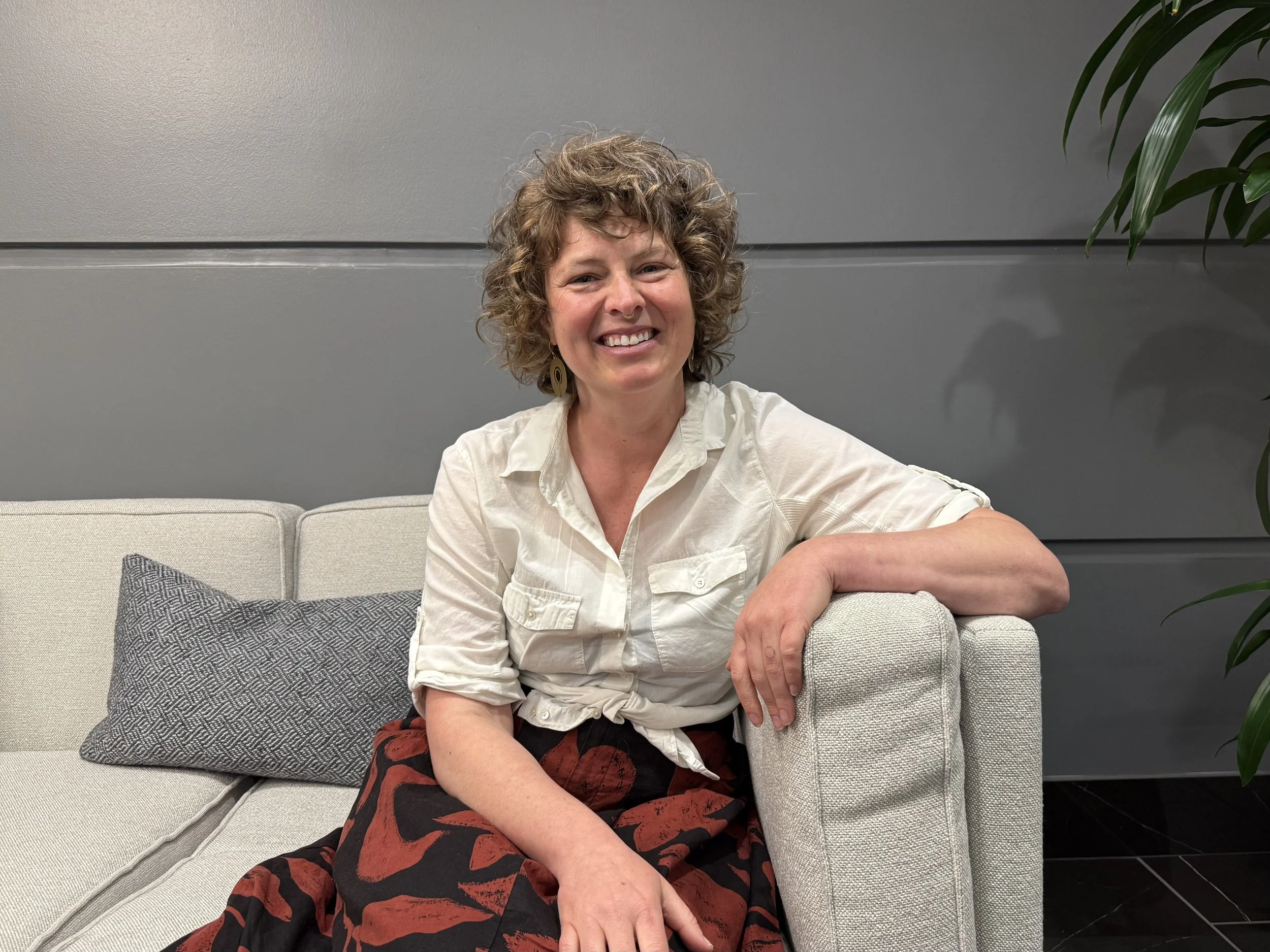
“We get to vote with our dollars. And I know we hear that all the time. But it is very much true that we can create the community we want by financially supporting these small businesses as they are coming up, as they are incubating at the market.” That belief sits at the heart of Director, Carly Gillespie’s work with the Downtown Alliance and the Downtown Farmers Market, but it began long before she found her way into nonprofit leadership.
Carly, who grew up in Cottonwood Heights near the mouth of Big Cottonwood Canyon, did not come from a childhood steeped in farming or homesteading. Her father died when she was four, and she was raised by her mother alongside her sister. Life, by her description, felt fairly typical. Yet, there were small seeds being planted early on, even if no one could have guessed where they would lead. Her paternal grandparents were an important part of her life, and her grandmother kept a small garden. Carly watched, absorbed, and enjoyed it, not realizing that plants, soil, and growing things would one day shape nearly every major chapter of her adult life.
Her first real turning point came at age fifteen, around 1997, when she got a job at Neff Floral, the beloved Salt Lake florist that had already been around for some eighty years. Her aunt, who was the company’s accountant, helped her get in the door. A teenage job quickly became something much more meaningful. Surrounded by flowers and greenery, Carly discovered an early passion for plants and for the quiet, grounding world they opened up. She stayed at Neff Floral through her teenage years, and by then, something had already taken hold.
After graduating from high school in 2000, Carly moved to Phoenix where her mother had relocated with her new husband. Carly thought she might go to school there, but the reality did not match the plan. Instead, she found herself working as a receptionist and trying to settle into a city that never felt right. Phoenix, she recalled, felt too hot, too indoor, too disconnected from the kind of life she wanted. She lasted less than a year, returning to Salt Lake in 2001, at age nineteen, before the desert heat could fully settle in.
Back home in Salt Lake, Carly returned to Neff Floral, but not for long. The family-owned business soon closed after decades in the community, a painful end for a shop that had been deeply loved. Carly then moved to another formative workplace, Cactus & Tropicals, where she began working in 2001, just before Karen and Scott Anderson took over the business from its founder, Lorraine Miller. Carly speaks with enormous admiration for Lorraine, describing her as an inspiring force, a woman who built something remarkable from her home and grew it into a flourishing business. For Carly, Cactus & Tropicals was not simply a nursery job. It was an education. She worked in the greenhouse, then the nursery, then landscaping, then seasonal holiday work. She learned every corner of the business, and with each step, her fascination with plants deepened.
It was during those years that a bigger dream started to form, even if it was still rough around the edges. “I want to grow things, I want to be a farmer,” Carly remembered thinking, and more specifically, “I want to be an organic farmer,” without yet fully understanding what that life would actually demand. She knew ornamental plants. She knew how much she loved the work. But farming, real farming, still existed more as an idea than a lived reality.
By 2007, when she was twenty-five, Carly felt ready for a leap. Friends had moved to the Oregon coast to open a bonsai and crystal shop. After visiting them, she fell in love with the landscape and decided to move. It was a spontaneous choice, made more from instinct than research. She imagined she would find work on an organic farm. Instead, she discovered there were not many opportunities on the Oregon coast. A stretch of hard, lonely, physically demanding work followed that tested her in ways she had not expected.
Carly took a job in landscape contracting, driving a dump truck, operating heavy machinery, and working in a fifty-acre native plant nursery deep in the woods. Often, she was out there alone, digging up plants, potting them, moving them, and encountering the sort of wildness that makes a person question every life choice that led them there. There were snakes. There were oversized fir trees. There was an old Vietnam veteran for a boss who was not especially interested in comforting a young woman in tears. Carly laughed about it later, but at the time it was intense. Still, she stayed with it for about six months, longer than she had expected, and in the process proved something to herself.
Eventually, another opportunity appeared. Friends who owned a glass shop needed someone to curate their art gallery. The arrangement came with a bonus - if Carly worked there, she could learn to blow glass. At twenty-seven, she found herself living in a cabin in the woods with a wood-burning stove and well water, spending winters on the Oregon coast where ninety inches of rain a year could make daily life feel isolated and rugged. When the 2008 economic crisis slowed tourism, the gallery’s business fell with it. Carly practically begged to be laid off for the winter, intending to return in the spring.
Instead, a friend sent her a posting for a ten-week AmeriCorps internship with Wasatch Community Gardens in Salt Lake City. The timing felt perfect. She could come home briefly, do meaningful work, and then head back to Oregon. That was the plan. But the minute she stepped into the world of Wasatch Community Gardens in 2009, something shifted.
A short AmeriCorps term turned into nearly five years and became one of the most defining experiences of Carly's life. At first, she and another young woman were growing food for youth programs, working with service-oriented groups and young people from detention facilities, helping them get their hands into the dirt and watching what that contact with the natural world could unlock. Then Carly took on a second AmeriCorps term and began running the organization’s community education program.
There, everything seemed to come together. Carly was no longer simply learning about plants. She helped others reconnect with food, with skills, and with self-sufficiency. Under her leadership, the workshop program expanded dramatically. A small offering grew to roughly sixty workshops a year, attracting more than one thousand attendees annually. The topics reflected the whole ecosystem Carly had come to love - beginning organic gardening, chicken keeping, beekeeping, food preservation, seasonal cooking, foraging. She met fascinating people, learned from them, and built a deep understanding of how hungry people were for this kind of knowledge.
Carly also saw something larger. During times of economic uncertainty, she noticed, people return to basics. They want to know how to grow food, preserve it, source it, understand it. Those instincts cut across political and cultural lines. In her classes, urban liberals and deeply conservative Utahns would find themselves side by side because they all wanted to learn how to raise chickens or can tomatoes or provide more directly for their families. Carly came to see this world as one of the great connectors, a place where ideology fell away and the fundamental question became the same for everyone - how do we care for ourselves and the people we love?
Those years also deepened her own personal commitment. Carly got chickens, gardened in a community plot, and threw herself into a world of practical knowledge that felt at once ancient and urgent. An abstract desire to “grow things” became a real and lived identity.
By 2014, now in her early thirties, Carly thought she might finally use her AmeriCorps education award and go to college. She had a plan to study ethnobotany at Weber State University and had already enrolled. But life, once again, had another route in mind.
The woman Carly had originally started with at Wasatch Community Gardens, Sharon, had created Backyard Urban Garden Farms, known as BUG Farms, a business built on an unconventional model - farming food on scattered plots of urban land throughout Salt Lake City. At first, Carly thought it was, in her words, “the dumbest idea” she had ever heard. To her, farming meant putting down roots, literally and figuratively. It meant land, soil-building, and continuity. Sharon’s vision of farming small pieces of donated land across the city seemed chaotic and unsustainable.
Then Carly found herself between jobs, reconsidering everything. She offered to run Sharon’s booth at the farmers market, and from there, slowly, she began helping with the farm itself. Sharon was easing away from day-to-day operations, and soon Carly and three others were essentially running it. At the end of 2014, she and her friend Coleman bought the business, and instead of going to college, Carly became a farm owner.
From 2015 through 2019, Carly and Coleman ran BUG Farms together. It was a partnership that worked because each brought different strengths. Coleman focused on the growing itself, the rhythms, and decisions of the land. Carly handled the business side while also farming alongside him. The model remained unusual but surprisingly effective. They grew food on multiple urban plots, many in Salt Lake’s Glendale neighborhood, where homeowners with large lots were willing to let the farm use part of their property in exchange for a share of the harvest. The business ran largely on a CSA (Community Supported Agriculture) model, with customers subscribing in advance for twenty weeks of vegetables. Any surplus often went to the farmers market.
That experience taught Carly not only how to farm, but how important the market could be as a marketing and community-building tool. It allowed the farm to become visible, to build trust, to reach enough people that eventually the CSA grew strong enough to carry most of the harvest without relying on weekly market sales.
It also tied her more deeply to the city itself. In one of those remarkable twists that seem to happen often in Carly’s story, she later discovered that two of the plots she had been farming had once belonged to her own great-uncle and his brother, who had farmed there years before. That kind of connection, between family history, land, and the larger farming community, meant a great deal to her. It confirmed what she had come to believe over and over again - in this world, everything is connected.
During those years, life was changing personally as well. Carly had met her future husband, Kyle, through Wasatch Community Gardens where he had volunteered before later working on the farm. Kyle became a wildland firefighter, and together they built a life that reflected so many of the values Carly had been teaching and living. They bought a home when Salt Lake was still remotely affordable, kept chickens, and leaned fully into a kind of urban homesteading spirit. Later, they bought three acres outside Heber with dreams of turning it into a more substantial farm. At various points, they had sheep, and, by Carly’s count, around one hundred birds, including chickens, ducks, geese, and turkeys. They even tried growing hemp after it became legal, taking on the massive labor of harvest, drying, curing, and processing with help from friends and borrowed space.
But farming, as Carly knew better than most, is not romantic when it comes time to pay the bills. When she became pregnant unexpectedly, and later had children to support, the financial reality of small-scale farming became harder to ignore. She was not interested in becoming a stay-at-home mother, but she also could not keep farming for so little while paying for childcare. Coleman and his wife were entering a similar stage of life. By 2019, it was clear that their time with BUG Farms was ending. That year, they transitioned the farm to Kristen and Zach, a hardworking couple who were ready to carry it forward.
Around that same period, Carly took a job at Overstock.com, commuting from Heber to Midvale to grow vegetables for staff in an elaborate greenhouse. The work was stable, and after years of small business uncertainty, the regular paycheck mattered. She was grateful for it. But emotionally, it was not where her heart lived. Beautiful heirloom tomatoes would wind up in the refrigerator without ceremony. Tiny, sweet bananas from twenty-foot trees were ignored because they did not look like grocery store fruit. The project felt disconnected from the deeper values that had drawn her to growing food in the first place.
Then came 2020, a year that changed nearly everything. Carly was pregnant with her second child. The pandemic hit. She and Kyle, already beginning to feel culturally and politically out of place in Heber, realized they wanted to be closer to their community in Salt Lake. At almost the exact same time, an opportunity opened up at the Downtown Farmers Market, a place Carly had known for years as a vendor, collaborator, and longtime believer.
Carly’s relationship with the market ran deep. Even before selling there with BUG Farms, she had partnered with the organization while running food preservation and seasonal cooking workshops through Wasatch Community Gardens. She knew former leadership, knew the community, knew how important the market was to local food systems. So, when a position opened up in late January 2020, she told the director that she would love to come on board. After the corporate world, she wanted work that felt like it mattered again.
What she walked into was one of the most difficult moments in the market’s history. The Downtown Farmers Market, operated by the nonprofit Urban Food Connections of Utah under the umbrella of the Downtown Alliance, has been part of Pioneer Park since 1992. It began as a bold idea from Bob Farrington, the Downtown Alliance’s original executive director, who saw the park as an underused space with a troubled reputation and believed a farmers market could help transform it. He drove north on Highway 89, the Fruit Highway, knocking on farmers’ doors and asking them to come sell in downtown Salt Lake. A handful said yes. From that tiny beginning, the market grew.
Over time, it expanded from a few farmers to a full-scale community institution. When unlicensed “rogue” vendors began setting up on the other side of Pioneer Park in the early 2000s, the city asked the organization to formalize that side as well, leading to the creation of the art and craft market and eventually bringing the entire park under a single permitted operation. Today the market has grown to more than 300 vendors in peak seasons and is celebrating its thirty-fifth season in 2026.
The market standards are strict and central to its identity. To sell there, vendors must make, raise, or grow what they are offering. Food and goods must come from within 250 miles of the market, which includes most of Utah and small portions of Idaho and western Colorado. Carly takes that integrity seriously. If there is concern that a farmer is reselling produce they did not grow, the market investigates, inspects farms, and takes action. She understands how hard it is for farmers to survive, but she also knows trust is everything. Customers come expecting authenticity, and the market protects that carefully.
What many people do not realize is just how much economic force sits behind the beauty and bustle of a Saturday morning in Pioneer Park. Carly estimates that roughly $11 million in direct-to-consumer sales flows through the market each year. It is not just a charming weekly ritual. It is a serious engine for local business. It has launched dozens of companies that later grew into brick-and-mortar shops. For Carly, that is not a loss. It is the point. The market is meant to incubate businesses, to help people test ideas, build customers, and create livelihoods.
That mission became even more urgent during the pandemic. When Carly joined the staff in early 2020, the market was already in transition. Then Covid hit, the winter market at the Rio Grande Depot shut down, and the March 2020 earthquake further complicated matters by damaging the building, which remains under seismic renovation. Suddenly the organization had to fight simply to stay open.
Working closely with the Utah Department of Agriculture and Food and other markets around the state, the staff made the case that farmers markets were essential. They reopened the summer market in Pioneer Park in June 2020, but at only about a third of its normal size, with dramatically altered operations. Farmers, ranchers, and packaged food vendors were allowed back, but prepared food vendors and art and craft vendors were not, because the market had to focus on essentials. "It was a painful decision," especially because those groups reflect so much of the diversity and entrepreneurial energy the market champions. Many of the prepared food vendors are immigrants and refugees, people using the market as a low-barrier entry point into business ownership. Carly felt deeply the weight of not being able to support them in the way she wished.
The financial strain was severe as well. Urban Food Connections of Utah operates on earned revenue from vendor fees, not on a large foundation of grants or donor campaigns. Shrinking the market meant shrinking the budget. Yet they made it through.
When the Rio Grande Depot could not reopen, The Gateway stepped in and offered space for the winter market. What no one expected to become long-term turned into a five-year partnership, with vendors operating creatively through former retail storefronts and indoor spaces. It asked everyone to be flexible, but it kept the market alive.
By 2022, operations had returned much closer to full scale, though rebuilding the vendor community took time. Some businesses had disappeared. Some people were no longer willing to take entrepreneurial risks. But more recently, Carly has watched a new wave of strong vendors emerge, evidence, she believes, that Salt Lake’s food culture is growing in exciting ways.
That growth matters to Carly for reasons both practical and personal. She has seen Salt Lake change from a smaller, more insulated city into something much more dynamic. She has also seen how the market has helped reshape Pioneer Park and the neighborhood around it. In 1992, there was little around the park. Now there are homes, hotels, restaurants, and a wider sense of possibility. The market has not done that alone, but it has undeniably been one of the catalysts.
And what makes it powerful is not just the produce. It is the whole experience. People can come for groceries, stay for lunch, meet friends, listen to music, buy gifts, watch dogs in costumes, and feel part of downtown in a way they might not otherwise. The market includes buskers and paid musicians, artists and food entrepreneurs, longtime farmers, and first-time business owners. It is joyful, practical, and deeply human all at once.
Carly also lights up when talking about one newer element that has changed the atmosphere in meaningful ways - the partnership with the Downtown Ambassadors. By bringing ambassadors into the market as seasonal staff, the organization has gained team members who already know many of the people on the streets downtown and can de-escalate difficult situations with empathy and familiarity. Rather than moving immediately to security or police, they can often send someone over simply to talk, offer resources, provide water, and defuse tension. It has changed the feel of Saturdays in Pioneer Park, making them safer and more compassionate at the same time.
For Carly, this is not abstract work. It is the culmination of everything she has cared about for decades - plants, land, food, community, small business, and the belief that local choices shape the character of a city. Her life has wound through flower shops, nurseries, the Oregon woods, glass studios, community gardens, urban farms, a real farm in Heber, corporate greenhouses, and now one of downtown Salt Lake’s most beloved public spaces. Every step has added something. Every step has brought her closer to the work she is doing now.
And perhaps what makes her story especially moving is that none of it seems to have been planned in any tidy or linear way. Carly followed instincts, opportunities, and a growing sense of what mattered to her. Along the way, she found that a passion for plants could become a passion for food systems, education, entrepreneurship, as well as the economic and social fabric of a city. A grandmother’s small garden and a teenager’s job at a florist became a life devoted to helping things grow. “Every single one of these businesses is supporting a family and a dream. And I think that we can create the food system and food community we want to see in our city.”
Ann Marie Wallace
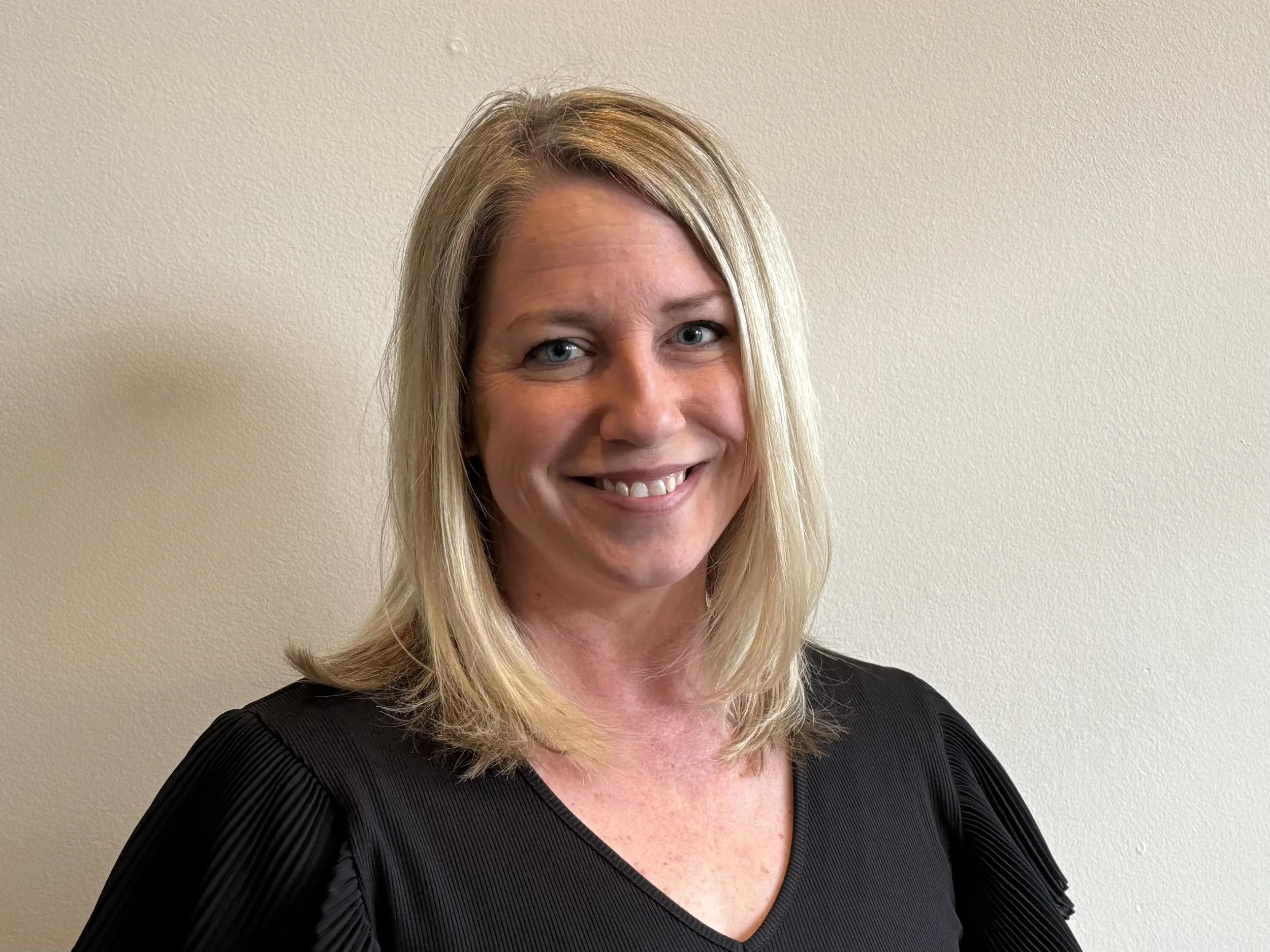
“Confidence - someone believing in you. That is the most important thing to me.” Ann Marie Wallace, director of the Women’s Business Center of Utah, says it simply, but that belief runs through every part of her story. She has spent years helping women build businesses, trust themselves, and reach further than they thought possible. On the surface, she comes across as gentle, gracious, and endlessly warm. But beneath that softness is a woman of remarkable drive, humor, and determination - someone who has moved from milking cows on a family dairy farm in Cache Valley to becoming one of the state’s most powerful champions for women entrepreneurs.
Ann Marie was born and raised in northern Utah, near the Idaho border, in a town of roughly two hundred people. She grew up with five siblings on a family dairy farm where the work was not optional and childhood came with responsibility. By age twelve, she was milking cows and moving sprinkler pipe. It was cold, demanding, unglamorous work, and at the time, she did not love it. But she sees it differently now. That life taught her persistence, discipline, and the kind of toughness that does not need to announce itself.
As a teenager, Ann Marie envied what she called the “city kids,” the ones who did not have to live that farm life. Her grandmother offered the steady reassurance that would stay with her. “This too shall pass.” It did. She graduated from high school in 1995, attended Snow College from 1995 to 1997, and then continued on to Utah State University. In between, she served on an LDS mission from 1998 to 2000 in Cape Town, South Africa, and Namibia. Living abroad opened her eyes in a profound way. She learned from other people, other beliefs, and other ways of moving through the world. It expanded her sense of possibility.
Back in Utah, Ann Marie completed her marketing degree at Utah State in 2004 and began building a career in hospitality. She worked at the university inn and conference center, first at the front desk and then as program coordinator, handling reservations, rates, rooming lists, conference logistics, invoicing, and even small-scale graphic design. She also coordinated Elderhostel programs centered on opera, music, and American history, arranging accommodations, transportation, meals, presenters, and week-long experiences for visiting seniors. It was detailed, people-centered work, and she was very good at it.
Ann Marie later moved to the Yarrow Hotel in Park City where her hospitality career expanded into group sales, government contracts, and association business. For a decade, hotel management shaped her professional life. She learned the rhythm of customer service, the complexity of large-scale coordination, and the value of making people feel taken care of. She also had the chance to travel internationally through hotel industry connections, gaining even more perspective along the way.
Still, something else was beginning to stir. While in Salt Lake City, Ann Marie became active with the Salt Lake Chamber and chaired its women’s networking group. That is where the Women’s Business Center entered her life in a new way. At the time, she did not fully understand the depth of what the organization offered. Then the center’s director, LeVania Mahate, asked a question that changed everything: Had Ann Marie ever thought about starting a business of her own?
She had. What followed was Concoctions, a non-alcoholic bartending and catering service that Ann Marie launched with the center’s support. What began as an idea soon became a real business. And then, in one of those turns life sometimes quietly prepares in advance, she learned that the Women’s Business Center was hiring a full-time business advisor. Though she had only been a business owner for a short time, she applied. In 2010, the stars aligned, and she got the job.
At first, Ann Marie learned in the most honest way possible. “Most of it in the beginning, I would respond to people by saying, ‘I do not know, but let us find out.’” It became her method and, in many ways, her gift. She learned alongside the women she served, absorbing knowledge, solving problems, and carrying each lesson into the next conversation. By 2013, she had become director of the Women’s Business Center of Utah.
That promotion came with enormous responsibility. The center was small, with only three team members, and Ann Marie suddenly found herself managing federal grant requirements, SBA expectations, programming, staffing, and the overall direction of the organization. She spoke about those years with candor. She came in early, stayed late, and spent countless hours figuring out not only how to run the center, but how to expand its reach and sharpen its purpose.
One realization changed everything. At a national meeting of Women’s Business Center directors, Ann Marie learned that because Utah had only one center, the entire state was its service area. Up until then, much of the center’s work had been concentrated in Salt Lake City. Ann Marie did not let that revelation intimidate her for long. Once she understood what was possible, she could not turn away from it. Rural communities, small towns, women far from the Wasatch Front - they mattered just as much.
With characteristic resourcefulness, Ann Marie began finding ways to make statewide outreach real. She pursued funding beyond the existing non-federal sources and matching federal grants, secured support from American Express, and launched an AmeriCorps VISTA project to build capacity. She partnered with chambers of commerce across rural Utah, created virtual pathways for training, and developed outreach efforts that met women where they actually were. A center that served roughly two hundred thirty-five advising clients grew into an organization now serving thirteen hundred to fifteen hundred people each year.
Covid accelerated one of Ann Marie’s most important shifts. The Women’s Business Center of Utah moved its services online, and rather than treating that as a temporary workaround, she saw the opportunity. Virtual access removed geographic barriers and opened the door wider. Services became free. Training expanded. New multi-week programs took shape, including Next Step for growing businesses, Minding My Own Business for solopreneurs, and Biz Spark for those just starting out. Hundreds of women have now moved through those programs.
Then came another bold leap. In 2020, Ann Marie entered the Goldman Sachs 10,000 Small Businesses program, choosing as her growth opportunity an idea that reflected both strategy and conviction - a public, inclusive online directory for women-owned businesses in Utah. She saw the need clearly. There were small lists and curated mentions here and there, but nothing expansive, visible, and welcoming. She wanted something that would not only connect customers to women-owned businesses, and drive business to their websites, but also advocate for those businesses and help more women discover the center’s services.
The directory launched in May 2021. Ann Marie's goal was five thousand listings. Today, in 2026, it stands at roughly three thousand six hundred members, with representation in every Utah county except two. That number alone is impressive, but the deeper significance lies in what the directory represents. It is a public declaration that women-owned businesses matter, that they deserve to be seen, and that their presence strengthens communities across the state.
Ann Marie has also helped guide the center into broader initiatives, including an online academy, statewide outreach supported by the legislature, and a forthcoming loan boot camp designed to help business owners strengthen applications and improve their chances of securing funding. Throughout all of it, she has remained focused not only on technical assistance, but on belief - helping women see themselves as capable of building something meaningful.
That theme is personal for her. Ann Marie married for the first time at thirty-four, divorced three years later, then remarried in 2016. Her first child was born when she was thirty-nine, and her second at forty-two. She speaks with gratitude and humor about that path, recognizing how different it looked from the lives many around her expected. In the small Utah town where she grew up, marriage and motherhood came early for most women. Her life unfolded differently. She did not resent that difference. She embraced it. Now, as she nears fifty with children still in elementary school, she seems to carry that chapter with the same mix of practicality and wonder that has shaped so much of her life.
And because one extraordinary professional life apparently is not enough, Ann Marie has also continued building businesses of her own. Concoctions is still going strong fifteen years later, and she recently bought out her partner to become sole owner. But perhaps the most delightfully unexpected twist in her story is her newest venture, Bare Instinct.
Yes, Bare Instinct has to do with bidets. In Ann Marie's hands, even that becomes both funny and fascinating. Research into industries ripe for disruption led her to an unexpected conclusion: “Someone needs to do something about this. It is me.” Her company is built around patent-pending drying technology designed to improve the bidet experience. It is inventive, practical, a little hilarious, and entirely in character. Of course, Ann Marie Wallace would find a way to bring purpose, research, and entrepreneurial ambition to something as overlooked as toilet hygiene.
She has support in that venture from her engineer brother, who helps with design, physics, and testing, as well as from an attorney, mentors, and advisors - including the Women’s Business Center itself, where Ann Marie is now a client in addition to being the director. She has even created a mastermind group in Cache Valley for women with ambitious business goals, because of course she has. There is no doubt that this woman does not seem especially interested in standing still.
What makes her so compelling, however, is not simply the scope of what Ann Marie has accomplished. It is the spirit in which she has done it. There is nothing self-congratulatory about her. She speaks with humility, laughs easily, and seems genuinely more interested in what can be built for others than in taking credit for herself. Yet her impact is unmistakable. Thousands of women-owned businesses are more visible because of her. Countless women have received guidance, training, structure, and encouragement because of her. Entire communities across Utah have been reached because she refused to accept that geography should determine opportunity.
Very far from the little girl milking cows in Cache Valley, Ann Marie Wallace has become exactly the kind of woman so many others need to meet. This is proof that strength can be quiet, leadership can be generous, and vision can arrive in the most unexpected forms, even in the shape of a statewide directory or a better bidet. “It is a bug that everyone catches, and I am just so grateful to be part of it - to help and encourage other women to make their dreams come true.”
Dallas Graham
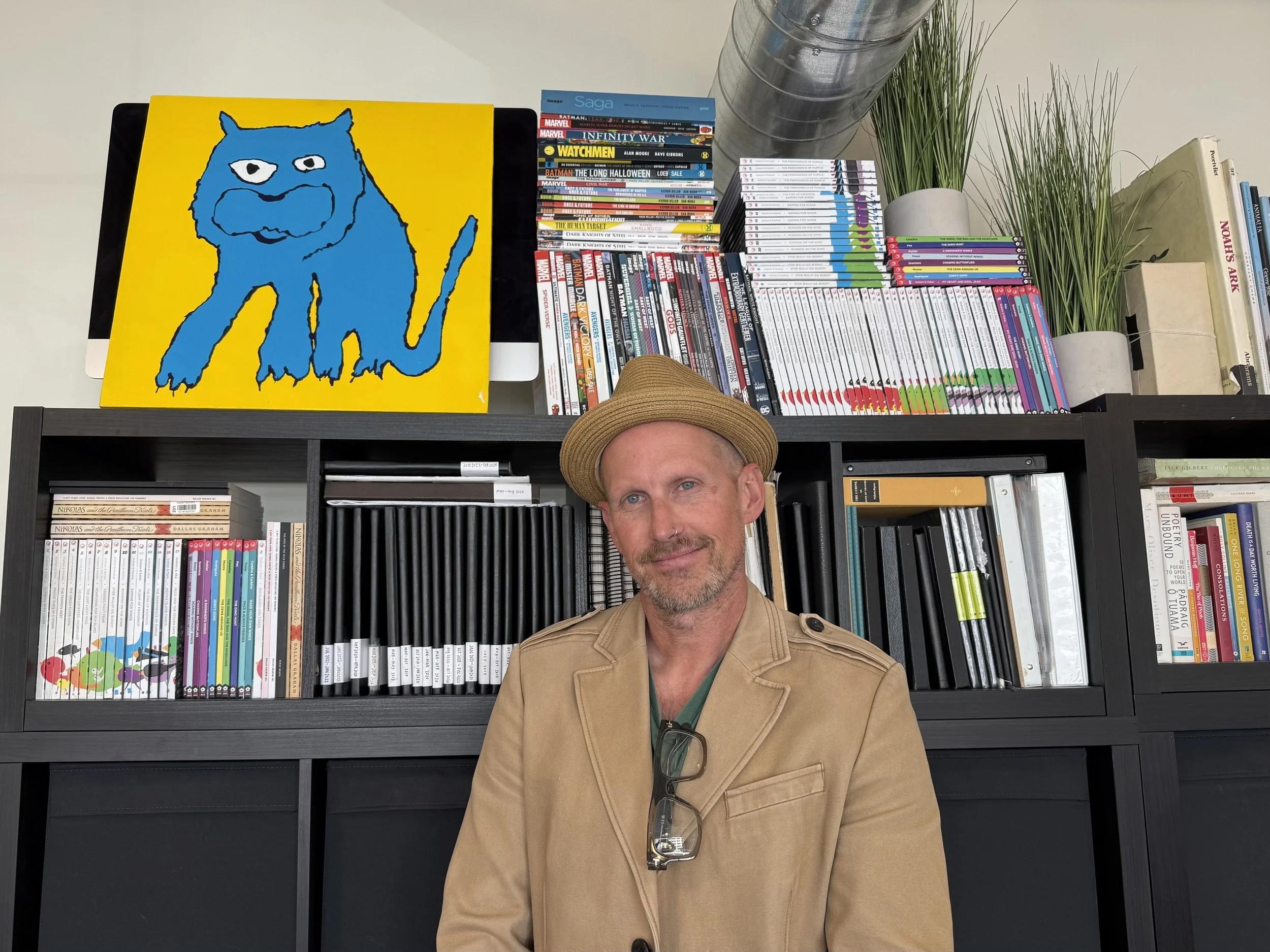
“I really, really want to lean into my silliness. It is incredibly valuable to me.” That may not be the first thing people notice about Dallas Graham, but perhaps it should be. Because behind the artist, designer, writer, publisher, community-builder, and deeply thoughtful creative force is someone who has spent a lifetime learning how to hold both gravity and lightness at once. His path has taken him from Boise to Salt Lake City, from music rooms to art studios, from New York design circles to conversations with families facing the unimaginable, and now into a new chapter of public art and personal coaching. Through it all, he keeps returning to the same instinct - to see people clearly, to honor their stories, and to make something meaningful out of that encounter.
Dallas Is one of nine children in a family that was, and still is, remarkably close. When he was six, in 1981, the family moved from Idaho to Utah after his father made a career shift. They settled in Farmington where his childhood unfolded on a mountainside that feels almost impossible to replicate today: horses, dirt roads, deep snow, cousins nearby, and a shared life that extended well beyond the walls of one home. His uncle had purchased the land and invited Dallas’s parents to come raise their children together. And they did. “It was genuinely idyllic. It was our Camelot."
Even now, that sense of connection remains. The family has grown exponentially - siblings, nieces, nephews, and now the next generation beyond that - but the closeness has endured. Dallas speaks of his mother with quiet awe. Raising nine children required something extraordinary. “She ran it like a ship, tended like a garden.” What stays with him is not just the scale of it, but the feeling inside it. “We were rougher, but we were kind to each other. We never had that edge where we were lobbing bombs into each other’s lives.”
As a boy, Dallas filled his days climbing trees, drawing, and watching Saturday morning cartoons whenever he could sneak them in. “I would wake up by myself and get my cartoons in at six am.” Art, in every form, was always nearby. "I was a reader. I loved stories.”
But it was music that first took hold in a serious way. Dallas's mother made sure of that. Music was not just encouraged; it was woven into daily life. Dallas studied piano for over a decade, played the upright bass, then cello - eventually becoming first chair - and later sang with Utah Chamber Artists for nine years. “We all sing, we all sing parts, we can all read music.”
Early on, Dallas was not interested in choosing just one path. Visual art, music, storytelling - it all mattered. That instinct carried into college at BYU where he studied art broadly, exploring painting, illustration, printmaking, and design. “I was intrigued by all of it.” That curiosity led him beyond the classroom. After graduating in 2001, he studied privately with Swiss painter Patrick Devonas, traveling between New York and Switzerland. It was a period of deep artistic commitment, one that helped him take himself seriously as a maker.
Back in Utah, Dallas built a creative life: design work, photography, projects that blended art and environment. But beneath that steady rhythm, something more personal was unfolding. For years, Dallas had been trying to fit into a version of life that did not fully align with who he was. He dated women he cared for, but something never quite connected. “Why isn’t it working?” The answer, over time, became impossible to ignore. “I can’t keep lying to myself and not being honest with others.” The realization did not arrive lightly. It came with weight, with consequence, with uncertainty. But it also came with clarity. “I had to decide my own reality, my own life.”
Choosing to come out at the age of twenty-eight to his family, his friends, and the wider world was a turning point. It required courage, and a willingness to step into the unknown. "I needed to live authentically." It was difficult, deeply so, but it opened the door to living truthfully. Over time, the people closest to him grew alongside that truth, meeting him with understanding, compassion, and love that allowed those relationships to endure and deepen.
In 2010, Dallas moved to New York City, settling in Brooklyn. For three years, he immersed himself in a world that felt both expansive and precise. He worked for designer Mirko Ilić in the Milton Glaser building, an experience he still speaks about with reverence.
Milton Glaser, the legendary designer behind the iconic I “Heart” NY logo - sketched in the back of a taxi on his way to a meeting - represented something larger than design itself. The idea that creativity could shape identity, community, even a city. Dallas experienced that firsthand. He also saw something quieter. “These people just do things and keep moving.”
When he returned to Salt Lake in 2013, he could not have known what was about to unfold. The Red Fred Project began with a question - and with a child. Watching a young boy named Mitchell face the end of his life, Dallas found himself asking something few people dare to sit with. What happens when a child does not get to grow up? What if they never become the artist, the writer, the person they might have been? The answer came with surprising clarity. “A shorter life is still a whole life.”
From that came an idea both simple and profound; ask children living in extraordinary circumstances what kind of story they want to tell and then help them tell it. Not about their illness, not about loss, just a story. “Why don’t we ask children about children’s books?”
What followed was ten years of extraordinary work. Dallas launched The Red Fred Project through a Kickstarter campaign that, in its final hours, was lifted by a single unexpected moment. Neil Gaiman, renown English author, shared it with the world through social media. It was enough to begin. Dallas stepped fully into the work, becoming, as he says, everything the project required. Publisher, writer, illustrator, designer, fundraiser. “A man with a mission.”
Thirty books were created. Thirty children were seen, heard, and honored with the first being about Nathan Glad, a six-year-old child who wrote Climbing with Tigers. Each story was imagined by the child and crafted with care while Dallas sat beside them. The children themselves had a lasting impact on him. Their imagination, their humor, their way of seeing life. “I got to work with the most fascinating people in the whole world.”
Then, in 2020, it stopped. Dallas was in Chicago, working with a child on one of the books, when he began to feel what was coming before he could fully name it. The travel stopped and the in-person connection disappeared. The very heart of the work was no longer possible. “I remember where I was and just thinking, this isn’t going to be able to continue.” He tried to find a way around it, to reimagine it. “I tried all the avenues in my head, to make it go on.”
But something in him already knew. “Sometimes things just end.” It is a simple sentence, but it carried the full weight of ten years of purpose. “And you don’t have any say.” The realization did not come with relief. It came with grief and exhaustion, and it came with the understanding that even something deeply meaningful could still come to a close. “It’s like when death comes and you say no, no, no. It’s not supposed to. It’s not fair.” And yet, even in that resistance, there was truth. “Yeah, sometimes things just end.”
Still, Dallas kept creating. In the wake of Covid, he self-published 3651 Years Lived: Global Poetry and Prose Reflecting the Pandemic, compiling one hundred voices of all ages from around the world. "Together, the voices reflect a wide range of human responses to a crisis that united us even as it kept us apart." Prior to Covid, he wrote a young adult fantasy novel, Nikolas and the Pantheon Trials.
Dallas continued to create even when direction felt uncertain. For a time, there was a sense of searching. After a decade of deeply human, mission-driven work, it is not easy to simply move on. He found himself floundering, but slowly, something began to change. In 2024, he presented a multimedia show titled UR MY BST FRND (You Are My Best Friend) at Fice Gallery, centered on the idea of becoming one’s own best friend. It marked a time of turning inward - an exploration of self, of kindness, of connection that begins from within. "It marked a shift. Something more personal and more reflective. Something lit up inside me, I felt like a kid again. It gave me energy."
Then came ABSLTLY AMZNG ANMLS (Absolutely Amazing Animals) in 2025, one of Salt Lake City’s major public art commissions. Large, joyful hybrid creatures, imagined in collaboration with children, blending threatened and thriving species into something entirely new. It is playful, imaginative, and layered with meaning. And, as always, Dallas found a way to bring it back to people. A simple invitation to connect, to respond, to let a child know their voice mattered. There is a QR code at the bottom of the mural. Everyone is encouraged to send a message to the children who helped create this. Dallas asks all of us to "let them know they are seen."
Now, in 2026, Dallas is leaning further into fine art - painting, sculpture, large-scale installations, while also stepping into something that feels like a natural extension of everything that he has done. He is completing training in Jungian coaching, work that allows him to sit face to face with people as they wrestle with who they are, what their lives mean, and what inner voice they may have silenced. It makes sense. So much of Dallas’s life has been about helping people feel seen. Whether he is working with a child on a book, creating public art with young collaborators, or sitting with someone trying to understand their own soul more fully, the through line is unmistakable. “I’m very human curious.”
It is not difficult to see why. There is a gentleness in Dallas, paired with a depth that is immediately felt. A presence that makes people feel seen, understood, and safe. His work reflects that same spirit - whether in a book created with a child, a piece of public art, or a canvas filled with movement and meaning. There is something undeniably beautiful about it, something that invites people closer.
Dallas Graham has lived many lives inside one, but what defines him is something quieter: the way he sees people, the way he listens to them, and the way he creates space for others to exist fully as they are. Perhaps most telling of all, what he has come to value most. “Laughter, the ability to laugh, who I laugh with, is some of the most important material in my life.”
James Brown

“I’ve been blessed with just enough foolishness to believe that I could make something happen.” James Brown’s grin stretches across his face as he reflects on the winding road that brought him to Salt Lake City, and the impact he continues to make eight decades later. His journey is one of relentless reinvention, risk-taking, and belief in possibility.
Born and raised in San Francisco, James speaks with deep reverence for the community that shaped him. “We didn’t see color. We saw people. That’s the way I grew up.” In the neighborhood he remembers so vividly, it was not unusual for families of every background to live side by side, raising one another’s children and looking out for their neighbors. “It was a collage,” he says. “And that stayed with me.” He went on, chuckling as he recalled being a young kid, leaping into the bay with his friends to hunt for tiger sharks. They would hit them on the head with a bat, tie them to their bicycles, and pedal to the fish market where the owner would hand over five dollars for each one. “So that was our game - let’s go get some sharks. I realized how foolish we were when I got older.”
In 1969, James landed a job with Shell Oil, marking the start of his professional life. But the years that followed were anything but linear. In the early 1970s, he made his way to Los Angeles where he lived with Sylvester Stewart - better known as Sly Stone of Sly and the Family Stone. “It was wild,” James says. The drugs, the parties, the celebrity chaos - it was not the life he wanted, but it opened his eyes. He began going back and forth between LA and San Francisco, eventually spending time in Portland and smaller towns in Oregon.
Then came an unexpected move - following a girlfriend to Salt Lake City. The relationship did not last, and James ended up briefly in Evanston, Wyoming. But something about Utah stuck. “I didn’t know it then,” he says, “but Salt Lake was where I’d finally figure out how to build something that mattered.”
At first, James had no real plan. But he had ideas - lots of them - and a knack for connecting with people. He started attending events, talking to local media folks, stopping by places where decisions were made. “I just kept showing up,” he laughs. “You’d be surprised how far that gets you.” His charisma, creativity, and persistence caught the attention of people in the television and radio world. Before long, he was consulting on advertising campaigns and pitching community-oriented concepts.
What started as scattered consulting gigs eventually coalesced into a real business. James founded his own marketing company and began producing public-access television content. He developed a reputation for blending entertainment with purpose, always with an eye toward uplifting others, especially older adults who were too often overlooked. Then came a moment he will never forget: a $2,500 check from Bountiful International. “They just said, ‘We like what you’re doing. Keep going.’ That kind of belief. It lit a fire.”
James’s most enduring contribution may have been his creation of New Horizons, a talk show that aired on ABC4 for several years, beginning in the late 1990s and running into the early 2000s. It gave voice to people across the community - particularly seniors - with stories of resilience, change, and pride. Around the same time, he also made appearances on local radio, always sharing his message of possibility and perseverance.
Eventually, James took a bold leap: renting a massive space to launch Salt Lake Studios, a production facility that would house his growing operation. It was his biggest endeavor yet. The building buzzed with energy and ambition. But then, after years of investment and growth, it was taken away, confiscated by the government over a technicality involving the building’s owners. “It was devastating,” James says. “But I had learned to lose before. I knew how to get back up.”
Today, James is the force behind Living and Aging with Pride - a show, a concept, and a calling. “Older folks have lived. We’ve survived everything life threw at us. We have more wisdom than the world gives us credit for.” His mission now is to create spaces on screen and off where that wisdom is recognized, valued, and shared.
“I’m eighty years old,” he says, “and I’m still dreaming. Still building. Because if you’re lucky enough to keep living, you better be bold enough to keep creating.”
Angelica Matinkhah
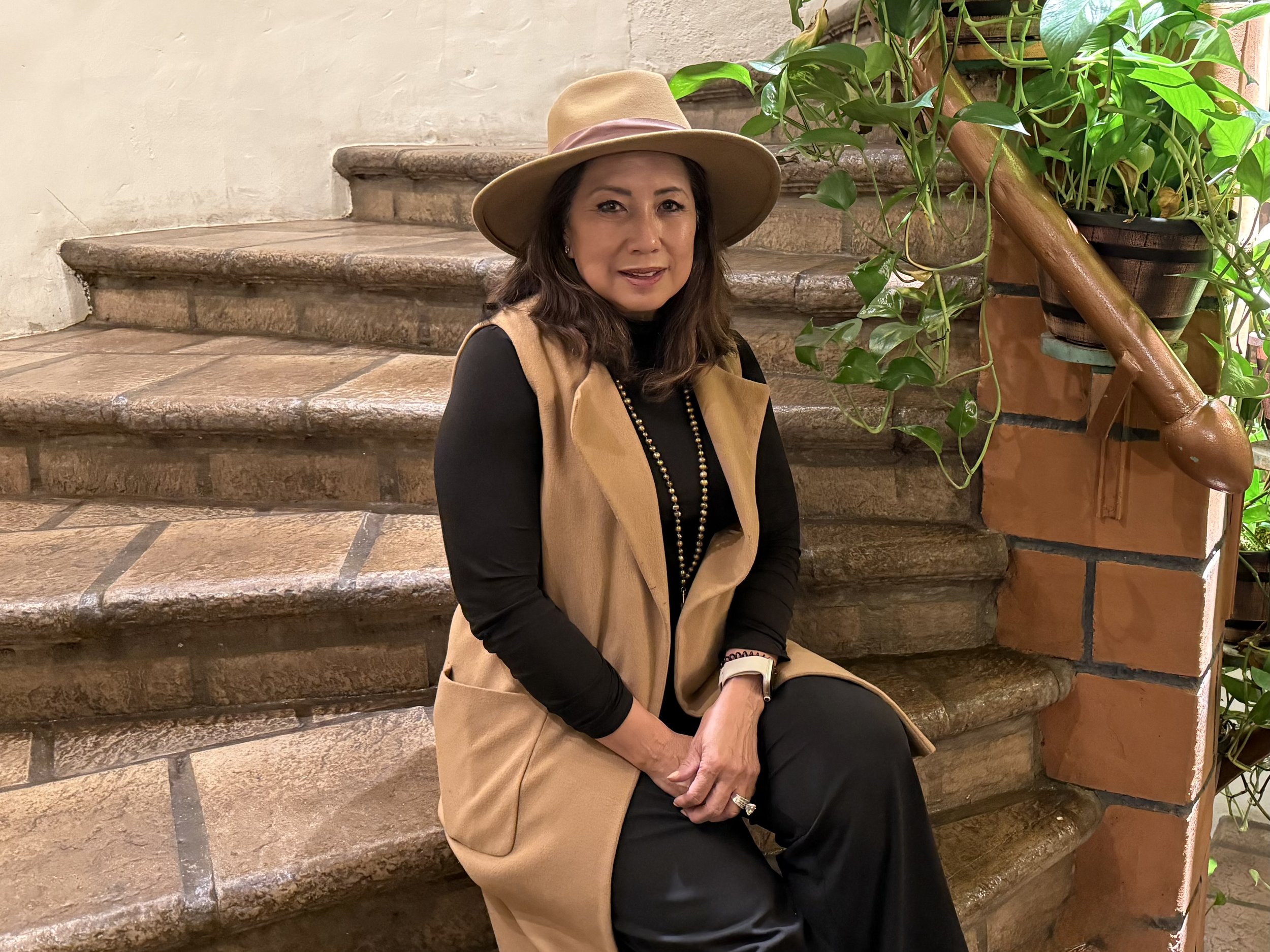
“This community adopted me,” said Angelica Matinkhah, known to most as Angie. She grew up in the Philippines surrounded by strong role models. Her father was an engineer and a university professor, and her mother was one of the first women to graduate from her dental school, though she set aside that career after marrying. “My dad owned a respected electrical consulting firm. He also taught at three universities at one time. He was super smart.” Angie, on the other hand, insists she was not naturally smart, just determined.
Angie attended Catholic schools run by nuns, graduating from the University of the Philippines with a degree in Architecture in 1981. From the start, she thought architecture was her destiny until she realized she lacked the deep passion many of her peers had. “I wanted to shift to engineering but was stubborn about finishing my degree in the five years it was supposed to take. Stupid pride,” she said with a laugh.
Angie had spent her school years in the care of Catholic nuns - first at an elementary school run by Spanish nuns and later at the Assumption for high school where the nuns wore striking purple habits. “They were strict, but they instilled in us a sense of discipline and values that has stayed with me all my life,” she recalled.
A turning point came when Angie began shadowing the specification writer at Leandro V. Locsin and Partners, then the most prestigious architectural firm in the Philippines. She discovered she loved the precision of specifications - the written documentation that tells builders exactly how to execute a design - and became the firm’s spec writer, a role that allowed her to contribute to every project.
Angie’s firm was commissioned to work on the palace of the Sultan of Brunei, then the richest man in the world, but she declined the offer to relocate for the project. Around the same time, she was awarded a Rotary Foundation scholarship for graduate school. Utah was not her first choice, but cost and circumstance brought her to the University of Utah’s Graduate School of Architecture in 1983, not knowing much about the school or the city.
What Angie found was serendipitous. Although she had written to the school requesting to study specifications and computers in architecture, she was mistakenly placed in a design studio. Speaking up to correct her misplacement changed her life. She was introduced to Dr. Ted Smith, perhaps the only person in the U.S. with exactly the expertise she sought - an Architect who had pioneered integrating specifications into computer systems - and to Dr. Wayne Rosenberg, an early computer science leader. Both became her mentors, guiding her through a graduate fellowship and eventually inviting her to become a partner in ARCOM, the small specification software division Ted purchased in 1987.
For decades, Angie helped grow ARCOM, translating the American Institute of Architects’ MasterSpec documents into emerging word processing platforms, expanding its reach as personal computers transformed the profession. When the company was eventually sold to a private equity firm in 2016, she assumed she would work there for life. As her attorney warned, however, upper management was let go within a year. “It broke my heart,” she admitted. “But now I see it was a gift. It gave me the chance to pour my time into the community.”
By then divorced and an empty nester, Angie jumped in. She joined the University of Utah Alumni Board of Governors, reconnecting with her alma mater and helping lead initiatives such as eliminating dues so all graduates could be considered alumni. She joined the Pioneer Theatre Company Board, supporting a regional theater she loves, serves on the College of Fine Arts Advisory Board, is a volunteer for the U’s Osher Lifelong Learning Institute, and mentors two amazing young ladies who are scholarship recipients of the First Ascent Scholars program.
Angie is a member of the Pioneer Theatre and Ballet West Guilds and continues to be a loyal patron of Utah’s cultural institutions. She attends Pioneer Theatre and two other theater company productions regularly. As passionate as she is about the arts, Angie is also an avid supporter of Utah Athletics and beyond; she has season tickets to University of Utah football, women’s & men’s basketball, gymnastics, and volleyball, and is a longtime Utah Jazz fan.
Angie serves on the board of Who Rocks the House, a support club for the University of Utah Gymnastics program, as well as on the Board of EmpowHER, an initiative that advances the women of Utah athletics in the pursuit of academic excellence and competitive success.
Angie’s calendar overflows with performances and events: Red Butte Garden concerts, Utah Symphony programs, board and guild meetings, volunteer work, athletic events, and the Wasatch Speaker Series, which has hosted names like Sec. Hillary Clinton, Pres. Joe Biden, and Malala. Capt. Sullenberger, Steve Wozniak, and Anderson Cooper are speakers to be.
Angie supports smaller theaters and music venues and never misses a chance to introduce friends to the arts. Her memberships and tickets are, in her words, “little ways I can help support them,” but her impact is far from small. Whether in a theatre lobby, at a stadium, or sitting on a board, Angie is constantly building connections that strengthen Salt Lake City’s cultural life.
One of Angie’s proudest commitments is serving on the steering committee of 100 Women Who Care SLC, a giving circle whose members each contribute $100 per quarter. At quarterly meetings, three nonprofits present, members vote, and the chosen organization receives the pooled funds - often $25,000 or more. “Your $100 makes such a big difference when it’s combined,” she said. “It’s such a simple, powerful way to help.”
Angie’s love for Salt Lake City was not instant. When she first arrived from the Philippines, she missed the diversity of larger cities and traveled out of town at every opportunity. But gradually, she found herself eager to return - to the friendly people, the mountains, the clean, wide streets. She and her then-husband considered moving to California but chose to raise their children here. “It’s my home, and I feel responsible for giving back.”
Today, Angie is a tireless advocate for the organizations and causes she loves. She works behind the scenes to bring people together, to shine a light on artists, athletes, and changemakers, and to strengthen the city she has called home for over four decades. “There are so many little ways we can help,” she said. “Even if it’s just supporting a local business or buying a ticket to a performance - it all matters.”
Marguerite Henderson
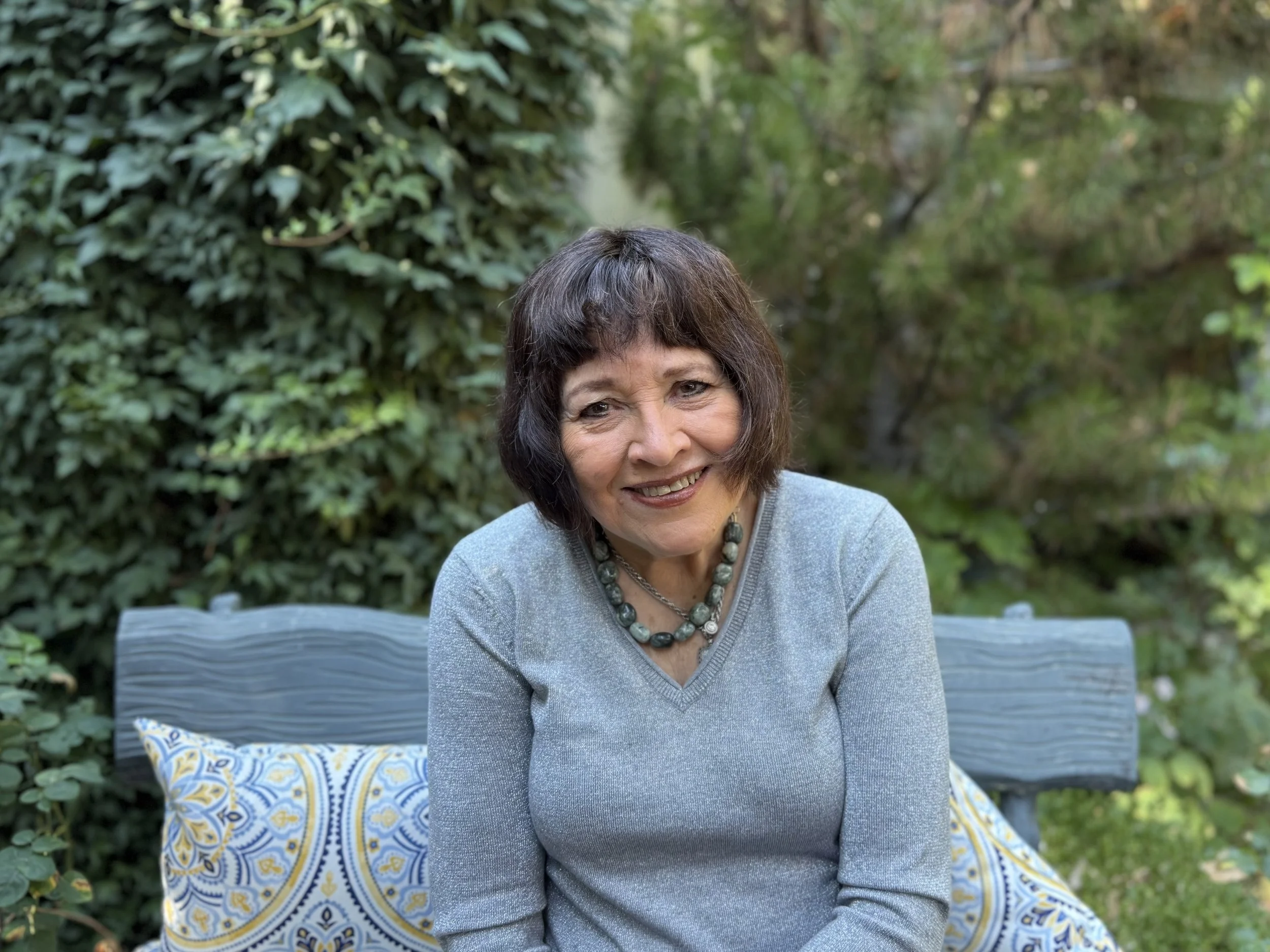
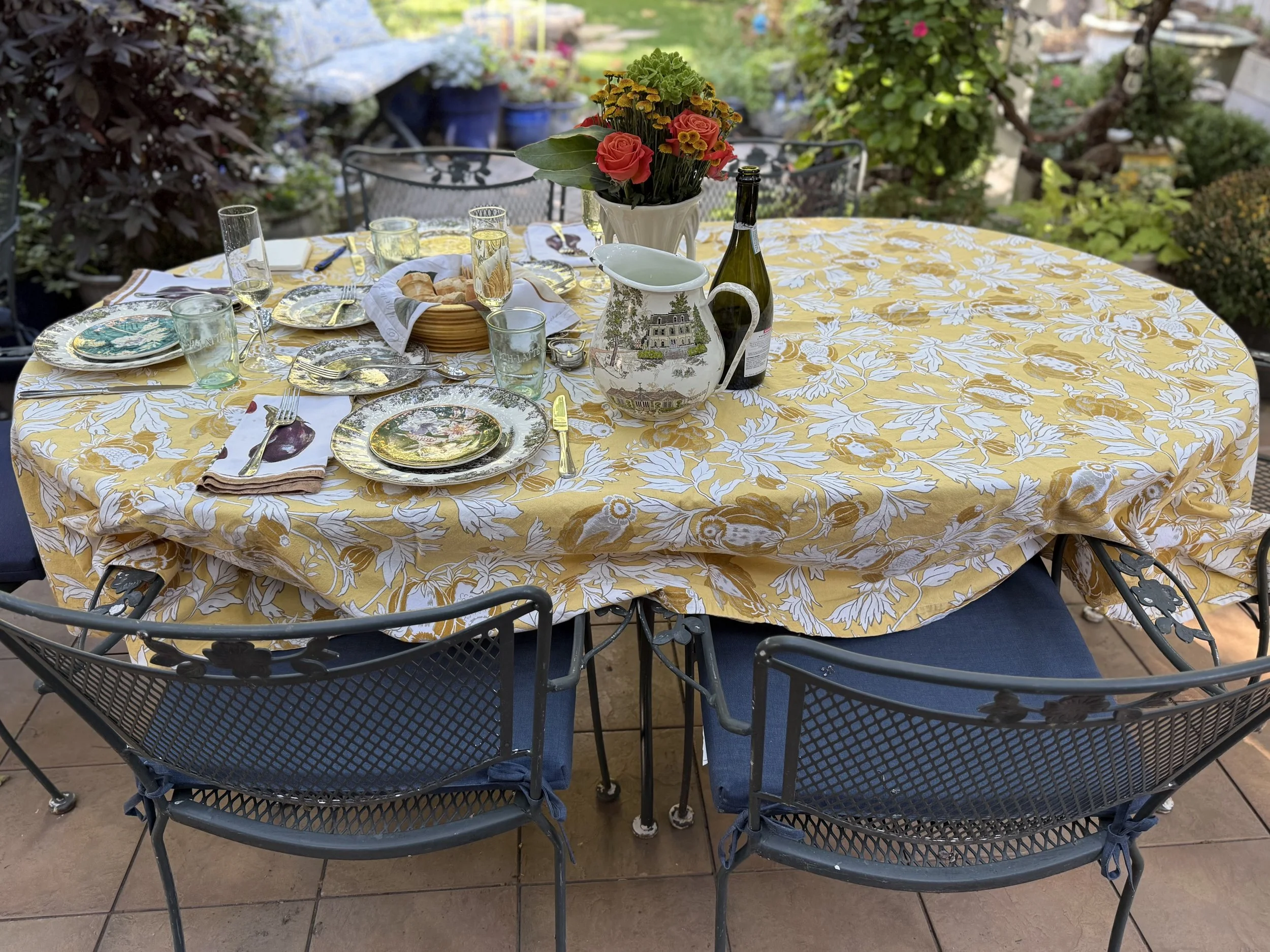
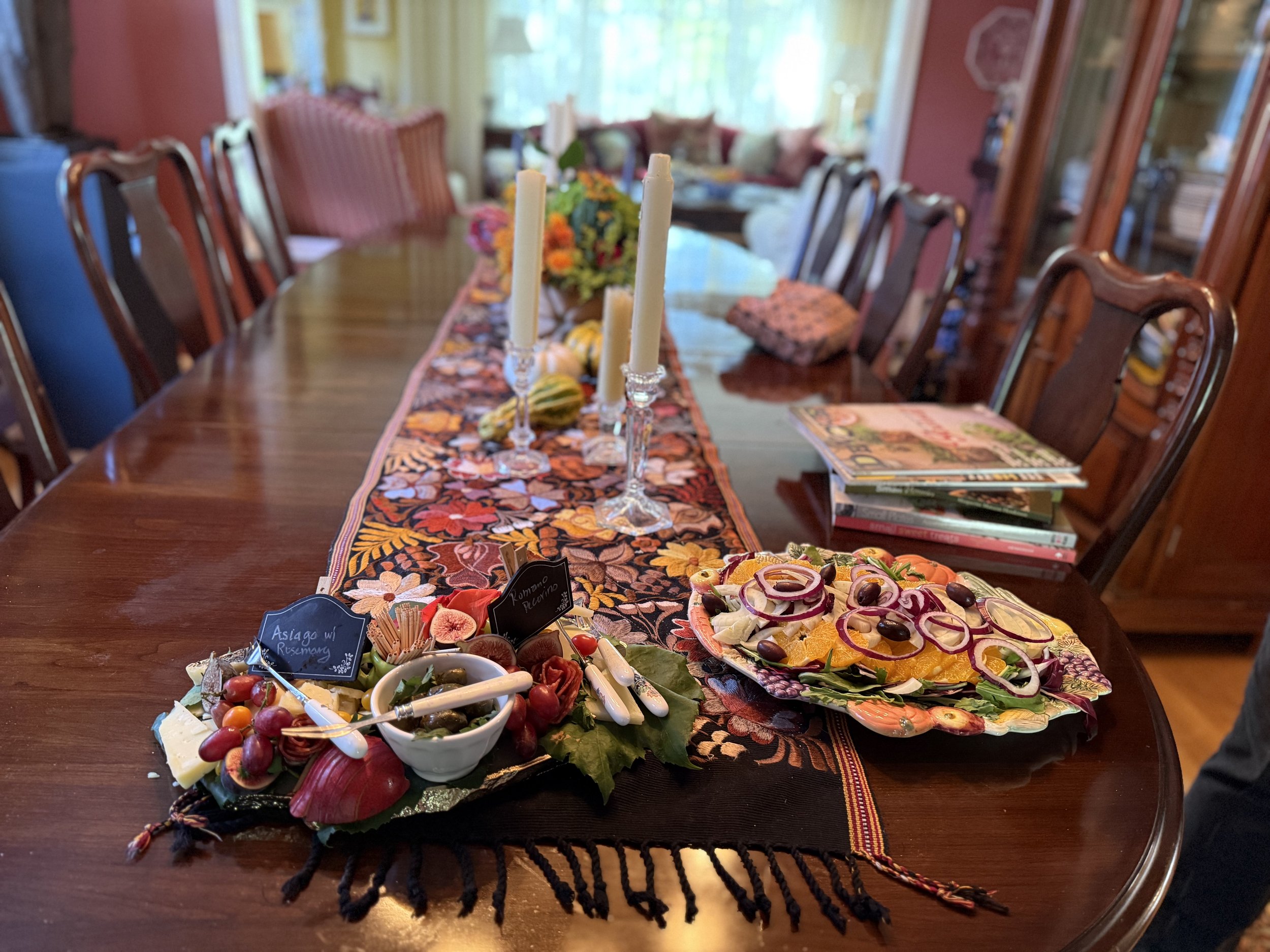
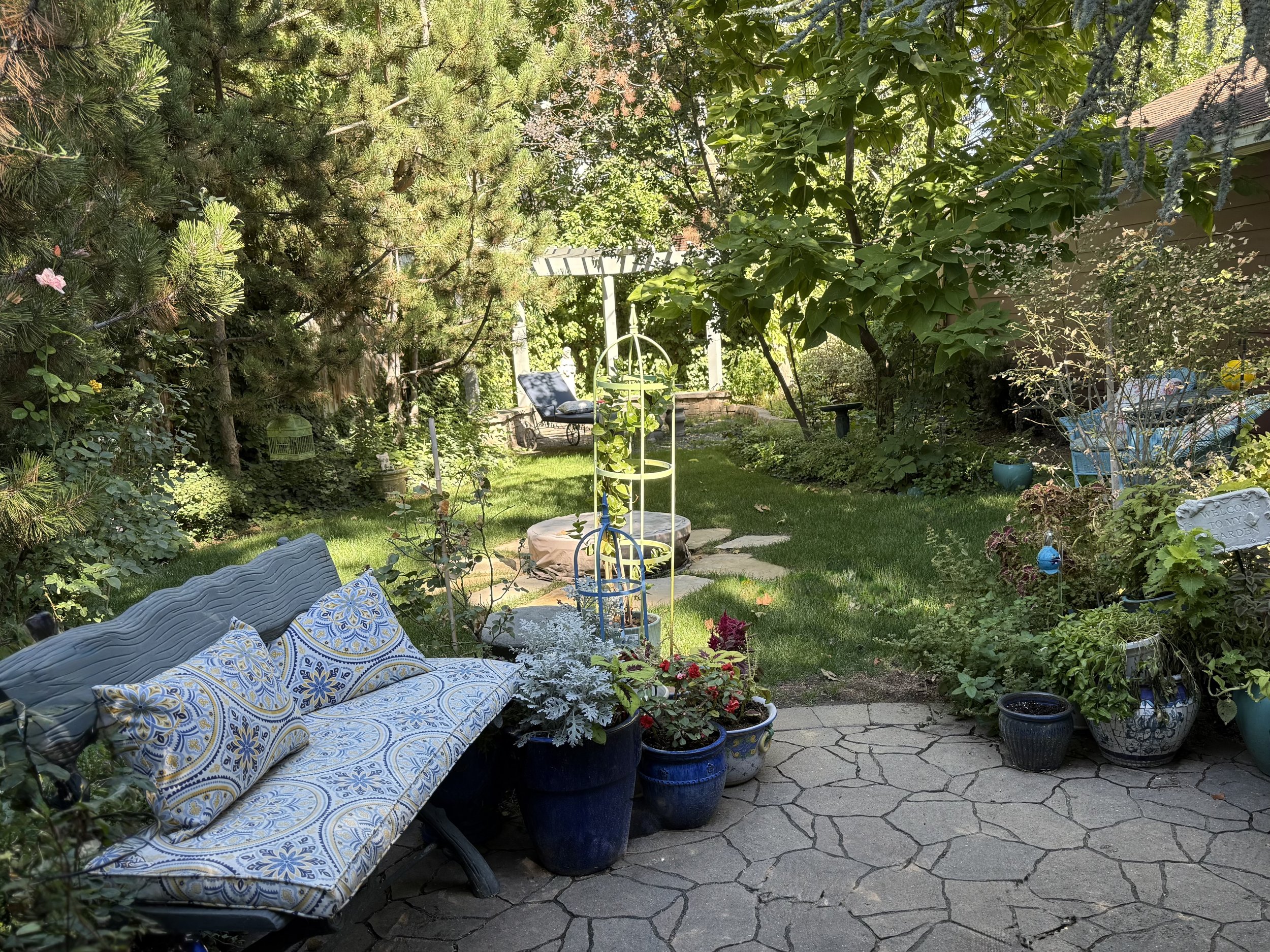
“Every Sunday, the whole block smelled like tomato sauce. You could walk down the street and know what everyone was cooking.” Marguerite Henderson, who has inspired so many Utahns in the culinary arts, grew up in Bensonhurst, Brooklyn, in a world that felt like its own little country. Her street was lined with families who all knew one another, and inside her house lived three generations - grandparents, aunts, uncles, her mother and brother - seven people “on a good day.”
Marguerite’s grandparents had come from Sicily in 1920, bringing with them the stories that stitched together family lore - olive groves and grocery stores back home, a grandmother who declared after the First World War, “We’re out of here,” and bought the tickets herself, and a brother already settled just outside of New York City waiting to help them get started. There were always whispers about how no one seemed to work but money never ran out - those colorful, half-true tales that make a family unforgettable. It was a lively, flavorful upbringing, steeped in love and tradition.
Marguerite was a true city kid with a key to the world. There were piano, dance, and art lessons. Saturdays were spent by the stage door waiting for actors to emerge, subway rides to the Met or a Broadway matinee. And the day Dustin Hoffman strolled by during a bomb scare evacuation near St. John’s and she simply said, “hi.” She attended public school through eighth grade, a Catholic girls’ high school, then St. John’s University to study elementary education. Yet the truest lessons always came from home.
Marguerite’s mother, Rose, was the heart of it all. She was elegant, social, and deeply talented. She worked in the garment district, sketching prom gowns on scraps of paper and sewing them into perfection at night. She was an extraordinary cook who taught herself through the recipes of Craig Claiborne of The New York Times and, in the early days, Julia Child. “She was so particular about how things were cut and chopped. Everything had to be uniform.” Every Sunday, Rose set the table with china and crystal, and she had a gift for making her daughter feel capable in the kitchen. By fourteen, Marguerite was cooking family dinners. By seventeen, her friends were lining up for a seat at the table.
In that house of many women, there was balance. Marguerite’s grandmother did not cook but crocheted the most beautiful sweaters for everyone in the family. Out back grew grapevines for homemade wine, tidy rows of tomatoes and garlic, and a single fig tree that stood watch in the center. “It was a good life,” Marguerite said softly. “We just didn’t realize at the time how lucky we were.”
Love and chance have always followed Marguerite. At a grand Italian wedding in Manhattan in 1970 - “complete with a satin money bag and all” - she met Robert, a West Point graduate just beginning his life in the military. Her date had canceled, leaving an empty seat that changed everything. Soon there were Fifth Dimension concert tickets with Robert, dinners in the city, and a wedding one week after she graduated from St. John’s. Germany followed - first as a young officer’s wife, later as a teacher during their four-year posting after law school. She taught literacy to GIs, some behind grade level but all eager to learn, and in between, she and Robert traveled across Europe on a shoestring. Their two children - Justin, born in 1976, and Sarah, in 1978 - joined the adventure.
When it came time for law school, Robert chose the University of Utah over Harvard, wanting to stay close to his family’s Idaho ranch. By 1980, they had settled in Salt Lake City with two small children and Marguerite’s firm belief that she needed to keep her mind, her hands, and her heart working together. “I could never not work,” she said.
Marguerite’s path unfolded naturally, one opportunity leading to the next. While living near Fort Lewis in Washington State, she spotted a small newspaper ad seeking someone to teach night classes in French and Italian cooking at a community college. She took the chance and discovered that teaching food was as fulfilling as cooking it. In Salt Lake City, another ad led her to Gabby Gourmet, Fred Wix’s beloved shop in Holladay, where from 1980 to 1983 her classes were packed every night. Students became clients, and soon she launched her own catering business, Culinary Delights, serving film commission organizations, banks, and community events. She delivered lunches to Robert Redford during Sundance at the Egyptian Theatre, catered fundraisers - including one for Senator Orrin Hatch - and became known for generous, beautifully prepared meals that brought people together.
By 1994, Marguerite and her business partner, Eileen, opened a small restaurant-market in Park City that quickly became a local favorite. The following year, they moved to the Avenues and opened Cucina, a place that still lives in the city’s memory. Its glass cases overflowed with roasted vegetables, chicken salads, pastas, fruit, and composed greens. She baked her famous scones each morning and insisted that day-old bread become bread pudding- never sandwiches. Lunchtime was a whirlwind of hospital and university orders, neighbors stopping in for dinner to go, and lines that stretched out the door on rainy Fridays. “I’d send someone down the line with brownies cut into quarters so no one waited hungry,” she recalled.
The soul of Cucina was the people who made it hum. Marguerite’s daughter managed the front, her son delivered orders, and the kitchen was filled with cooks who were treated and paid with respect. Most memorable of all was Joaquin, the dishwasher who arrived each day in a pressed white shirt and bow tie and stayed for decades. He raised his family on that job, watched over the dining room with quiet pride, and became part of the Henderson story. “God was looking out for us,” Marguerite said.
Television soon came calling. First it was small cooking segments filmed at Cucina, followed by a long run on KSL’s News at Noon, where Marguerite became affectionately known as “the Wednesday Lady.” Her first cookbook, Savor the Memories (2001), was self-published and illustrated by a high school friend. Later came her partnership with Utah publisher Gibbs Smith, followed by more books and countless home cooking classes that sold out season.
When she and Eileen sold Cucina in 2001, it was not goodbye - it was simply the next chapter. Marguerite continued writing, consulting, and developing recipes for organizations from the California Cheese Commission to local restaurants. She kept appearing on television, kept opening her home kitchen to students, and kept feeding her community in every sense of the word.
Throughout the conversation, Marguerite returned again and again to Brooklyn, to her mother, and to the lessons passed down through food. The family recipes were not just meals - they were love stories told through flour, tomatoes, and time. Her nephew still cooks her grandmother’s bolognese and keeps Rose’s handwritten carrot cake recipe framed on the kitchen wall. And Marguerite, now a grandmother herself, still feels that connection each time she slices a carrot just right.
Due in fall of 2026, Heirloom Italian Cookbook - a celebration of 125 recipes and the stories behind them - will be published by Gibbs Smith. Sicily may be having its moment in world travel, but Marguerite’s moment has been building for decades. It is the scent of Sunday sauce drifting through Bensonhurst, the fig tree in her backyard, the Easter parade on Fifth Avenue, the laughter around Cucina’s tables, and the steady rhythm of a woman who has always followed her heart into the kitchen. “I introduced my mother in the Cucina kitchen once and said, ‘This is the lady who made me who I am today.’”
Stuart Melling
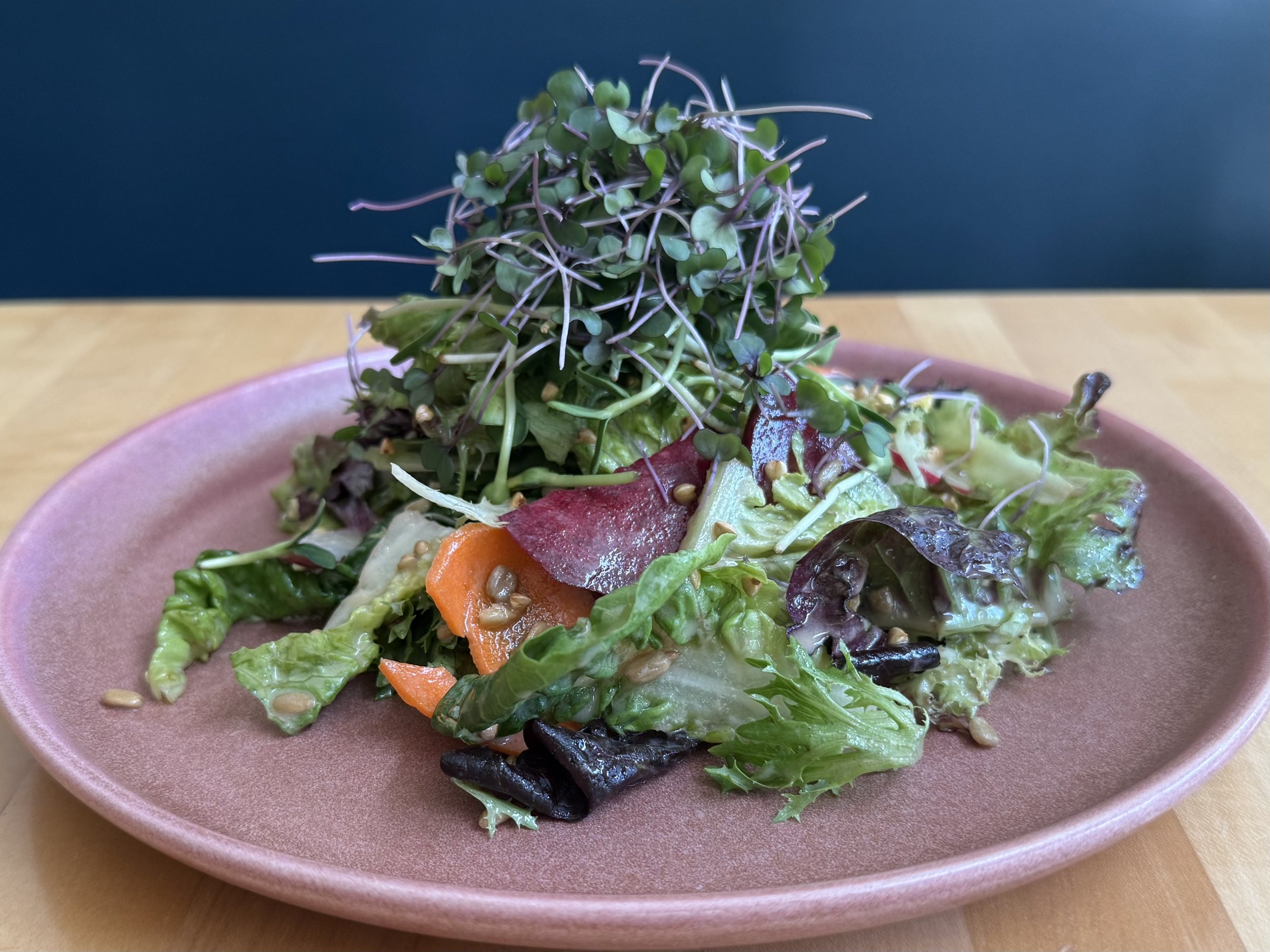
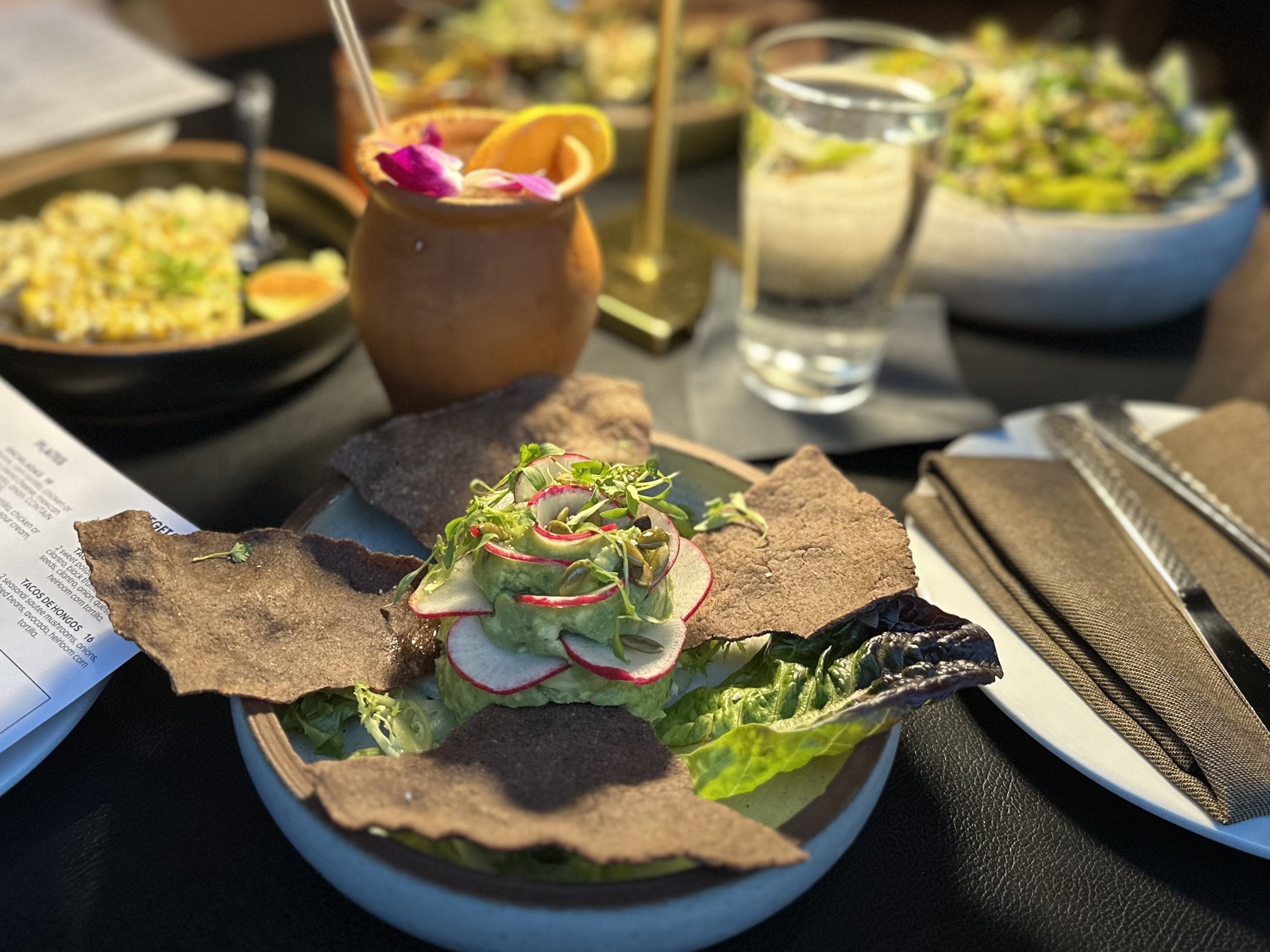
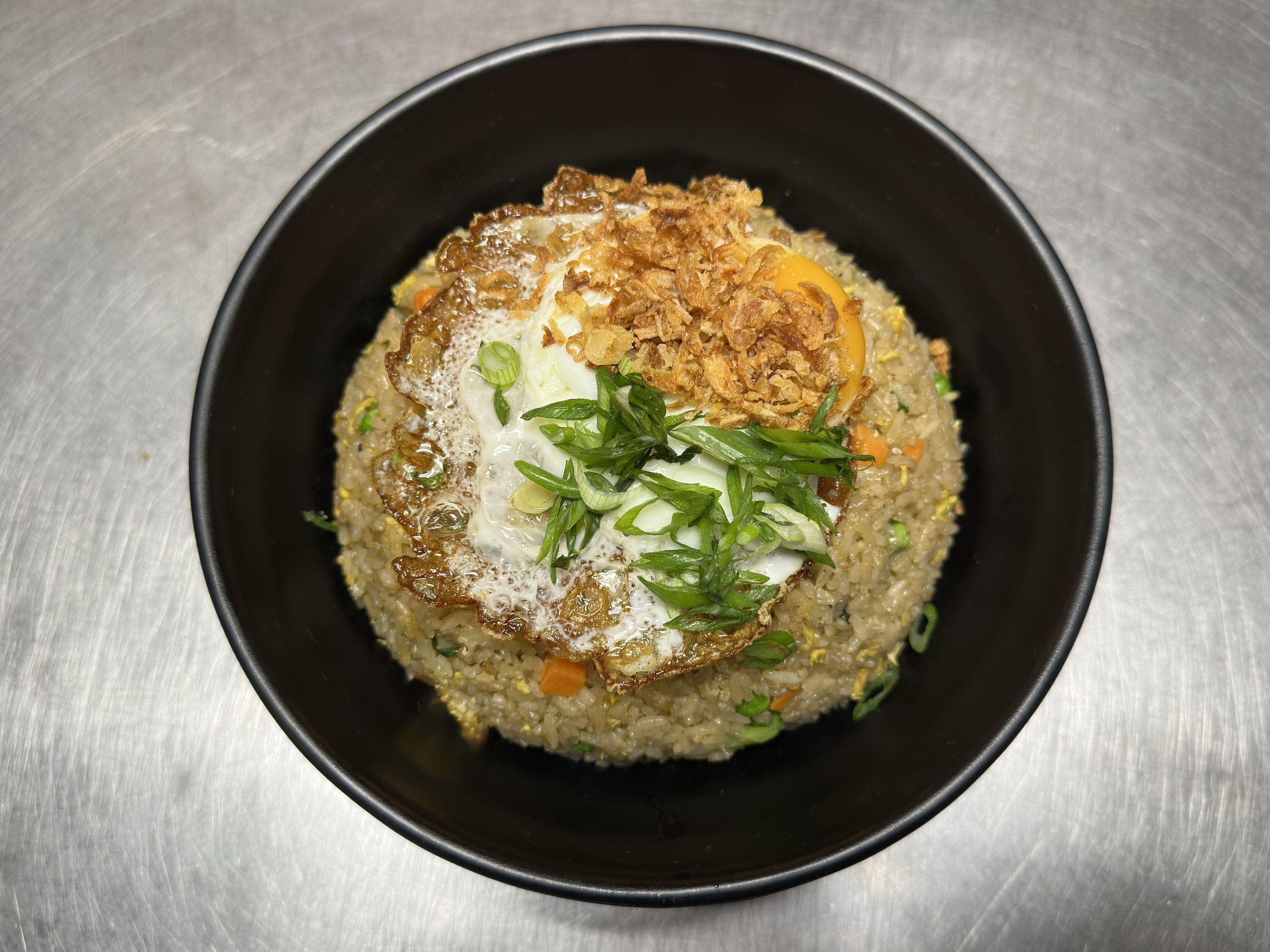
“I can talk about food all day, but that does not mean people should listen.” Many of us in Salt Lake City would politely disagree with Stuart Melling. His newsletter, Gastronomic, is read by thousands and quietly revered. Readers look forward to what he has to share. He has his pulse on the city’s food scene, and his clear-eyed view is what keeps people coming back each week to learn what is opening, what is closing, and what deserves attention right now.
Stuart did not arrive in Salt Lake City intending to become its most trusted online voice on dining. He came because of a conversation that began on an internet forum long before dating apps or social media - when curiosity, patience, and long phone calls still mattered.
Stuart grew up in Wigan, a former industrial mining town in England where eating out was a rarity. Life was simple. Both parents worked. London felt far away. Food was not yet an obsession. At university in Manchester, Stuart studied computer science, convinced from childhood that he wanted to be a programmer. He soon realized that he did not enjoy it the way he expected, but the internet itself stayed central to his life. It was there, in 1997, in a music forum, that he met Wendi, a Utahn with a shared love of bands and conversation. Messages became emails. Emails became expensive phone calls, made possible by international calling cards and a willingness to stay up late on both sides of the Atlantic.
By the middle of 2000, Stuart was visiting Utah regularly. In 2005, he married Wendy, and Salt Lake City became home. As they settled in, the couple began eating out frequently. They read local reviews, tried the places being praised, and kept noticing the same disconnect. What was being written did not always line up with what they were experiencing. Stuart, well-equipped technically and never short on opinions, decided to build something better. He launched Gastronomic in 2007. The name was complicated. The idea was not. He wanted accuracy, context, and honesty written by someone who actually paid attention. What began as restaurant reviews gradually evolved into something far more useful - a living record of the city’s dining landscape, tracking its shifts, and its momentum. “I just wanted people to know where their money is best spent.”
That clarity of purpose helped establish Stuart’s reputation. From about 2010-2015, it also led to several years of freelancing restaurant reviews for The Salt Lake Tribune. But writing formally as a critic in a small city comes with its limits. Salt Lake is not New York. Critics are recognizable. Stuart jokes that it is hard to miss “the English guy with the long hair, the beard, and the nose ring.” Once people know who you are, anonymity disappears, and so does the illusion that one person’s experience can be definitive.
More importantly, Stuart's thinking shifted. Why should one person’s taste decide the fate of a business? Why flatten complex, hardworking places into a verdict or a star rating? “I am not here to tell you what is best. I am here to tell you what is happening.”
That change sharpened his voice. Gastronomic became less about judgment and more about attention - attention to new openings, quiet closures, neighborhood changes, and, a few years later, the fragile economics of running an independent restaurant in a post-Covid world. Dining out has become a luxury. Margins are thinner. Costs keep rising. And when a place closes, the story is often far more complicated than a headline suggests. “Restaurants disappear quietly if nobody is paying attention.”
What many readers may not realize is that Gastronomic is not Stuart’s full-time job. In 2000, he co-founded a UK-based technology company with a former university roommate, specializing in WordPress web hosting and infrastructure. More than twenty-five years later, in 2026, the company is still operating - intentionally small, built around real people answering phones, no scripts, no automation. That independence matters. It allows Stuart to remain his own boss, and to run Gastronomic without pressure to chase clicks, favors, or approval.
Trust sits at the center of everything he does. Stuart pays for his meals whenever possible. Sponsored content is clearly flagged. Partnerships are selective. “If you do not have trust,” he says, “you do not have anything.” He also works within real constraints. He does not drive. He never has. In a city built around cars, he moves through Salt Lake on foot, by ride services, and through relationships. That limitation has narrowed his geography but deepened his knowledge. He writes about the places he can truly know.
Ask Stuart about Salt Lake City’s food scene today, and he will tell you it is exciting, fragile, and constantly misunderstood. "Every five years, someone insists the city was better five years ago." Outside publications drop in, crown a single restaurant, and leave. Meanwhile, dozens of small places work long hours, raise families in back kitchens, and eventually decide quietly that they are done. Stuart pays close attention. He documents. He shares. He shows people where to look. “While they are still here, I want to help them.”
Stacy Phillips
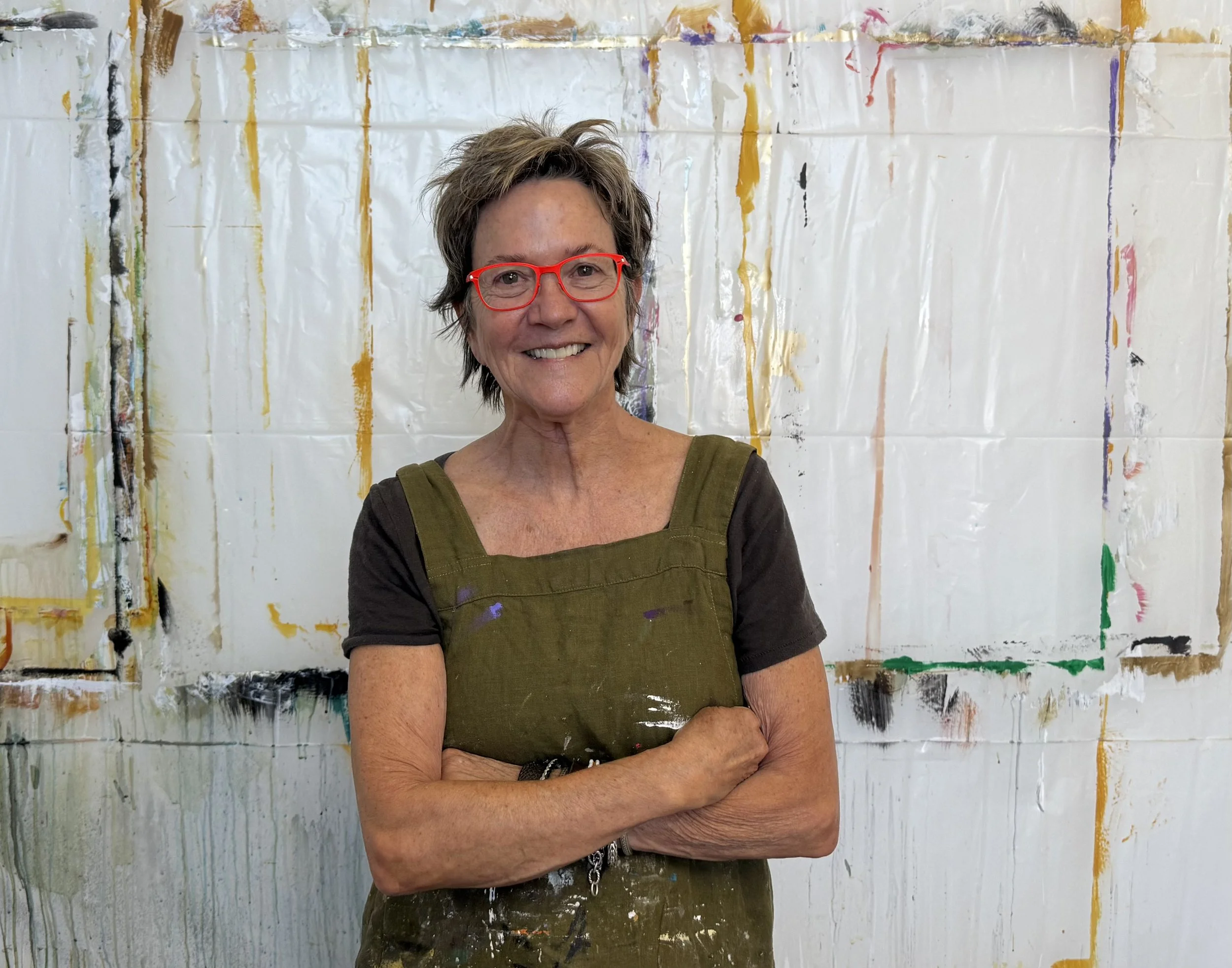
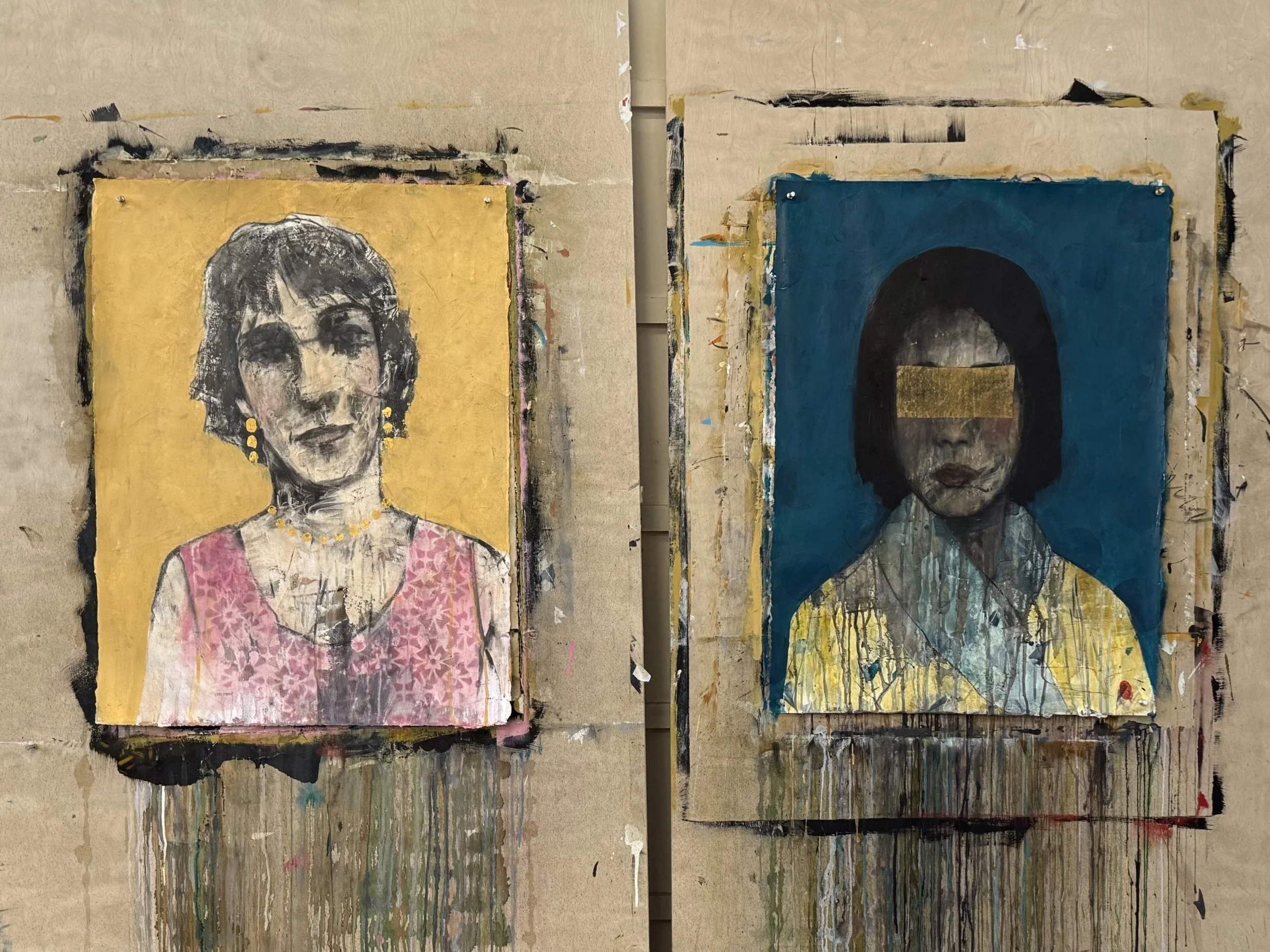
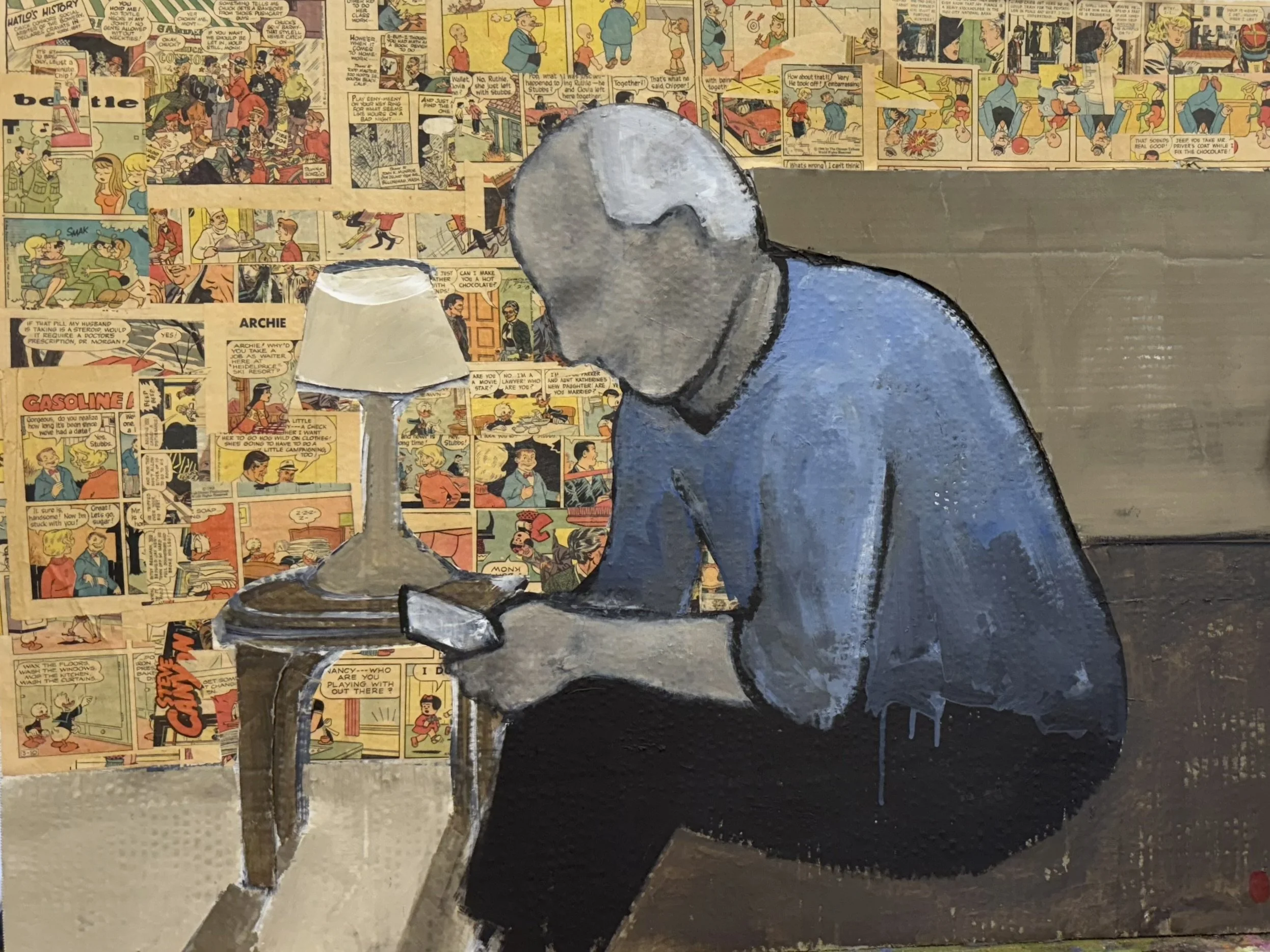
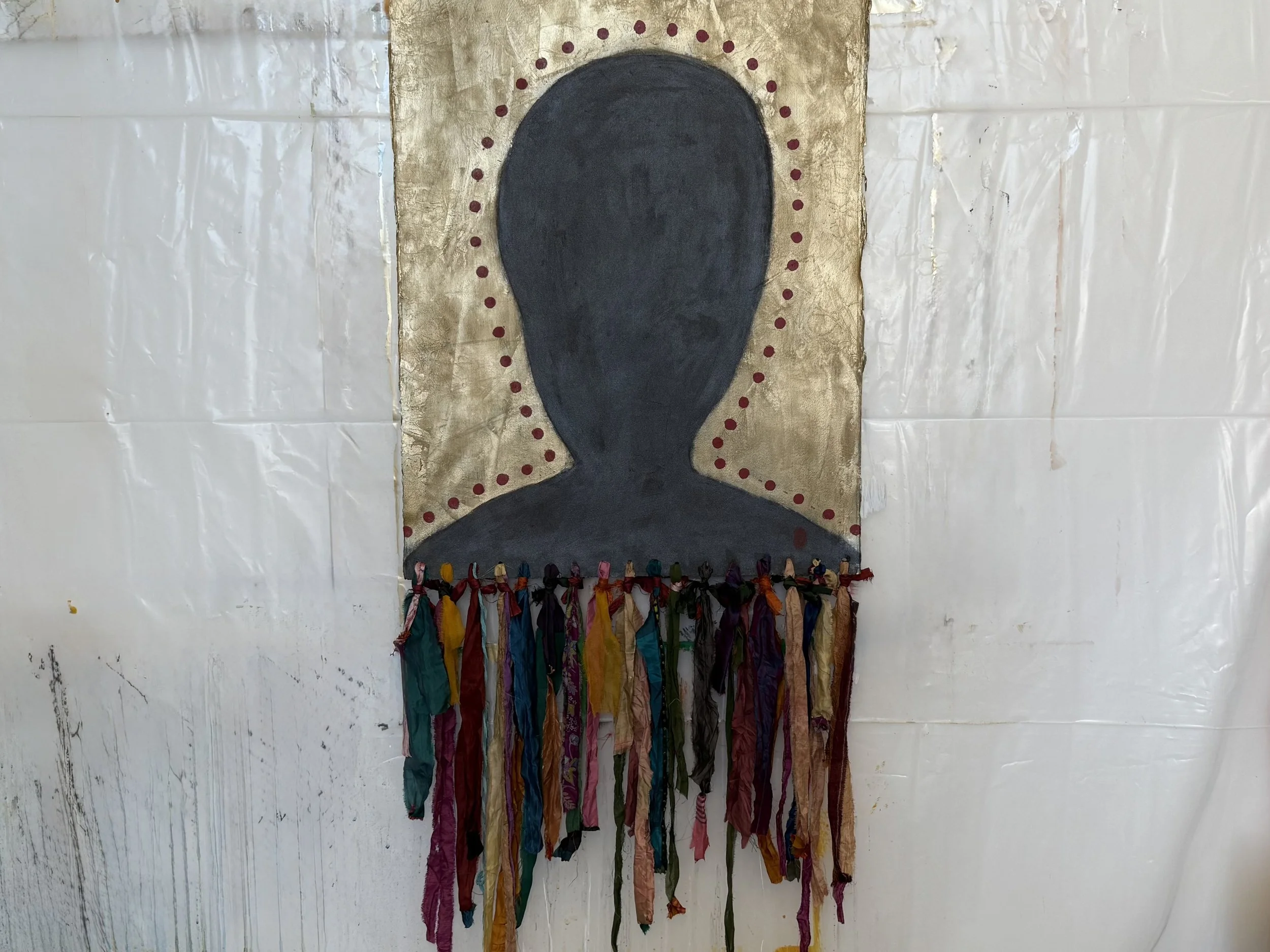
“I have always been a maker. I have always been interested and curious about materials and putting things together.” Stacy Phillips, an exceptionally talented artist and an extraordinary woman, was born in Sacramento, California, but home was never fixed in one place. By the time she finished high school, she had moved dozens of times and attended eight different grade schools.
Stacy’s childhood was marked by constant change, yet certain things remained steady: a love for collecting - pockets filled with sticks, stones, and treasures - and a fascination with creating. She was also inspired by her grandmother, an independent artist and sign maker, who lived a life of resilience and self-sufficiency.
Although school came with challenges, one high school art teacher saw something in her and encouraged her creativity. Even her corporate father, while steering her toward practicality, supported her interest in art, though with the reminder to always have a “backup plan.” Stacy did just that, earning both a business degree and training in graphic design. For a short time, she worked in advertising but quickly realized it was not her path.
In 1985, Stacy came to Utah, first landing in Park City. What was supposed to be a temporary job in a jewelry store quickly turned into something much larger. Within a year, she purchased the business and, at just twenty-six years old, transformed it into the Flat Rabbit Gallery, an original art gallery and framing shop. She ran it for nine years, employing six people and bringing contemporary art into the mountain town. But as the years passed, she felt a tug. “I didn’t want to wait until later in life to give myself permission to make art.”
So, Stacy sold the gallery and began in earnest the pursuit of her own artistic voice. At first, she experimented widely - jewelry, ceramics, graphic design - without being tied to a single medium. She earned a full scholarship to graduate school in Miami, but after a year, she realized the academic track was not for her. What she wanted most was to be in her studio, making. A sabbatical in Mexico confirmed it; in three months there, she created more than in a year and a half of school. What she needed was not credentials but confidence.
Her early work centered on sculpture: ceramic, bronze, and wood forms, many adorned with beaded skirts that explored themes of identity. That body of work led to a breakthrough when Park City’s Coda Gallery (today Trove Gallery) bought an entire show from her and began representing her nationally, including in New York and Palm Desert. Stacy went on to have three shows in New York’s Soho art district, where her work was exhibited alongside nationally recognized artists. For more than two decades, she has continued to show with Trove Gallery in Park City and Coda Gallery in Palm Desert.
Travel also shaped her path. On her fiftieth birthday, she gave herself the gift of three months in Italy, working in a University of Georgia studio program. When she returned, studio space in Park City had become scarce, and Salt Lake City offered fresh opportunities. She moved in 2011 and found a home at Poor Yorick Studios, a community of artists that has become both a workspace and a family. “I found my studio before I found an apartment, because it was more important to me.”
Today, Stacy's practice spans painting, printmaking, mixed media, woodworking, and more. She has taught widely, including as a working artist for Golden Paints from 2017 until the program ended. There, she gave lectures and workshops in exchange for what she laughingly calls “payment in paint.” That role deepened her understanding of materials and strengthened her belief that craft is the foundation of creative freedom.
Teaching has become an important part of her journey. For five years Stacy worked with Nicholas Wilton’s Art2Life program as the “materials paratrooper,” supporting more than 3,500 students worldwide during the early days of COVID. Today, she runs her own online membership, “Recess,” where artists from across the globe gather twice a week to make, share, and connect. The community includes participants from France, Scotland, Australia, and across the U.S., who come together not just for technique but for conversation and creative support. She also teaches live workshops in places like Santa Fe, balancing instruction with her own studio time. Teaching, she says, informs her practice as much as making does. “It is a give-give situation, for sure.”
But it is in her studio where Stacy feels most alive. She is endlessly drawn to materials: paper, cardboard, handmade watercolor stock, acrylics, oils, texture, stitching. Each surface pushes back in its own way, sparking new discoveries. For her, the physical qualities of a material are never just technical; they guide the work itself, demanding a conversation. She believes that “if I know my craft and I know my materials, then I am better suited to execute my ideas. Whatever they may be.”
Much of Stacy's recent work has centered on portraiture, though not in the traditional sense. Her pieces created in 2025 do not seek likeness. Instead, they cross boundaries of gender, race, and identity - an eye from one source, lips from another, features layered and rearranged. The result is work that questions how we see one another, and how we might connect more deeply in a world where true listening feels rare.
Stacy explains that the work is not about representation so much as conversation. In her own way, alone in her studio, she seeks to reconnect with humanity through the human form. Portraits become meditations on empathy, reminders that identity is both individual and universal. She hopes viewers will meet her work with an open mind and perhaps open themselves to dialogue and reflection.
Stacy also resists the pressure of “finished work.” Paper, she says, allows her to bypass perfection and stay focused on discovery. Some of her surfaces are luxurious handmade stock; others are cheap sketch paper or even recycled cardboard. She treats them all with equal seriousness because what matters most is the process of curiosity. “I did not want the mentality of having to work and think about finished work, because for me, that gets in the way of discovery.”
In 2026, now in her sixties, Stacy is more at peace in her practice than ever before. She no longer chases security or second-guesses her choices. She teaches when and where she wants, exhibits regularly - including a recent show at Finch Lane Gallery - and spends each day in her studio at Poor Yorick. The balance she has found between making, teaching, and connecting is the life she once dreamed of as a young woman running a gallery but never making her own art. She does not plan to stop exploring. “Maybe I will do landscapes for a while. Maybe portraits. Maybe something else. What I know is that I will follow my curiosity. It is not about a finished product. It is about discovery. That is what I will do for the rest of my life.”
Erika Carlsen
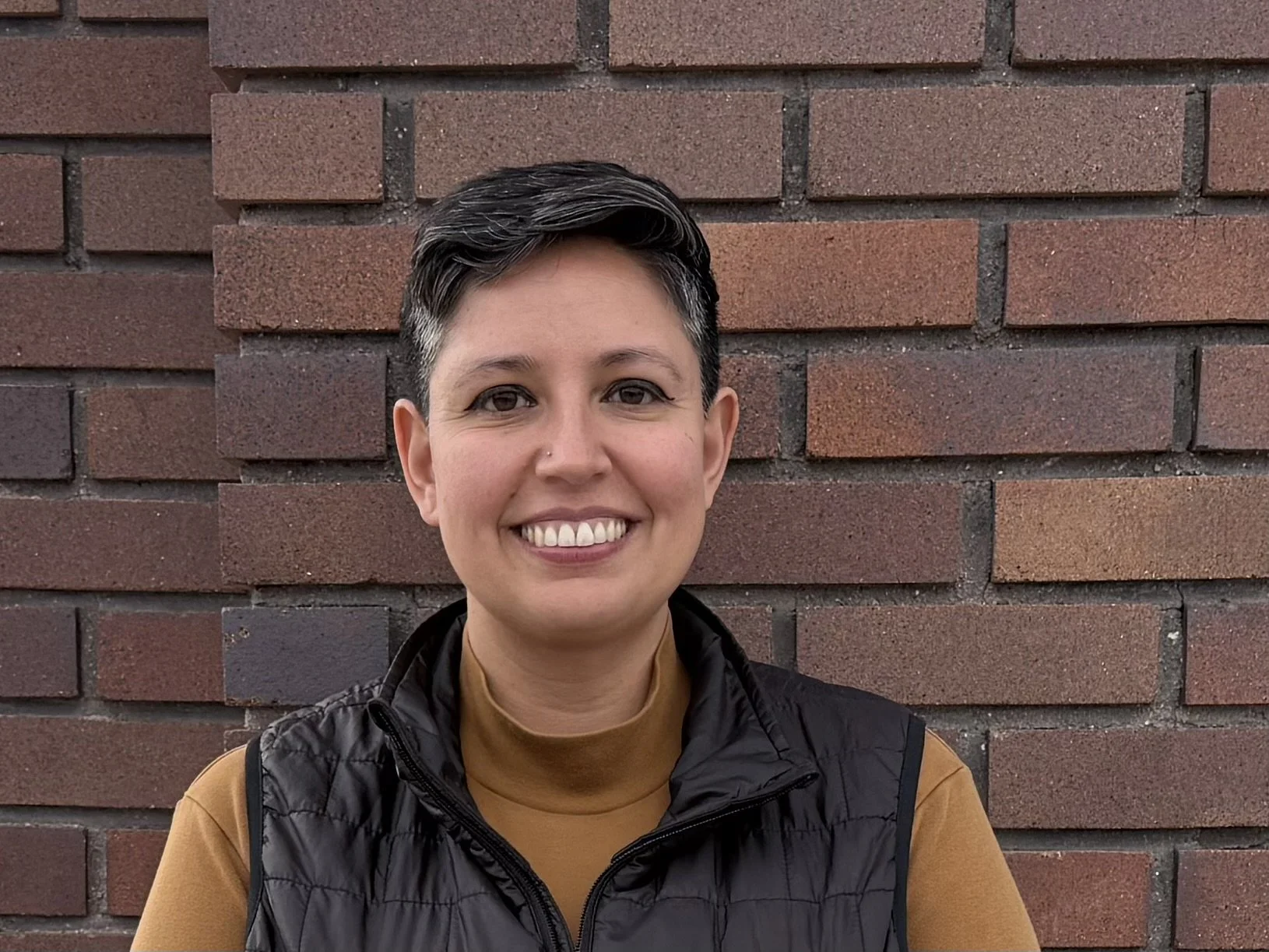
“I’m asking myself what does it mean to be a good ancestor to this city.” When Erika Carlsen says this, it does not sound like a campaign slogan. It sounds like a daily examination of conscience. It is the question she returns to when she walks into a Salt Lake City Council meeting, when she drafts a newsletter to District 5, when she sits with a small business owner worried about rent or zoning or survival. To understand why that question anchors her, you have to go back to Ogden.
Erika was born and raised in Ogden in a large Latino family. Community was a way of life. It was loud, layered, and constant. Her grandparents were originally from Mexico but settled first in Chicago where her mother grew up one of eleven children before the family relocated to Utah in the late 1970s. It was a home where barbecues were frequent and doors stayed open. “At my grandmother’s house, random people would just stop by, and she would invite them in and feed them,” Erika remembers. “I just thought that was the coolest thing.”
As a child, Erika was quiet but constantly observing. She watched how adults treated one another. She noticed who showed up when someone needed help. In the summers, Erika worked in her stepfather’s "tiny title company," filing papers, answering phones, taking messages in carbon-copy notebooks, correcting documents on a typewriter with white-out. At the time, it felt tedious. Now she sees something else. Growing up, she heard her parents talk about the trade-offs of small business ownership - the months when revenue dipped and stress crept in. “Well, I’ll pay my employee this month,” her stepfather would say, “but I’m not going to bring home a paycheck.” Those moments shaped her understanding of responsibility and sacrifice long before she knew she would one day serve in public office.
Another early influence came through books and film. Erika read The Autobiography of Malcolm X and watched Ghosts of Mississippi. “I grew up really loving the civil rights movement,” she says. “Just feeling a connection to movements for justice.” But another reality was unfolding quietly during those same years.
“Being a young, queer kid in Utah twenty years ago was not easy,” Erika says simply. “And being Latina.” One moment still sits with her. She was seventeen, in a park with her girlfriend. They kissed. A family nearby stared. Minutes later, a police officer approached. “We’ve received reports that you two have been indecent with each other,” he said, warning they could be ticketed. Erika was not out to her parents. Her mother worked at the courthouse. Fear took over. “We’re just friends,” she told him. That moment - the fear, the shrinking - helped convince her she could not remain in Utah.
At eighteen, Erika left for the University of San Francisco. There, she came out to her family during spring break of her freshman year. College became a laboratory for activism - immigrant rights, labor rights, organizing alongside dining hall workers. In 2005, as anti-immigrant legislation surged in Arizona, she and fellow students undertook a five-day political fast. A year later, she was selected for a fellowship that took her to Spelman College in Georgia for a summer policy institute. “That fellowship opened up my whole world.”
The fellowship also funded a study abroad program in Spain’s Basque Country. Erika took politics classes in Spanish at a university in Bilbao. It was her first time leaving the United States. One of Erika’s fondest memories came when her mother flew to visit her, and they traveled through Europe together. Her mother, who had never had the opportunity to pursue higher education herself, was suddenly walking through foreign cities beside her daughter. Erika still becomes emotional when she speaks about that trip.
After graduating in 2009, Erika entered the Coro Fellows Program in San Francisco, rotating through nonprofits, government agencies, political campaigns, labor unions, and private businesses. “We had to figure out how to work together,” she says of being paired with people whose politics were vastly different from her own. “A functioning democracy has all of those elements.” Yet something deeper tugged at her. She had studied policy, but she kept returning to the moral and spiritual foundations beneath social movements. The leaders she admired were often grounded in faith. “If I want to make change,” she realized, “maybe I start with the faith part.”
Erika applied to one program - Harvard Divinity School - and was accepted in 2012. In divinity school, she began redefining what ministry meant for her. “If you look up the definition of the word ministry, it means to be an agent or medium through which something is accomplished.” For Erika, ministry did not have to mean a church. It could mean organizational leadership. It could mean civic life. It could mean cultivating compassion in institutions that had forgotten how. Her master’s thesis explored exactly that - how to cultivate compassion in for-profit contexts and why it matters.
Upon graduation, Erika noticed Harvard did not have a Latino recognition ceremony like her undergraduate university had. So, she helped create one. Parents walked across the stage with their children - migrant farm workers, first-generation families, immigrants who had sacrificed everything. “It was just awesome,” she says. And the best part for her is that Harvard continued this tradition.
After graduation, Erika worked at the Harvard Kennedy School focusing on leadership development. Then life asked something more of her. In 2017, her aunt, who had been in the delivery room when Erika was born, went into kidney failure. Erika was a match. At thirty, she donated her kidney. “I would do it again in a heartbeat,” she says. “Hands down, best thing I’ve ever done in my whole life.” Recovery was long, and then, in 2018, her mother died of breast cancer. All those classes on death and dying became personal. “We’re all still the ages we’ve ever been,” she says now, reflecting on grief. The child in Ogden, the teenager in the park, the student in Spain, the daughter walking beside her mother through Europe, they all remain present in the woman she is today.
During the pandemic, Erika returned to Utah from San Francisco re-immersing herself in leadership development and nonprofit work, returning to the fellowship program that had once expanded her world.
In Utah, Erika bought a home in Salt Lake City’s Ballpark neighborhood. She remembered going to the farmers market with her dad, to Bees games, seeing her first Pride flag and realizing there might be space for her here after all. And, when the Bees prepared to leave the neighborhood, she organized. That organizing led neighbors like Missy Greis of Publik to encourage her to run for District 5 City Council. She said no at first. Then she said yes. Now, one month into her term in 2026, Erika represents Ballpark, Liberty Wells, and the 9th and 9th area. She helps to approve the city budget, hosts City Budget 101 workshops, champions small businesses, and is launching a Neighbors in Action campaign to highlight residents who quietly make their blocks better.
Erika understands her work, and her life, as a conduit for something larger than herself. “My faith and spiritual orientation deeply guide how I show up.” When asked what has shaped her most - beyond policy, beyond titles, beyond office - she does not hesitate. "It is my family. It is my community. It is the example of sacrifice that I watched growing up and the love that I received."