The BackLine SLC
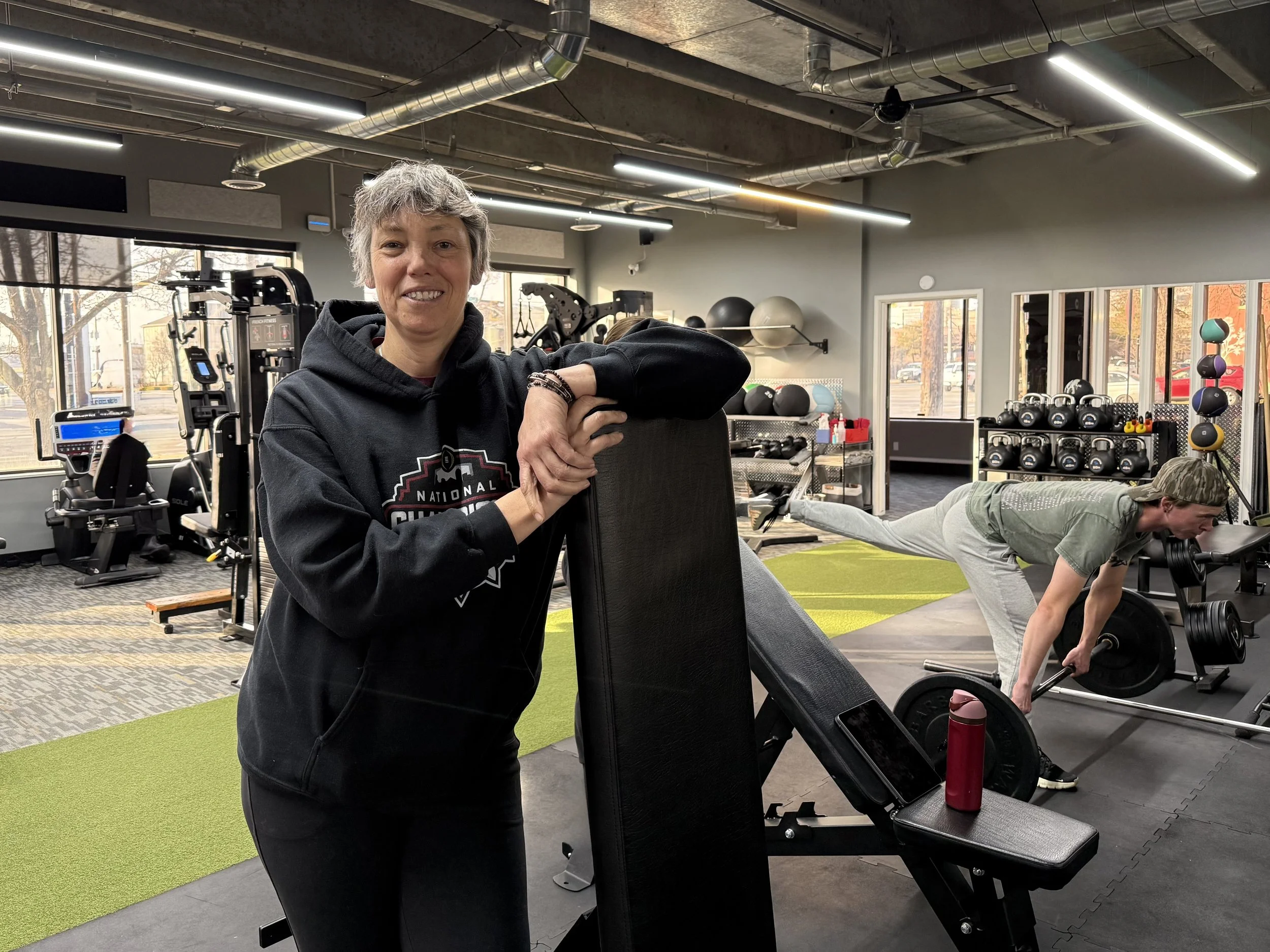
“There is a connection, I don't even know how to explain it, between just moving your body and being healthy.” Lya Wodraska has carried that belief through every chapter of her life. Today, it sits at the center of The BackLine SLC, the gym she built to help people find what their bodies need, whether that means building strength, easing chronic pain, or simply learning how to move with more confidence.
Lya grew up outside Atlanta, in the country, where being outdoors was simply how you lived. Lya had a horse. She ran through the woods. Activity was not something you scheduled, it was woven into her days. “I was never going to be in a job where I sat still.” Lya’s inclinations were influenced by her parents. Her dad quit his sales job in computers to become a sailboat captain. He also started a soccer league in their small town so Lya could play. “We didn't have one, much less one that let girls play. Boys and girls played together.” Lya’s mom was into the aerobics craze and started an aerobics program in town.
Lya headed to the University of Georgia in Athens believing she would become a veterinarian, until reality arrived in the form of algebra. “I got my happy D in algebra and hopped over to journalism.” She joined the student newspaper, The Red and Black, and found her lane as a sportswriter. It was a turn that changed everything, including where she would eventually build her life.
Gymnastics became one of her strongest beats, in part because Lya had already been covering the University of Georgia team during its prime. Utah and Georgia were fierce rivals and covering that rivalry brought her west more than once. When an opportunity opened at The Salt Lake Tribune, she said yes. “They called to see if I would want to interview for the job out here. I was intrigued with the mountains and everything that Utah has to offer.”
Lya arrived in Salt Lake City in August of 1996, just twenty-five years old. The 1996 Olympics marked the end of her chapter in Athens. “The closing ceremonies was my last day at the paper in Athens. I always remember that.” She did not know many people yet in Salt Lake, but gymnastics had already given her a bridge. Writers and beat reporters crossed paths constantly, and she also had a friend connected to Utah gymnastics who helped her find her footing.
Lya's reporting life in Utah was full and varied. She covered high schools at first, then moved through beats that read like a tour of the state’s sports identity. “I have covered everything from the Jazz to Utah football, Utah gymnastics, Utah basketball.” She even covered Utah State football for a stretch. She loved the work, and she loved the writing, but the industry began to shift under her feet.
As Twitter gained traction and newspapers fought to survive, the kind of storytelling Lya treasured started giving way to constant short updates and online churn. At the same time, layoffs became part of the landscape. She described a moment in 2013 when employees were handed letters that quietly revealed who was staying and who was not. She was not let go; however, she kept hers as a warning. “I put that letter on my refrigerator and said, not again.”
Around then, something else was taking root. Lya was working out at a gym near the Tribune, and people began asking if she was a trainer. She started to think about what kind of parachute she would want if the day came when journalism forced her hand. She pursued certification through the CHEK Institute, a corrective holistic exercise approach grounded in kinesiology and movement, and she began building a training clientele alongside her reporting job.
What Lya discovered surprised her. In journalism, she loved the human part most, meeting people, learning their stories, and shaping a narrative that mattered. Training gave her that same connection, but with a different kind of impact. By 2015, she had enough clients to make the leap. She left the Tribune and stepped into training full time, eventually working out of a gym called Body Wise on Foothill, where she stayed for years.
Then, once again, outside forces pushed change. The complex was purchased and rent doubled. Space was reduced. Plans shifted. When the gym’s owners tried to move, a renovation went sideways and a wall came down. Lya suddenly found herself bouncing between locations. She realized that what she wanted most was to train the way she believed training should be done, with attention, care, and a clear sense of what each person truly needed. So, she opened her own place.
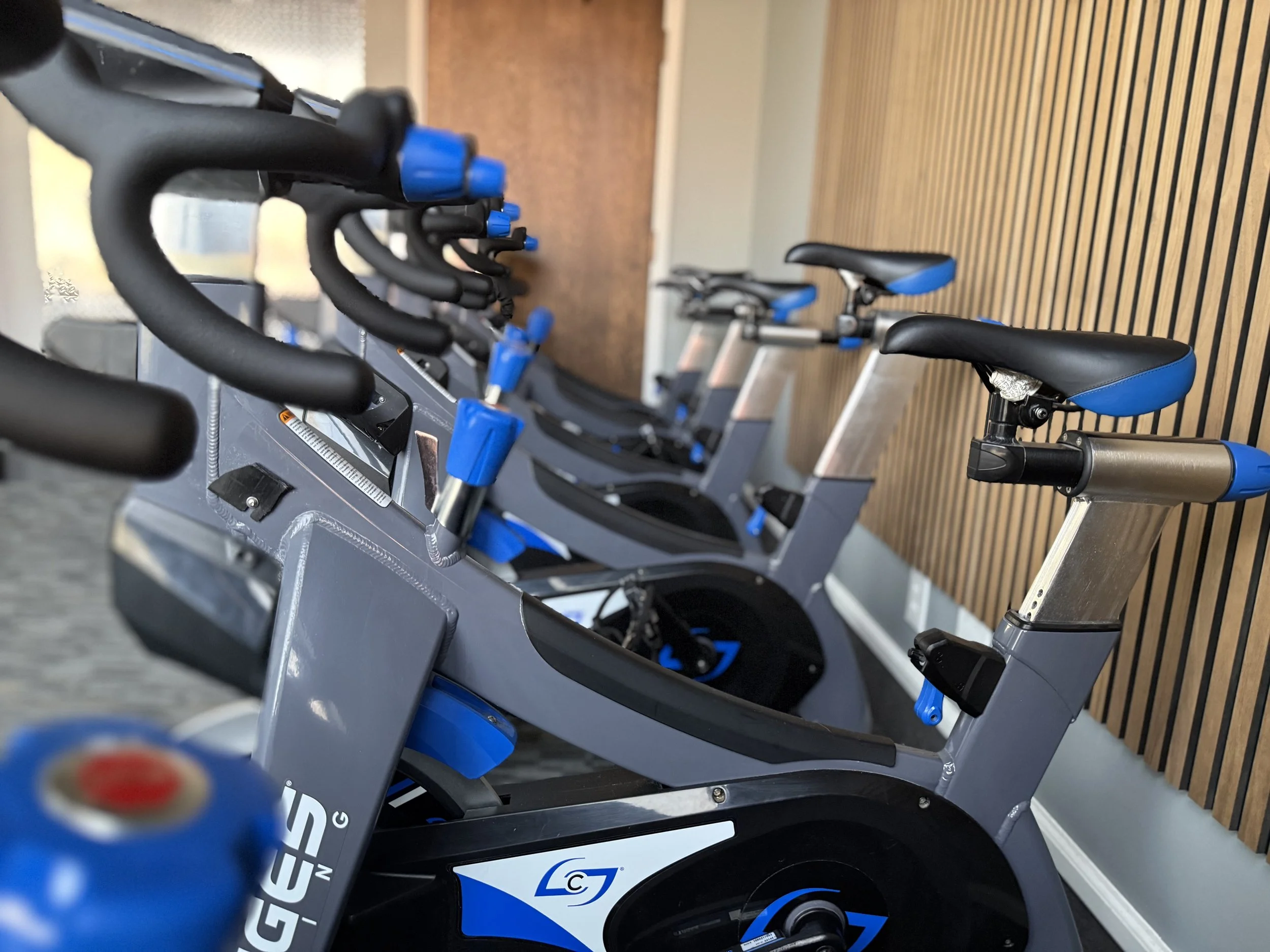
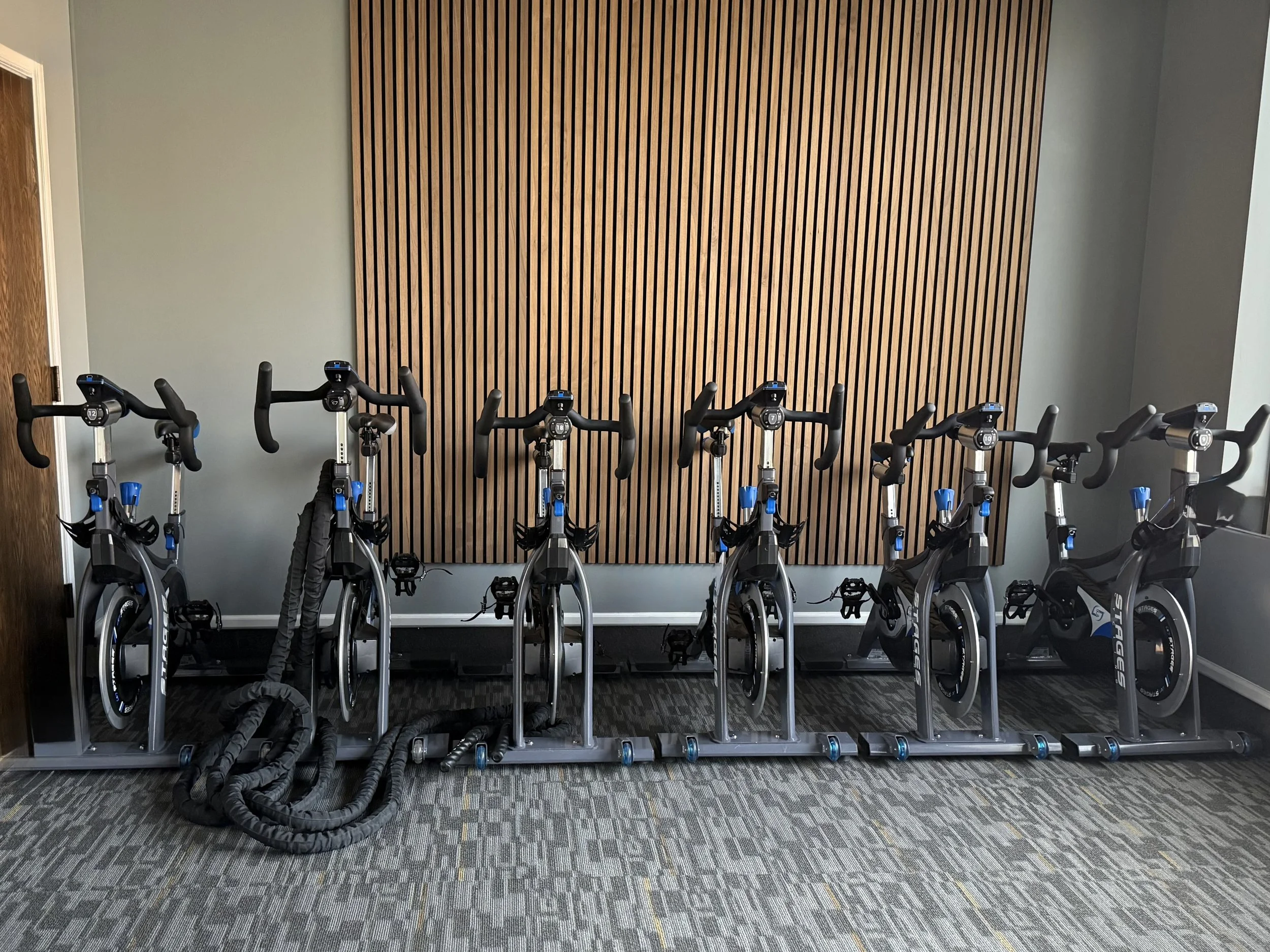
In early 2026, BackLine SLC will celebrate its second anniversary in the Maven area, in a space Lya chose as much for the feeling as for the footprint. She loved the windows. She loved being above ground. “Most gyms are downstairs in basements, and I am very tied to the outdoors.” Her life in Utah is still defined by movement, cross country skiing, mountain biking, hiking, being outside whenever she can, and she did not want to spend her days training in a basement.
From the beginning, BackLine was not designed to be a place where people get lost in the crowd. Lya and her team focus on what happens when you slow down enough to really see the person in front of you. “We do a good job of recognizing where people are and being able to meet their needs.” That might mean helping someone build a baseline before they jump into a more intense program. It might mean guiding someone who is dealing with chronic pain and does not want to keep guessing their way forward. “We fill the gap for a lot of people, between coming out of physical therapy, and then getting back to their sport or dealing with chronic injuries.”
Lya talks often about posture and function, about learning how to move your own body well, because real life rarely comes with a machine that does the work for you. One of the lines that stayed with her from her training education was simple and clear. “A machine is not going to carry you up the hill. So, you have to learn to move your body to get there.”
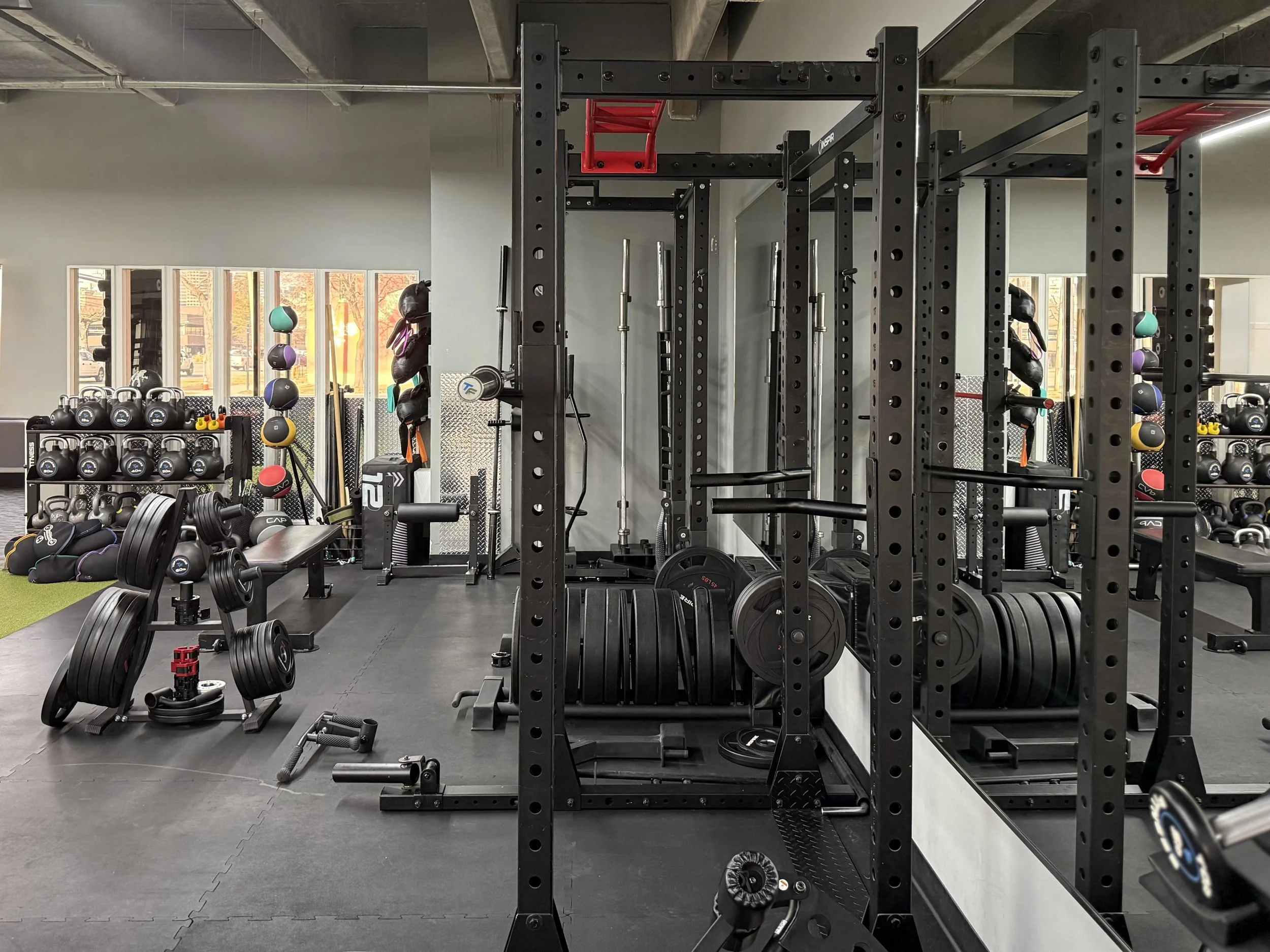
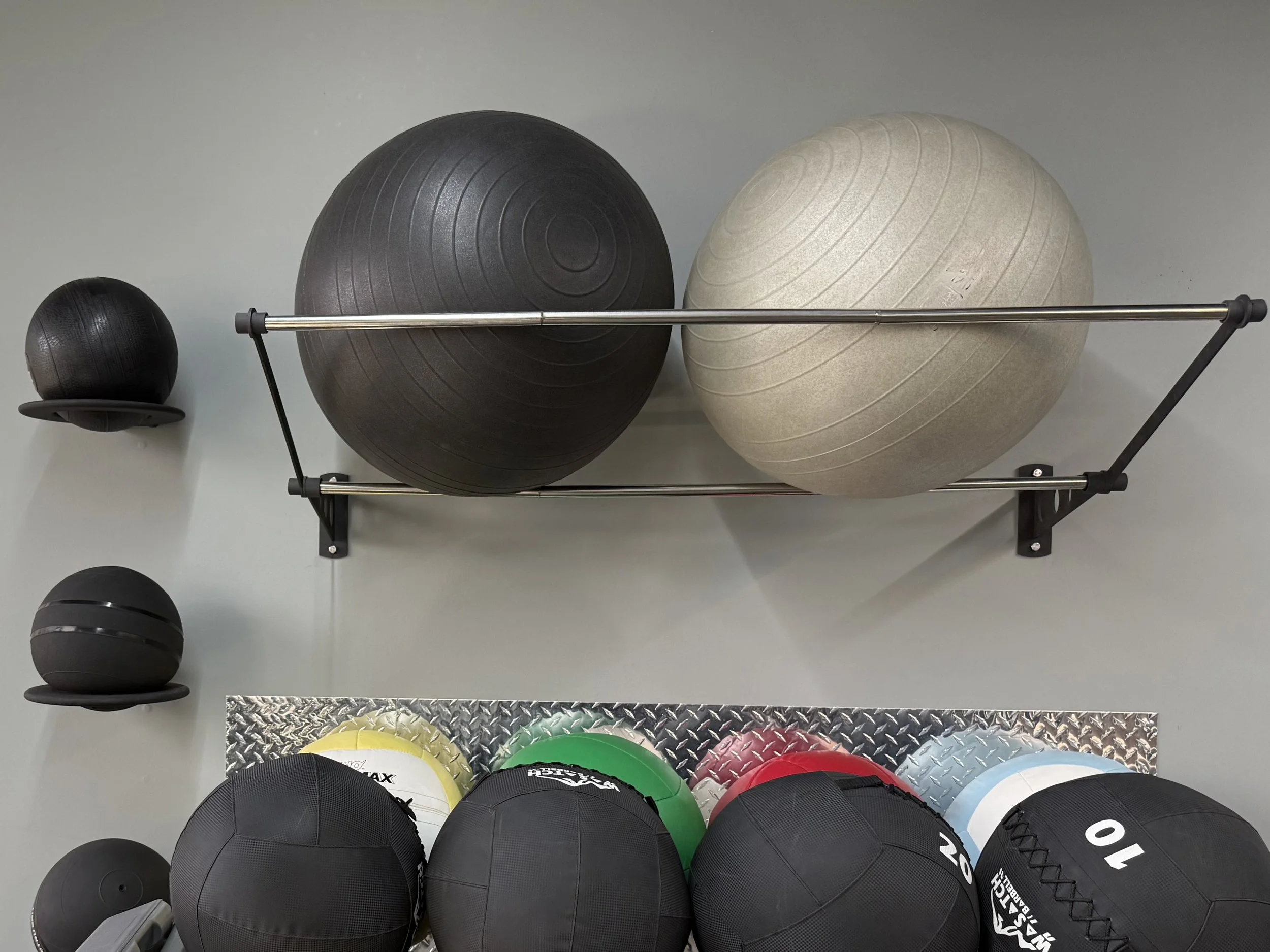
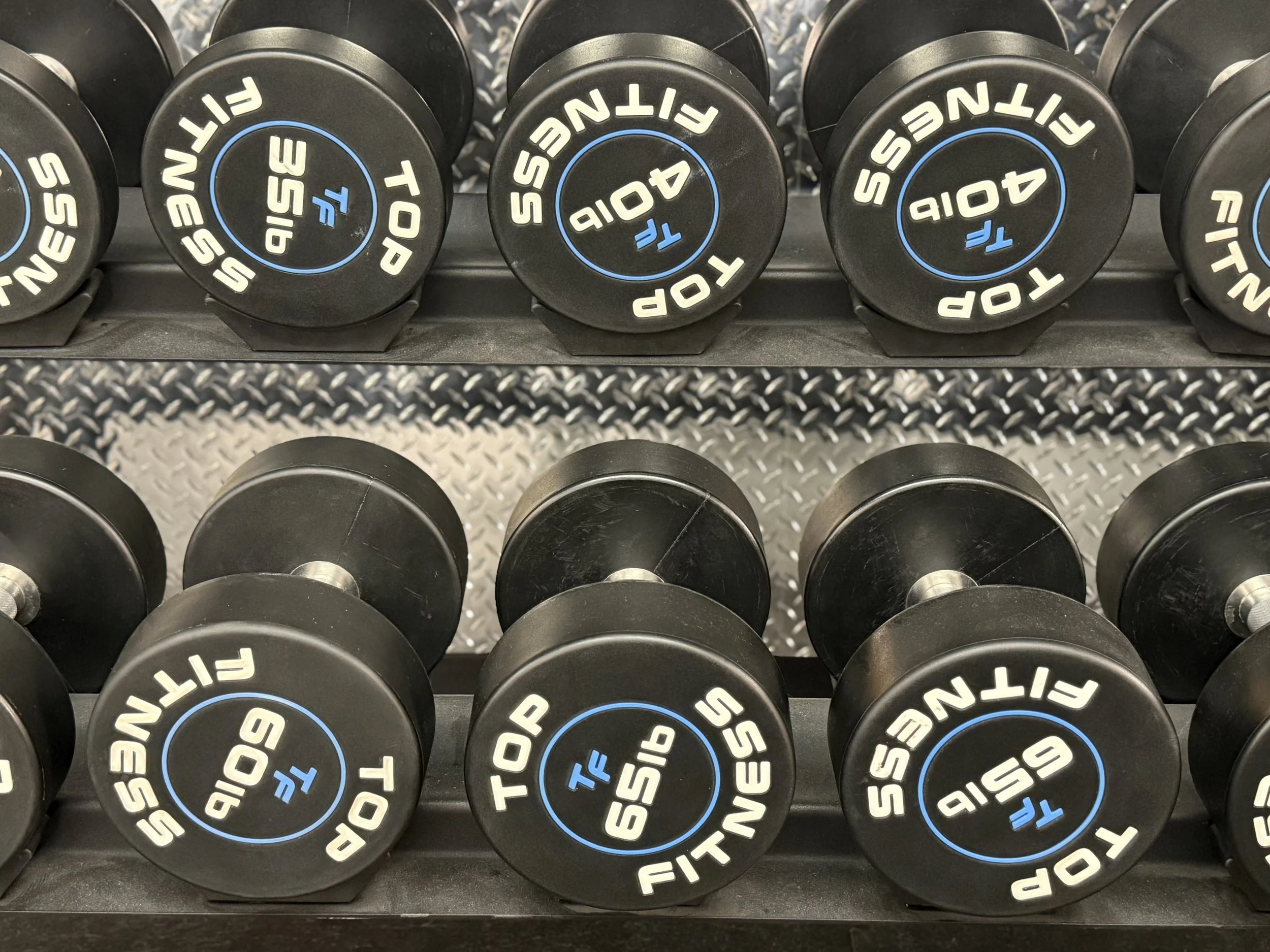
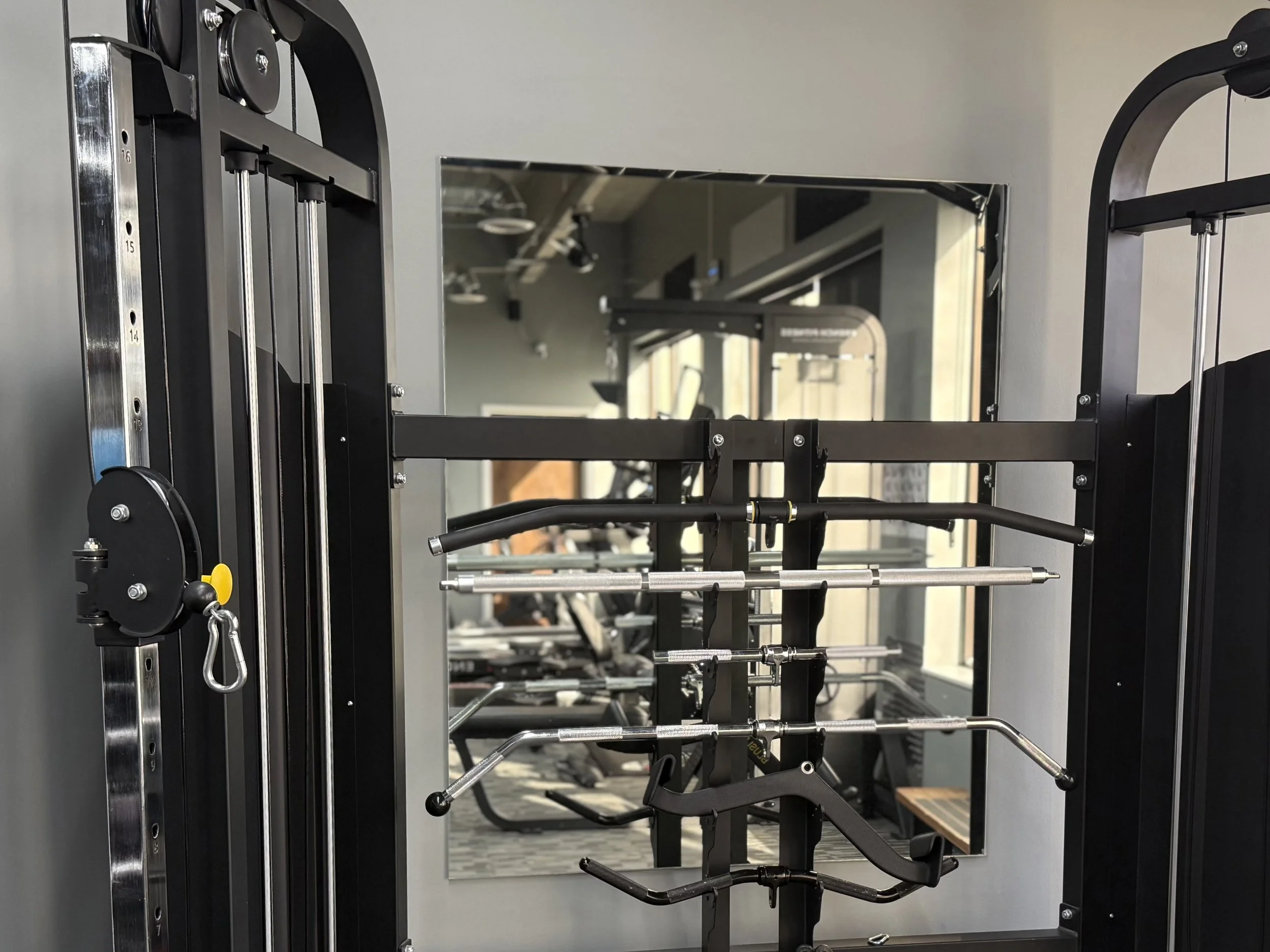
BackLine is built around that idea. The equipment supports it, kettlebells, squat racks, an Olympic lifting setup, a cable system, sleds, medicine balls, and slam balls, plus the more playful tools like maces, clubs, and Bulgarian bags. Although personal training is at the heart of what they do, the gym also offers memberships for people who want access to the space, and classes add another layer of energy. On Saturday mornings, Lya runs a circuit class that can include up to fifteen people moving station to station. Some lifting classes stay intentionally small, four to six people, so the coaching can remain personal. Yoga and mat Pilates are offered, and there is a massage therapist in-house.
And then there is the spirit of the place, which matters just as much to Lya as the programming. “We try to really drive a sense of community in the gym.” She smiles when she explains it because her reference point is not a glossy brand concept. It is Waffle House. “You go into a Waffle House, and everybody says hello to you. We want to know your name. What brought you here. Give you that personal connection.”
Even the name BackLine carries her larger vision. Lya chose it because it holds more than one meaning. In physical work, “back line” points to the support system of the spine. In music, it is the crew behind the band, the people who make the performance possible. Through her training, she has also been fortunate enough to work with people in the music industry, sometimes traveling to support crew members on the road, which quietly ties those two worlds together.
BackLine has also become a home for other trainers, and one of the things Lya is most proud of is that they are not treated as employees. They are independent professionals building their own businesses within the space. It is mentorship in motion, and she is honest about how much she is still learning as she goes. She is thinking about ways to support them more, coffee conversations, lunches, maybe even a trainer getaway, because she remembers how long it took her to build her own business slowly and steadily.
Outside the gym, Lya keeps returning to the things that restore her. She gardens and works with native plants. She planted a pollinator garden outside the gym, and in the summer, the garden has monarch caterpillars. She also makes massage balms using native plants, a small line connected to her training work, called Core Matters, with “lotions and potions for adventures.” It is another expression of the same instinct that runs through everything she does, the desire to help people feel better in real, tangible ways.
And that is what makes Lya’s story quietly powerful. She followed her curiosity, she adapted when the ground shifted beneath her, and she kept choosing the work that felt most human, most useful, most connected. In the end, she circled back to the same truth she opened with, movement as a path to health, strength, and a life that still feels wide open. “I never thought I would see myself as a gym owner. I was forced into it, but it has been great.”
Smiling, Justin shared that he begins each day with a full walk-through before guests arrive, checking that every exhibit is functioning and ready. That is followed by a daily huddle with the "illusion experts," the staff members out on the floor whose role is part host, part guide, and part explainer. What makes the experience feel different from a traditional museum is that the team is not guarding secrets. They are there to help visitors understand how perception works, why the brain gets tricked, and what is really happening behind the image.
That approach changes the mood in every room. Instead of quietly observing, people participate. They compare what they see, test ideas, and ask questions. Children tug adults forward. Teenagers notice angles and patterns adults would otherwise walk past. Grandparents try one more time because the solution feels possible, just out of reach.
Certain exhibits surface again and again as favorites. The Vortex Tunnel is the fan favorite, a spinning passageway that disrupts balance and makes walking straight feel unexpectedly difficult. Almost no one exits the way they expect to, and the laughter is immediate.
The Ames Room, a classic forced-perspective illusion, allows a child to appear taller than a parent simply by standing in a particular corner. It is part optical trick and part pure delight, built perfectly for that camera moment where everyone plays along.
The Salt Lake City museum also features a Reversed Room with a local twist, designed as a playful nod to Utah’s soda culture. Visitors take upside-down photos that appear to defy gravity once flipped. Families choreograph poses. Friends compete for the most creative shot. The room becomes a stage, and no two visits look the same.
Between the large installations are quieter moments that reward patience. Wall-mounted illusions that appear bent until a magnetic straight edge proves otherwise. Images that seem to move, colors that shift, and patterns that change as the eyes focus. These are the exhibits that make visitors stop, stare, doubt themselves, and then suddenly understand.
Both Justin and Pien spoke about the Brain Gym as central to the museum’s personality. It is a space filled with tables of puzzles and dilemma games, some collaborative, others intensely personal. Instructions are available. Help is welcomed. The goal is not to prove intelligence. The goal is to keep trying. It is common to see a child methodically following steps, an adult getting stuck, and the solution emerging together.
The museum is also a popular destination for school groups, with a strong STEM emphasis. Teachers who book field trips can receive curriculum materials designed to connect what students see and touch inside the museum to concepts in science, math, and broader ways of thinking about perception and the brain.
The experience continues into the retail shop at the end of the maze-like space. It is not a traditional gift shop so much as an extension of the museum itself. Shelves are filled with tactile, curiosity-driven items including puzzles, fidgets, brain teasers, and STEM-forward games, many available as samples so visitors can try before they buy. Justin often places a small item in an illusion expert’s hands as a quiet conversation starter, another way to spark interaction between strangers.
For both Pien and Justin, the most striking part of the museum is not any single exhibit. It is the way people look up from their phones and at one another. There is something about connection that happens in this museum. People are helping each other, laughing, and really talking with each other again. To Pien, "This is the hidden mechanism inside every illusion. Not just the trick of light or angle, but the way curiosity pulls people into the same moment, encourages them to share what they see, and keeps them together just a little longer than they planned."