Peter Prier & Sons Violins
“My grandfather found a violin in the bottom of a bomb crater.” For Paul Prier, the story of Peter Prier & Sons Violins begins long before the beloved Salt Lake City shop opened its doors. It begins in Germany in 1942, when his father, Peter Paul Prier, was born into a world marked by war, hunger, loss, and uncertainty. Peter’s father was killed during World War II, and he was raised by his mother and grandfather in a family that had very little.
As a young boy, Peter was always hungry. His sisters remembered him as a growing child in a home where food was scarce. Then one day, his grandfather was walking home and spotted a violin case at the bottom of a bomb crater. He climbed down, opened it, and found a violin inside. He brought it home, repaired it, and began teaching Peter how to play. Peter was about five years old.
Peter’s grandfather, a musician and jack-of-all-trades, played wherever he could - weddings, funerals, birthdays, and local gatherings - often trading music for food. That was how Peter first came to understand the violin: not as something precious to be kept behind glass, but as something that could feed a family, lift a spirit, and create possibility.
By the time Peter was fourteen, his talent had become impossible to ignore. He was awarded a full scholarship to the conservatory in Munich, a life-changing opportunity for a family with almost no means. Room, board, and training would all be covered, and his mother was overjoyed. Two weeks later, Peter came home. “He said, ‘This is not what I want to do. I love to play the violin, but I cannot play for ten hours a day. I want to learn how to make them.’” His mother could hardly believe what she was hearing. The school year had already begun. He had not been accepted anywhere else. But Peter had made up his mind. He wanted to attend the violin making school in Mittenwald, Germany.
When he arrived, the school told him exactly what his mother had feared; the class was full. Then one of the instructors, Leo Aschauer, asked if Peter could play. Peter picked up the violin, played for them, and suddenly the answer changed. “They said, ‘Actually, we need one more player here, so you are in.’”
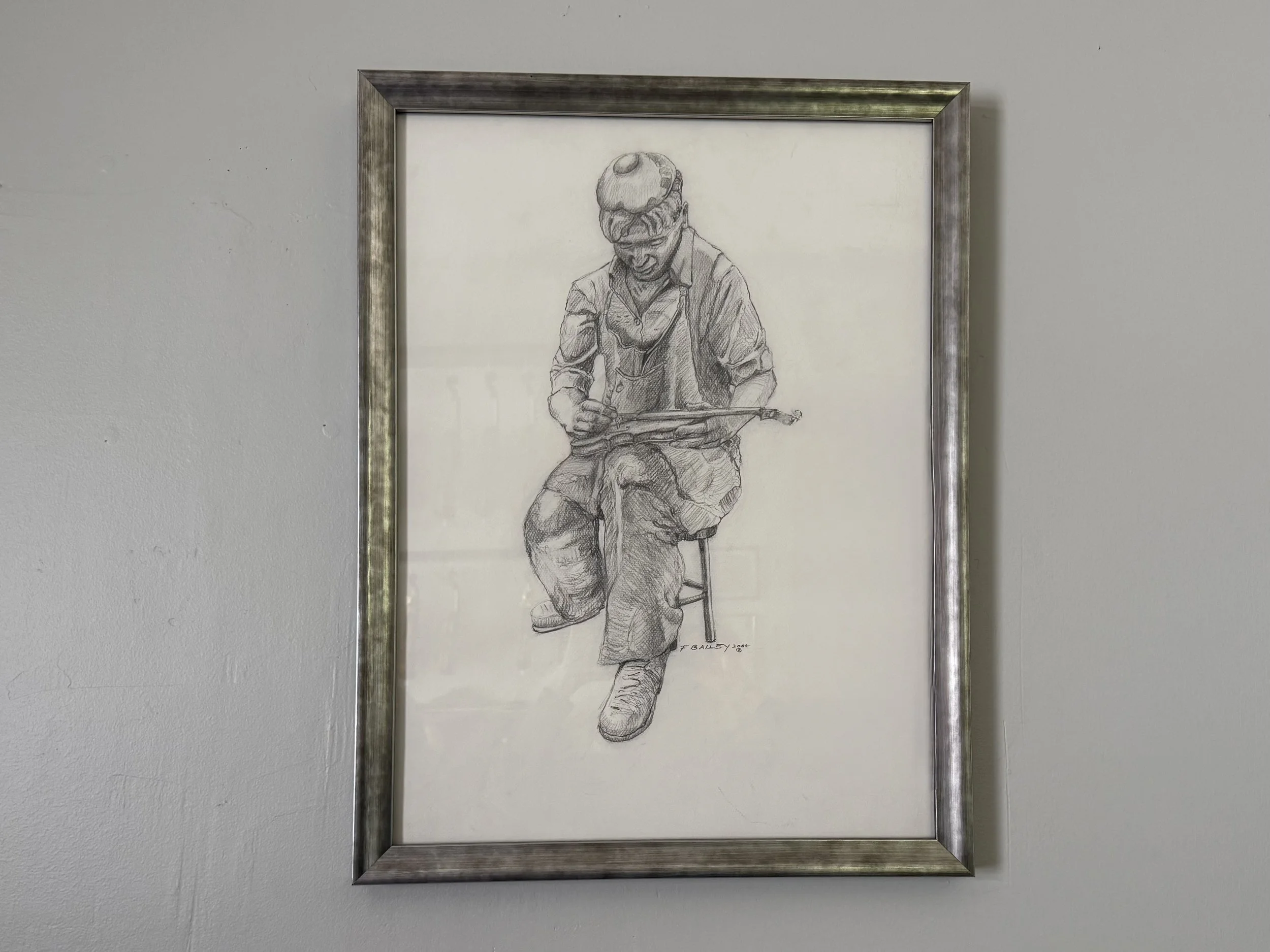
From the age of fourteen to nineteen, Peter studied in Mittenwald, working summers for the school to help cover his education. He cut scrolls, bent ribs, and learned the foundations of a craft that would define the rest of his life. He graduated at the top of his class and was offered a position at one of Germany’s finest violin shops. Then a letter arrived from Pierce Music Company in Salt Lake City, Utah asking whether any graduates might be interested in coming to work in the American West. Everyone laughed. Salt Lake City felt impossibly far away, but not to Peter. He raised his hand.
Years later, when Paul asked his father why he had been so eager to go, Peter gave him the answer that revealed so much about his spirit. At sixteen, he had seen his first Western film, and from that moment on, he wanted to be a cowboy. Laughing, Paul said, “He found a way to go out West, work in what he loved, and be a cowboy.”
At nineteen, with very little money, no English, a violin in one hand and his tools in the other, Peter boarded a ship for America and made his way to Salt Lake City. He fell in love with it immediately. He worked for Pierce Music Company for about five years, and when the business closed, he was asked if he wanted to buy the inventory. He did.
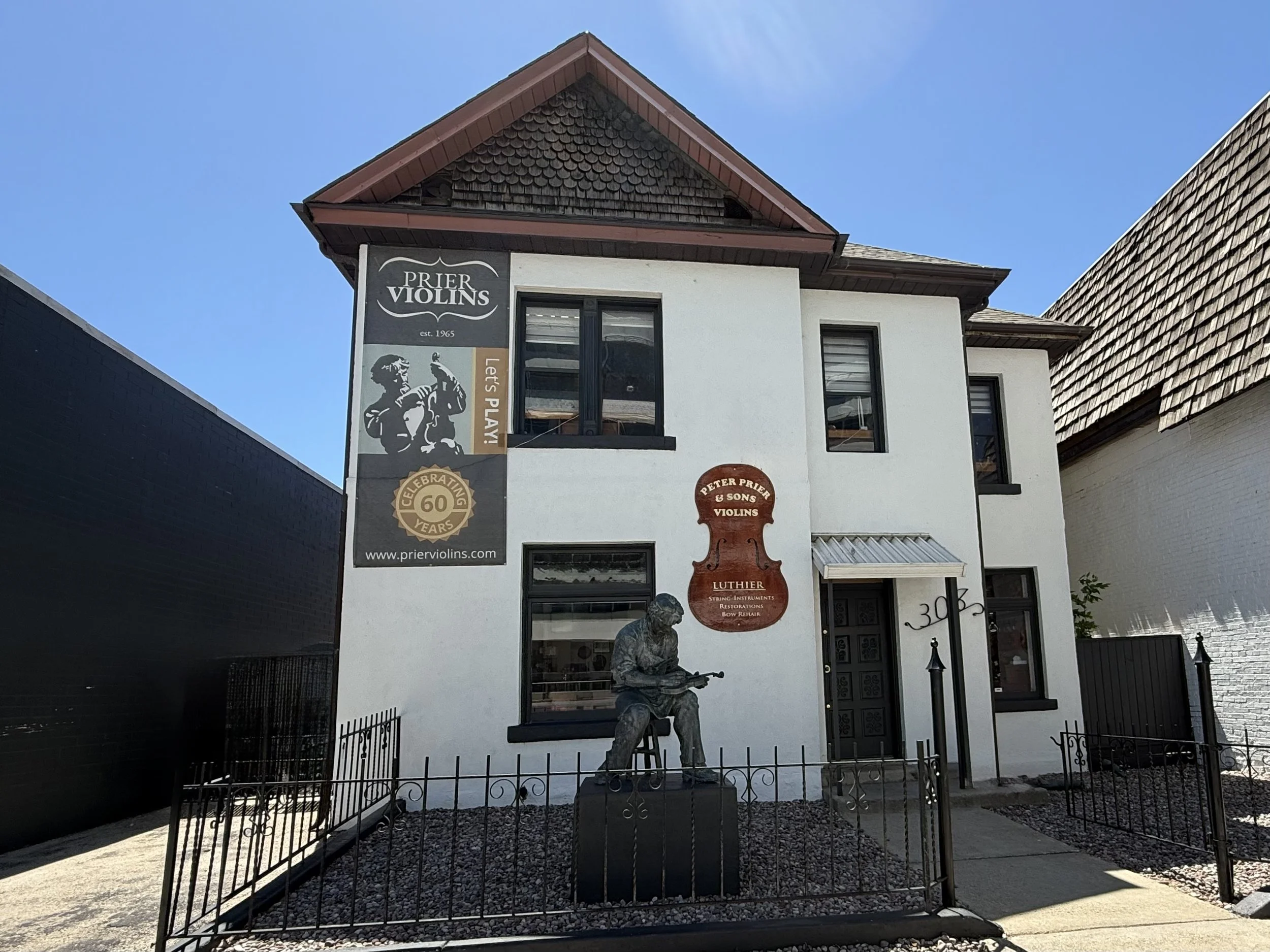
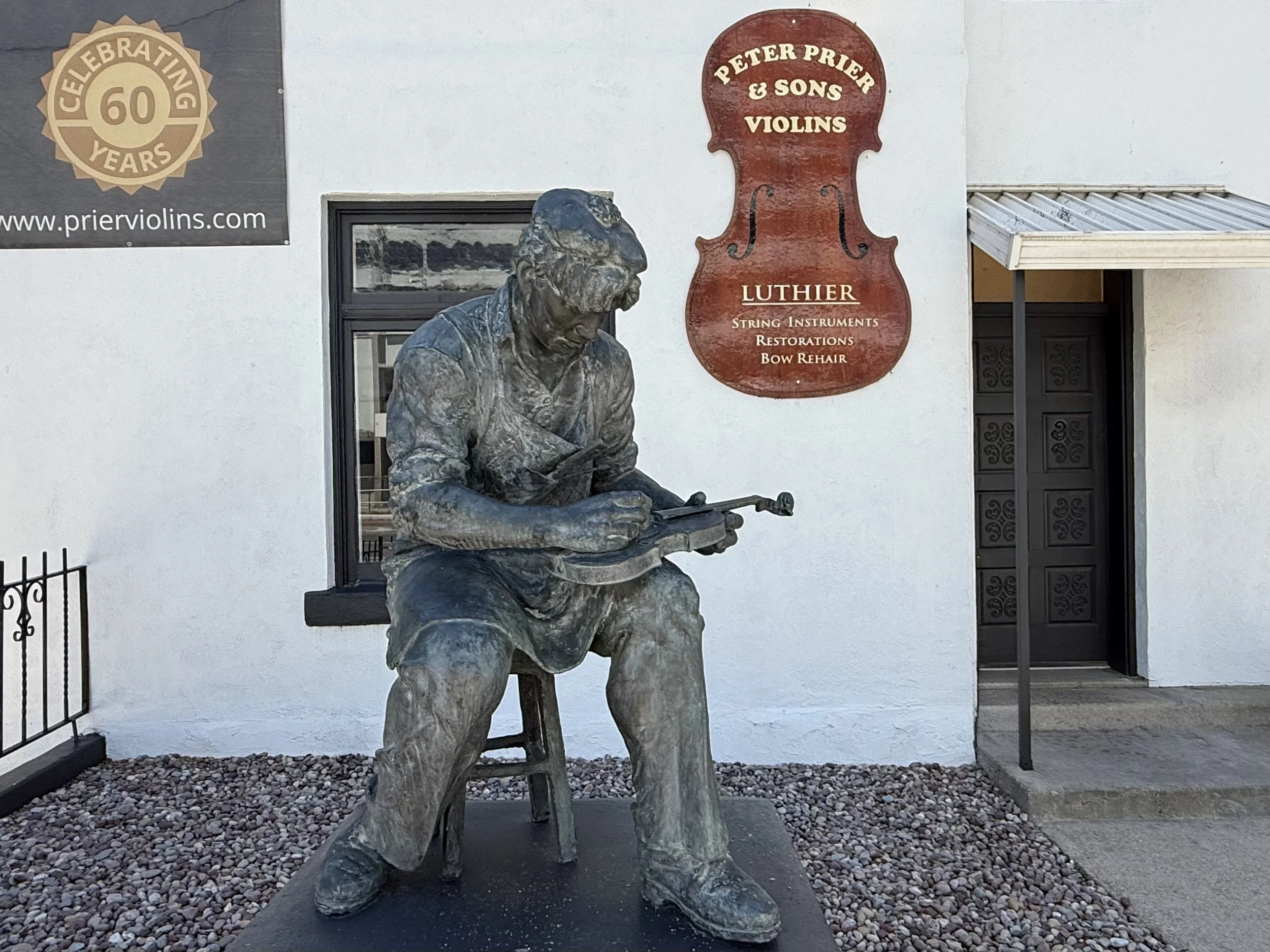
In the mid-1960s, Peter opened his own shop, initially naming it Prier Music Co. After a few iterations, the shop settled on its current name, Peter Prier & Sons Violins. He bought a building on 200 South, only a couple of blocks from where Pierce had been, and began building a life rooted in music, craftsmanship, and community. He joined the National Guard, became part of the Alta ski patrol, played in the Utah Symphony, and embraced his adopted country fully.
By the early 1970s, people had begun coming into the shop asking Peter to teach them how to make violins. At first, he said no. He was busy running the business and raising a family. But the requests continued, and finally he agreed to instruct a few students upstairs in the shop. That first class began in 1972, and within a year, he received more than one hundred applications.
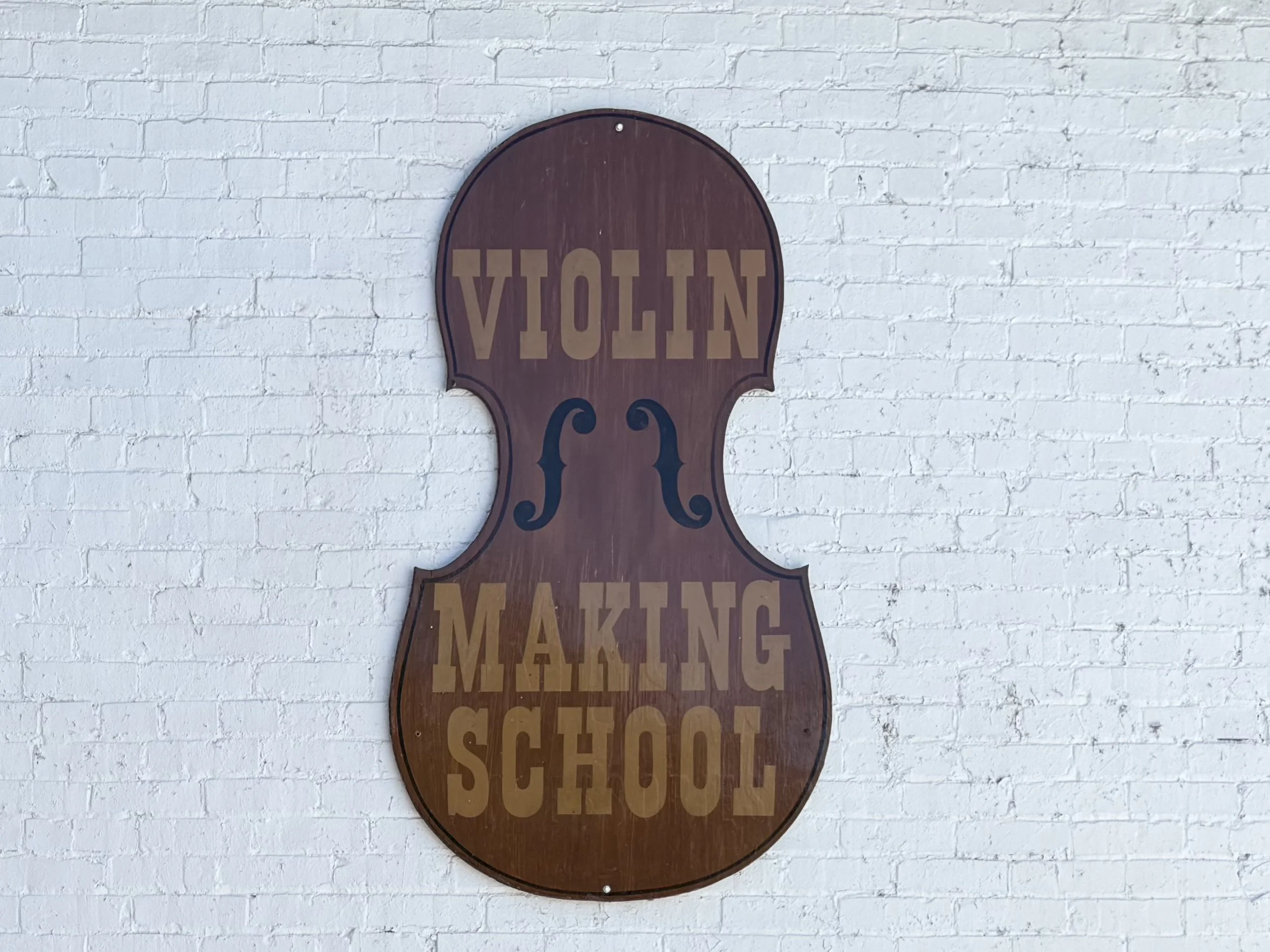
Peter realized he had created something much larger than he expected. He purchased the building next door and founded what became The Violin Making School of America. Walking into the school today still feels like stepping into another century - part workshop, part classroom, part Geppetto’s studio - filled with wood, tools, concentration, and quiet wonder. The school was never simply about business for Peter. “He always felt he was given an exceptional chance to do what he wanted to do, and he wanted to pay that forward.”
At first, some of Peter’s colleagues around the world criticized him for opening a school, accusing him of diluting the craft. But that only strengthened his resolve. In time, graduates of the school began winning gold, silver, and bronze medals at international violin making competitions. Salt Lake City became known around the world as a center for violin making.
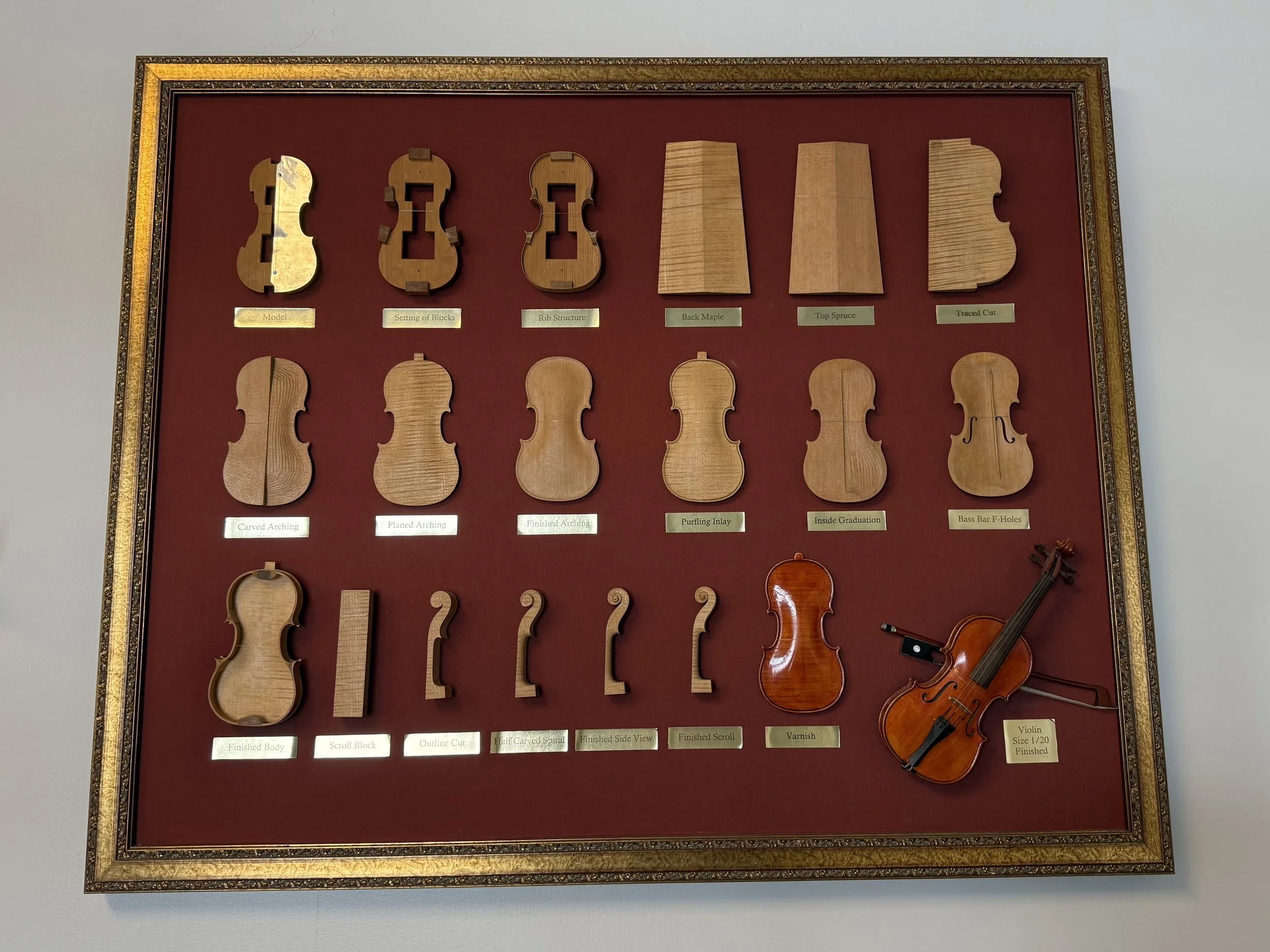
Years later, Peter sold the school to Charles Woolf, a graduate of the program. Today, The Violin Making School of America remains next door to Peter Prier & Sons Violins. The two are separate businesses, but their histories remain deeply connected. Students at the school make violins, violas, and cellos, while Peter Prier & Sons Violins continues to sell fine instruments, perform repairs and restorations, rehair bows, and serve musicians of all levels.
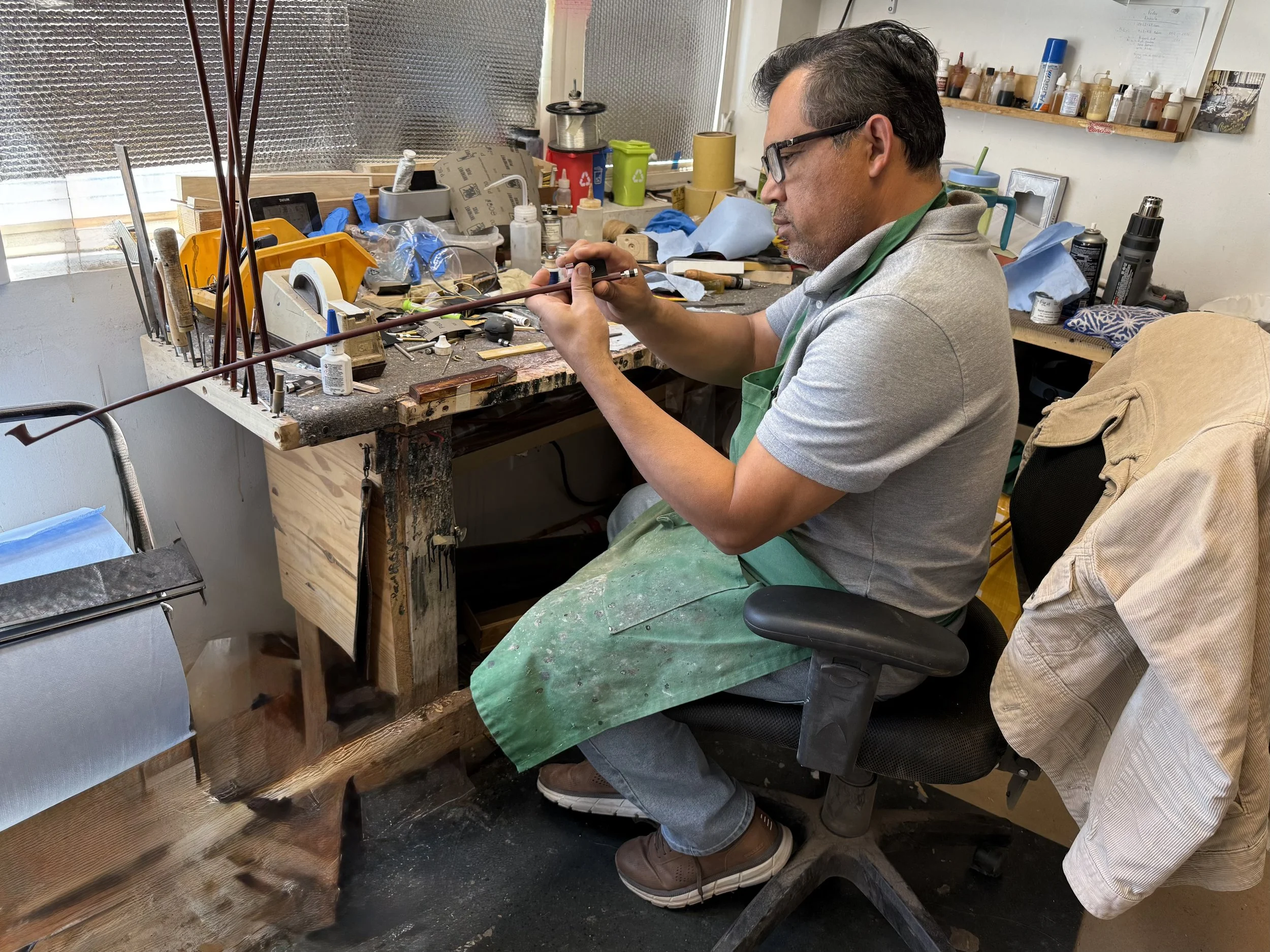
Paul grew up inside that world, though he did not always know he would become part of it. Raised in Salt Lake City, he attended West High School and was drawn to the arts. He took film classes for a year at USC and, like many children, thought for a time that what his father did was not quite “cool.” But he had spent his youth in the shop, cleaning, helping, and absorbing more than he realized. Then one year, while home from school, Peter asked if Paul would help at the bow bench, rehairing and repairing bows. “I got bit by the bug.”
Peter recognized his son’s interest and helped arrange an apprenticeship in France. In 1992, Paul and his wife moved there, dividing their time between Paris and Vannes, a small town on the west coast. Over the course of several years, he studied with master bow makers and learned both traditional wood bow making and carbon fiber bow making.
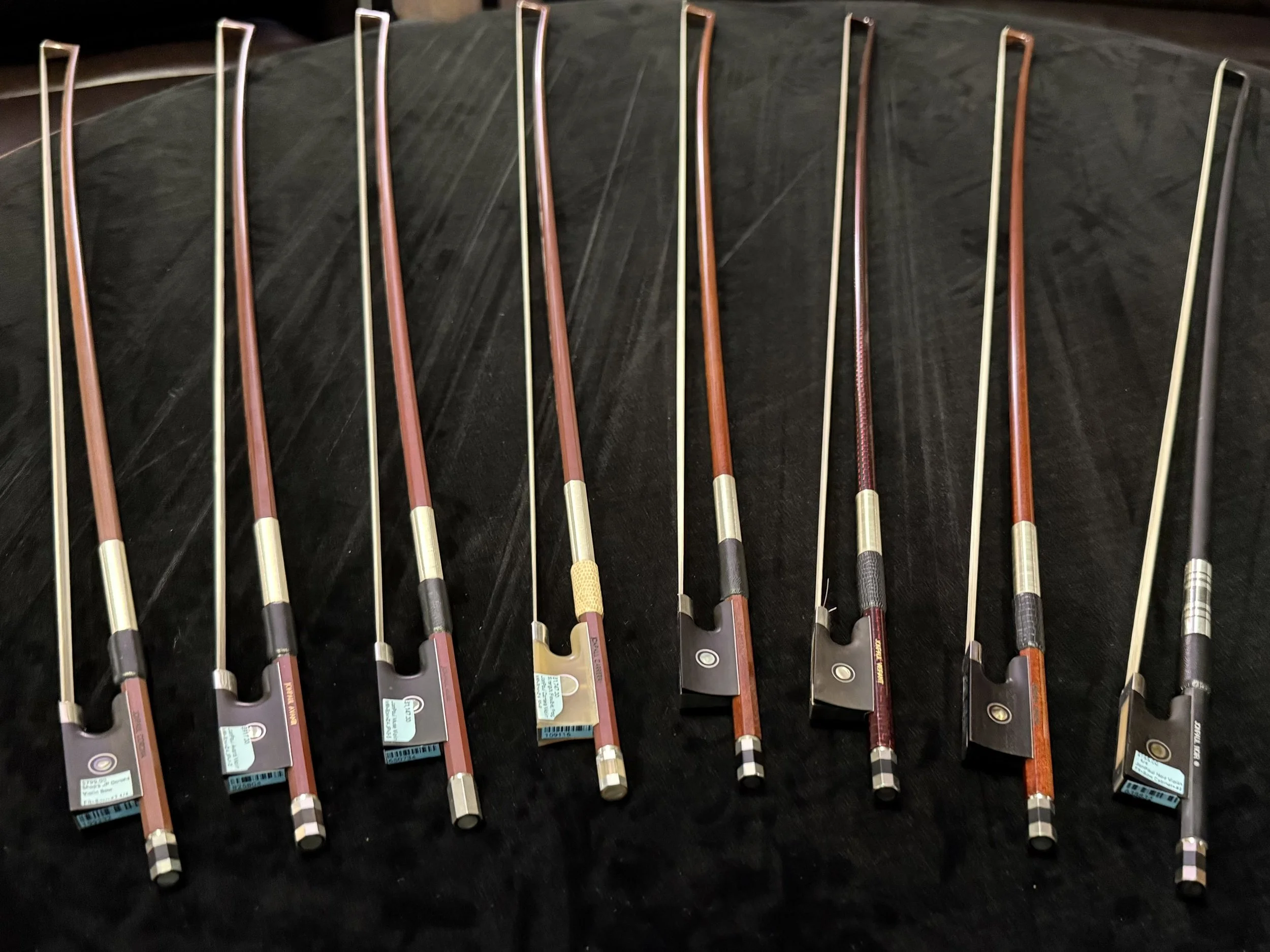
In 1996, he brought that knowledge back to Salt Lake City. Today, the bows made upstairs at Peter Prier & Sons Violins include both traditional wood bows and carbon composite bows, a blend of old-world skill and modern innovation that Peter, despite his deep respect for tradition, fully supported. “He was the master of the old classic style, but he was incredibly open-minded to any new process or any new way of making what we do better.”
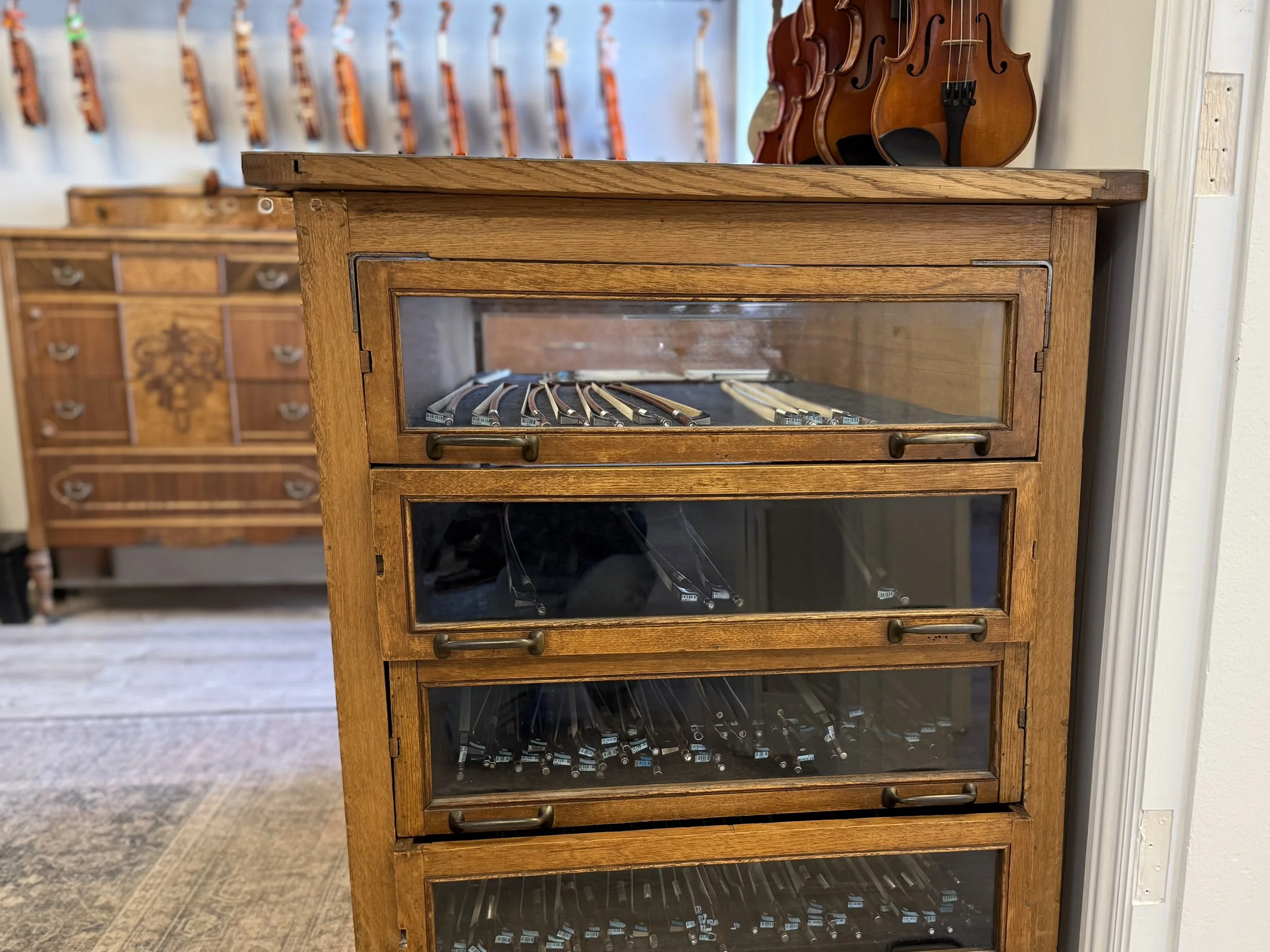
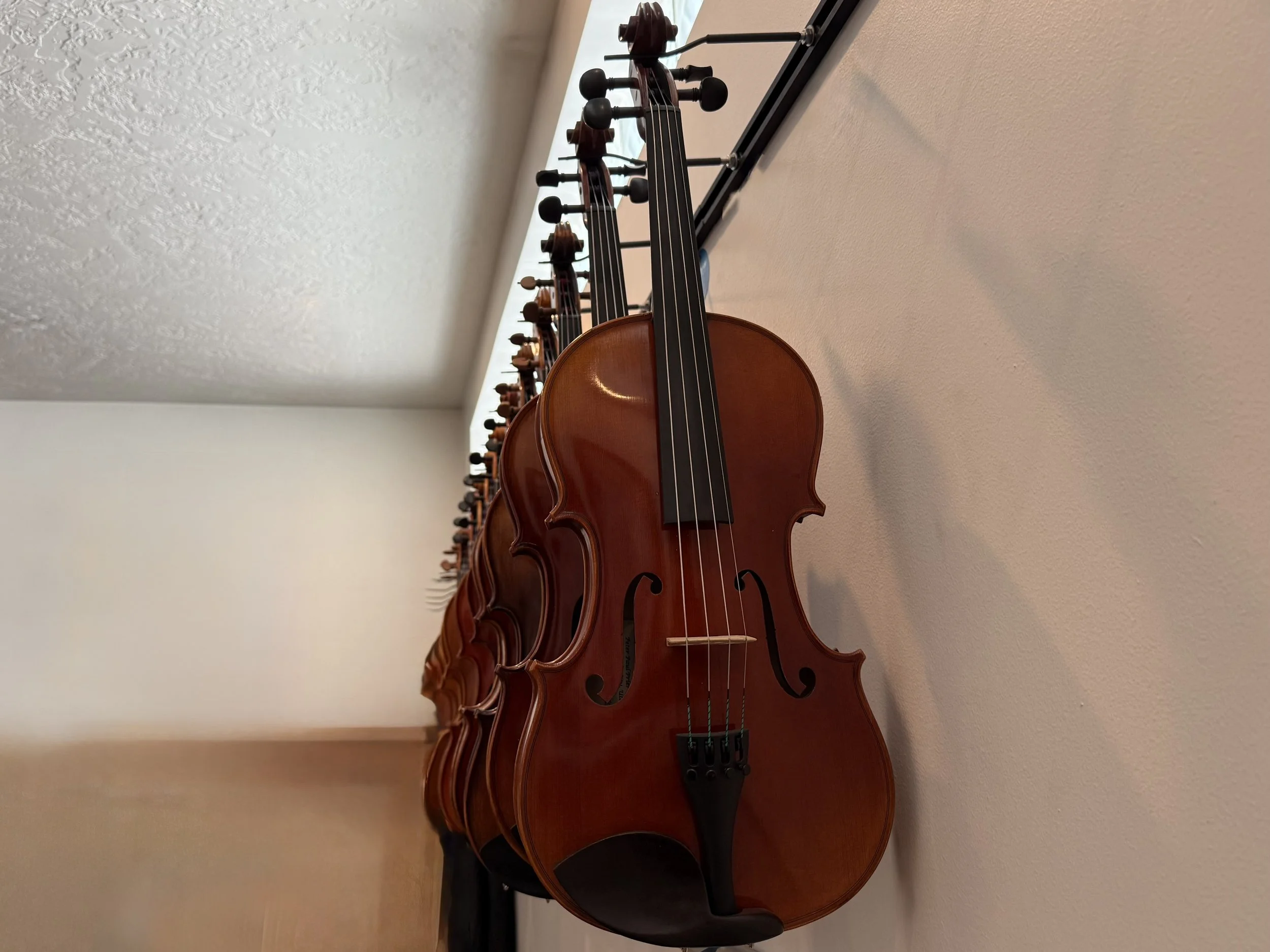
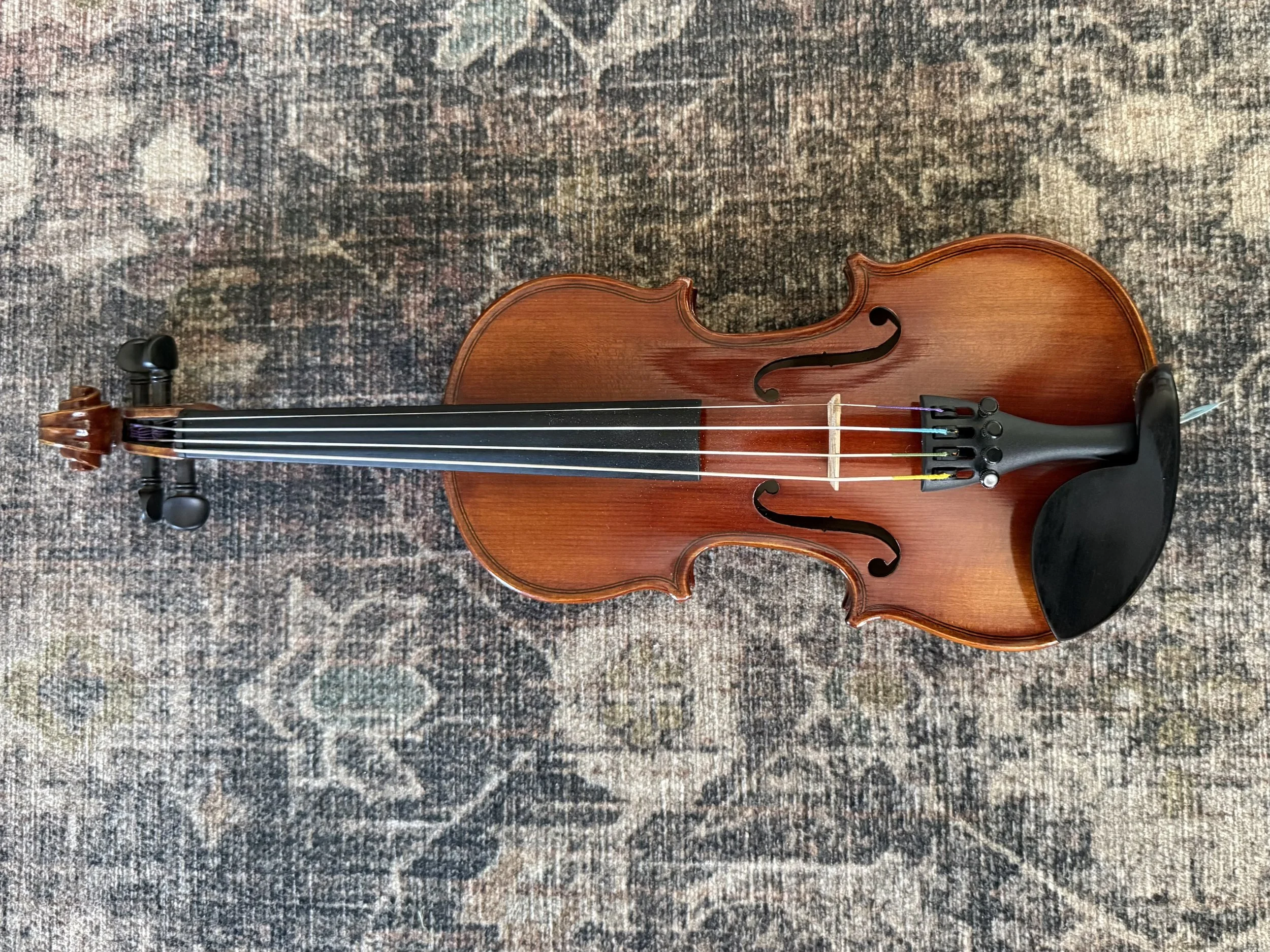
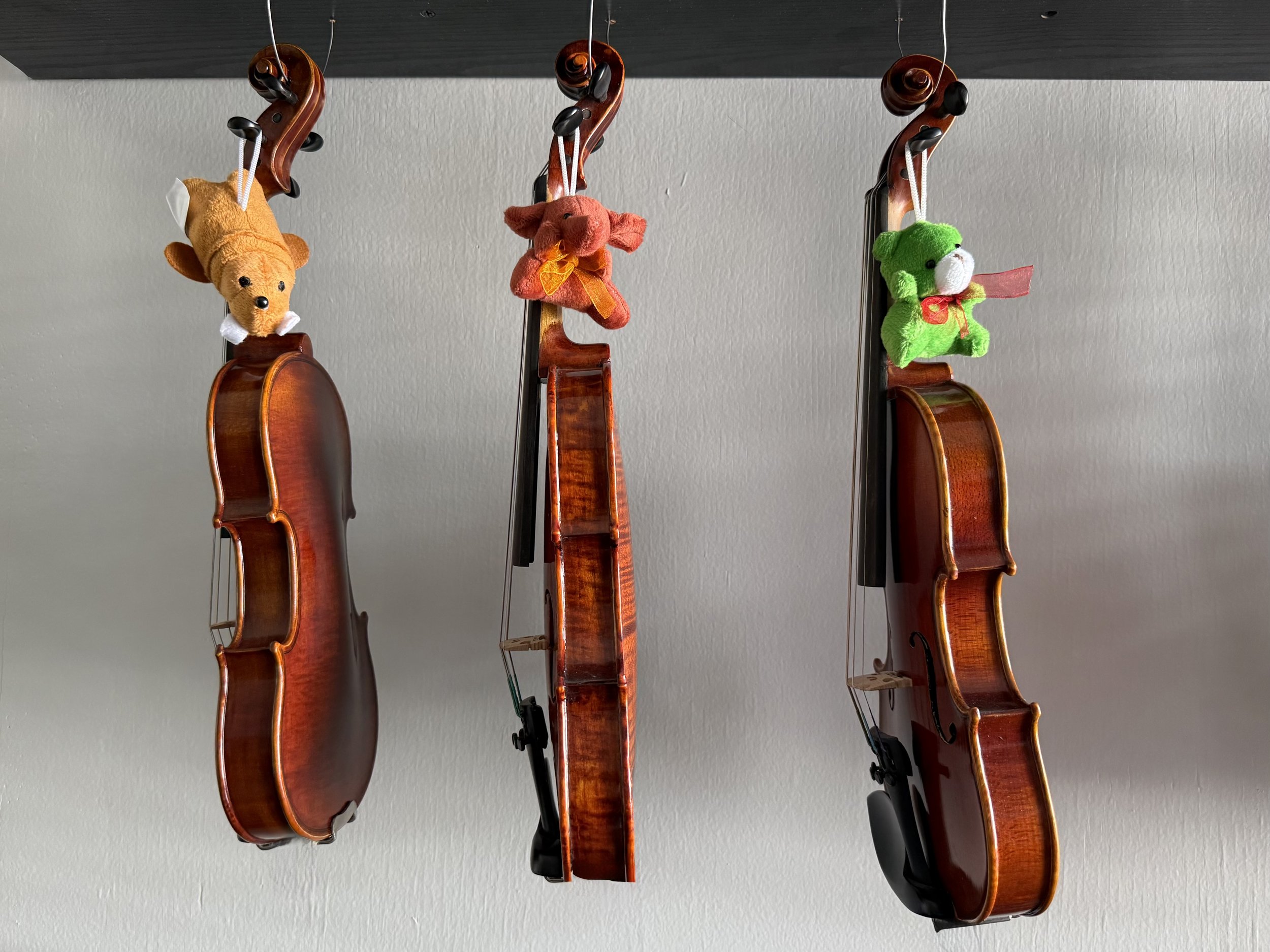
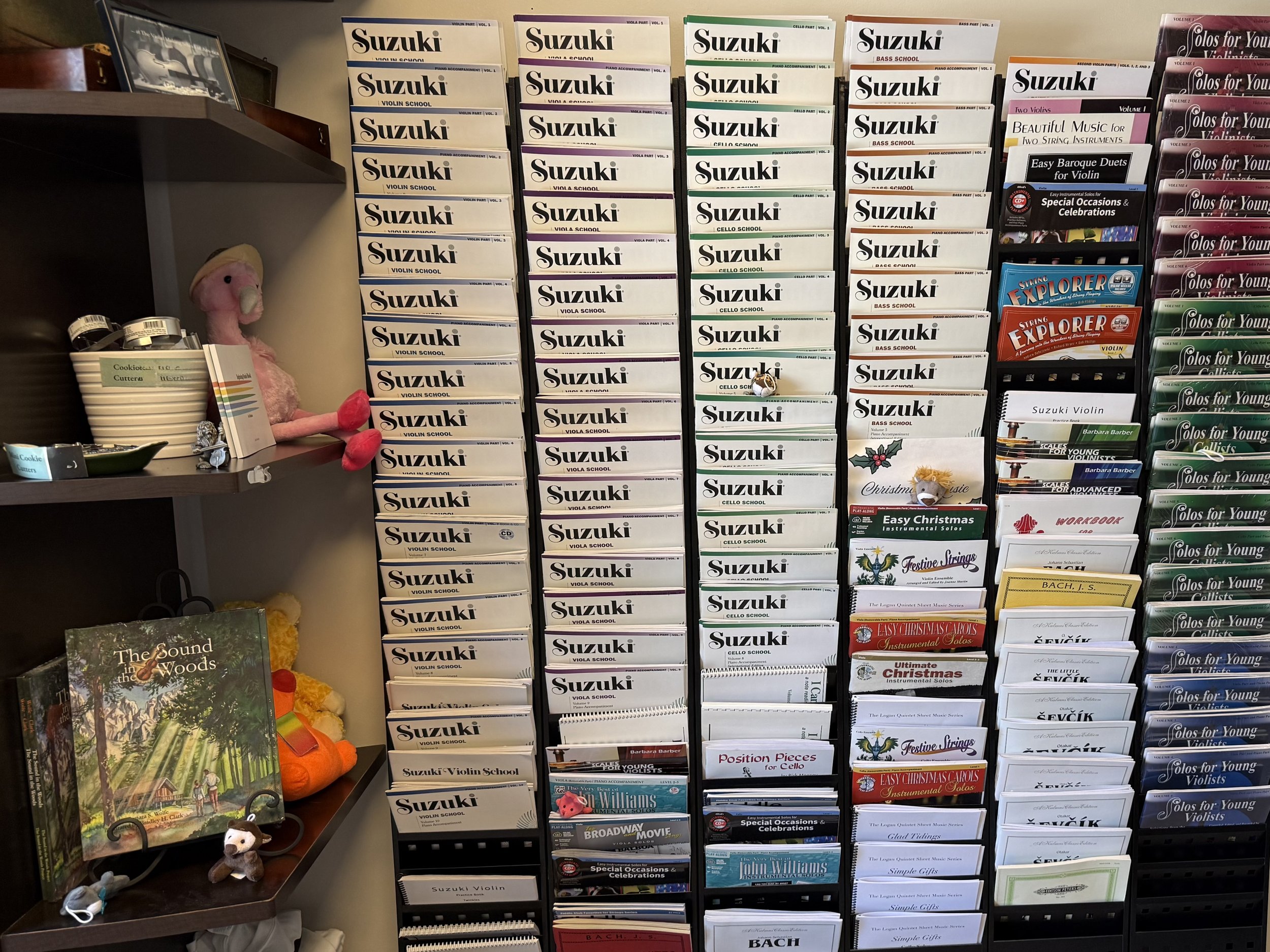
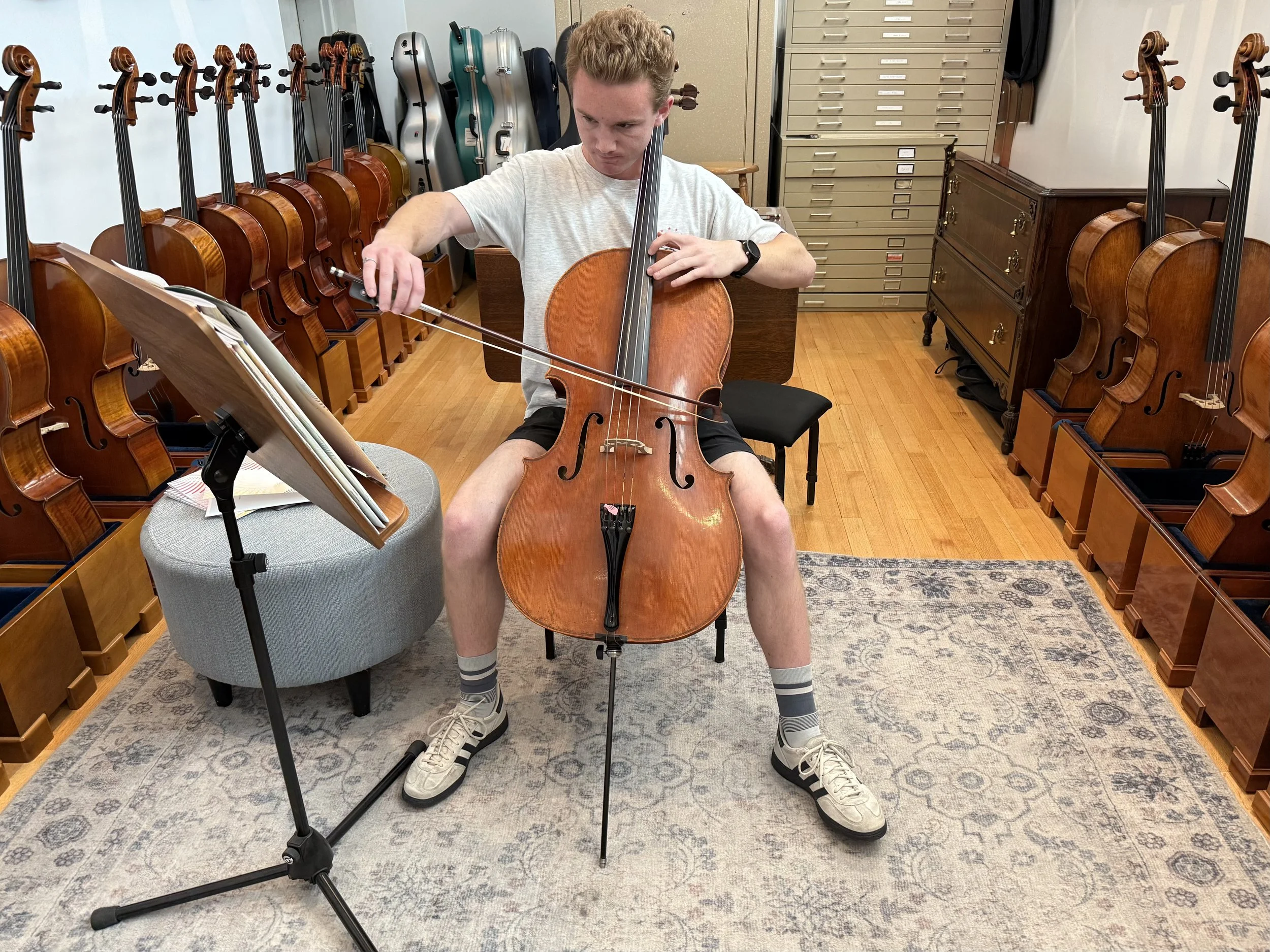
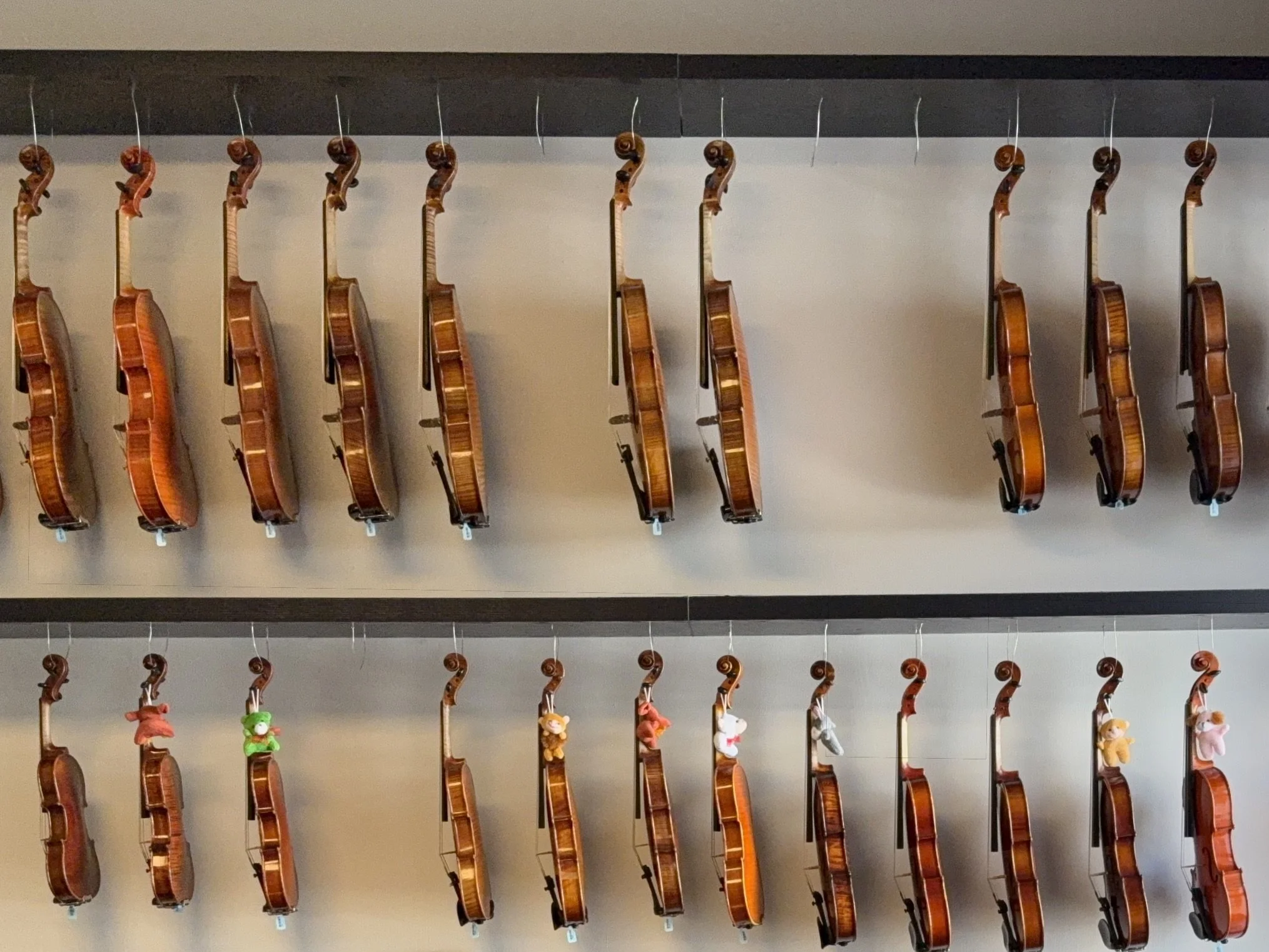
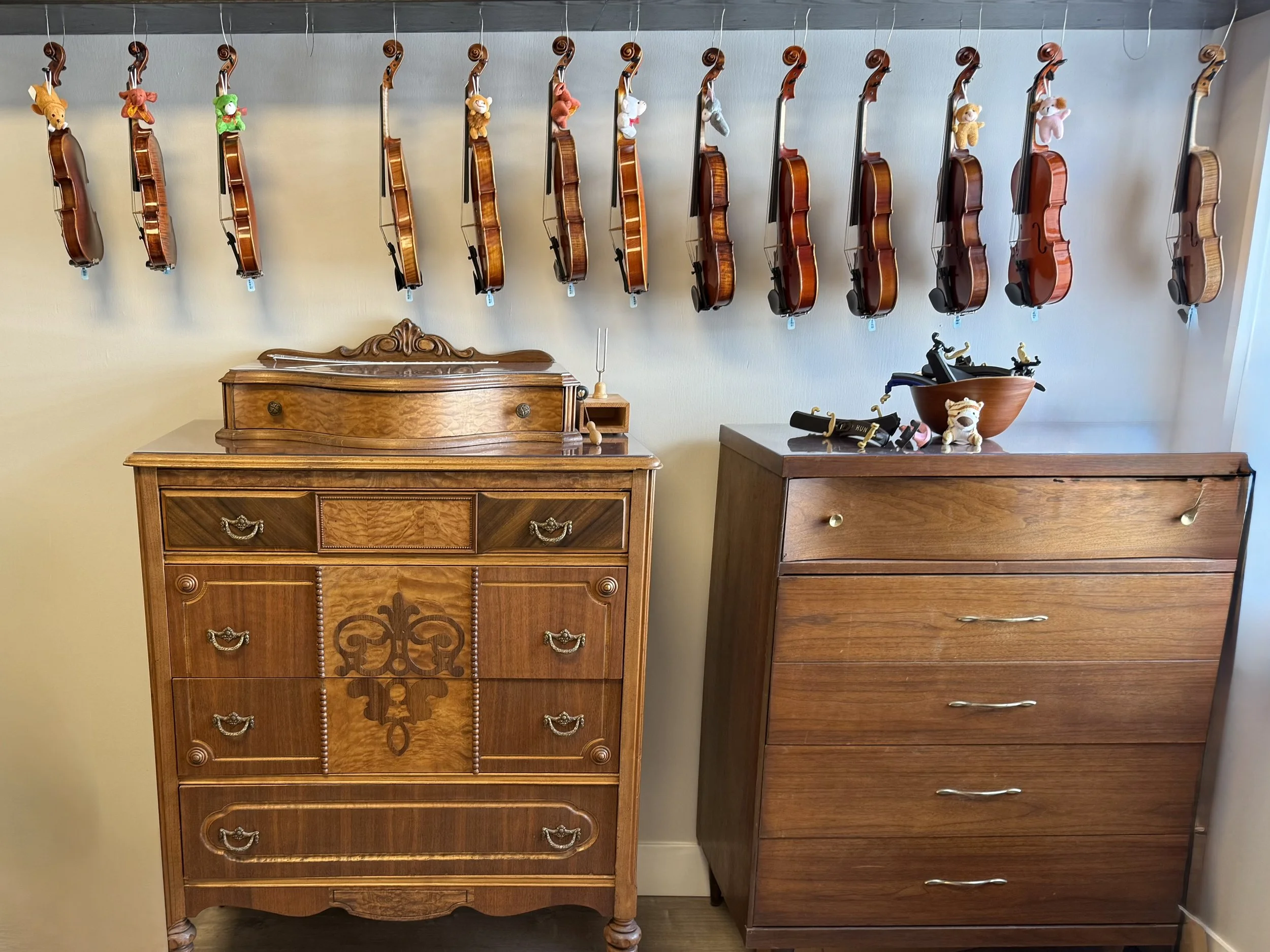
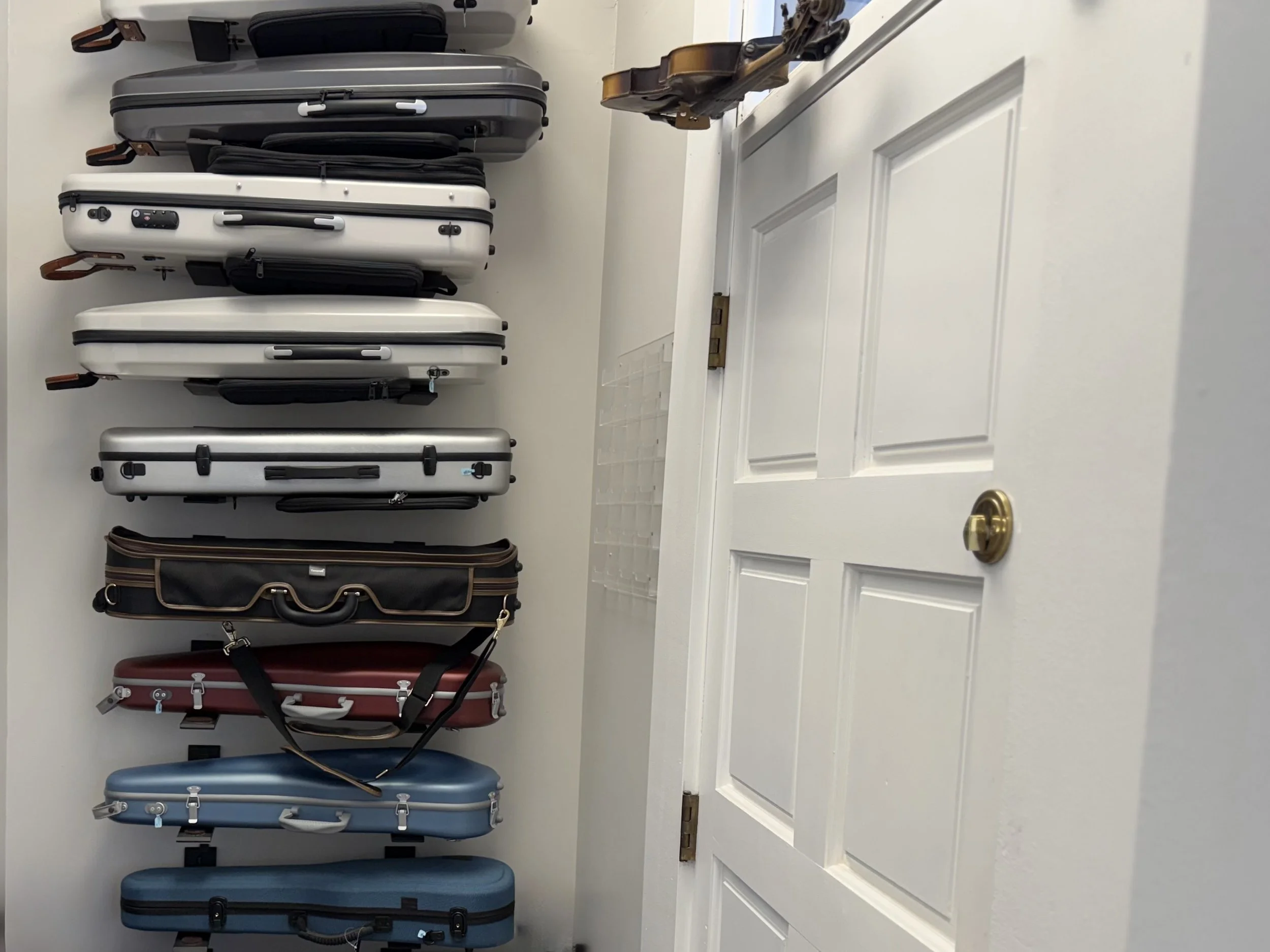
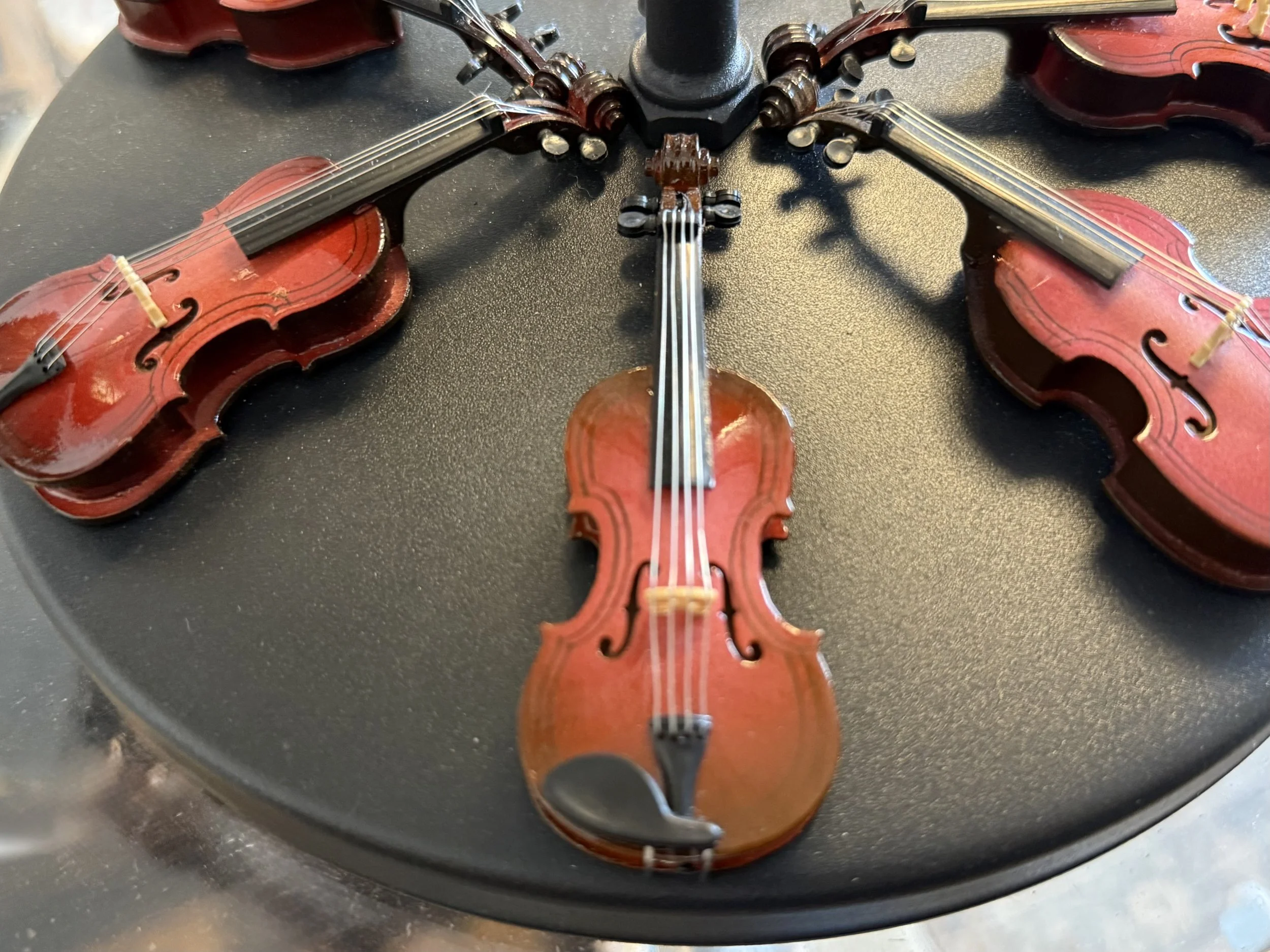
That balance still defines the shop. On the main floor, musicians come in to look at violins, violas, cellos, basses, bows, cases, strings, and accessories. Upstairs, instruments are repaired and restored, bows are made and rehaired, and the careful work of keeping music alive continues day after day.
The wood itself is part of the story. Violin wood must be cut, dried, and stored in very specific ways. Maple and spruce must be prepared carefully, often years or decades before they are used. Peter traveled regularly to Europe, including Mittenwald, where wood sellers kept stocks of wood that had been cut for violin making generations earlier. Today, wood also comes from places such as Canada, Serbia, and Croatia, and occasionally local spruce is cut and stored for future use. Nothing about this work is fast. That is part of its beauty.
Over the years, Peter Prier & Sons Violins became known far beyond Salt Lake City. For decades, it was one of the only major violin shops between Chicago and Los Angeles with the depth of expertise to handle rare and valuable instruments. People brought violins from across the region and eventually from around the world to be repaired, restored, sold, or brokered through Peter’s shop.
One of Paul’s favorite stories involves an Idaho potato farmer who walked in with a violin and asked Peter to repair it. The instrument turned out to be the 1704 “Glennie” Stradivarius. The farmer had been playing it at barn dances. He and Peter became friends, and eventually the farmer entrusted Peter with making sure the violin ended up in the right hands. But for Peter, the value of an instrument never changed the way he treated the person holding it. “My dad started a tradition. If you came in to buy a Stradivari, he treated you the same as the six-year-old kid who was just starting.”
When great instruments came into the shop, Peter would sometimes let young students play them. Parents would grow nervous only after learning that the violin in their child’s hands might be worth millions of dollars. Peter loved those moments. Instruments, he believed, were made to be played and enjoyed. They were not meant to be unreachable. That belief came from his own life. Peter had grown up poor. He had been displaced by war. He knew what it meant to be hungry, to begin again, and to depend on opportunity when it appeared. He carried that with him into every corner of the shop.
Paul says his father could be direct, sometimes even brusque, shaped by his German upbringing and by English as his second language. But beneath that straightforward manner was a deeply generous man. “There was not a mean bone in his body. He really loved people. He loved violin making, and he loved making music.”
Music was at the center of the Prier home. Paul’s mother, Kay, was a fine pianist, and she and Peter bonded through music. Paul remembers falling asleep at night to the sound of his father playing violin while his mother played piano. The children were encouraged to play whatever instruments they wanted. Paul chose drums first, then violin, piano, saxophone, and choir. “If it sounds good, it is good,” he said, quoting Louis Armstrong.
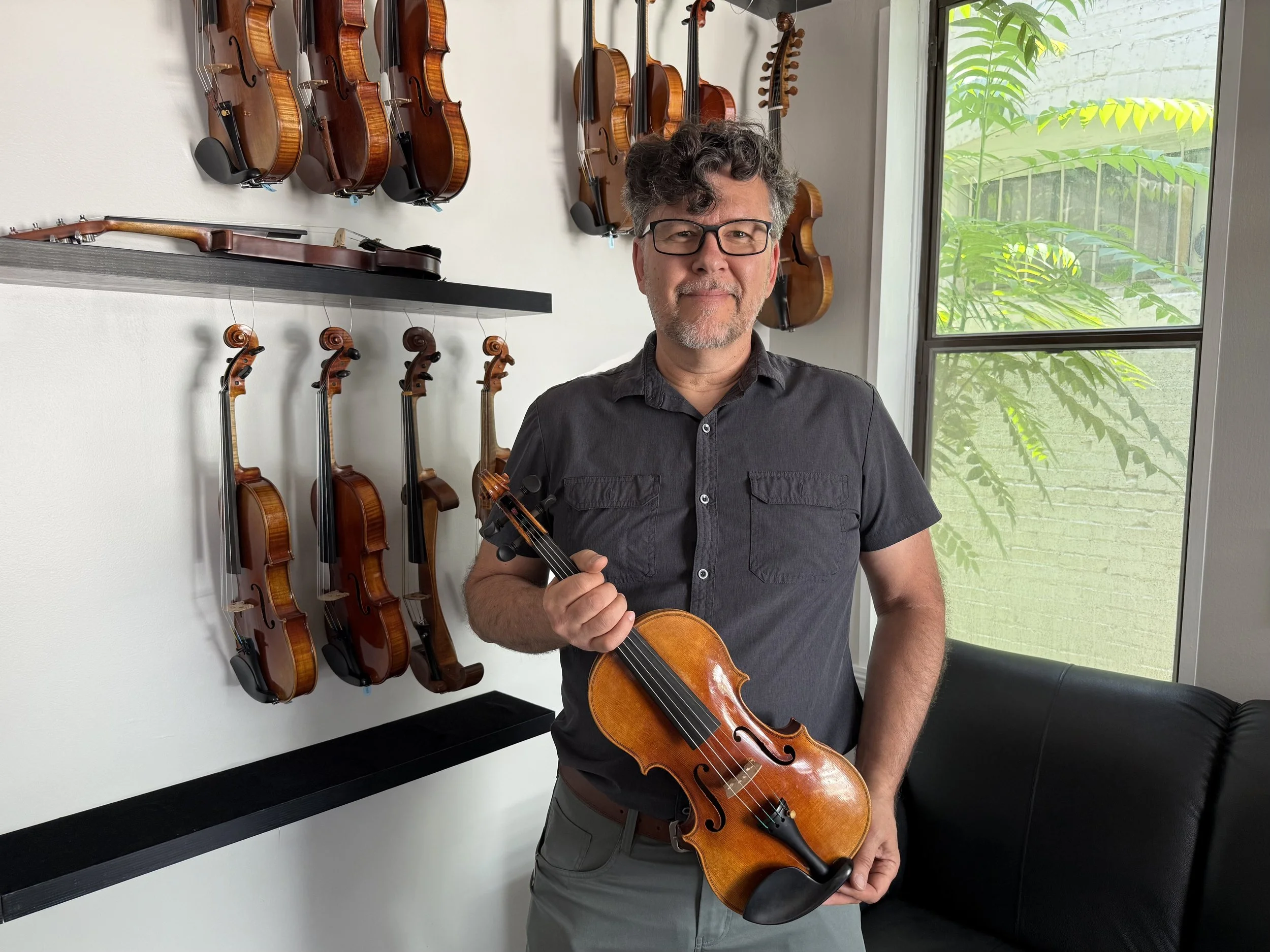
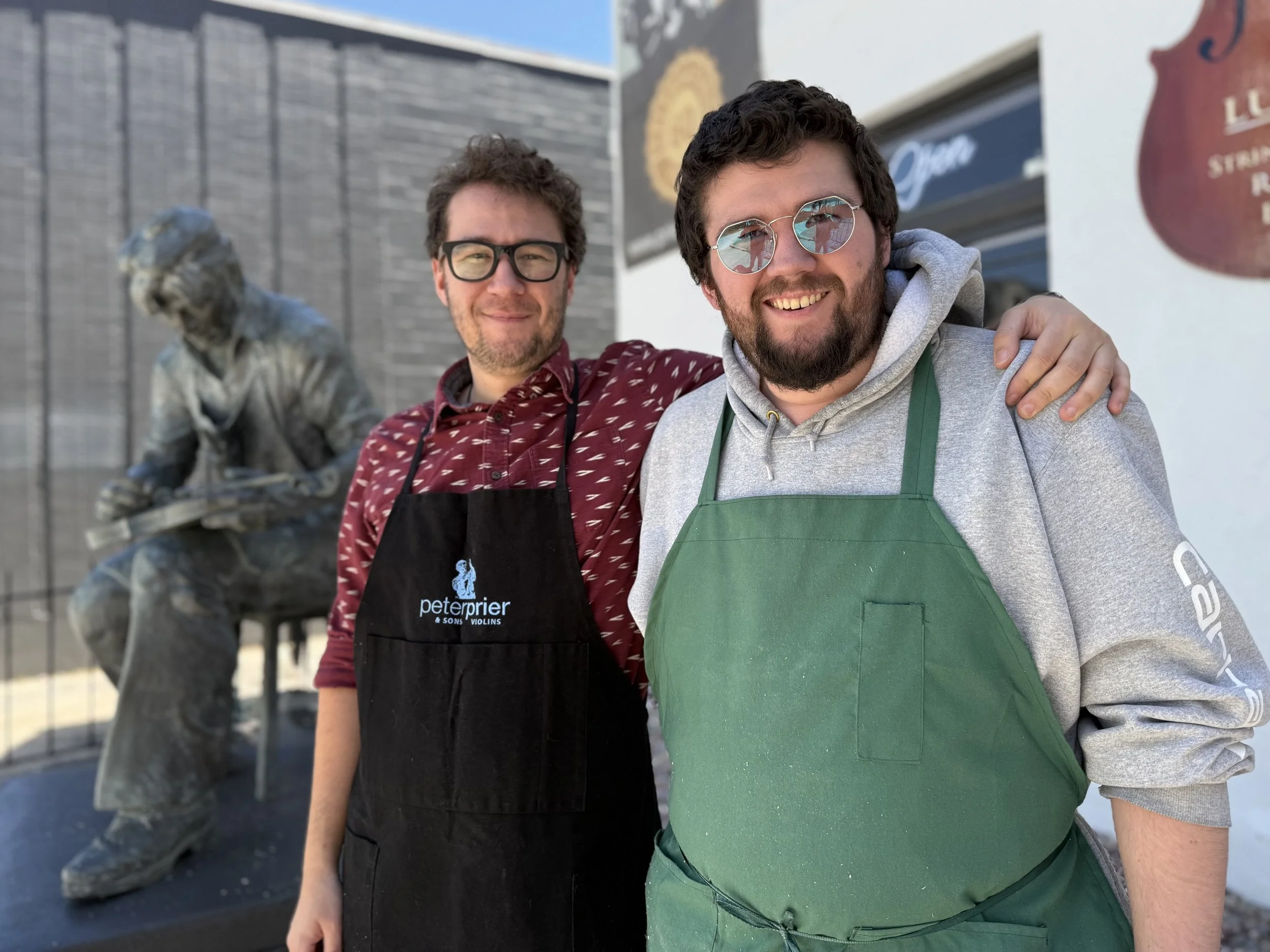
Today, Paul continues the work his father began, combining traditional craftsmanship with modern techniques. The family connection continues as well. Two of Paul’s sons have chosen to join him, helping carry Peter’s legacy into another generation.
Despite the years that have passed since Peter’s death in 2015, his presence remains constant. Paul admits that not a day goes by that he does not look at his father’s picture and quietly say, “Thank you, Dad.”
That gratitude can be felt throughout the shop. Peter Prier & Sons Violins is not a place built around trends, speed, or noise. It is a place of wood shavings, varnish, strings, tools, stories, students, teachers, families, and musicians. It is an old Salt Lake business in the best sense - deeply rooted, quietly remarkable, and still doing the work it was created to do.
Next door, young makers continue shaping violins by hand. Upstairs, bows are repaired and made. Downstairs, children come in for their first instruments while professionals entrust the shop with treasured ones. The legacy of a boy who once learned to play on a violin found in a bomb crater continues to sing. “I am American, and I have the papers to prove it.”