Anchor Tattoo
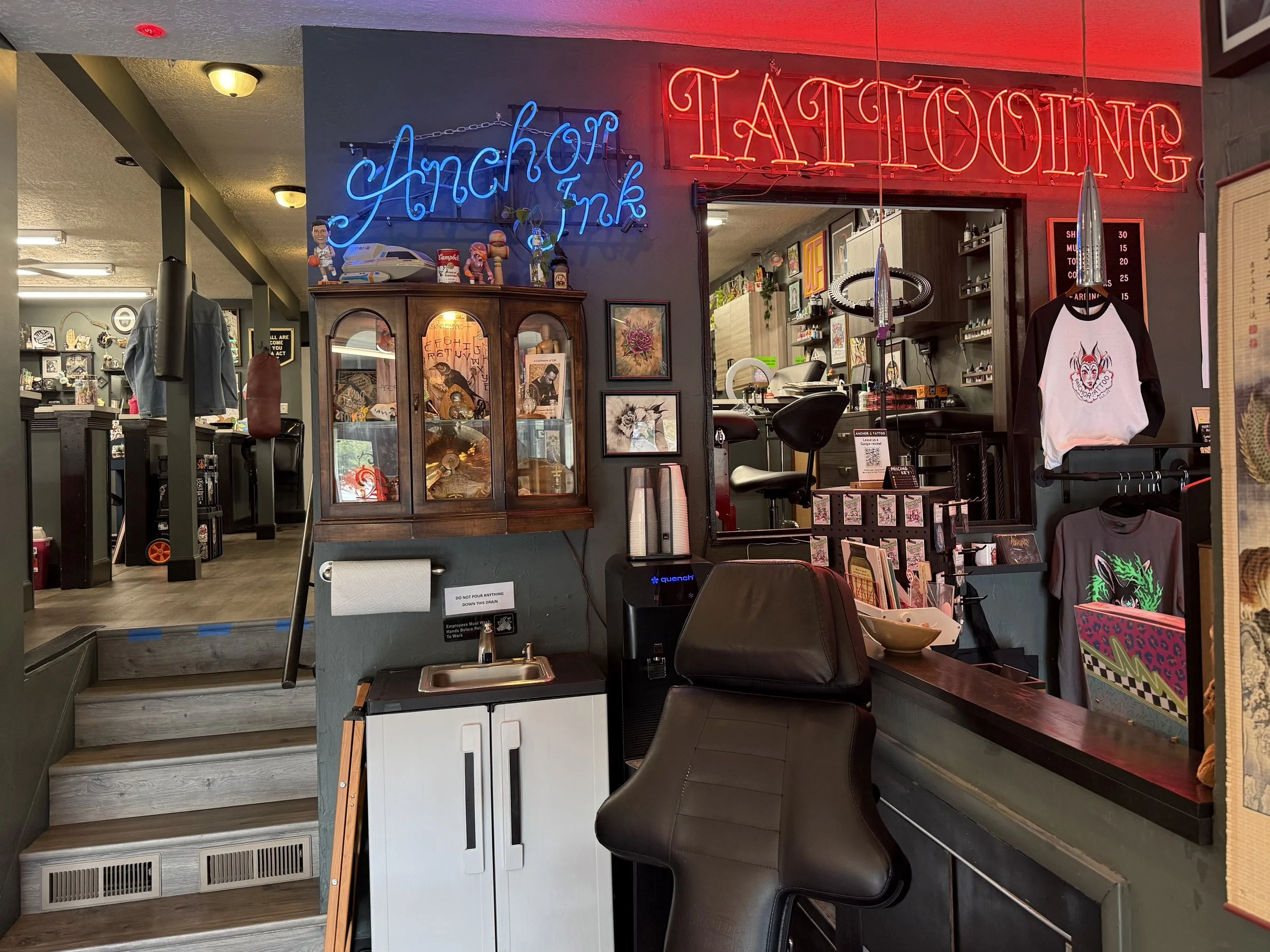
Address: 1576 South State Street
Telephone: 801-349-2819
Website: anchortattooslc.com
District: Ballpark
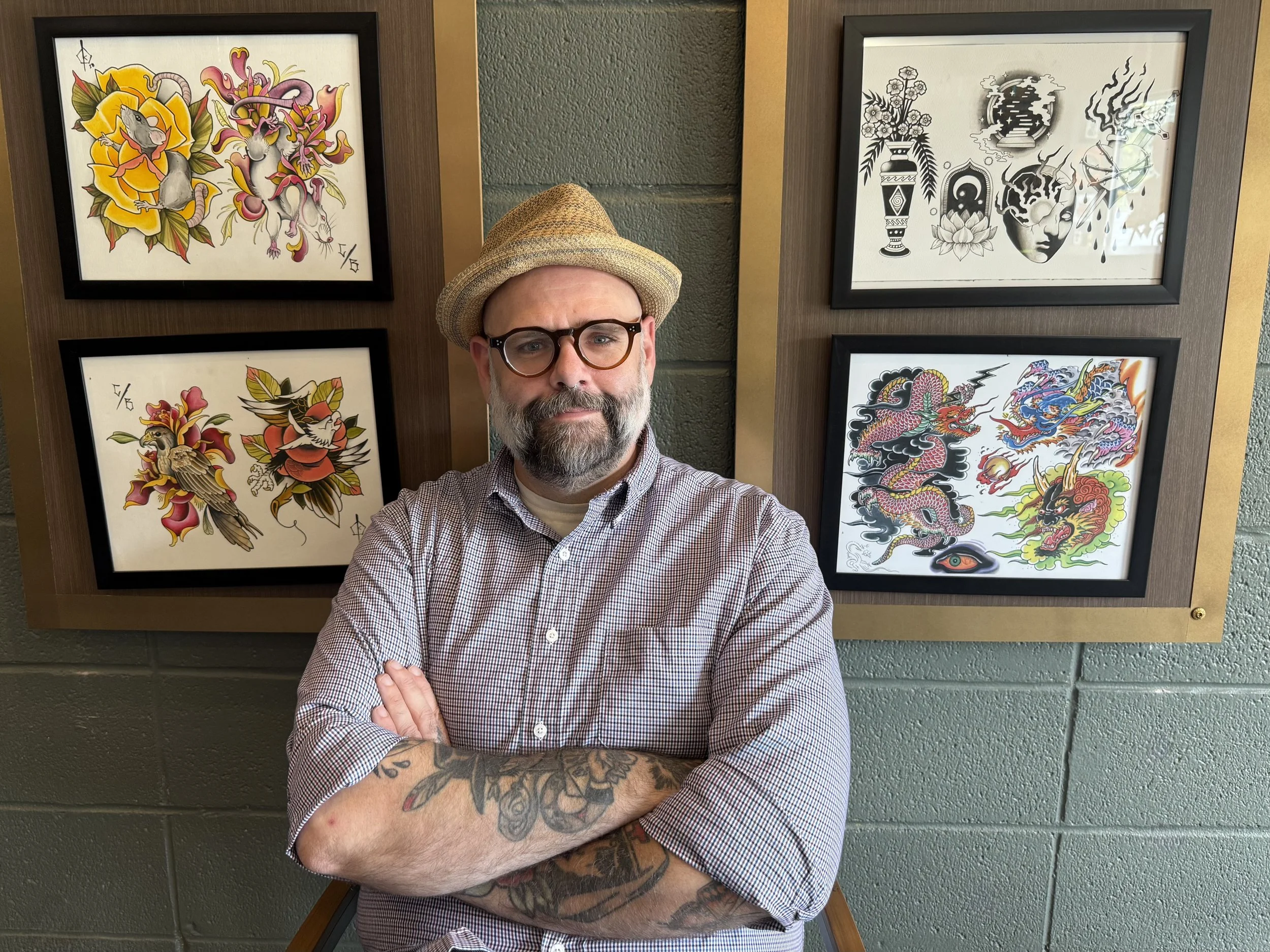
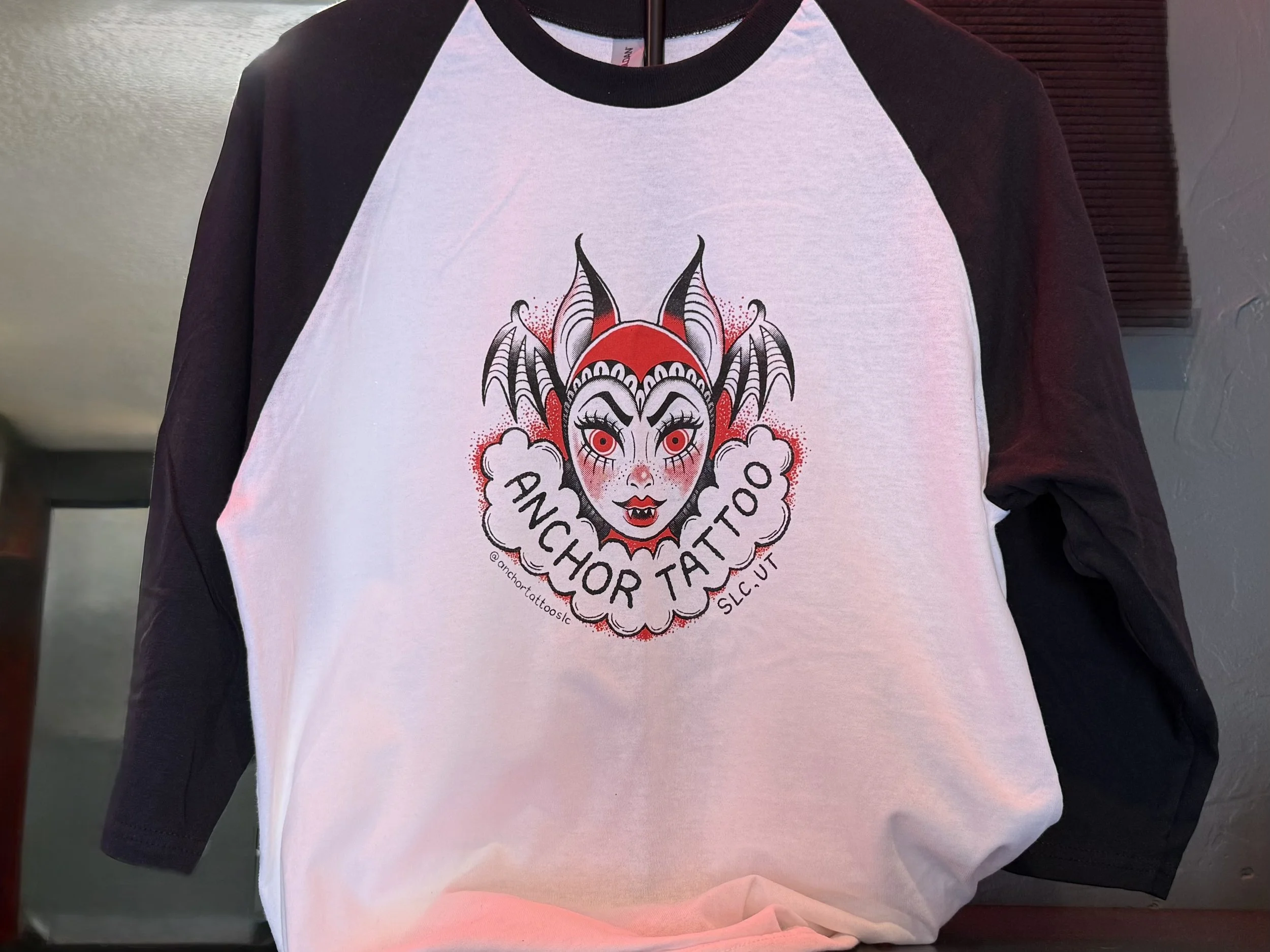
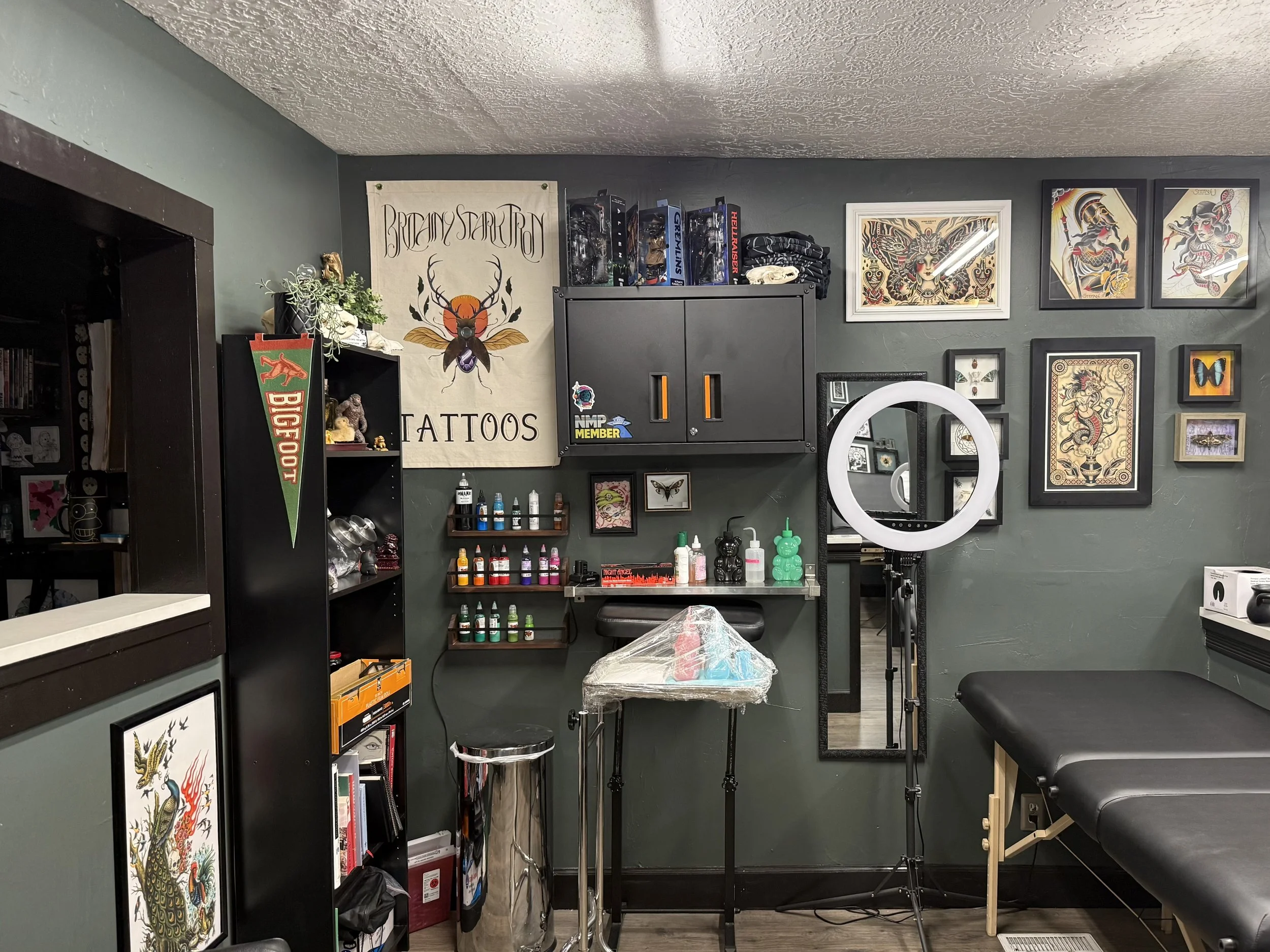
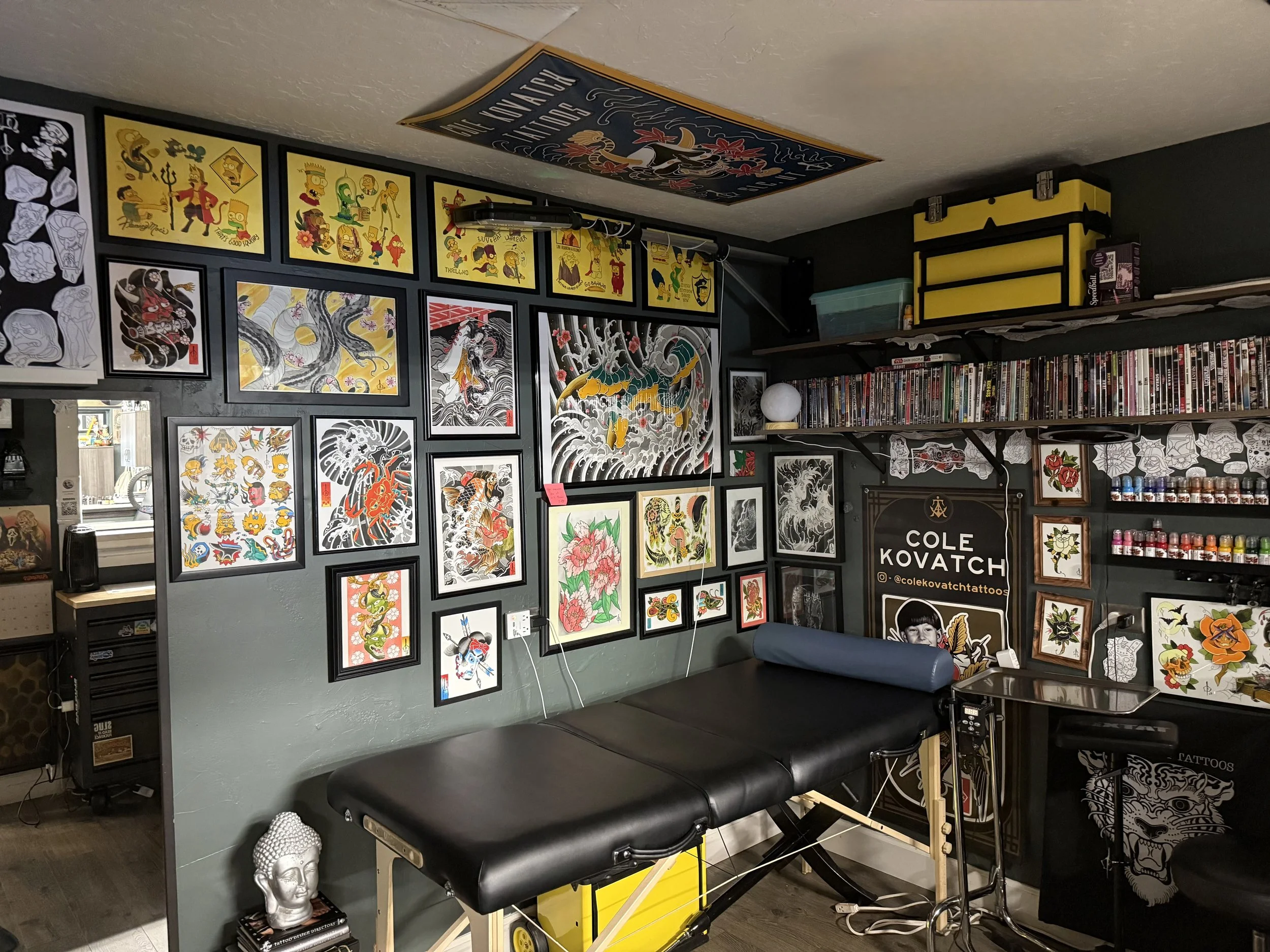
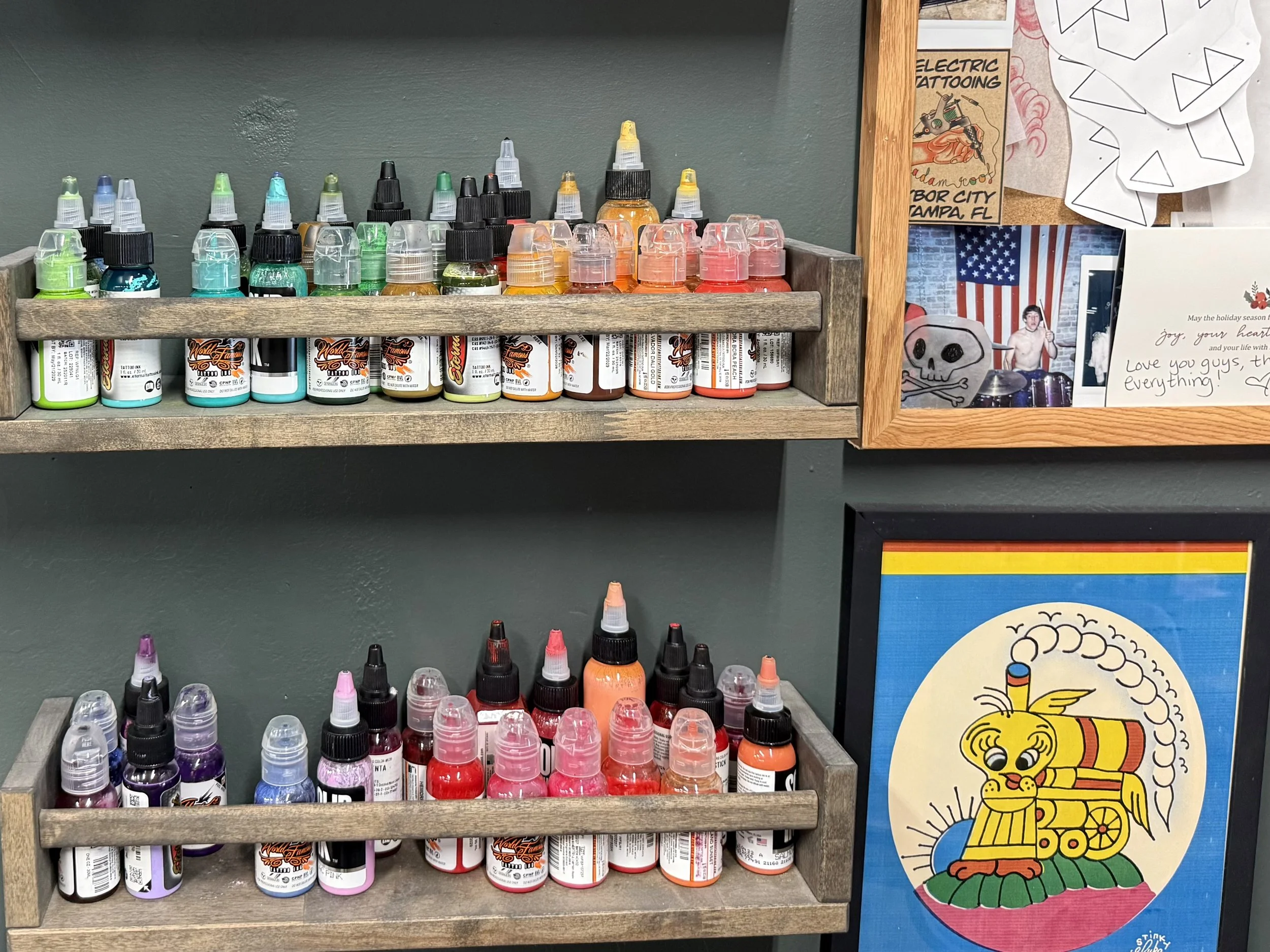
“Never be too proud to seek out people who are better than you.” For Chris Walkenhorst, being an artist has always meant continuing to learn - from the people working beside him, from those who came before him and, most importantly, from a lifetime spent drawing. Today, much of that drawing takes place at Anchor Tattoo on State Street, the longtime studio owned by Charles Bogus, where nine artists work and Chris rents his space.
Although new to Anchor, Chris has enormous respect for the caliber of artists around him, including Bogus, whom he describes as a very skilled tattoo artist. “You should always be around people who you respect as an artist and be trying to grow as an artist.”
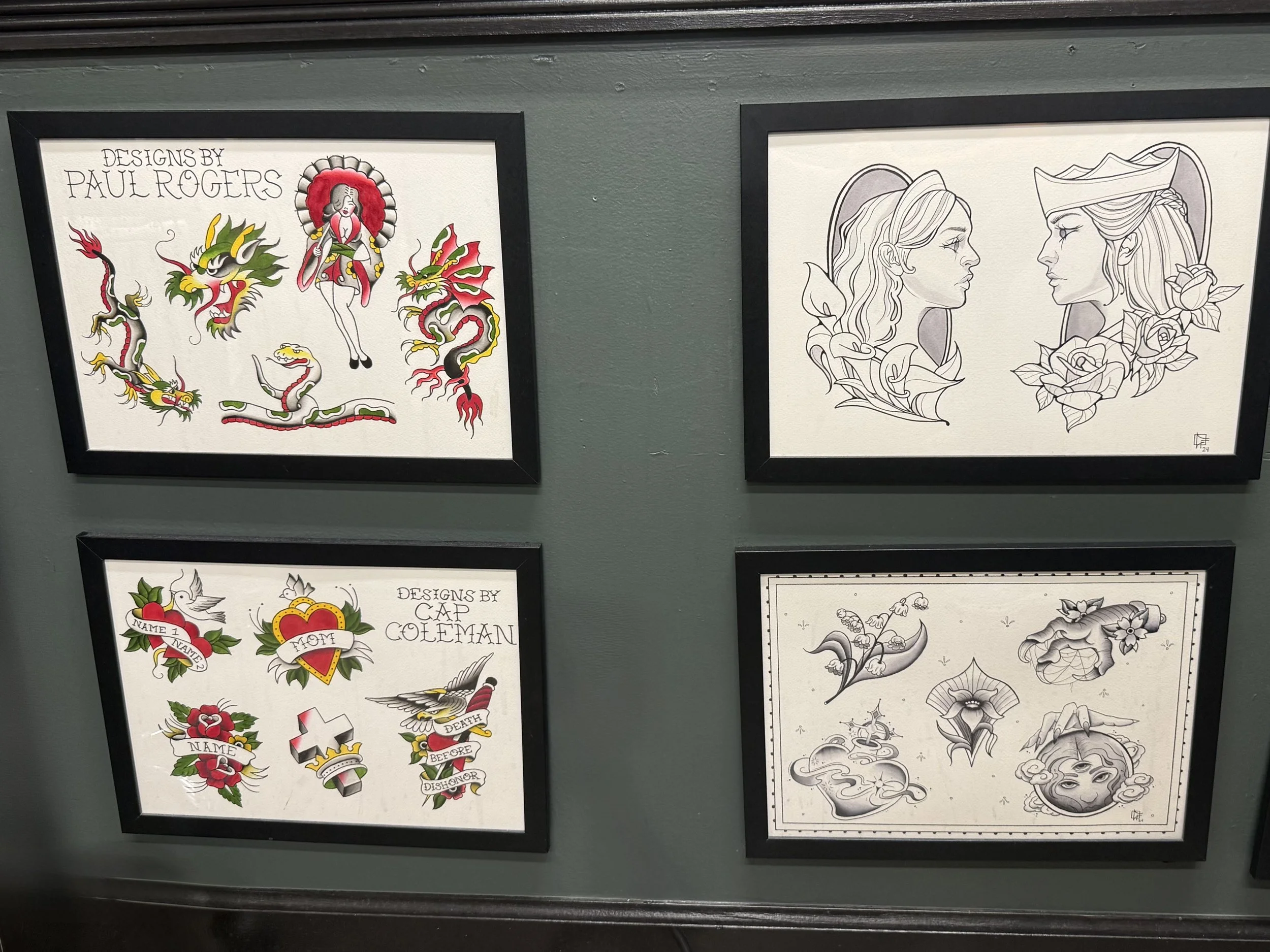
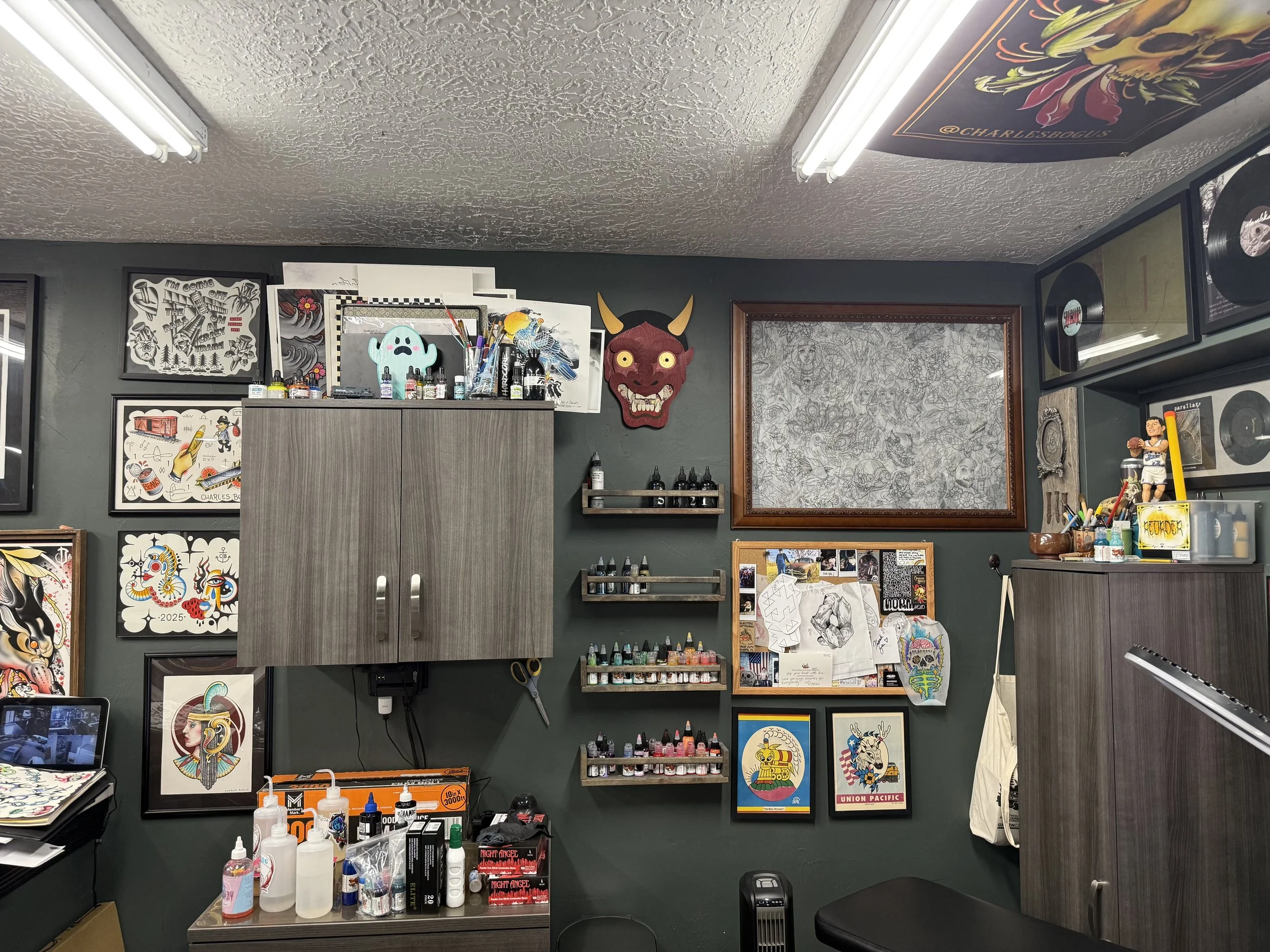
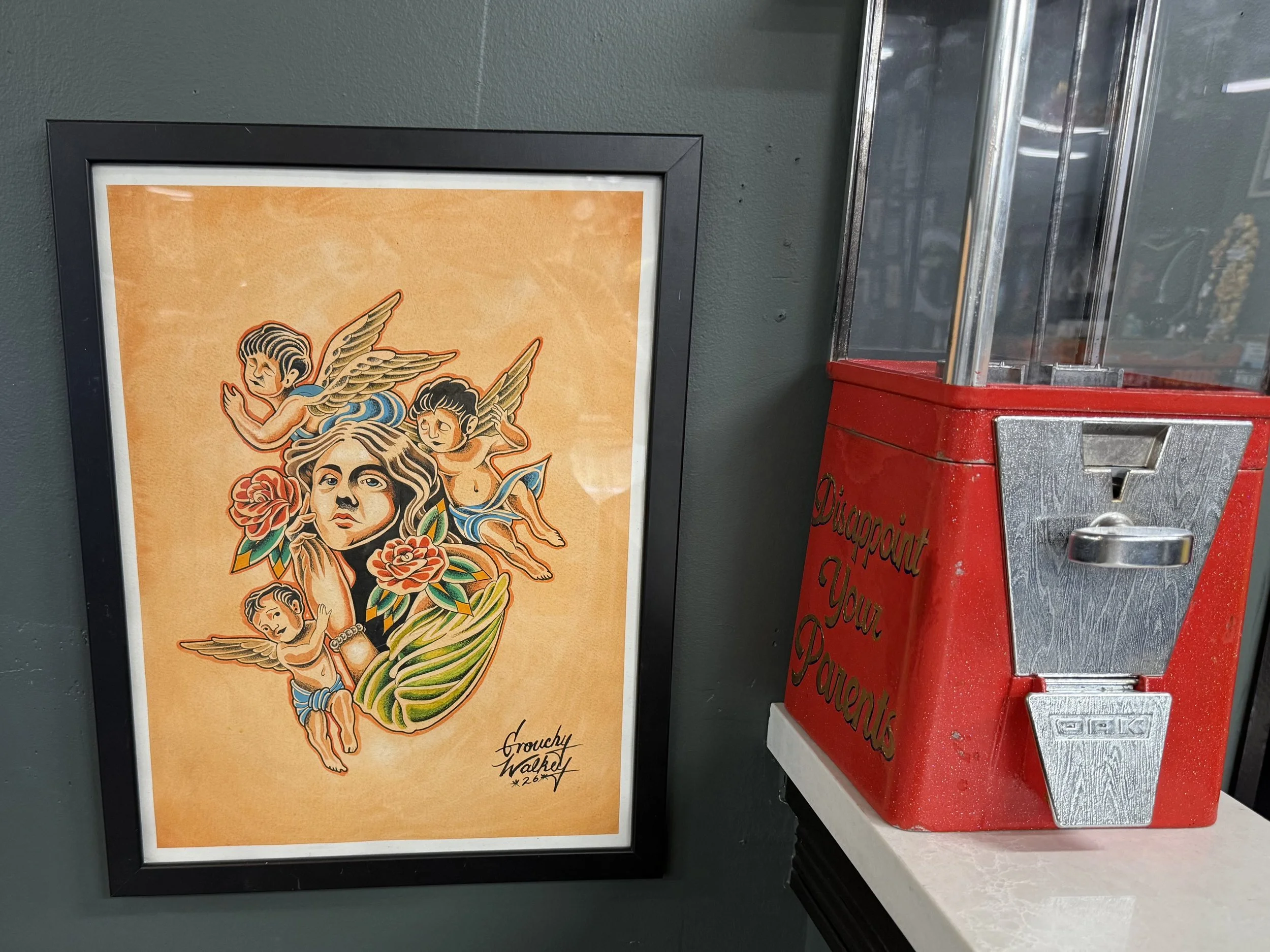
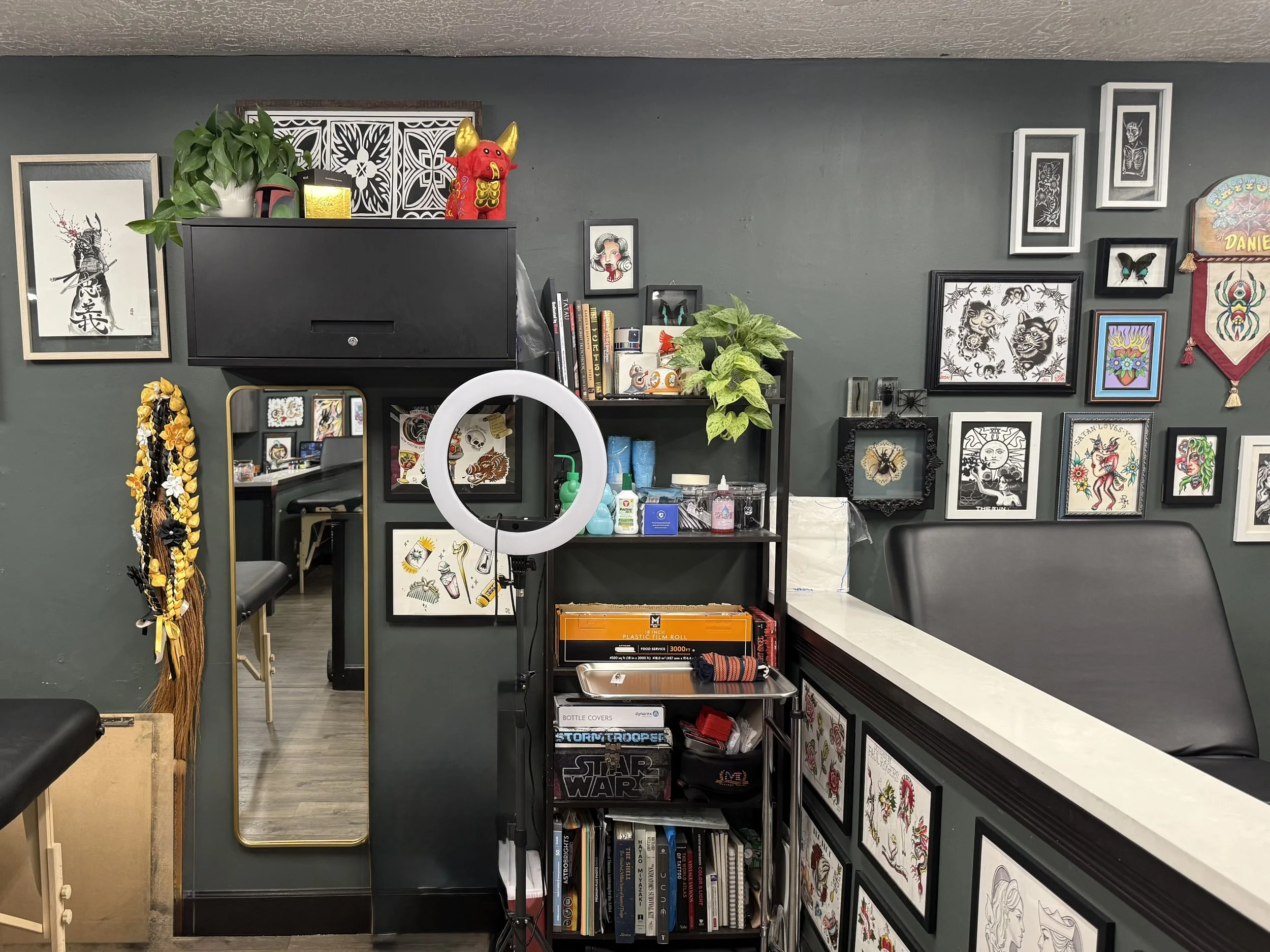
It does not take long standing beside Chris’s station to understand that, for him, the word artist is every bit as important as tattooer. The walls are covered with his work - intricate portraits, original designs, and drawings created not necessarily because someone has asked to have them permanently placed on their skin, but simply because Chris wanted to draw them.
Chris was born in Pocatello, Idaho, in the early 1980s, a place he remembers as seemingly caught in another era. His father was in the military, however, so Pocatello was only the beginning. The family moved repeatedly, with Chris living in North Dakota, Texas, Missouri, Michigan and eventually Germany, among other places.
Through all of it, there was drawing. “I’ve always drawn. They didn’t really know what to do with me in school.” Chris was placed in gifted and talented programs, although traditional classroom learning was not necessarily where he flourished. He remembers his desk perpetually covered with drawings. His hands might have been occupied, but he was listening, absorbing what was happening around him while simultaneously disappearing into whatever was taking shape on the paper in front of him.
By 2001, Chris was graduating from high school in Germany. After September 11, he followed another family thread and enlisted in the United States Air Force. Even then, he was determined to find a way to remain connected to art. Most recruits, he recalls, did not arrive at a recruiter’s office insisting upon becoming a military photographer, but Chris did. Having grown up around the military, he knew the position existed and held out for it until a recruiter called several weeks later with an opening, and he took it.
After basic training and photography training at Fort Meade in Maryland, Chris was stationed at RAF Lakenheath in England, near Cambridge. It was an extraordinarily busy period as American military operations intensified following September 11, and his work occasionally took him into the air alongside flight crews. He spent two years in England before being transferred to Texas and eventually left the Air Force in 2006.
What followed was not a straight line toward tattooing. Chris used his GI Bill to study art, beginning at community college in Nevada before eventually attending Rochester Institute of Technology where he earned his bachelor’s degree in illustration. He loved Rochester, loved art school, and left with precisely the education he had wanted. Then came the harder question of how to make a living as an illustrator. Chris returned to Las Vegas and found himself selling beer for a beverage distributor, doing work that provided an income but truly little of what had driven him throughout his life. He continued drawing and began talking to friends who were tattoo artists.
Tattooing had always fascinated him. Growing up in a military family with a religious mother, however, it had hardly seemed like an obvious career choice. Now, as an adult with an illustration degree and a job he disliked, the idea no longer seemed quite so improbable. “So why not just go Peter Pan for a while?” Chris was thirty-eight years old when he decided to start over. He quit his job, moved in with roommates, and became an apprentice at Lokahi Studios in Las Vegas. “I was eating fish sticks and ramen for about a year and a half.”
It was not glamorous, nor was it supposed to be. Chris began at the bottom, learning the mechanics of the equipment as well as the vastly different demands of creating art on skin. He had expected the tattoo world to be guarded and territorial. Instead, he found people willing to teach him. That experience helps explain the way Chris talks about tattooing today. There is little bravado. He is quick to praise other artists, fascinated by techniques different from his own and as interested in learning as he is in showing what he can already do.
His curiosity extends well beyond the artists working today. Chris has become a student of tattoo history, fascinated by the men and women who helped move the craft from hand-poked markings practiced for centuries to the extraordinarily diverse art form it has become.
Tattooing, of course, long predates America. But the story of professional tattooing in this country took an important turn in nineteenth-century New York where sailors returning from voyages helped make tattoos an increasingly familiar sight. Martin Hildebrandt, a German-born tattooer who worked during the Civil War era, established what is regarded as one of the country’s earliest permanent tattoo shops in Manhattan in the early 1870s. In nineteenth-century America, tattooing was particularly associated with sailors, soldiers and the circus and carnival circuits where heavily tattooed performers became popular attractions.
Then came Samuel O’Reilly. Working in New York, O’Reilly helped usher tattooing into the electric age when, in 1891, he patented an electric tattoo machine derived from the technology behind Thomas Edison’s electric pen. What had previously been accomplished by repeatedly puncturing the skin by hand could now be done mechanically, profoundly changing the speed and possibilities of the craft.
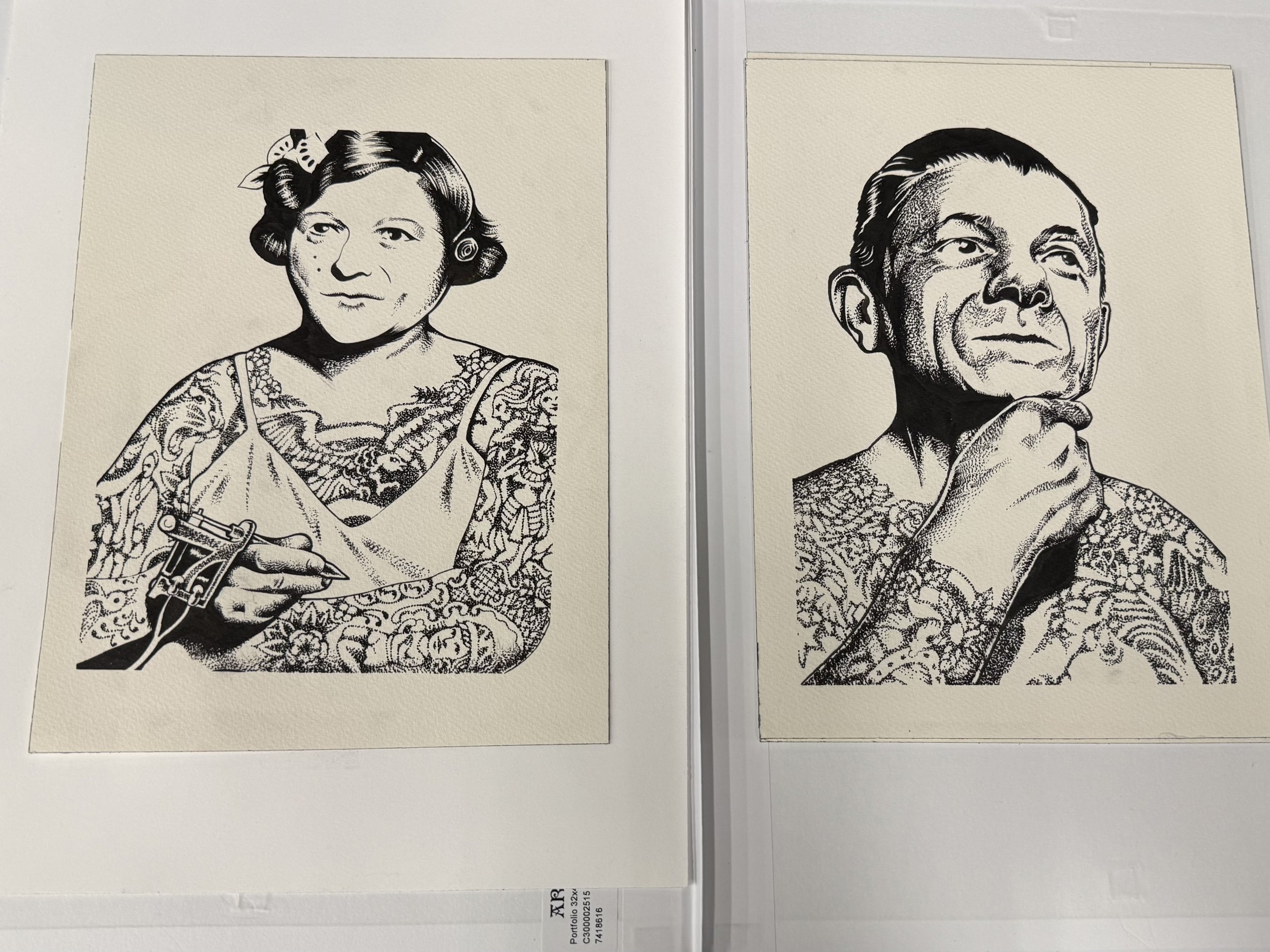
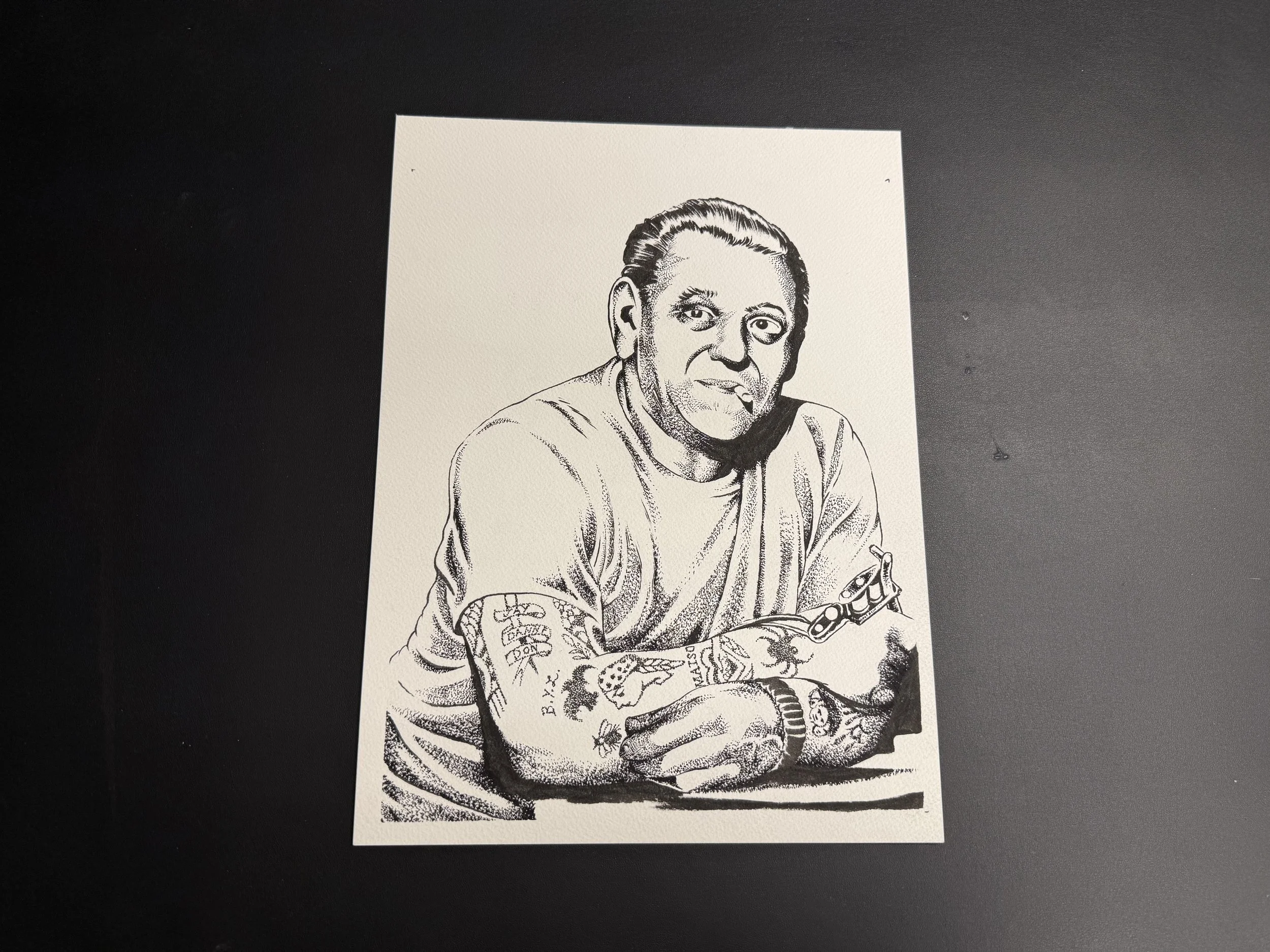
Chris knows and admires O’Reilly’s story well enough that he has drawn him. In fact, some of the striking portraits at Chris’s station are part of a series depicting people from tattoo history. His plan is to eventually turn the drawings into trading cards to take to tattoo conventions. It is a project that brings together two sides of Chris that are, in truth, inseparable - the illustrator trained at RIT and the tattoo artist fascinated by the lineage of the craft he entered late in life.
Among the figures Chris has chosen to draw is Mildred “Millie” Hull. Her story is the most compelling of the group. Born in New York in 1897, she had worked as a burlesque dancer and circus performer and became heavily tattooed herself before learning to tattoo from legendary Bowery artist Charlie Wagner. In 1939, at a time when the profession was overwhelmingly male, Hull opened her Tattoo Emporium in the back of a barbershop at 16 Bowery. Known as the “Queen of the Bowery,” she became one of the earliest and most prominent women to own and operate her own tattoo business in New York.
There is something particularly appealing about Chris choosing to draw people such as O’Reilly and Hull. These are not merely names to him. He is interested in the people behind the art - who they were, how they worked and what each added to a craft that was passed for generations from one tattooer to another.
There is even an important Utah chapter. Owen Jensen was born in Pleasant Grove and grew up around Ogden where he worked in the railroad shops and developed the mechanical abilities that would later serve him well. In 1911, Jensen recalled walking twelve miles to Provo to see Buffalo Bill’s Wild West Show. There he encountered a heavily tattooed performer, an experience that helped ignite his fascination with tattooing. Two years later he received his first tattoo, and after leaving Utah eventually learned both to build tattoo machines and to tattoo himself.
Jensen went on to become a respected tattooer, machine builder and supplier, working in California alongside some of the best-known names of the era, including Bert Grimm. It is an intriguing reminder that Utah’s connection to tattooing reaches much further back than the proliferation of studios visible throughout Salt Lake today.
The history also contains some extraordinary twists. Tattooing remained legal in Salt Lake while New York City, one of the places most strongly associated with the development of modern American tattooing, outlawed the practice in 1961 amid health concerns surrounding hepatitis. Tattoo artists continued working underground, but the ban remained officially in place for thirty-six years, until tattooing was legalized and regulated again in 1997.
Chris entered this long history by a decidedly modern route. After completing his apprenticeship and becoming licensed in Nevada, he moved to Salt Lake in 2022, drawn in part by family. His father’s side is from Utah, and his younger sister was already living here. He initially worked at SLC Ink and later Raven Thorn Manor before eventually finding his way to Anchor.
Salt Lake also gave him Tori Plant, owner of Plant Salon. She and Chris met online not long after he arrived in Utah, and their first date was deliberately low risk. Tori was already planning to attend a concert, and Chris suggested meeting her there. If they did not like one another, they could simply go their separate ways and enjoy the music. They liked one another, married and today they share a home in Rose Park, and Tori has inevitably made her way into Chris’s art. One particularly striking portrait at his station is of his wife, rendered in the distinctive style that emerges when Chris is drawing from his imagination rather than following someone else’s reference.
It is here, surrounded by his work, that the distinction between tattoo artist and artist becomes increasingly difficult, and unnecessary, to make. Chris experiments constantly. For some of his drawings on paper, he has even devised his own tool, taking a drawing nib normally used with pen and ink, attaching it to the back of a tattoo needle and placing it into a tattoo machine. The machine drives the nib rapidly across the paper much as a tattoo machine moves a needle into skin. Watching him demonstrate it makes clear that he is not simply interested in making images - he is interested in understanding and experimenting with the tools that make them possible.
Skin, however, presents challenges that paper never will. A beautiful illustration does not automatically become a beautiful tattoo. Chris understands that what works on paper must be reconsidered for the body - how a line is made, how an image sits on the skin and how it will age. He welcomes walk-ins and works across styles, but there is enthusiasm when someone chooses one of his original designs. “If you pick an original, you’ll become my best friend.”
Better still is a client who arrives wanting to collaborate. Chris does not simply want someone to hand him an image and ask him to reproduce it. He wants the conversation, the exchange of ideas and the opportunity to make something that belongs to both artist and client. “If you’re interested in coming up and talking about a project with me and working on a project together, then I will move you to the front of the line,” he says. “If you like what I already do, then let’s work together and make it your own."
For a boy who once covered his school desk with drawings, a photographer who insisted upon an artistic job in the Air Force, an illustration student who spent years learning his craft, and a thirty-eight-year-old willing to return to the bottom for the chance to learn another one, the path may have been anything but direct, but the thread running through it has never really changed. “I’m always drawing, and I love it.”