Bicycle Collective
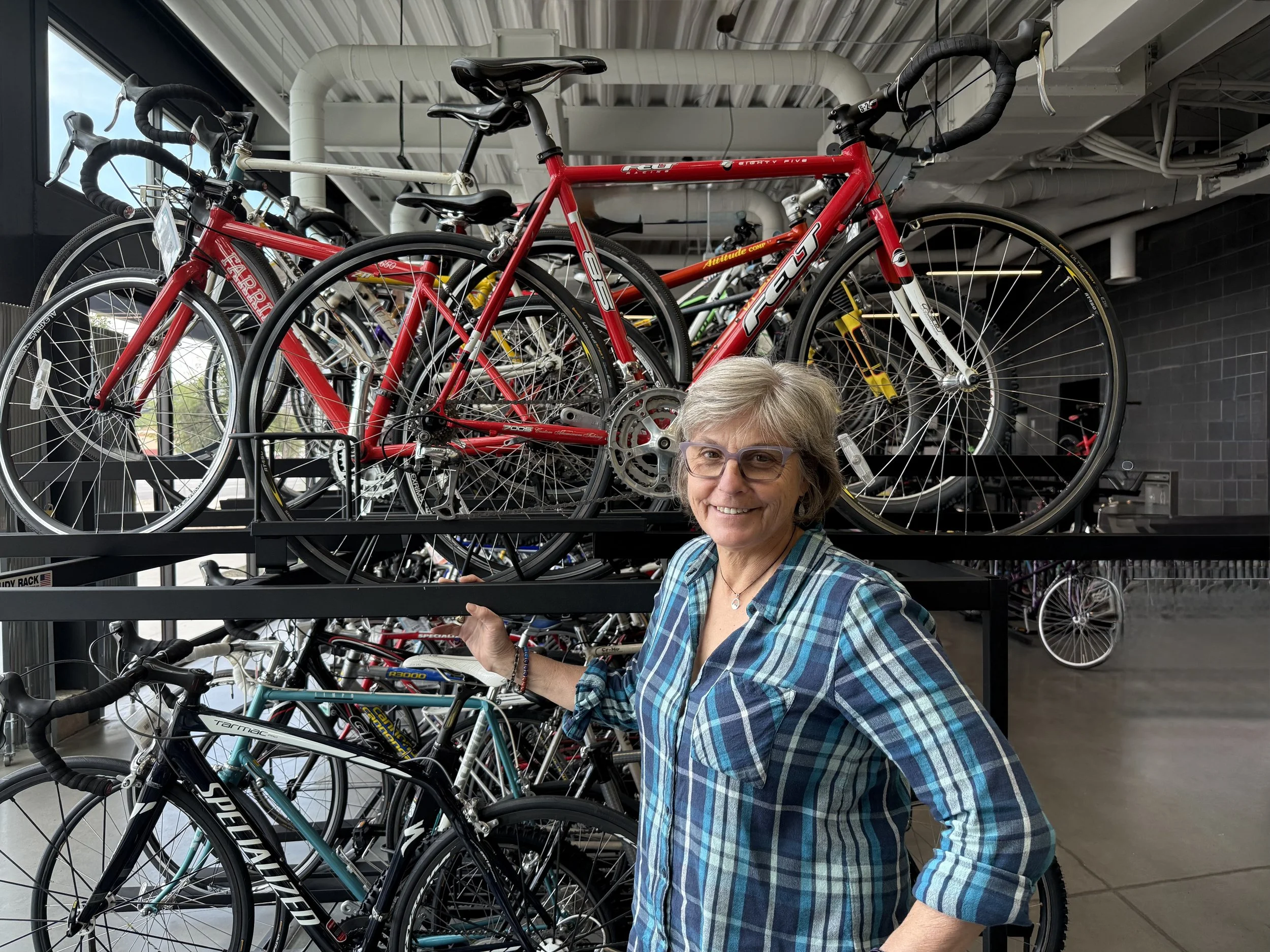
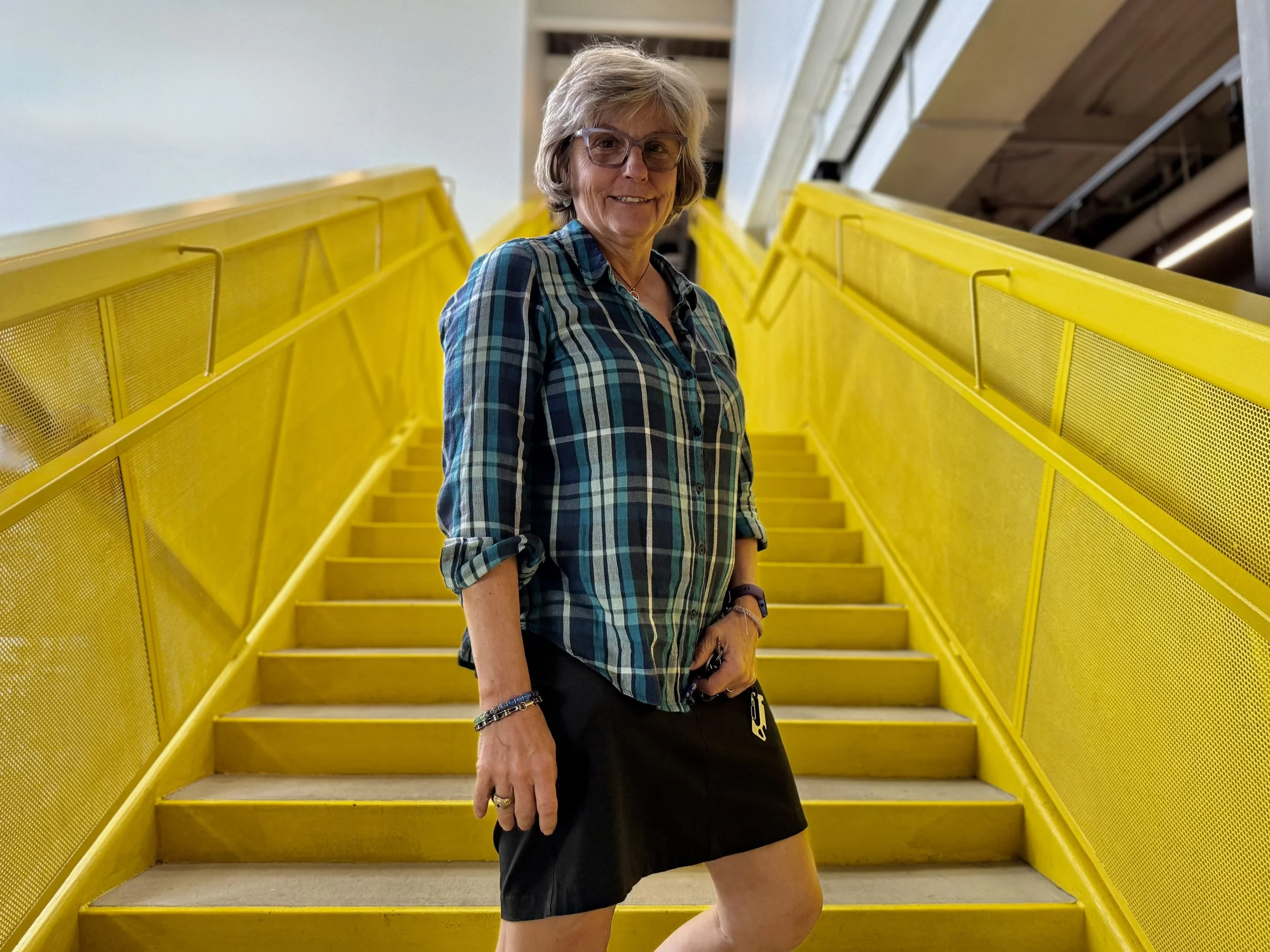
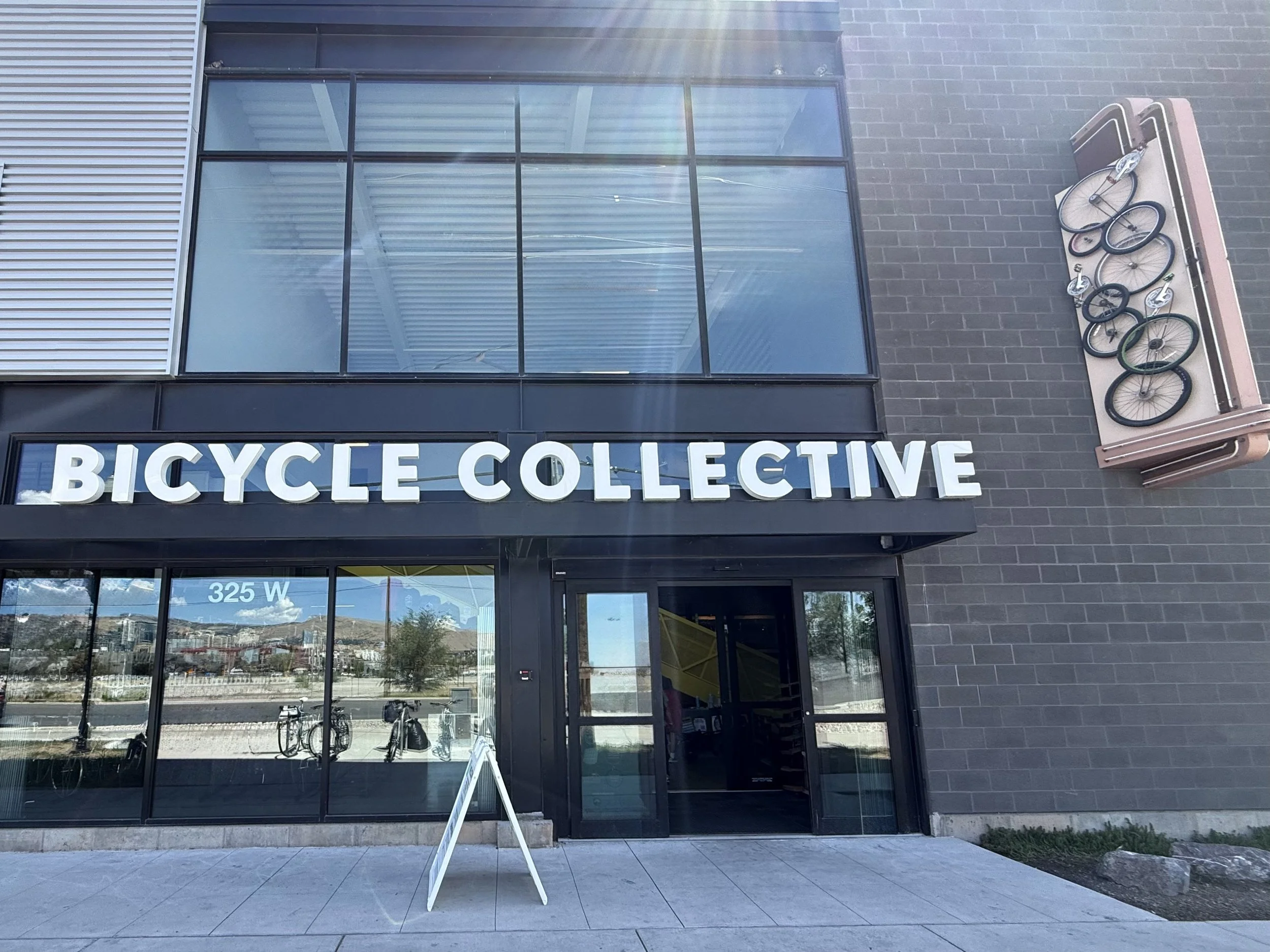
“We work at the intersection of transportation equity and environmental sustainability.” For Donna Matturro McAleer, executive director of Bicycle Collective, those are not simply words describing a nonprofit organization. They are evident throughout a building where donated bicycles arrive every day, professional mechanics work alongside longtime volunteers, and customers search for everything from a vintage part to a one-dollar inner tube. Somewhere in the midst of it all, another bicycle is being prepared for someone for whom two wheels may mean an entirely different level of independence.
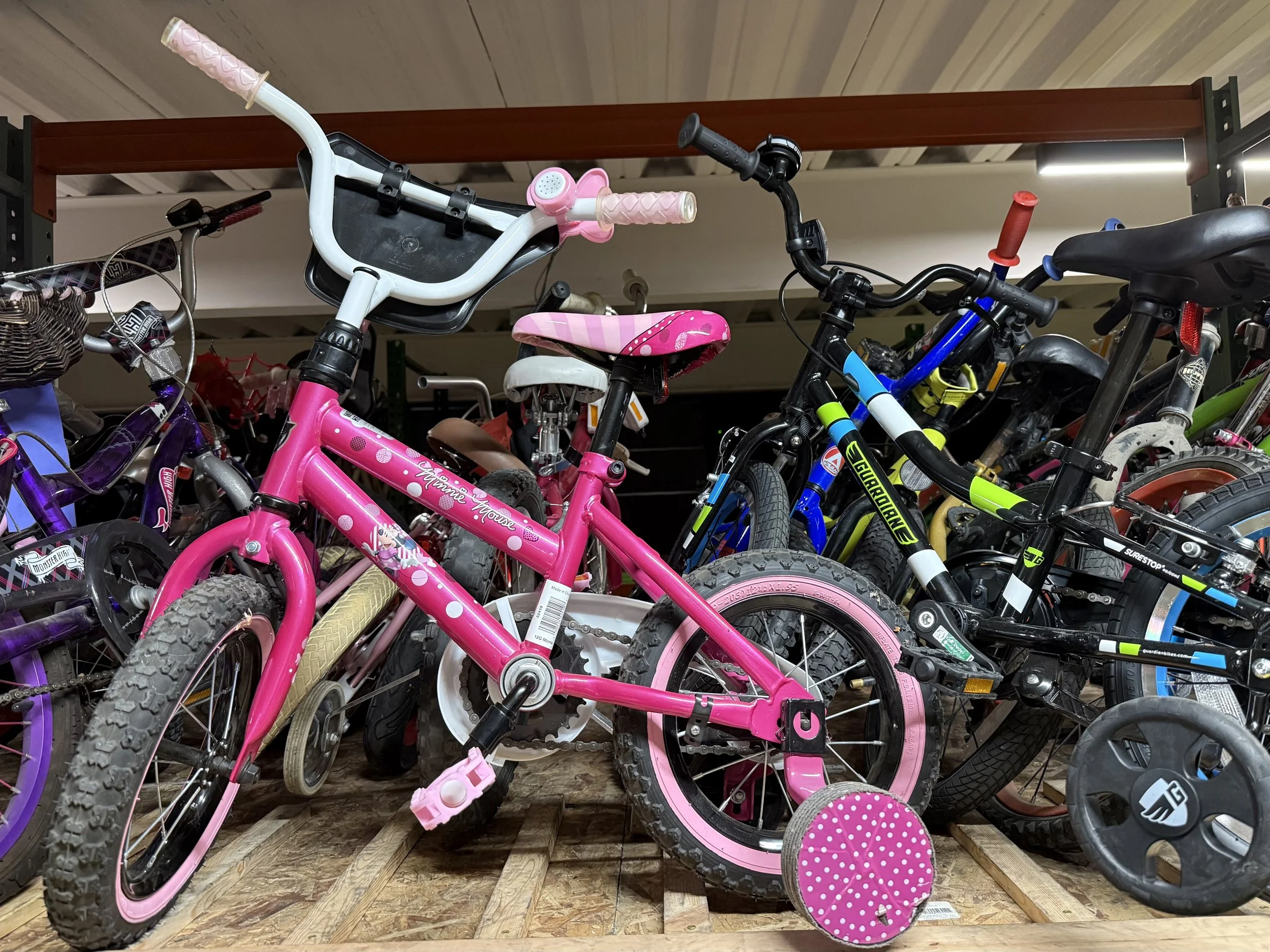
Bicycle Collective was founded in 2002 by a group of cycling enthusiasts who happened upon several children’s bicycles in and around dumpsters. The bikes were in good condition. Some needed tubes, others air in their tires or new chains. The discovery prompted a simple question. Surely, there were people who needed bicycles who could put them to use. From that modest beginning grew an organization devoted to promoting cycling as an effective, sustainable, and affordable form of transportation and recreation, with particular emphasis on providing bicycles to people who may have no other reliable means of getting from one place to another.
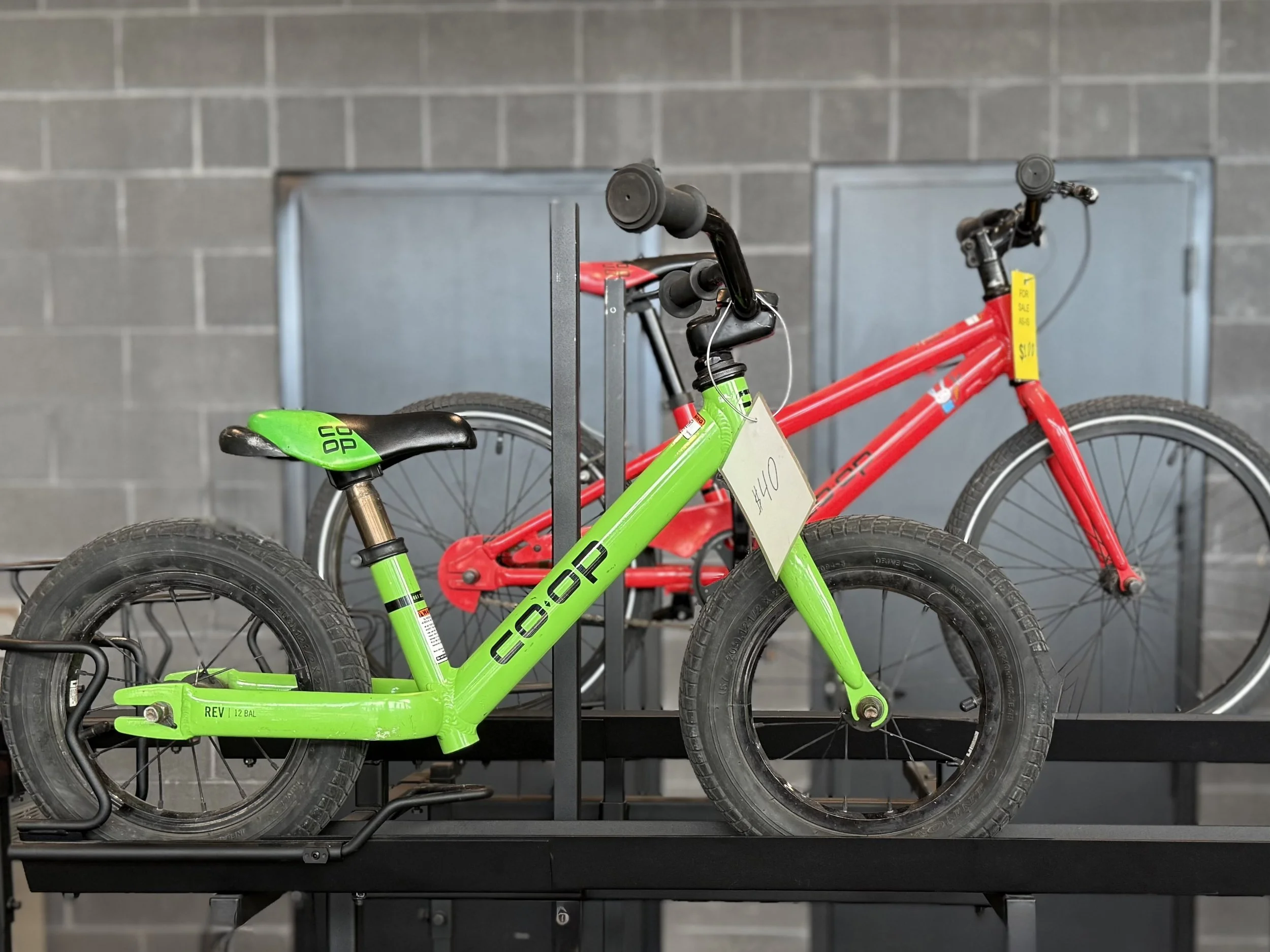
“Transportation is a formidable barrier to economic mobility,” Donna explained. Without it, getting to a job interview, maintaining employment, shopping for food or simply moving through daily life becomes considerably more difficult. Through more than sixty community partners across Utah, Bicycle Collective works with newly arrived refugees, people coming out of substance abuse programs or incarceration, low- to moderate-income families, and others facing transportation challenges. In a typical year, the organization sells approximately 1,300 bicycles and gives away another 1,200, remarkably close to a one-to-one ratio.
On any given day, that mission unfolds with clients being fitted for a bicycle. Before they leave, there is more than simply handing over the bike. The client is walked through the basics: checking the air in the tires, making certain the brakes are working properly, and understanding how to use them. The goal is not merely to provide a bicycle, but to give someone a reliable form of transportation and enough knowledge to begin caring for it.
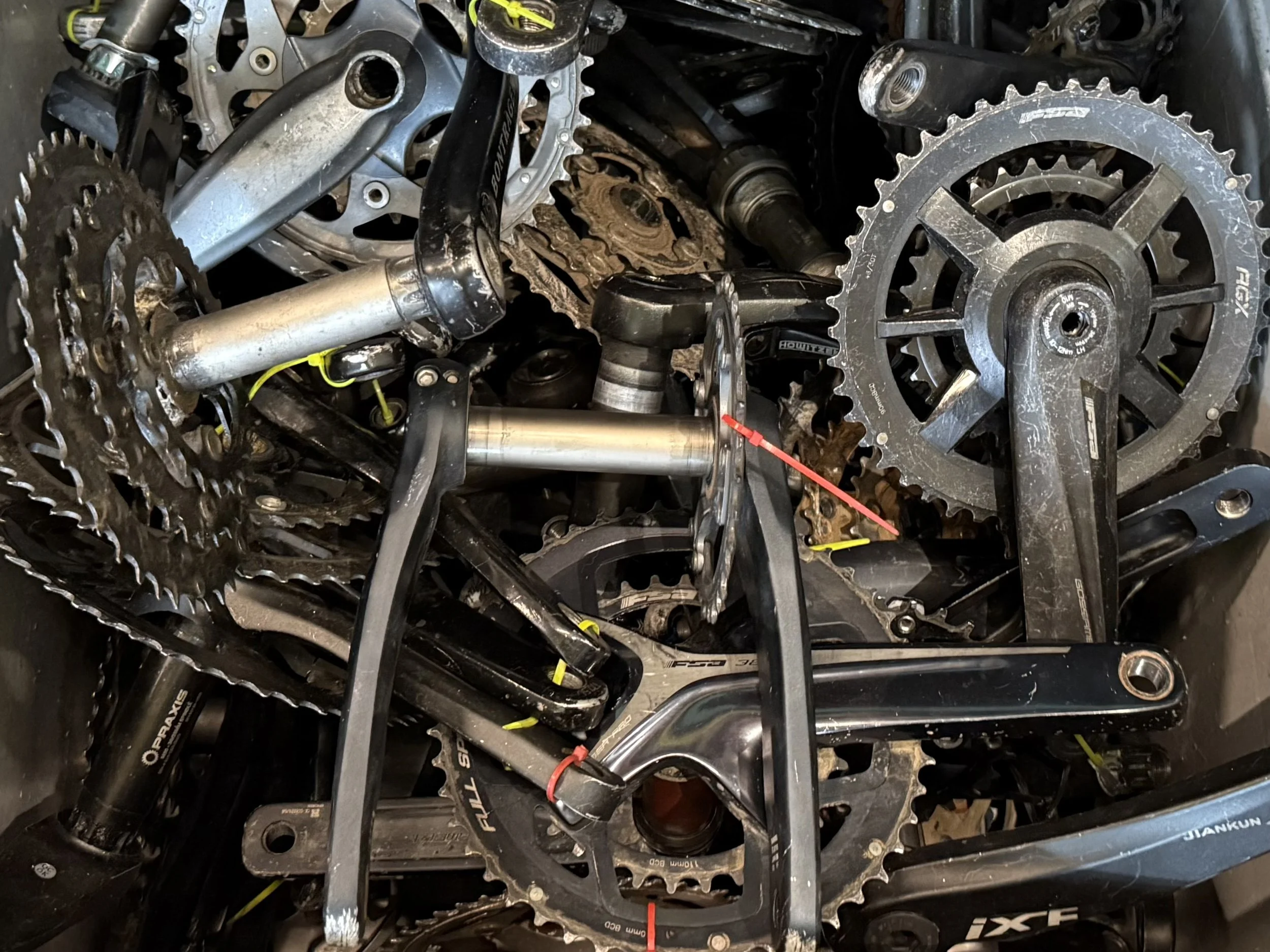
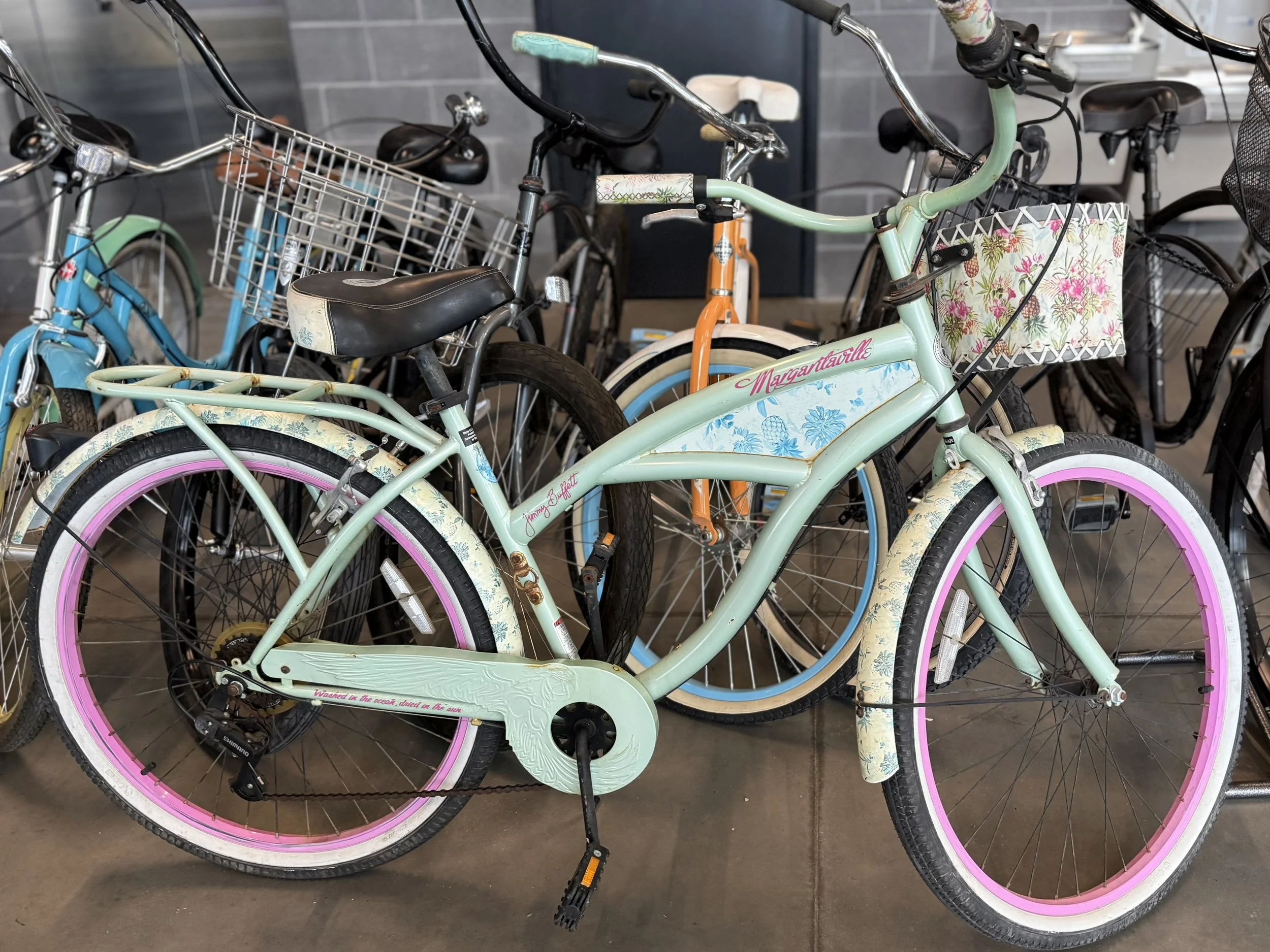
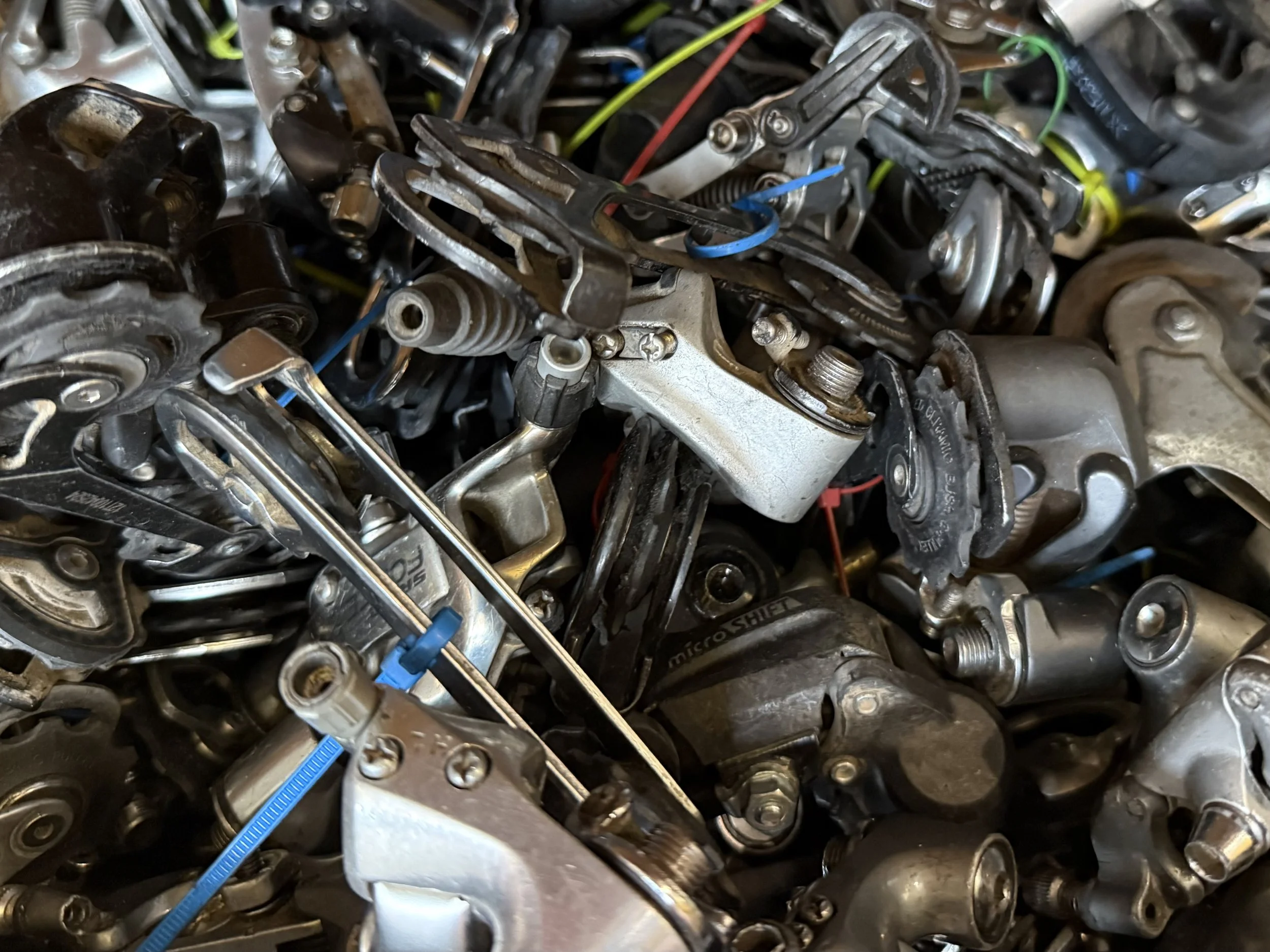
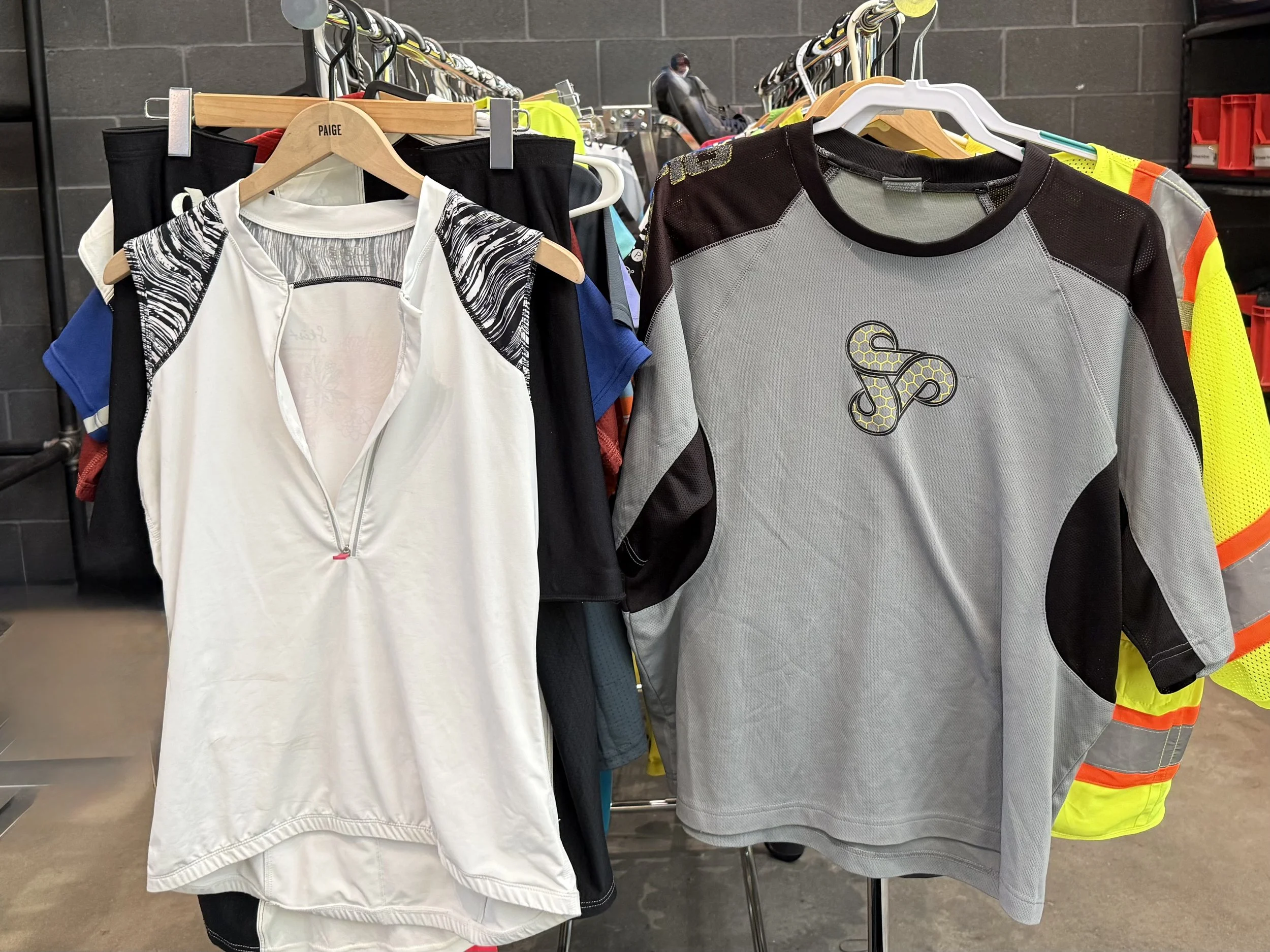
Nearly everything is donated. Bicycle Collective accepts bikes, components, accessories, trainers, clothing, and anything else related to cycling. Each donation is quickly evaluated. A bicycle worth restoring for retail goes to the professional mechanics. One designated for the organization’s Bikes for Goodwill program enters a carefully structured volunteer repair and quality-control process. Parts that can be useful elsewhere are removed and saved, while bicycles and components that have reached the end of their usable lives are recycled. Last year alone, Donna said, Bicycle Collective recycled 102 tons of steel and aluminum.
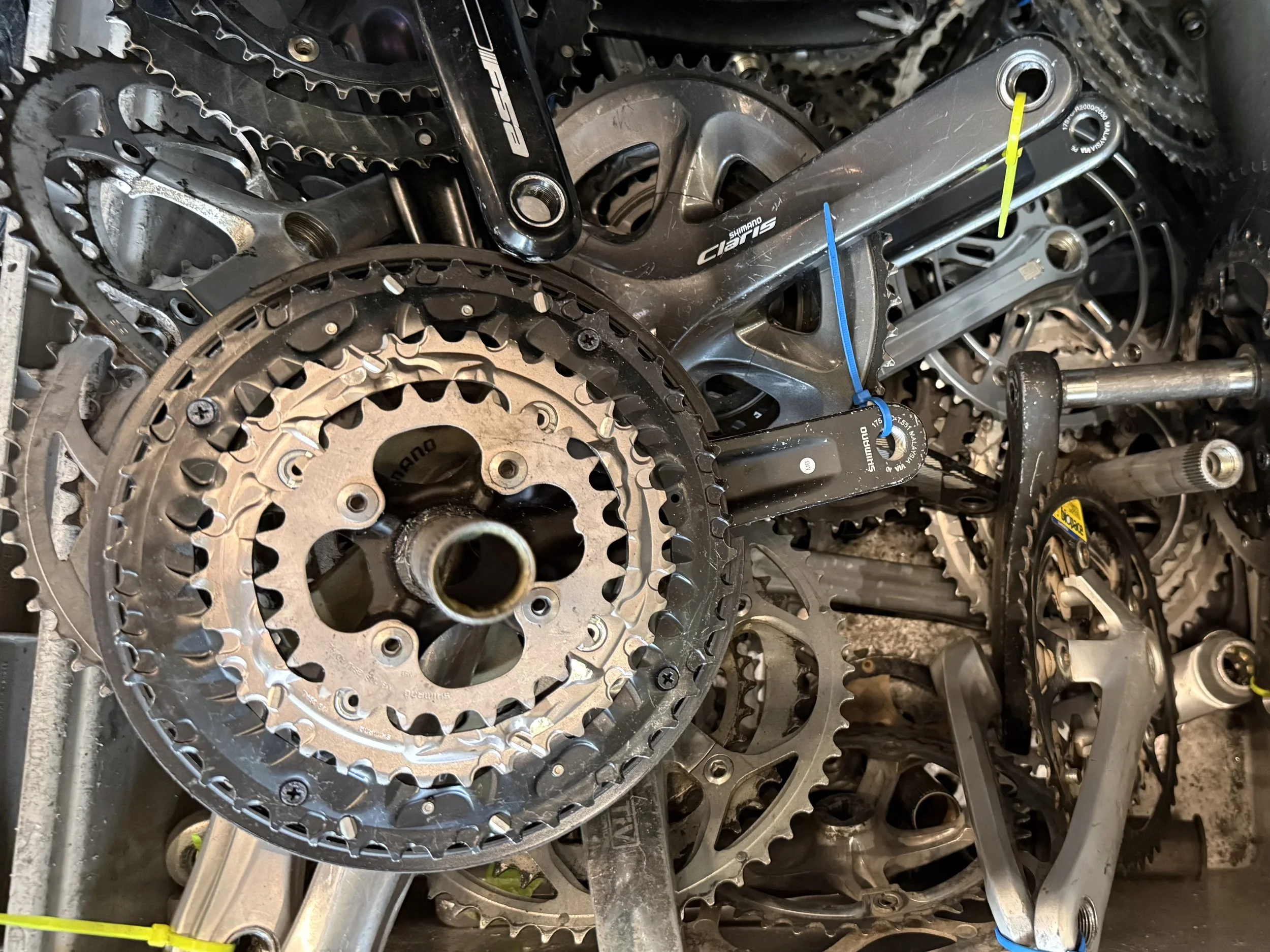
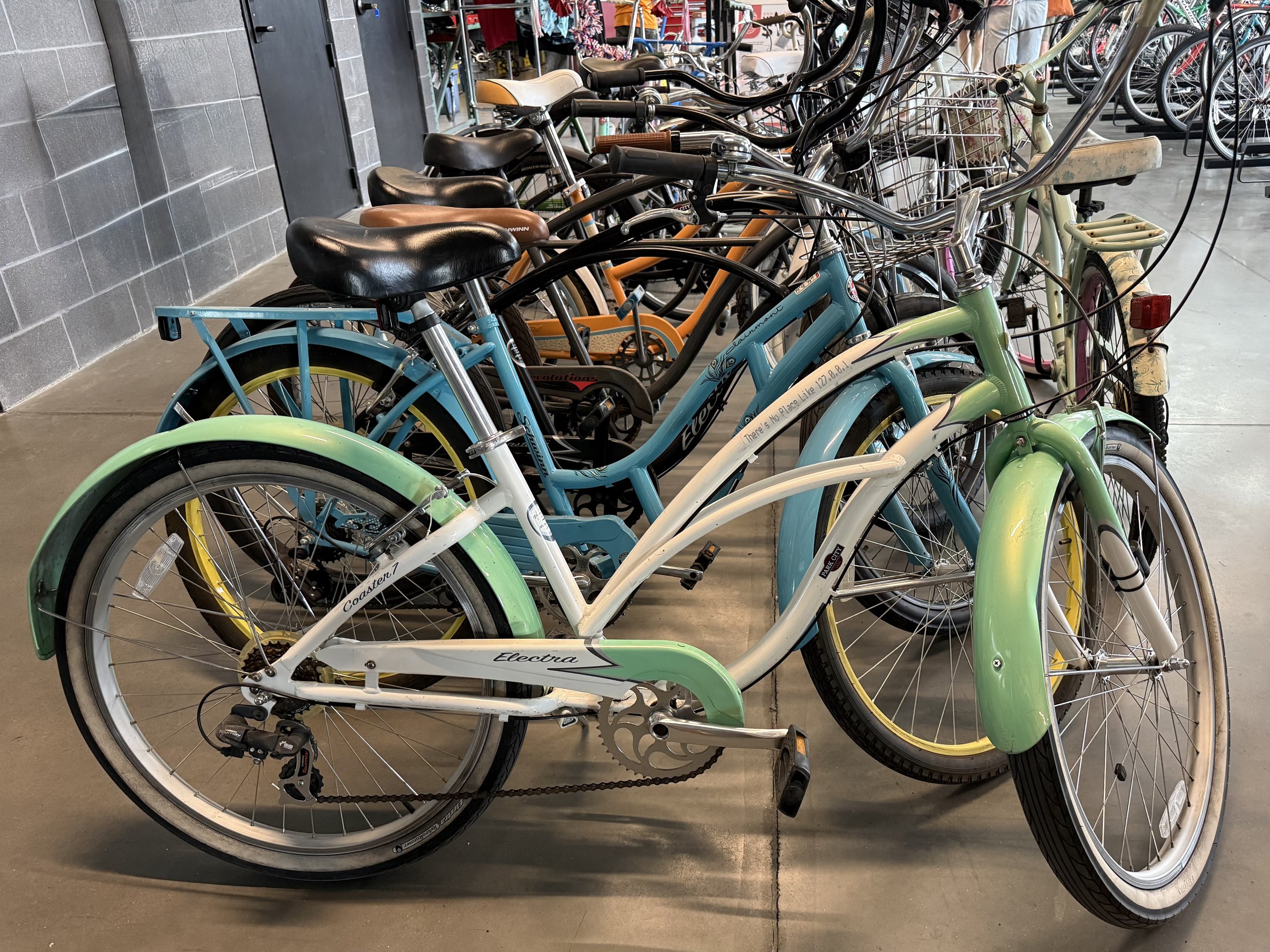
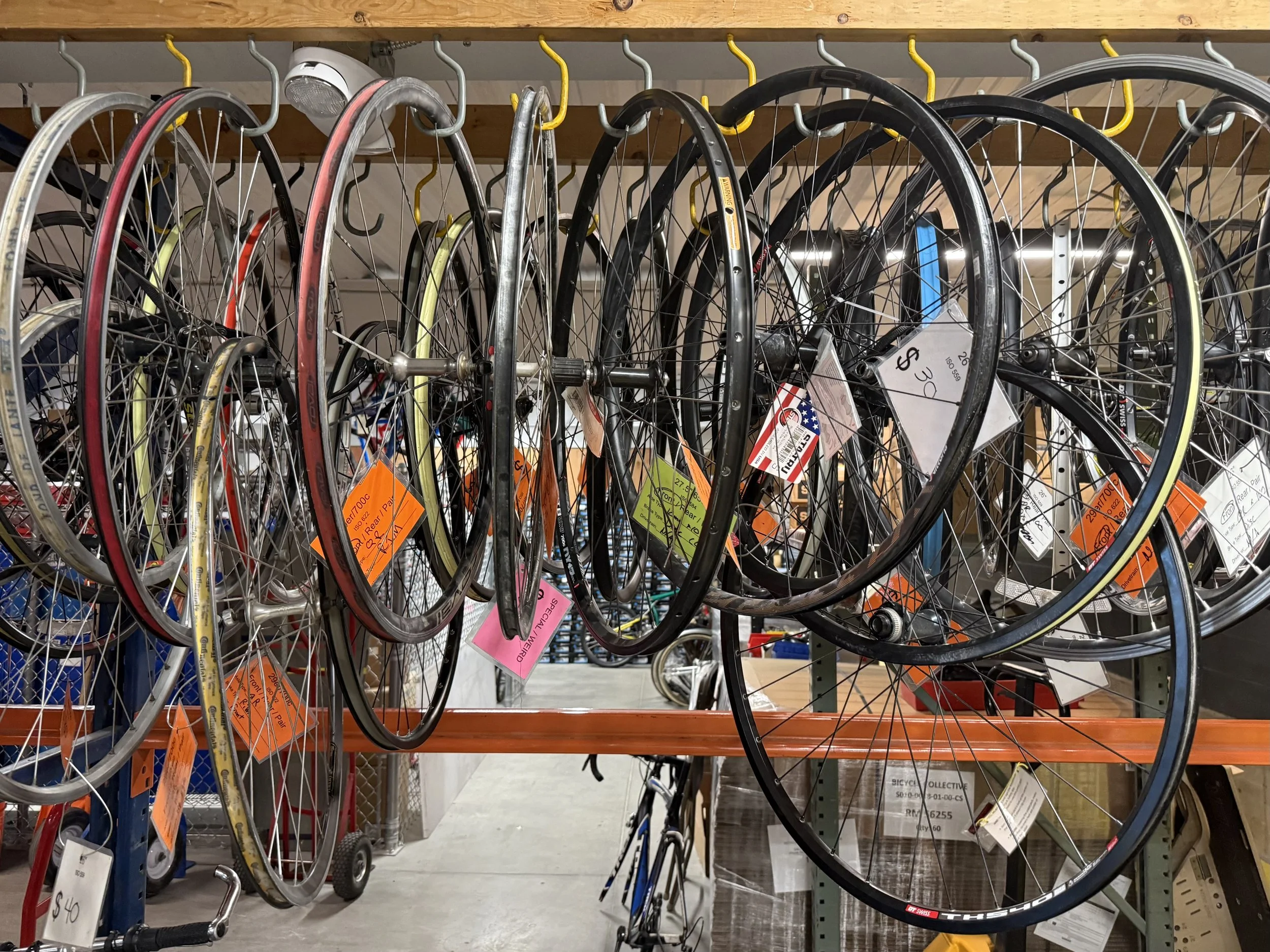
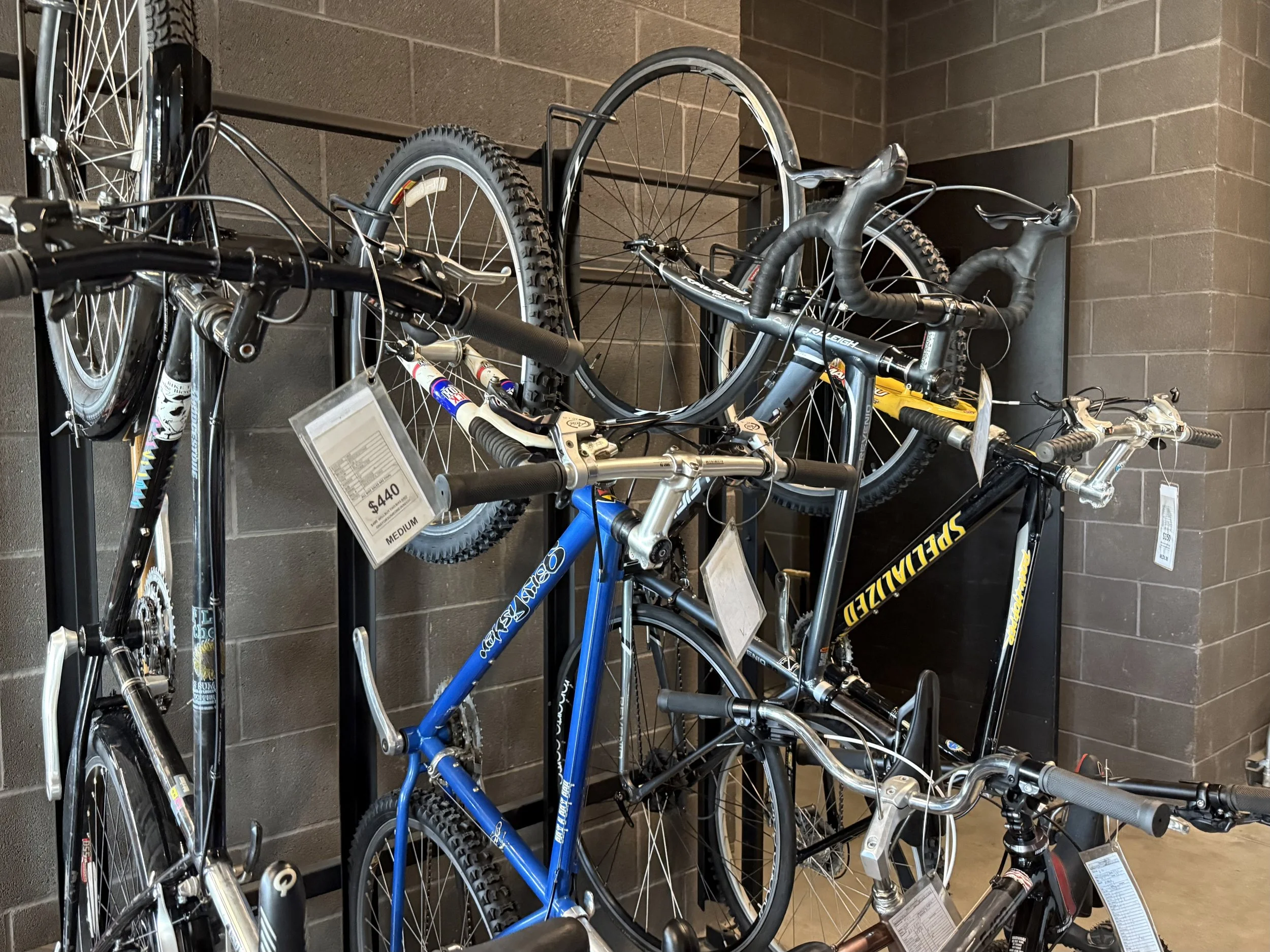
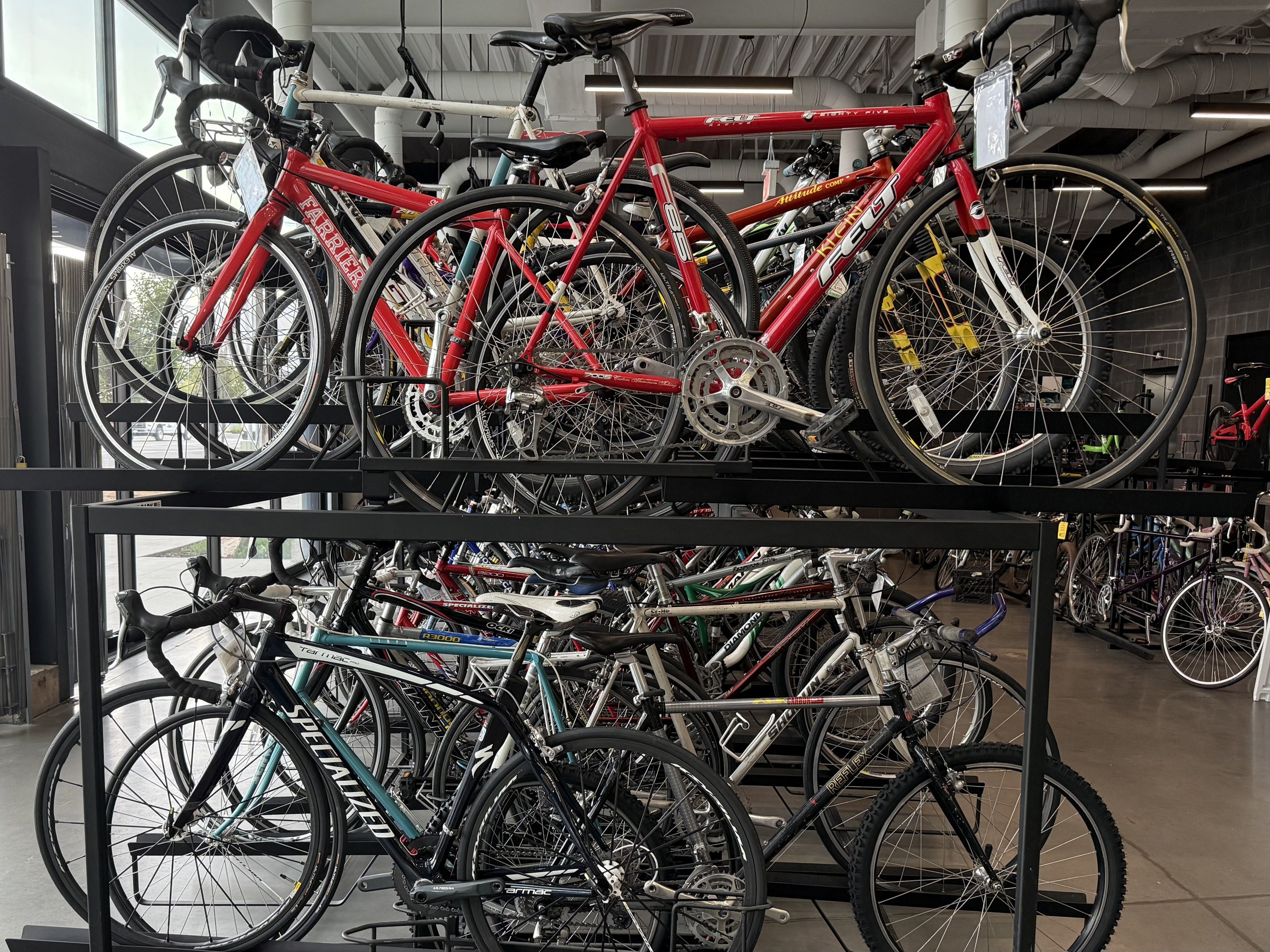
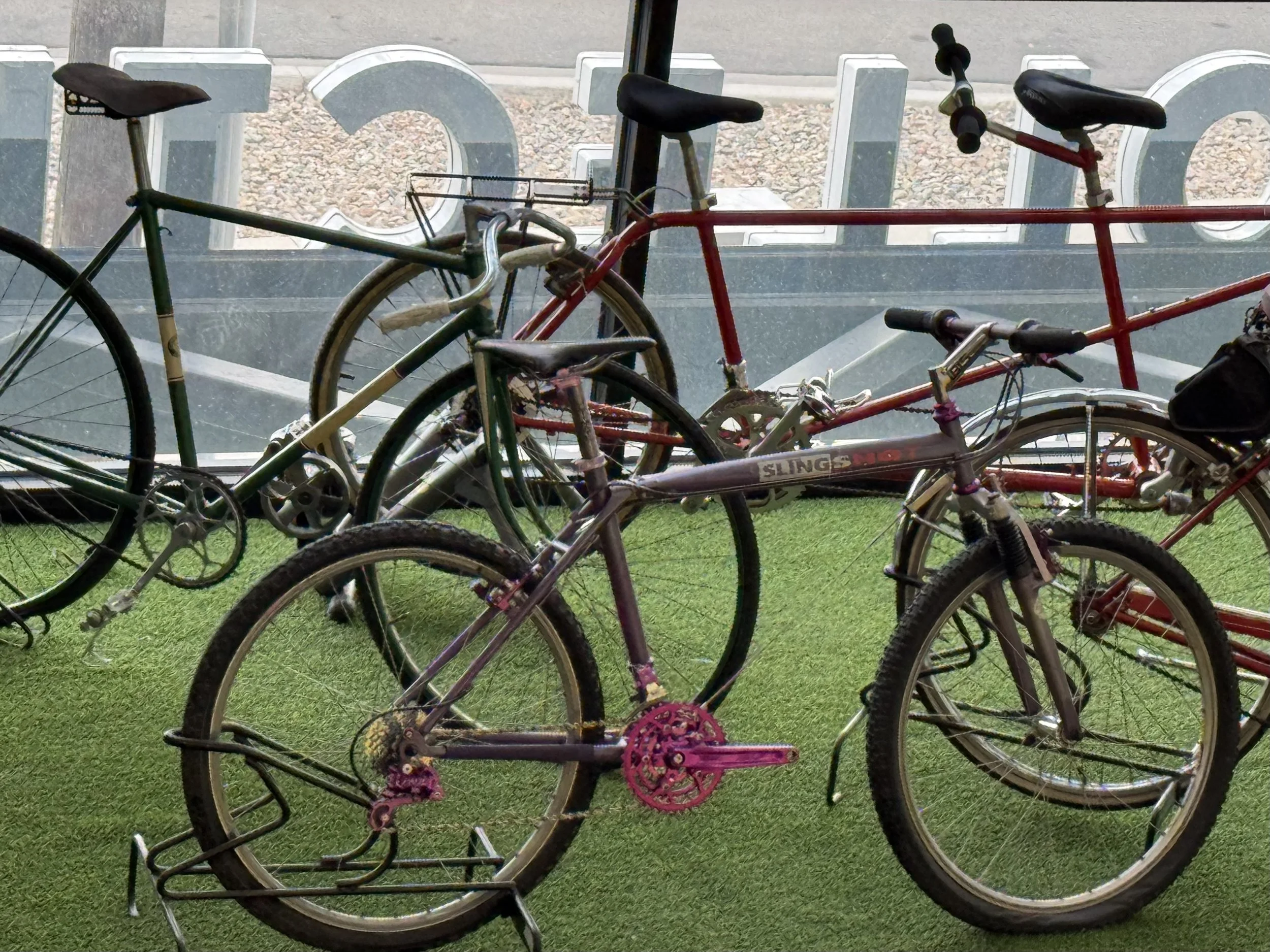
That constant circulation of materials is central to the organization. Upstairs, rows of donated bicycles await their next lives, sorted by type and size. Elsewhere, wheels, derailleurs, brakes, shifters, cassettes, inner tubes, and countless other components are organized for future use. Bicycle Collective also works with the Village Bicycle Project, sending certain bicycles and parts to Africa.
There is something particularly compelling about the enormous range of people Bicycle Collective serves. Donna pointed to used inner tubes as an example. They are among the organization’s most popular items and sell for one dollar. Some have been patched, others, although donated, may never have been used. “When somebody comes in and you see them take out twenty nickels or a hundred pennies out of their pocket, it makes you quite reflective,” she said.
Yet, on any given day, they may also ship a rare bicycle component across the country, or around the world, to an enthusiast who has been searching specifically for it. That worldwide customer base has become a surprisingly important part of Bicycle Collective. Unlike many nonprofits that rely heavily upon donations and grants, Bicycle Collective has built what Donna describes as a blended revenue model, earning seventy-five percent of its revenue through its retail and online operations, memberships, DIY bench rentals and other services, with philanthropy making up the remaining twenty-five percent. Its e-commerce operation alone now accounts for twenty percent of annual revenue, with bikes and components purchased by customers around the world.
Donna remembers reaching out to one repeat customer in New Hampshire who had placed somewhere between fifteen and twenty orders totaling thousands of dollars. She assumed he must have developed an attachment to the organization’s charitable work. His response surprised her. The mission was secondary, he told her - Bicycle Collective simply kept having exactly what he was looking for at the right price. For Donna, that was revealing. The organization does not have to depend entirely upon someone choosing to support a cause - it can compete because the products themselves have value.
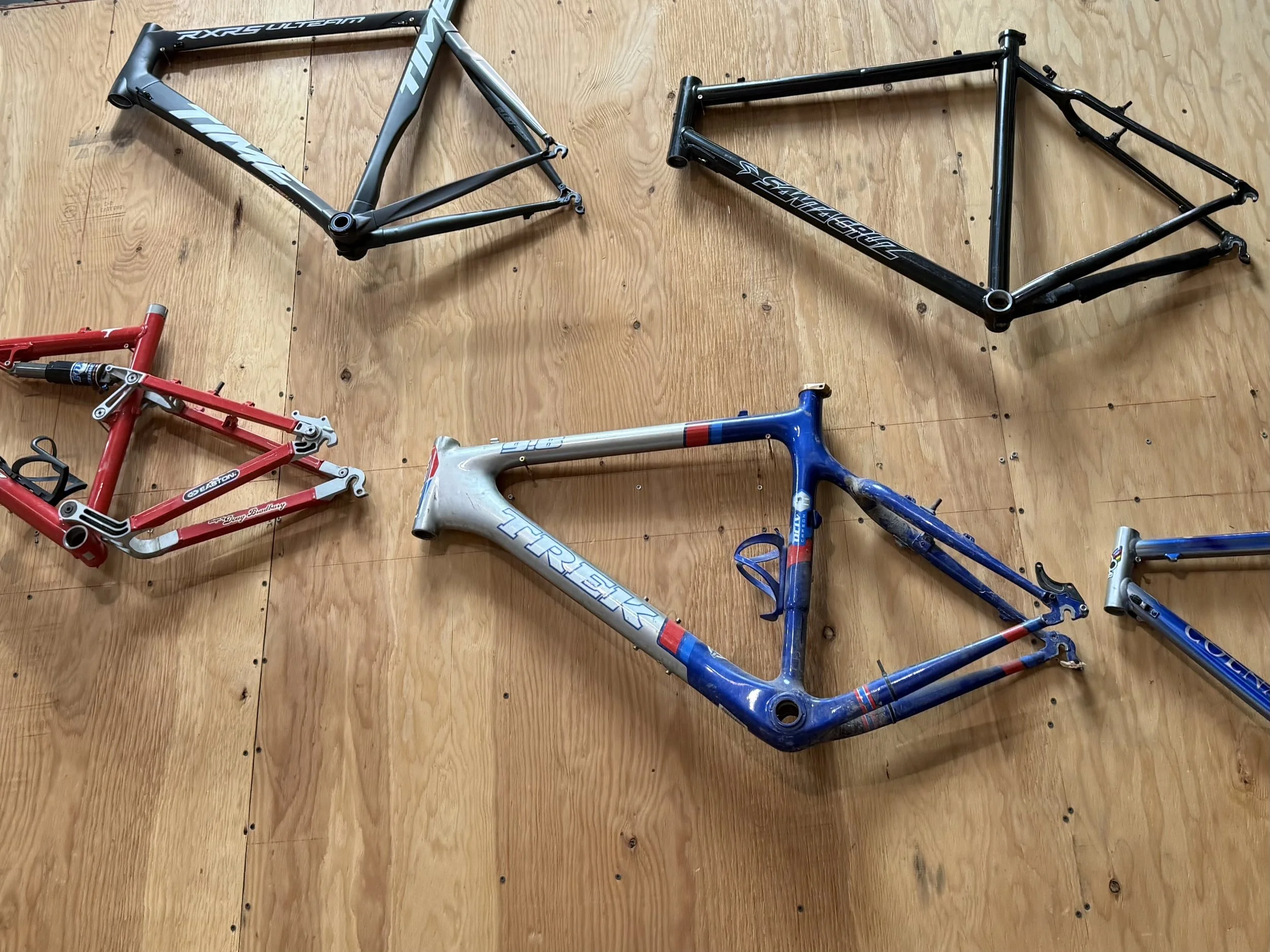
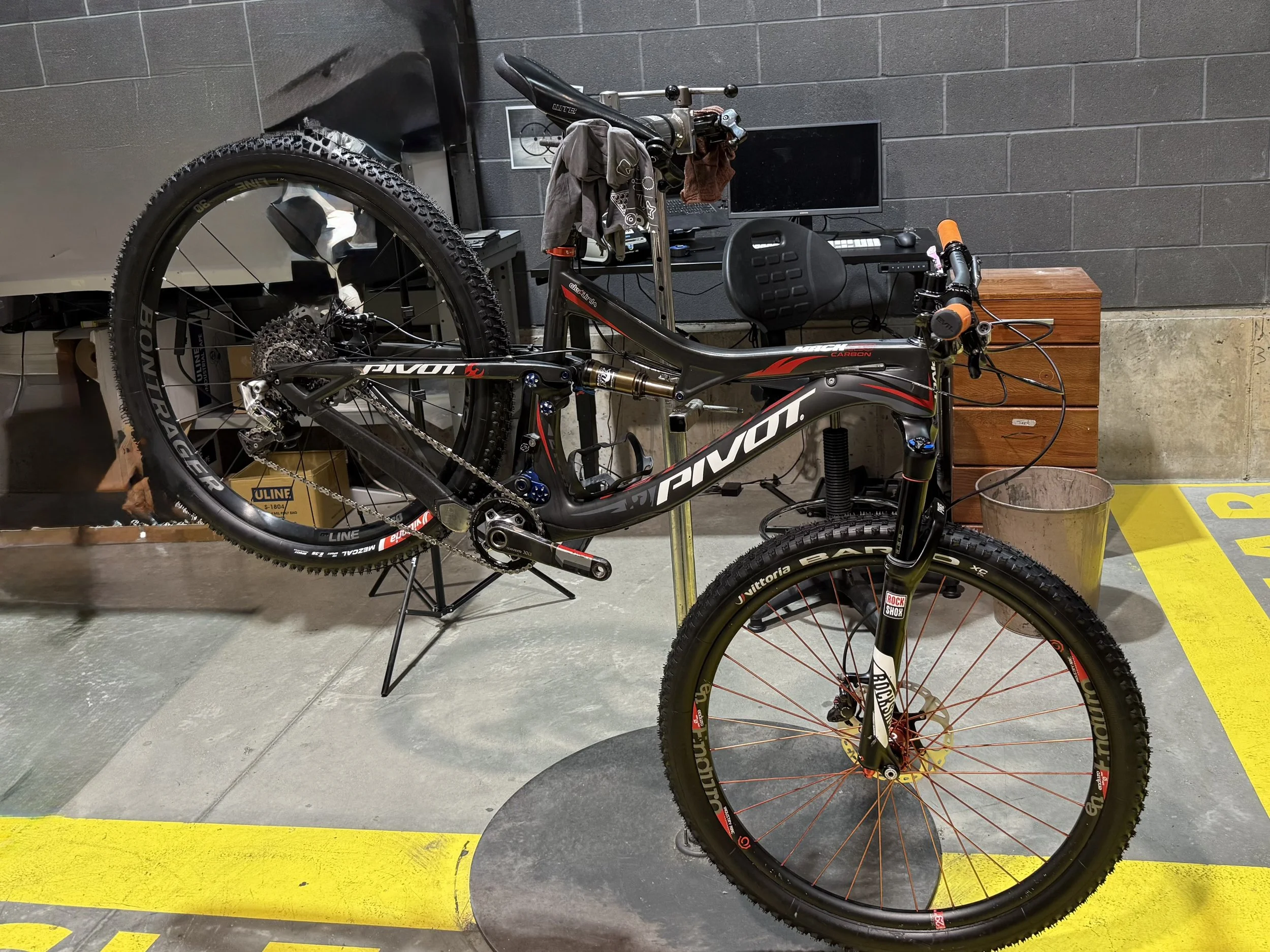
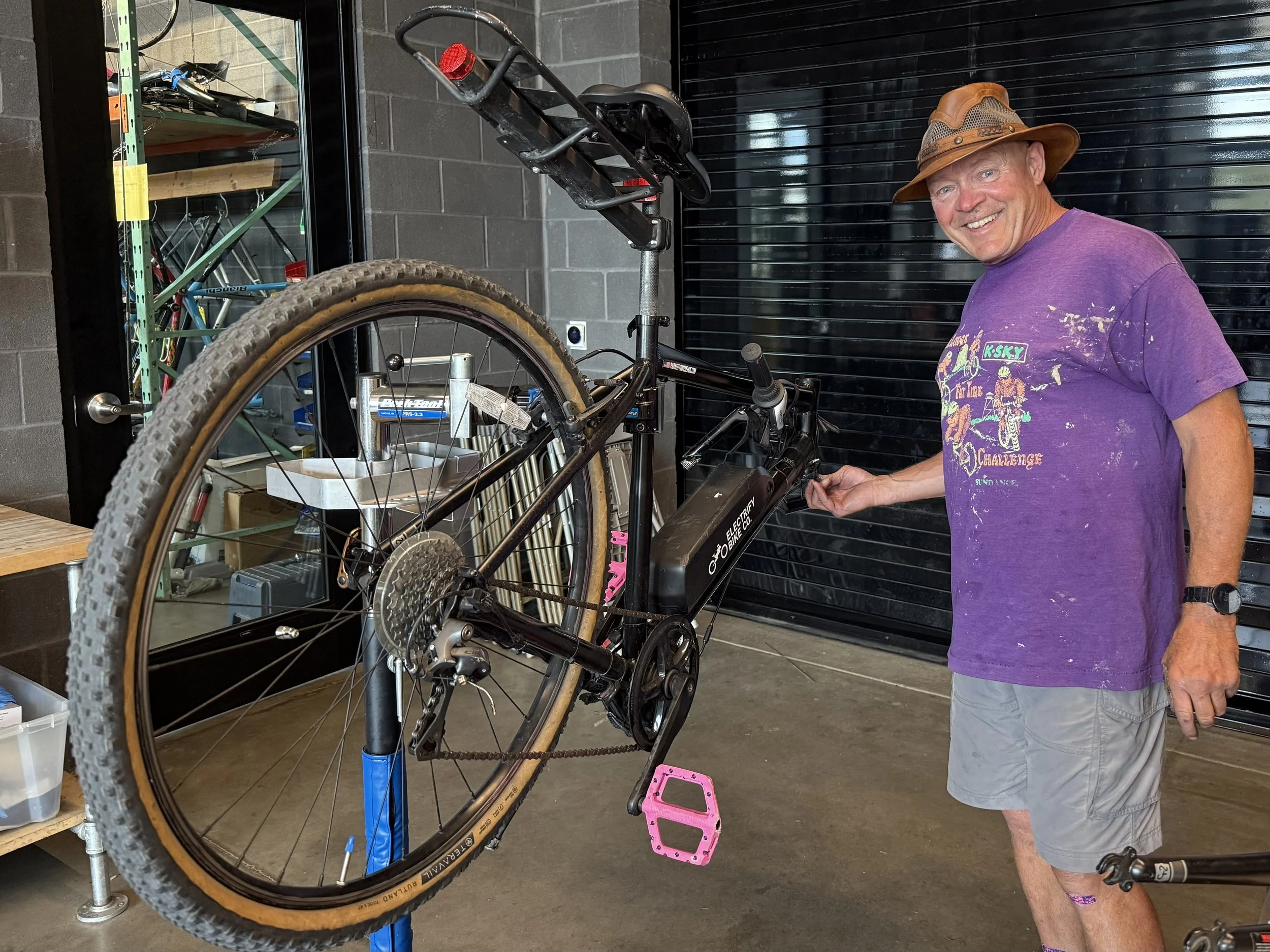
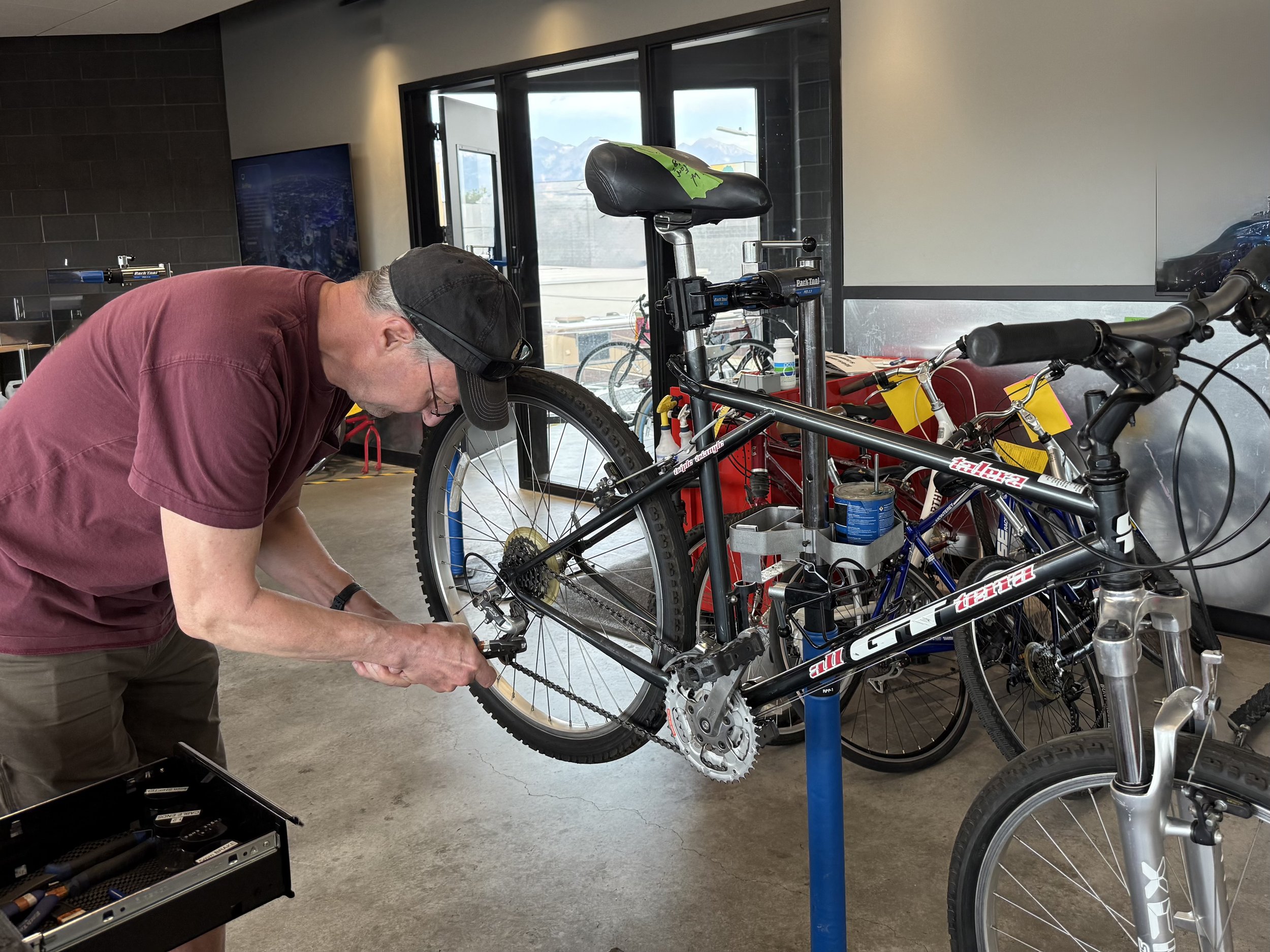
And every one of those products is different. Because everything has been donated, each bicycle on the retail floor is an inventory item of one. Professional mechanics restore them and prepare them to be ridden out the door, drawing upon what Donna believes is an unusually broad and deep range of expertise. Working daily on bicycles representing decades of design and technology, the mechanics may encounter a current high-end bicycle one moment and something built fifty years ago the next.
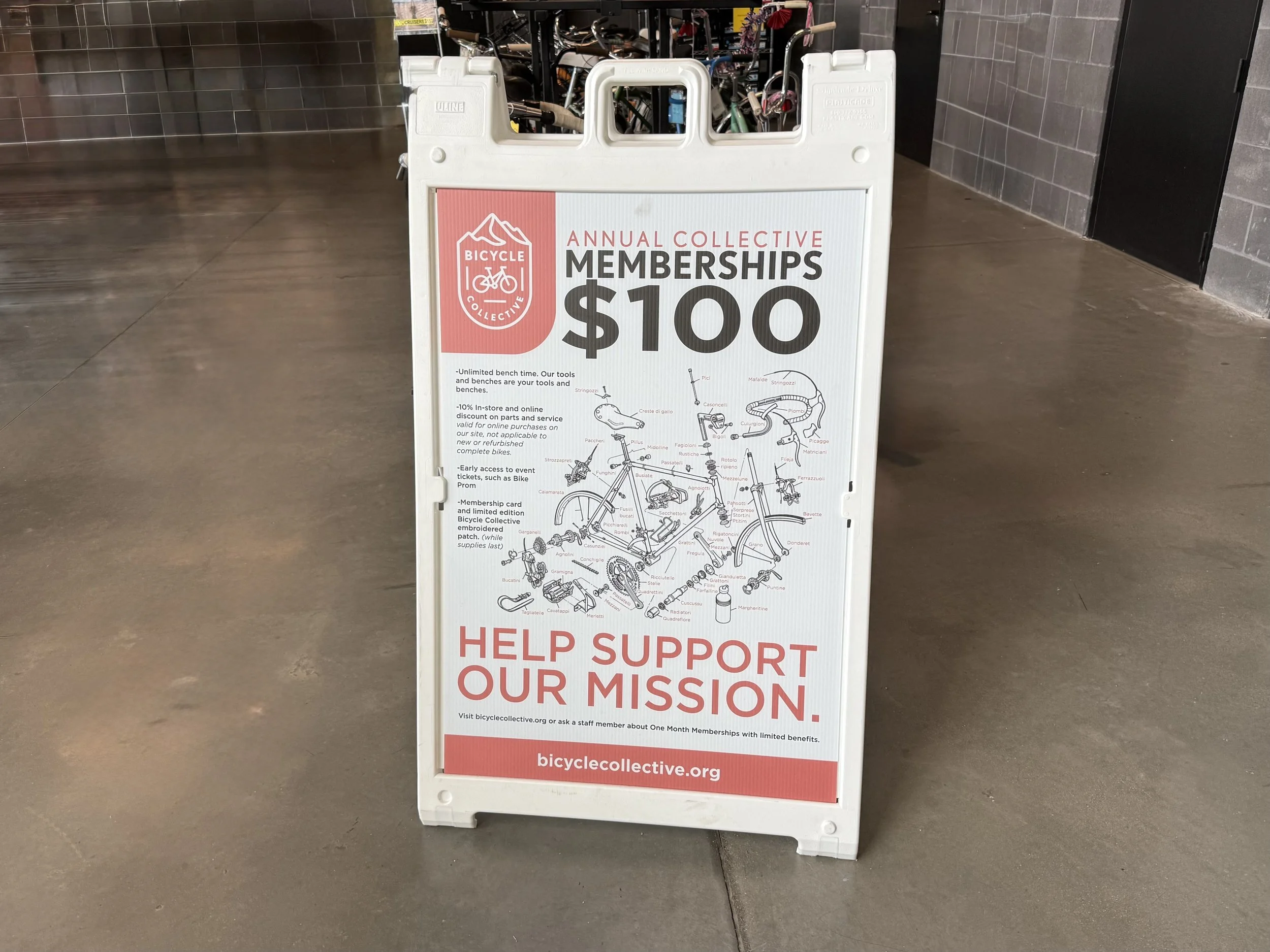
The public is welcome to shop, but Bicycle Collective also encourages people to become their own mechanics. Its do-it-yourself shop provides benches and tools for anyone wanting to repair, upgrade or even build a bicycle. Staff members offer guidance, although the person at the bench does the actual work. Bench space is available by the hour, while members receive unlimited use along with discounts on parts and accessories. In addition, community classes are held during the month and cover subjects ranging from fixing a flat or changing a drivetrain, to preparing to commute by bicycle through a Utah winter.
Wednesday evenings bring another program, known as WTF - Women, Trans, Femme - when the shop closes to the public. Women, and people who do not identify as binary, can learn bicycle mechanics, work on their own bikes, and receive instruction from volunteers in a space created specifically for them.
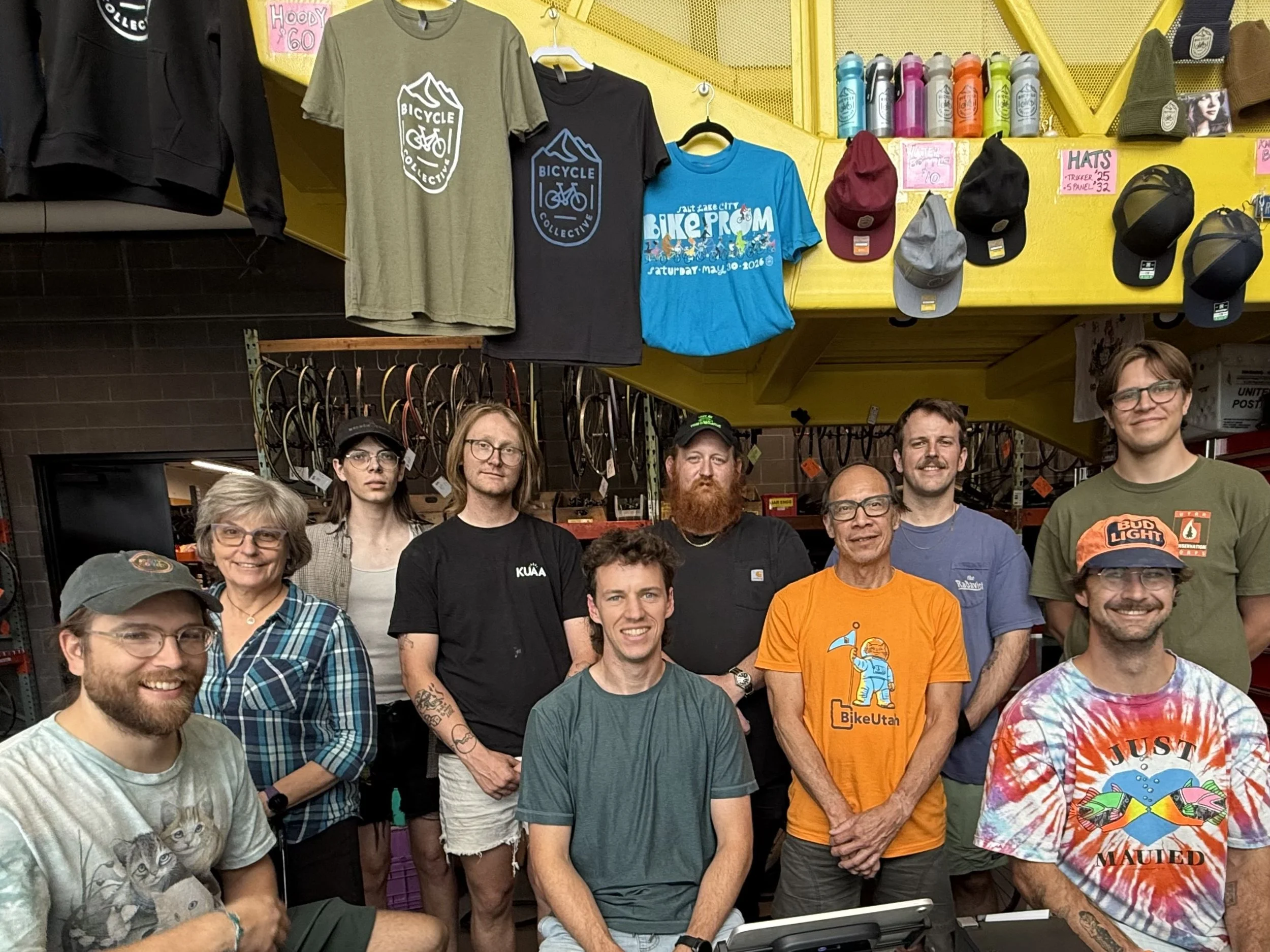
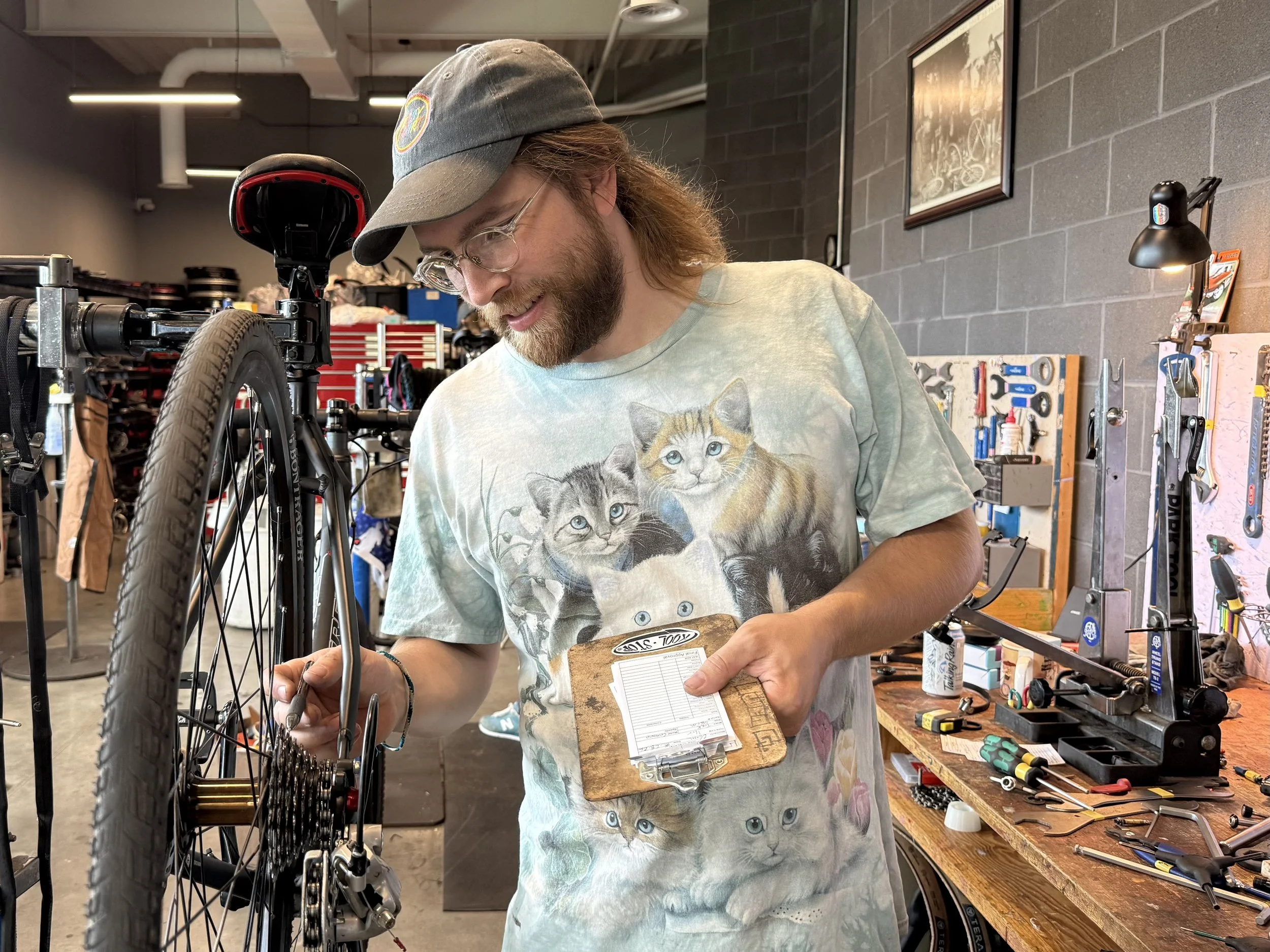
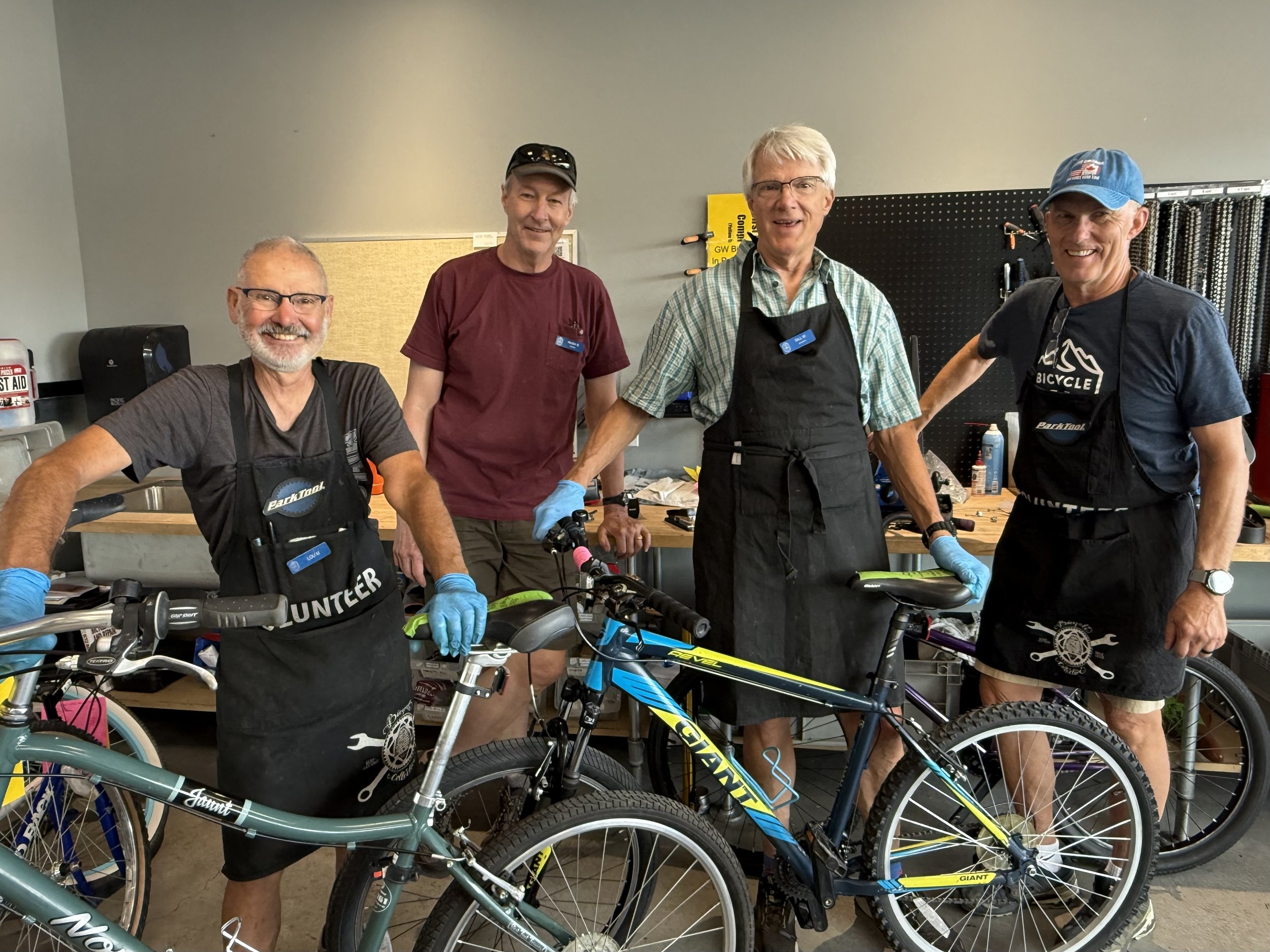
Volunteers of all ages and experiences are woven through every part of Bicycle Collective. On certain evenings, volunteers come from their regular day jobs to work on bikes. During the day, retirees can be found happily surrounded by bicycles in varying stages of repair, all destined for clients in need. Core volunteers commit at least eight hours each month and receive mechanics training. Many have been with the organization for years and have repaired hundreds, in some cases thousands, of bicycles. A detailed tagging and quality-control process ensures that each bike is checked repeatedly before it reaches its eventual rider. “I think our name is very apropos - Bicycle Collective,” Donna said. “It really is a collective of skills and experience and knowledge that we all pour into this from our perspectives.”
The organization now has three Utah locations - its Salt Lake City headquarters and smaller operations in Ogden and St. George - all accepting donated bicycles and giving bikes back to their communities. Its Salt Lake headquarters is an enormous leap from the Collective’s former space on 2300 South, which Donna estimates was twenty percent the size of the current building.
The opportunity for something larger began when Salt Lake City’s Redevelopment Agency issued a request for proposals for the property in 2017. Bicycle Collective’s board proposed creating a community bike shop, and after the project was selected, Donna was hired in 2019 to lead the capital campaign, help bring the building to life, and strengthen the organization financially. The resulting space was designed around how Bicycle Collective functions, with areas for retail, professional repair, volunteer work, donations, storage, e-commerce, education, and community gathering.
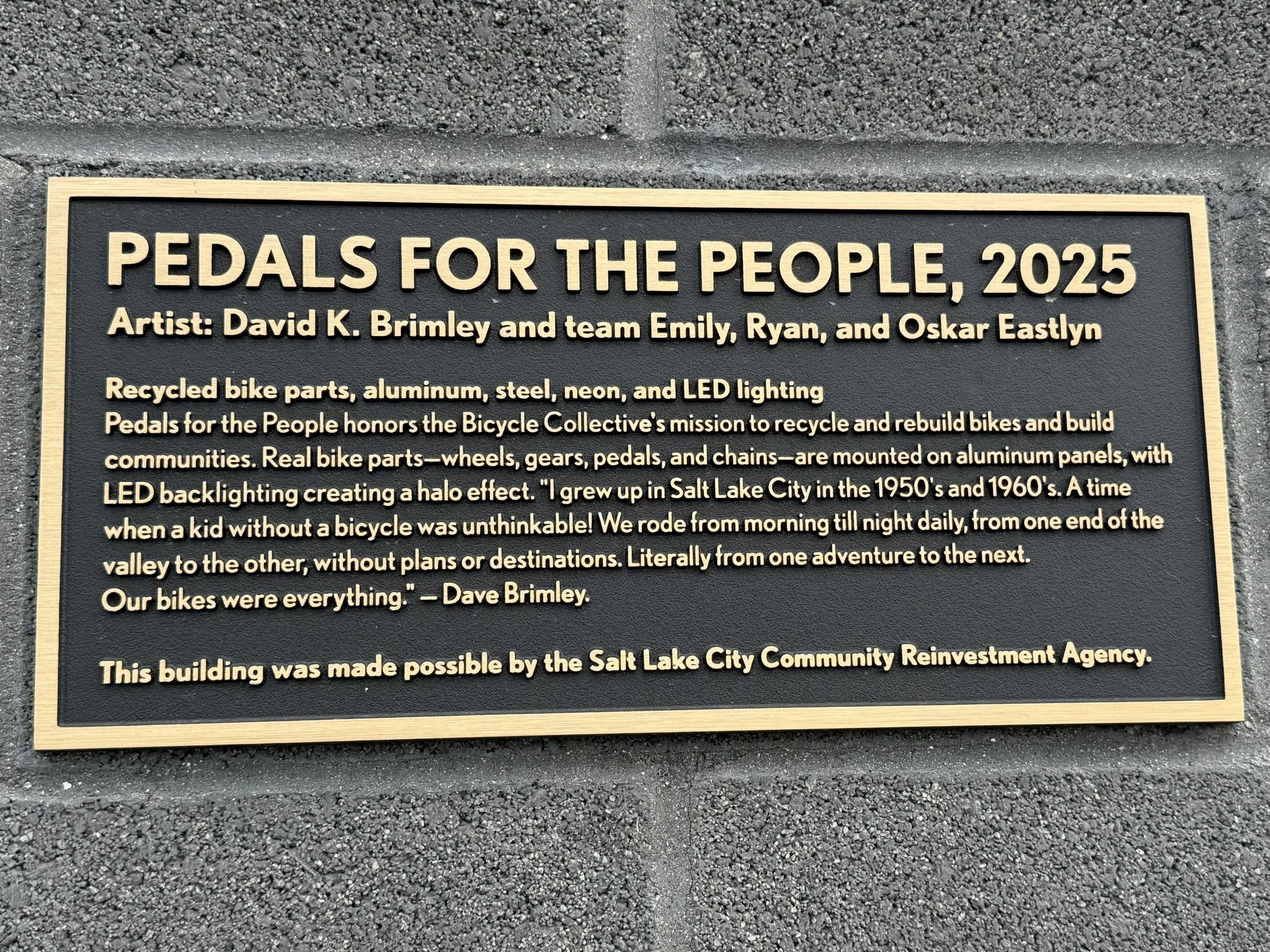
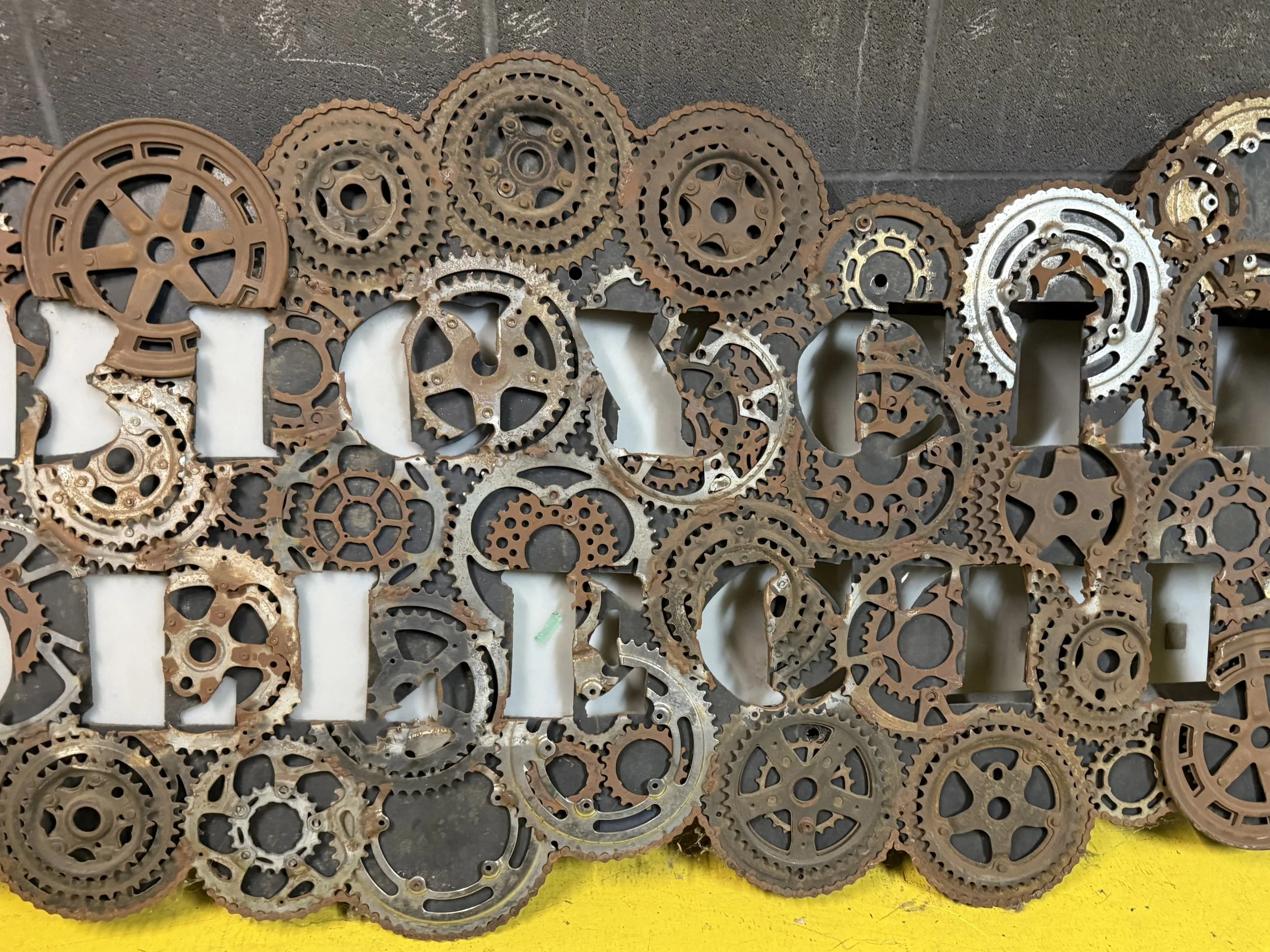
Even the building reflects the organization’s philosophy. There are 118 solar panels on the roof, recycled shipping boxes waiting to be used again and, in the e-commerce department, brightly colored pool noodles repurposed as inexpensive protective padding for bicycle components being shipped around the world. Outside, a remarkable blade sign created by local neon artist Dave Brimley incorporates bicycle parts from the shop into a piece of public art, its wheels illuminated with LED lights after dark.
The pandemic unexpectedly accelerated another transformation. When Salt Lake City began shutting down in March 2020, Bicycle Collective was considered essential because people still depended upon bicycles for transportation. Donna and her team rapidly created appointment systems, staggered staffing, limited the number of people inside the shop and found ways to continue supplying bicycles to clients without direct contact. Demand exploded. Between March 13 and the end of April, the Collective sold every bicycle it had.
At the same time, bicycle shops around the country were searching for parts as global supply chains stalled. What could have been only a crisis became an important lesson. Bicycle Collective already had something people needed, but until then its audience had been limited by geography and opening hours. E-commerce changed that. A shop in Salt Lake City could suddenly be open twenty-four hours a day to someone searching from anywhere in the world.
Yet for all the bicycles sold, shipped, and restored, the clearest expression of Bicycle Collective’s purpose may still be the simplest exchange. A person arriving without reliable transportation leaves with a bicycle.
For Donna, who can move easily from explaining revenue models and recycling tonnage to introducing the mechanics and volunteers working throughout the building, the mission comes back to those individual moments. Bicycle Collective may be a retailer, repair shop, classroom, recycling operation, gathering place, and remarkably self-sustaining nonprofit all at once, but the reason for doing it remains uncomplicated.
“Most of the time we’re dealing with people, even if they’re in a vulnerable position,” she said. “It’s a pretty happy day when they’re getting a bike.”