Junah
Address: 916 South Jefferson Street
Telephone: 801-382-9182
Website: junahslc.com
District: Central 9th
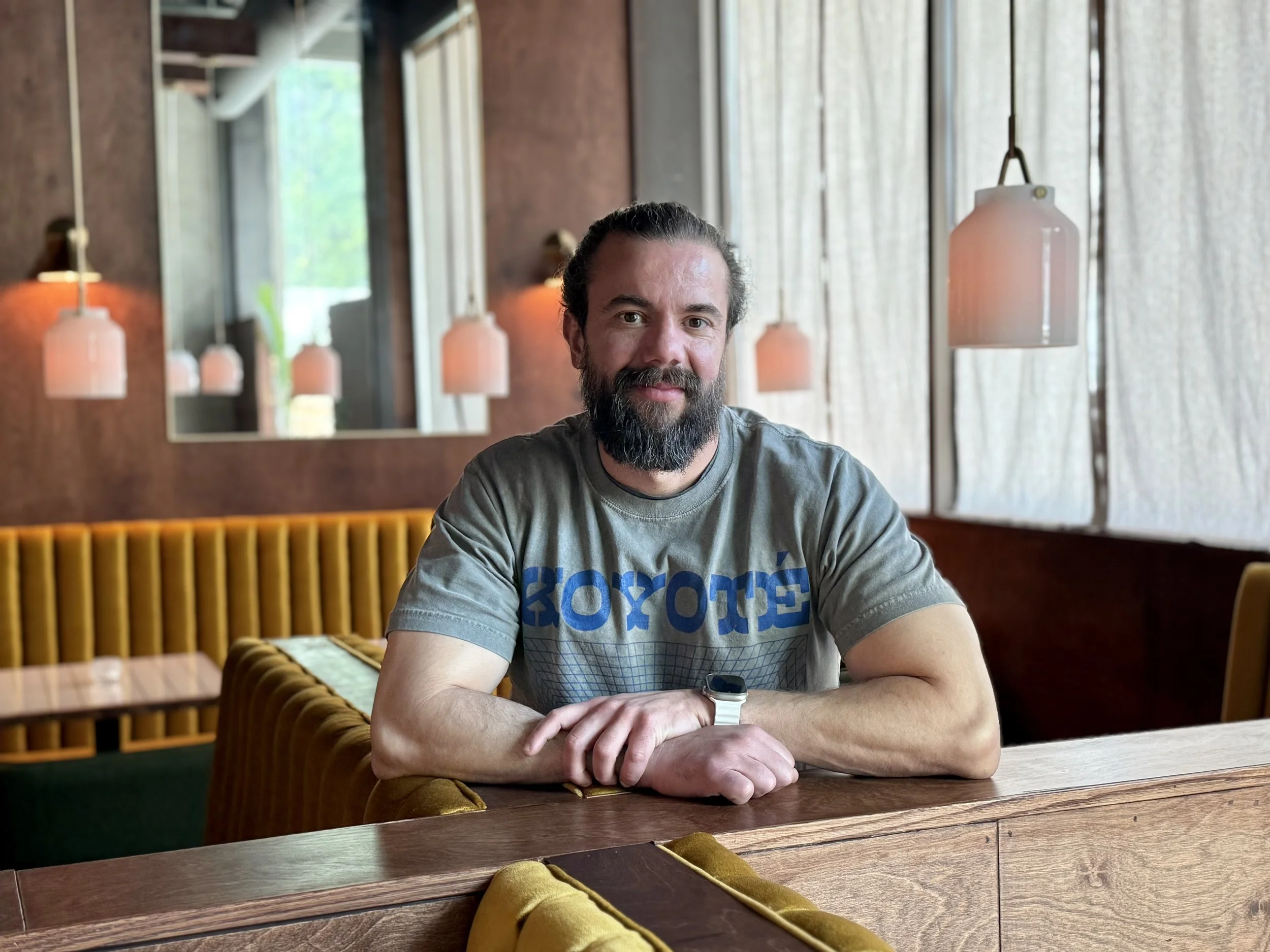
“Sometimes the fear of not being successful brings you back to the safe zone.” For Felipe Oliveira, co-owner, Junah was never meant to be safe. It was meant to be thoughtful, beautiful, and a little unexpected - the kind of restaurant that asks people to trust the people behind it and then rewards that trust with something they have not quite seen before in Salt Lake City.
Felipe, and his partner Hironosuke Tagai, known to many simply as Hiro, had already taken one leap together with Koyote, the ramen and Japanese restaurant that quickly became one of the city’s most talked-about new spots. When they first decided to open a restaurant together in 2023, both men understood the risk. They had spent years in the industry, helping other owners build and grow restaurants, but those ventures had not been “on our dime, on our luck,” as Felipe put it. Koyote was different. It began with an empty office space, permits, demolition, construction, branding, furniture, design, menu development, and every behind-the-scenes detail that comes before a single dish reaches a table.
At Koyote, Hiro’s vision led the way. Opening his own ramen and Japanese restaurant had long been a dream, and once the two men committed to making it happen, they built everything from the ground up. The first days were quiet enough to be frightening. Felipe remembers opening on a Tuesday with only about fifteen guests. The next day was not much busier. Then Stuart Melling of Gastronomic SLC wrote about them, and everything changed. Within days, the restaurant went from a handful of diners to crowds they could barely keep up with. Because their food required time - marinades, prep, careful cooking - they occasionally had to close simply because they had run out of food. “It was a good problem to have,” Felipe admitted, “but at the same time, not that great.”
Still, Koyote found its rhythm. Customers returned again and again, some “more than one hundred times in less than two years.” The restaurant grew beyond ramen, adding dishes that worked in warmer months as well as cold ones, and Felipe and Hiro began to understand that what they had created was not a passing moment. It was a business the community had embraced.
Felipe and Hiro had arrived at that moment from very different paths. Felipe was raised in Brazil where he first built a career far from restaurants, managing IT for a large hospital group before leaving for the United States in search of something more alive and meaningful. After time in Florida, he drove west with his dog and landed in Utah, a place whose mountains and open horizon reminded him of his hometown, Belo Horizonte. A job at Per Noi Trattoria introduced him to the restaurant world and slowly developed into a calling. Italian food, especially, became part of his foundation.
Hiro’s story began in Japan and continued in Utah where he grew up missing the depth of Japanese flavors he knew from home. His father had opened a small Japanese restaurant in Salt Lake, giving Hiro an early glimpse of the industry, though he first tried to follow other interests, including tennis and illustration. Food kept pulling him back. After years in sushi kitchens, he became increasingly focused on ramen, eventually returning to Japan to study and work in ramen shops before bringing that knowledge back to Utah.
Together, their backgrounds gave Koyote its foundation: Hiro’s deep connection to Japanese food and Felipe’s instinct for building, organizing, and pushing an idea forward. At Junah, those same strengths would take a different shape.
Felipe is not someone who stands still for long. “I like to grow,” he said. “As a business, as a person, all my career, I always aim for the top.” That drive is not only about money. In fact, Felipe is quick to say that if money were the only motivation, there would be easier ways to earn it. What matters to him is the experience - the possibility that someone might walk into one of their restaurants and leave happier, more satisfied, or somehow changed by the meal and the moment.
When the space that would become Junah became available, Felipe and Hiro first considered whether it could be a second Koyote. The location, however, was too close to the original. Rather than repeat themselves, they decided to create something entirely new.
Felipe had a strong background in Italian cuisine, one he had developed working with Italian chefs and learning from Italian food culture over the years. Hiro brought his Japanese heritage, training, and creativity. Together, they began exploring Itameshi - the meeting of Italian and Japanese cuisine. Felipe knew there were restaurants in cities like Los Angeles, New York, and Seattle playing in that space, but he did not see it being done in Utah in the way they imagined. “The only thing we had to do again was to be unique.”
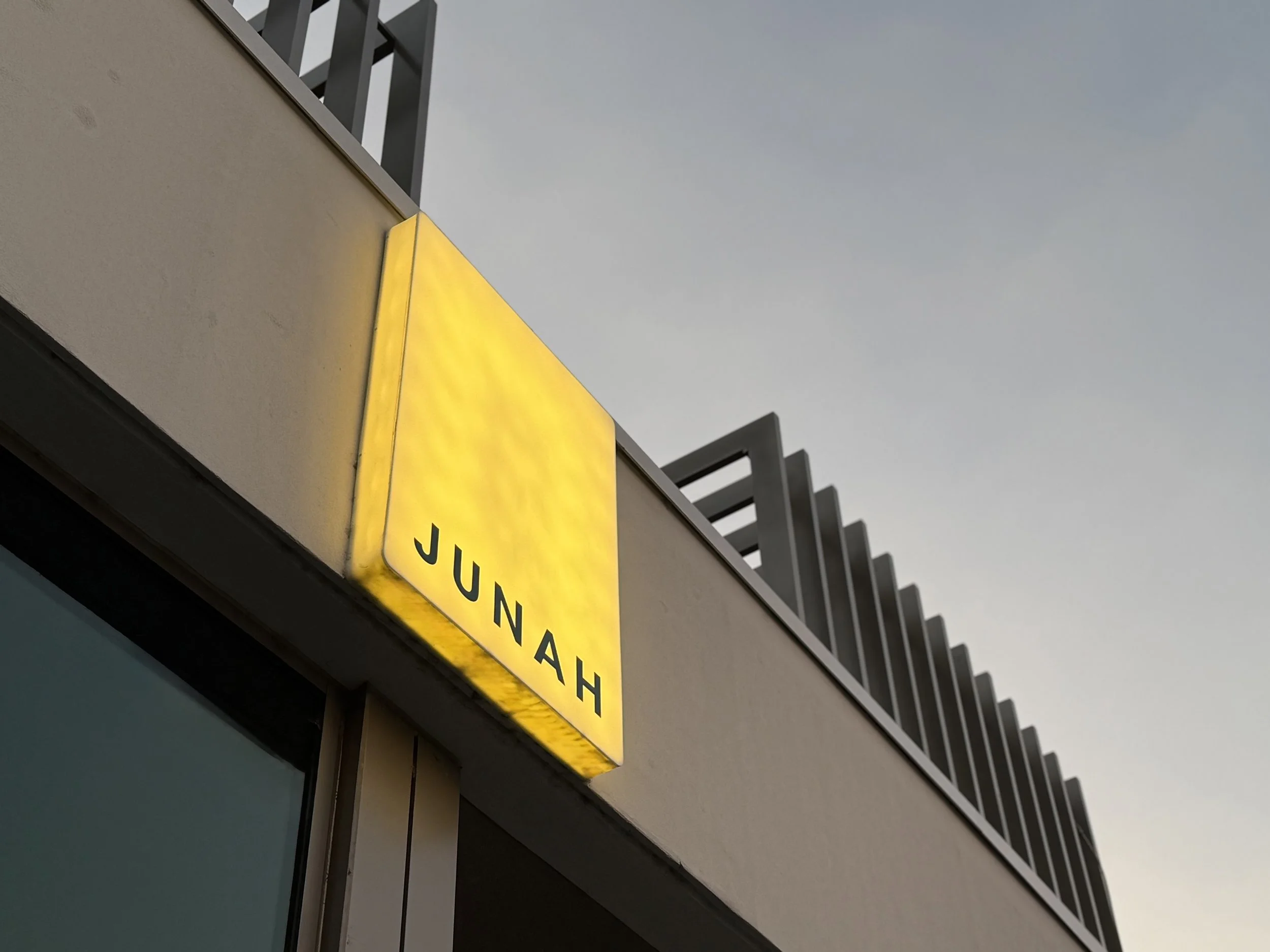
Junah opened in March 2025 after Felipe signed the lease in October 2024 and spent roughly six months bringing the space to life. The name itself, he explained, was chosen simply because they liked the sound of it. People have since told him it carries meanings in different cultures, but that was not the reason. “It was just a pretty name that we think fit well.”
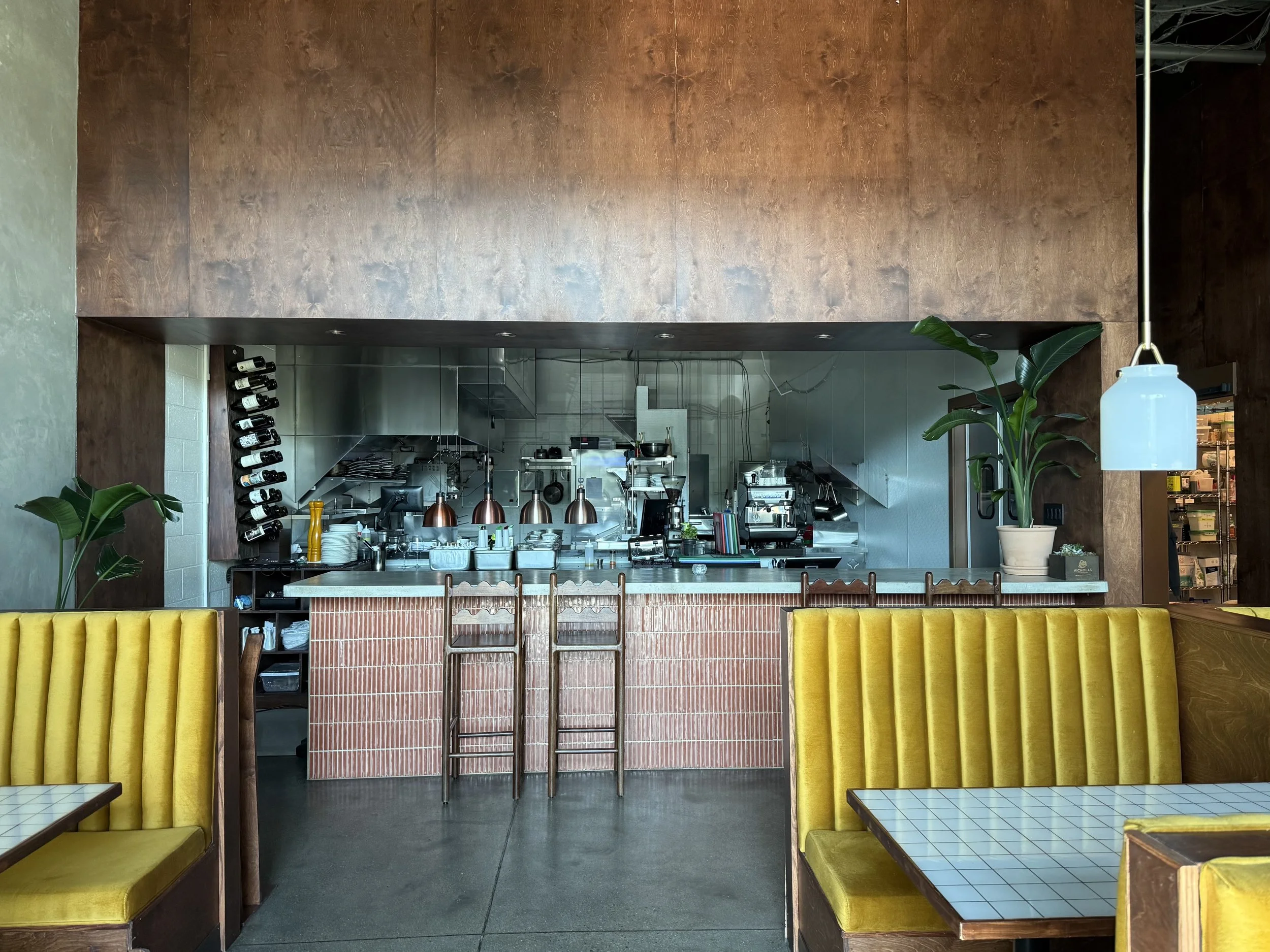
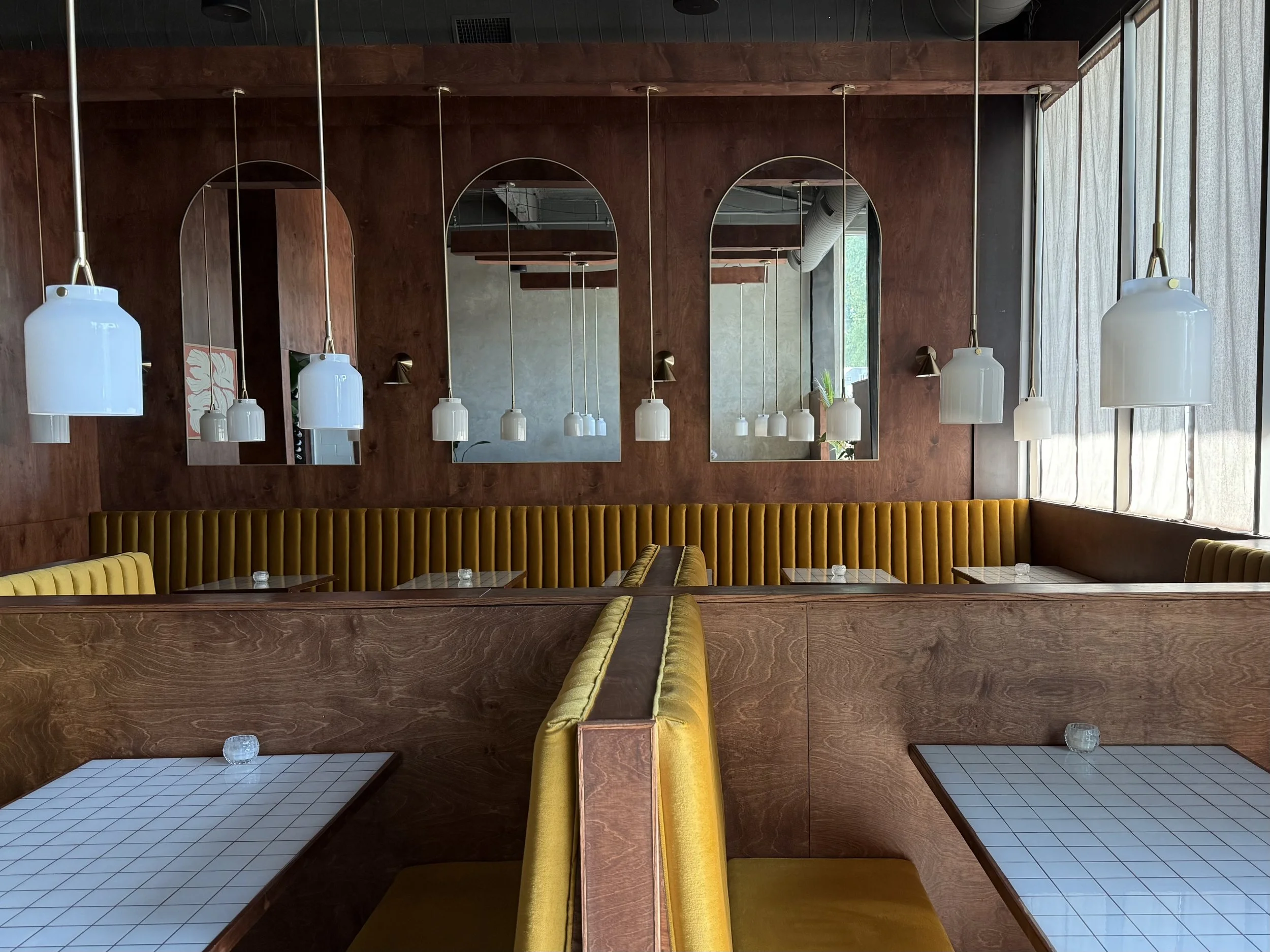
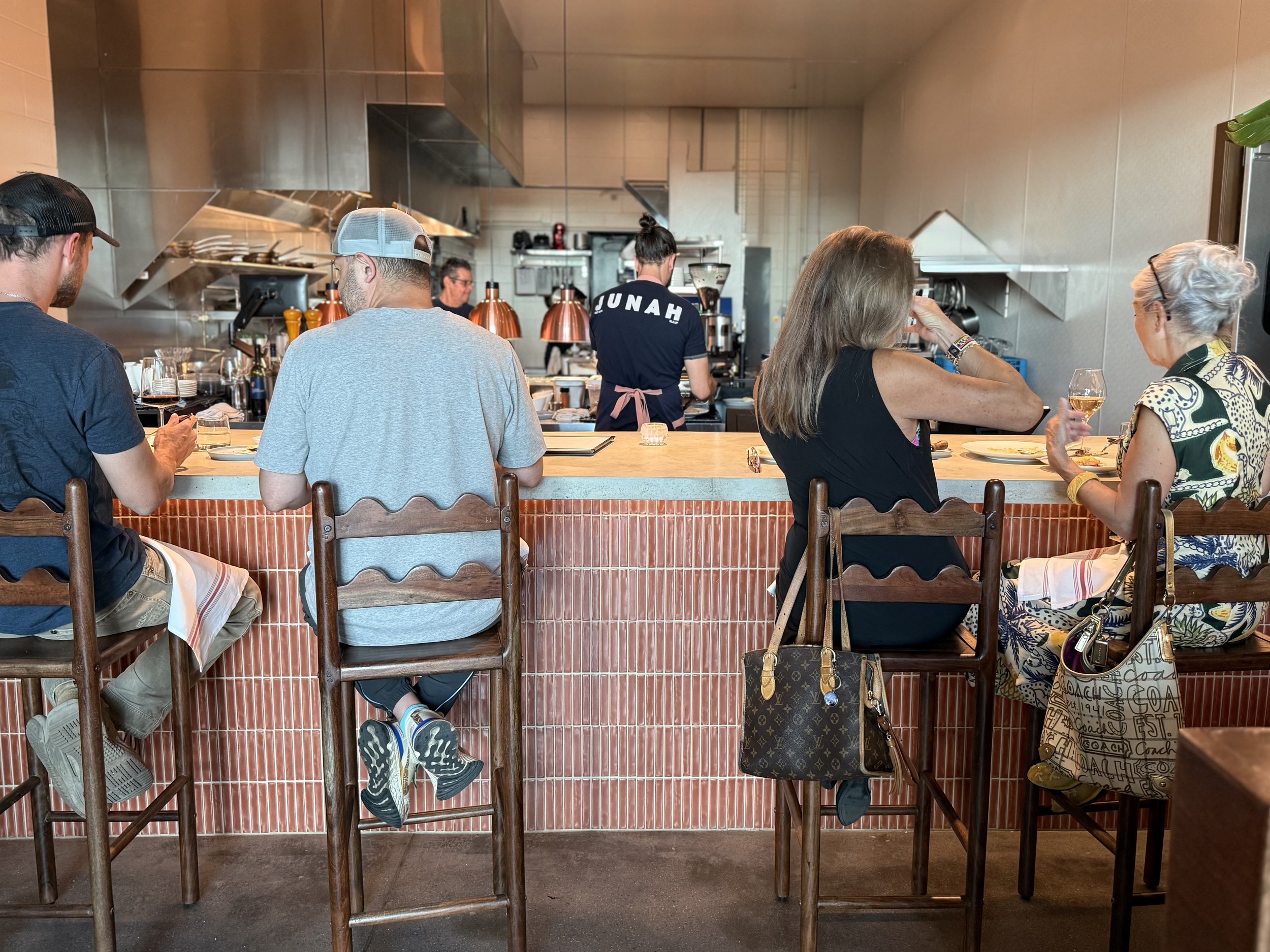
The restaurant is more elevated than Koyote, with a mood that feels intimate, warm, and carefully composed. Felipe wanted a room that would be beautiful without feeling stiff, a place suited for a girls’ night out, a date night, or a family dinner. The padded gold fabric for the booths is comfortable, the lighting is soft, and the wood walls have become something of a signature for Felipe and Hiro. White tiled tables brighten the room, while a four-seat bar offers guests a view into the kitchen. “If you come by yourself, or if you want to watch how things are done in the back, I think that’s a great spot,” Felipe said. “But if you’re looking for something more intimate, the booths can be perfect.”
The menu took about two months of concentrated work. Hiro traveled to Japan for a week, dining at Itameshi restaurants and gathering ideas. Some made their way into Junah, some did not. The goal was never to imitate, but to refine the concept for Utah while keeping it distinctive. Felipe and Hiro tested, tasted, invited friends, and adjusted. They wanted dishes that would feel adventurous without being so unfamiliar that guests could not connect with them. “We are in Utah,” Felipe said. “Not in Japan.”
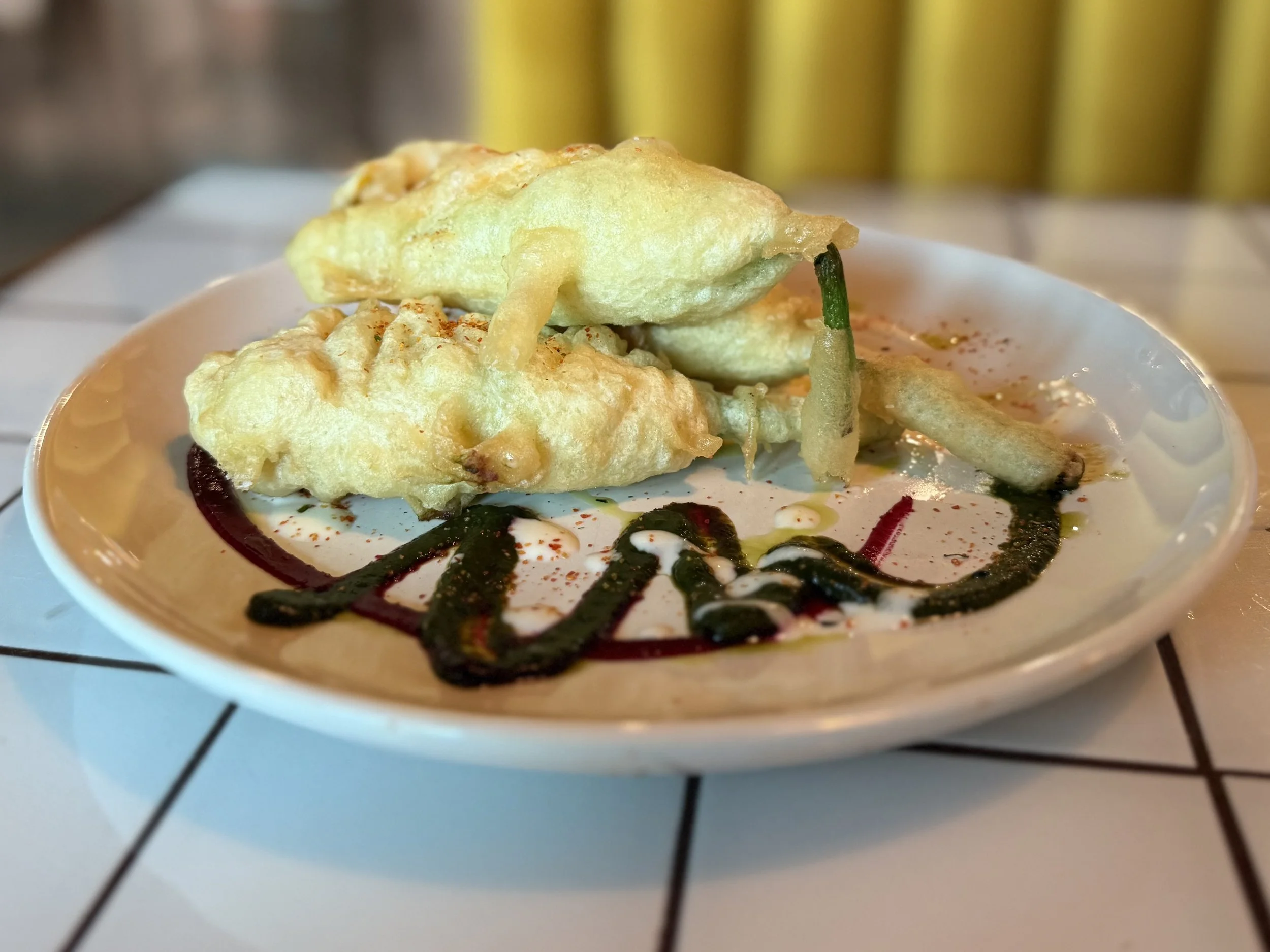
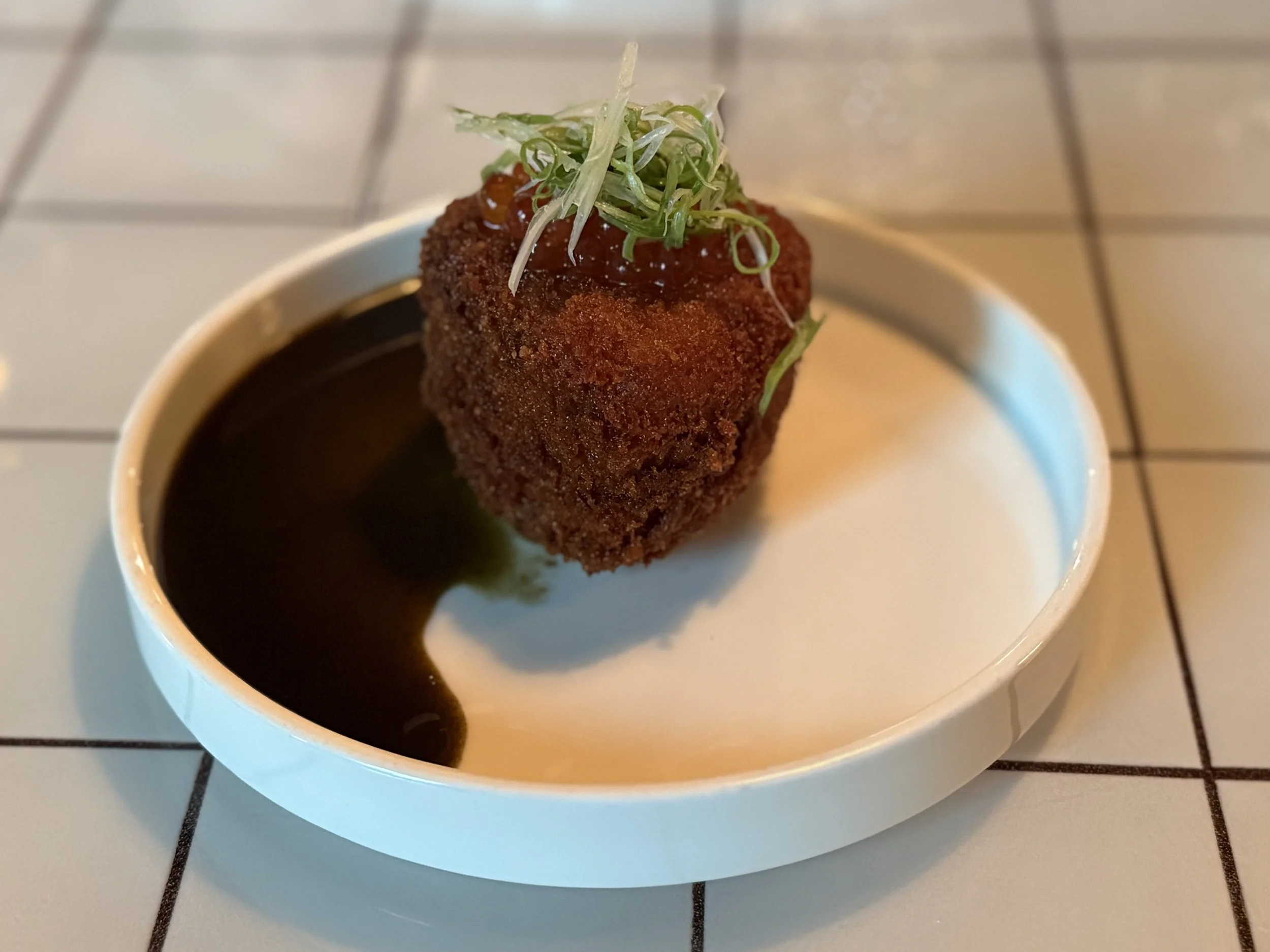
One of the clearest examples of the restaurant’s Italian-Japanese conversation is the onigiri-shaped arancini, one of Junah’s most popular dishes. Traditional onigiri is a Japanese rice snack, often triangular and wrapped in nori. At Junah, Felipe and Hiro use carnaroli rice, the Italian rice used for risotto, shape it like onigiri, fill it with buffalo burrata, panko fry it, and top it with ikura in ponzu. A nori glaze made with seaweed, red wine, and balsamic vinegar sits beneath it, bringing together sweetness, acidity, richness, and umami.
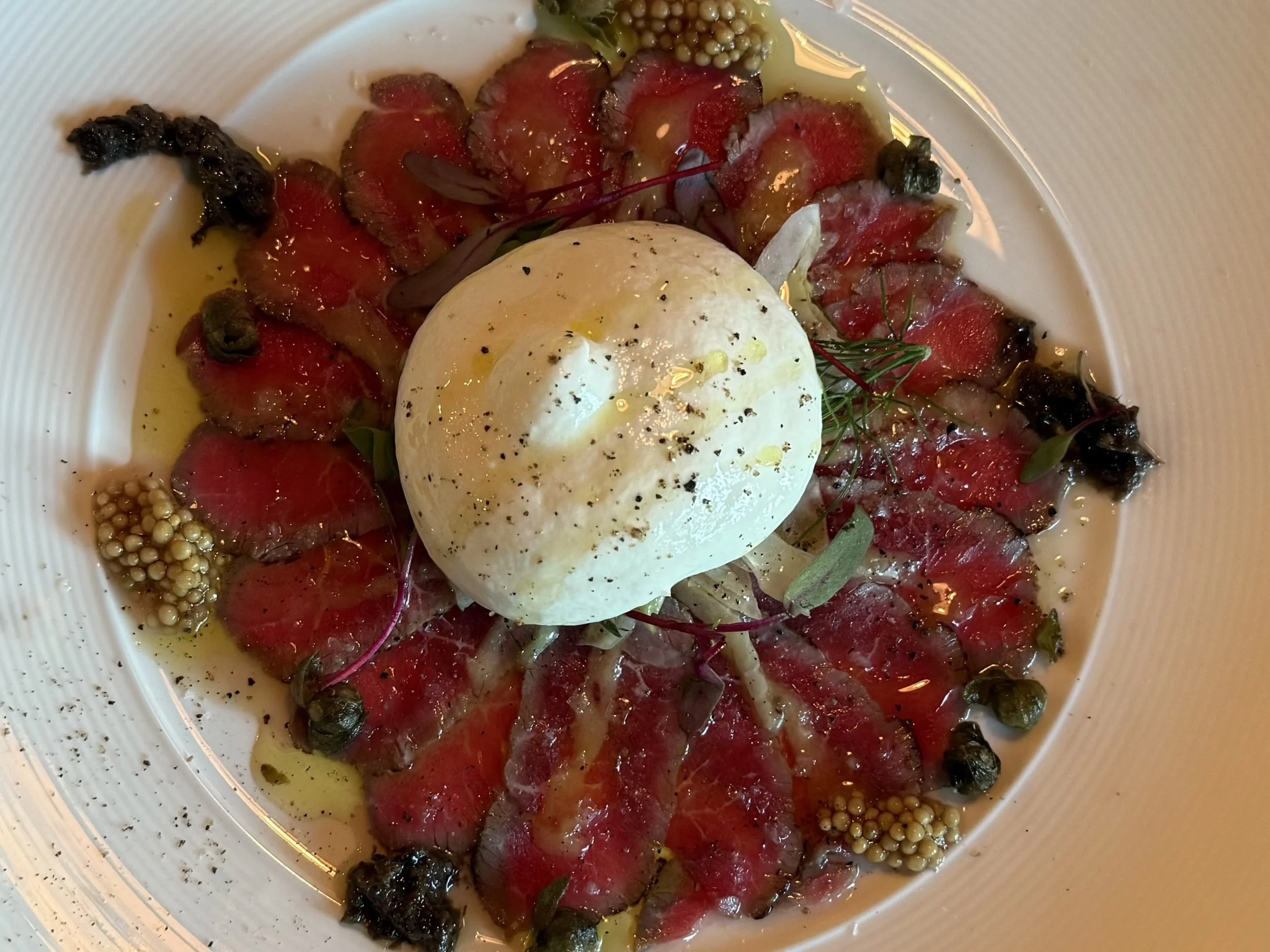
Another favorite is the crudo, made with shima aji, a fish related to mackerel that they bring in from Japan every week. It is served with mandarin vinaigrette, slow-fried golden garlic chips, and wasabi foam. The dish is simple in appearance but exacting in execution.
Felipe sees a natural connection between Italian and Japanese cooking. "Both cuisines, at their best, rely on excellent, yet simple ingredients, strong technique, and restraint. At Junah, that philosophy guides the menu. The plates are smaller and carefully composed, with presentation playing an important role. Felipe believes too many restaurants fall back on familiar dishes because they are afraid to take a risk. He understands the instinct, but he resists it. “You should be more adventurous, not only to eat, but to cook,” he said. “When you cook for people, I think you should go for something that will surprise them.”
That sense of care extends to the kitchen culture. Felipe lost his mother when he was twelve and was raised by his grandparents. His younger sister was eight at the time. That loss, he said, forced him to grow up faster and shaped the way he manages people today. He believes it made him more understanding of staff members who are dealing with family responsibilities, health issues, or personal struggles. In the restaurant business, where pressure can build quickly, he tries to keep his team grounded. “I’d rather you take that two extra minutes to finish the dish well rather than just throw food out.”
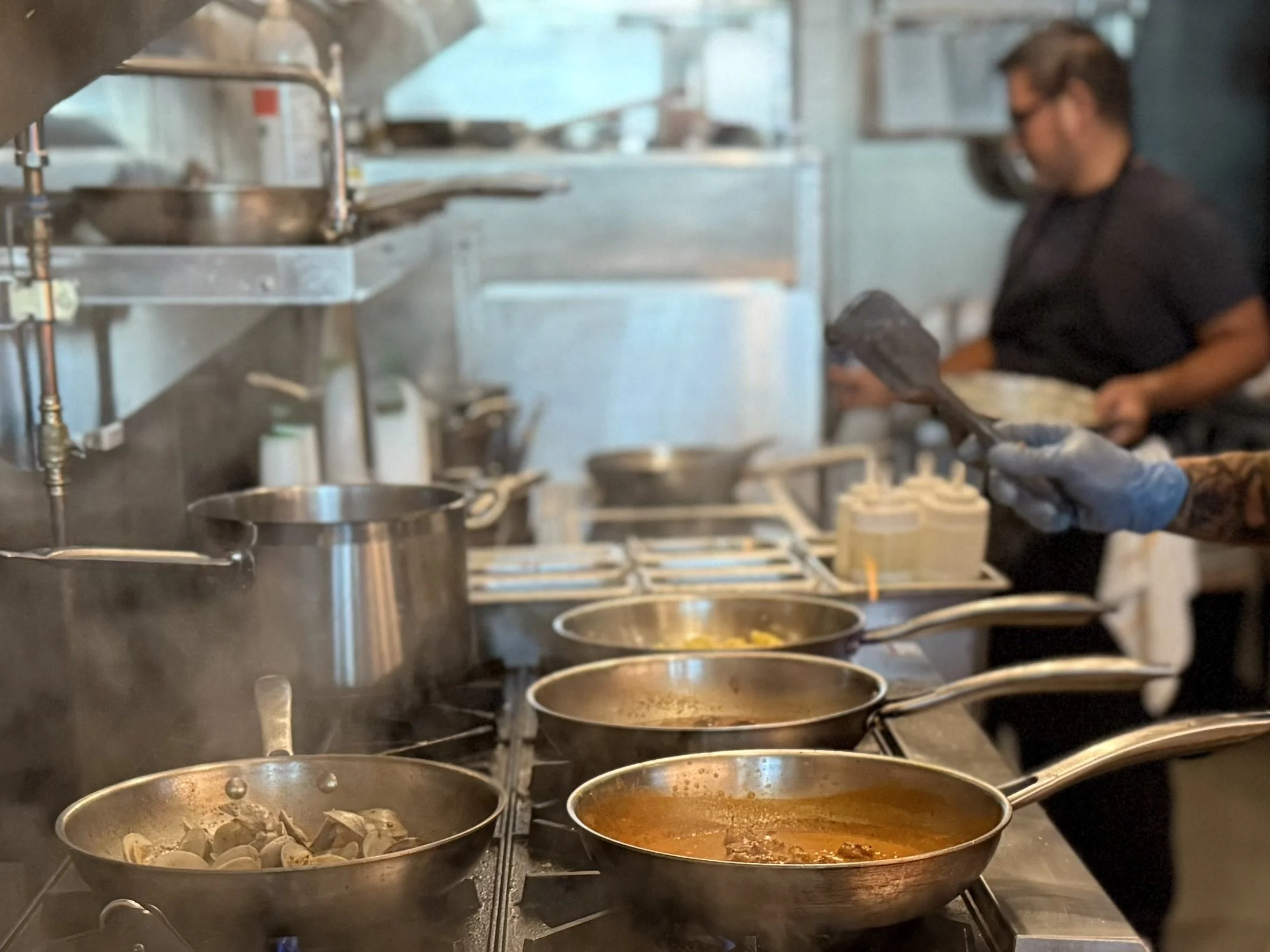
For Felipe, standards matter whether they are serving fifty people or five hundred. The system should remain the same. The respect for the ingredient should remain the same. The patience should remain the same. Sauces take hours. Dishes are cooked to order. Nothing is simply poured from a jar and sent out.
That is also why Junah’s menu will continue to evolve. Felipe and Hiro are working on seasonal changes. Some dishes will come off, others will be added, and the goal is to respond to the weather, the season, and the ingredients that are at their best. “America can fake that everything is year-round,” Felipe said, but he knows that ingredients have their own timing.
Felipe and Hiro may create the concepts, but they know that the restaurants exist because of the teams who show up day after day. “If we have a Koyote and a Junah, it’s because of them. There’s no doubt. Hands down to the people that work with us, the ones that no longer work with us, the ones that are working, and the ones that will come to work with us. Without them, nothing would happen.”
For the two men, the future is already moving quickly as they are opening a second Koyote in the Park City area, near Kimball Junction, at the base of Olympic Park. For Felipe, the location makes sense: close enough for Park City diners, convenient for people heading toward the mountain, and easier to access than driving deeper into town during high season.
For all the creativity, expansion, and momentum surrounding Koyote and Junah, Felipe views the heart of it quite plainly. “We’re just simple people trying to prepare excellent food for our guests. That’s what we do.”