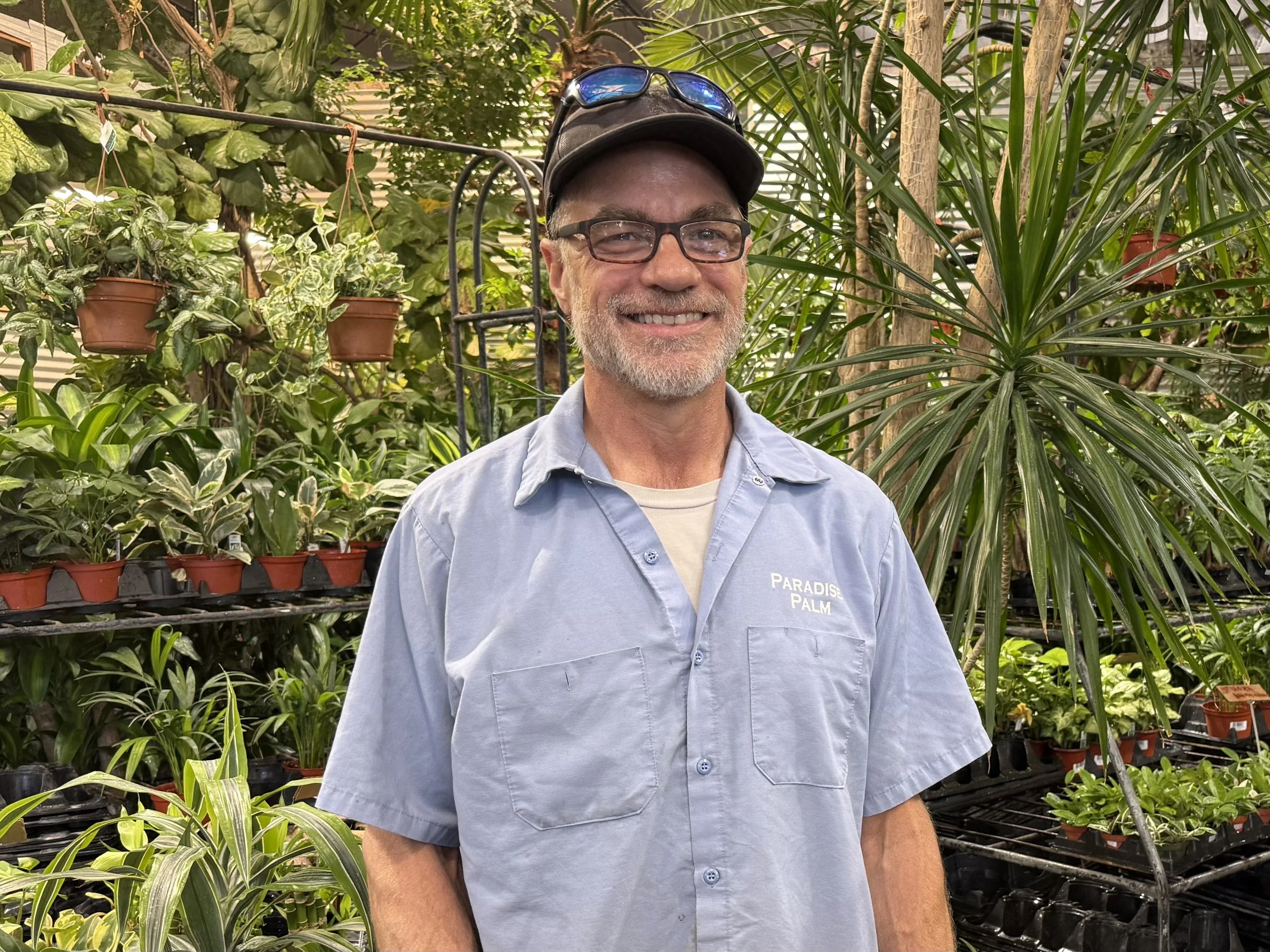
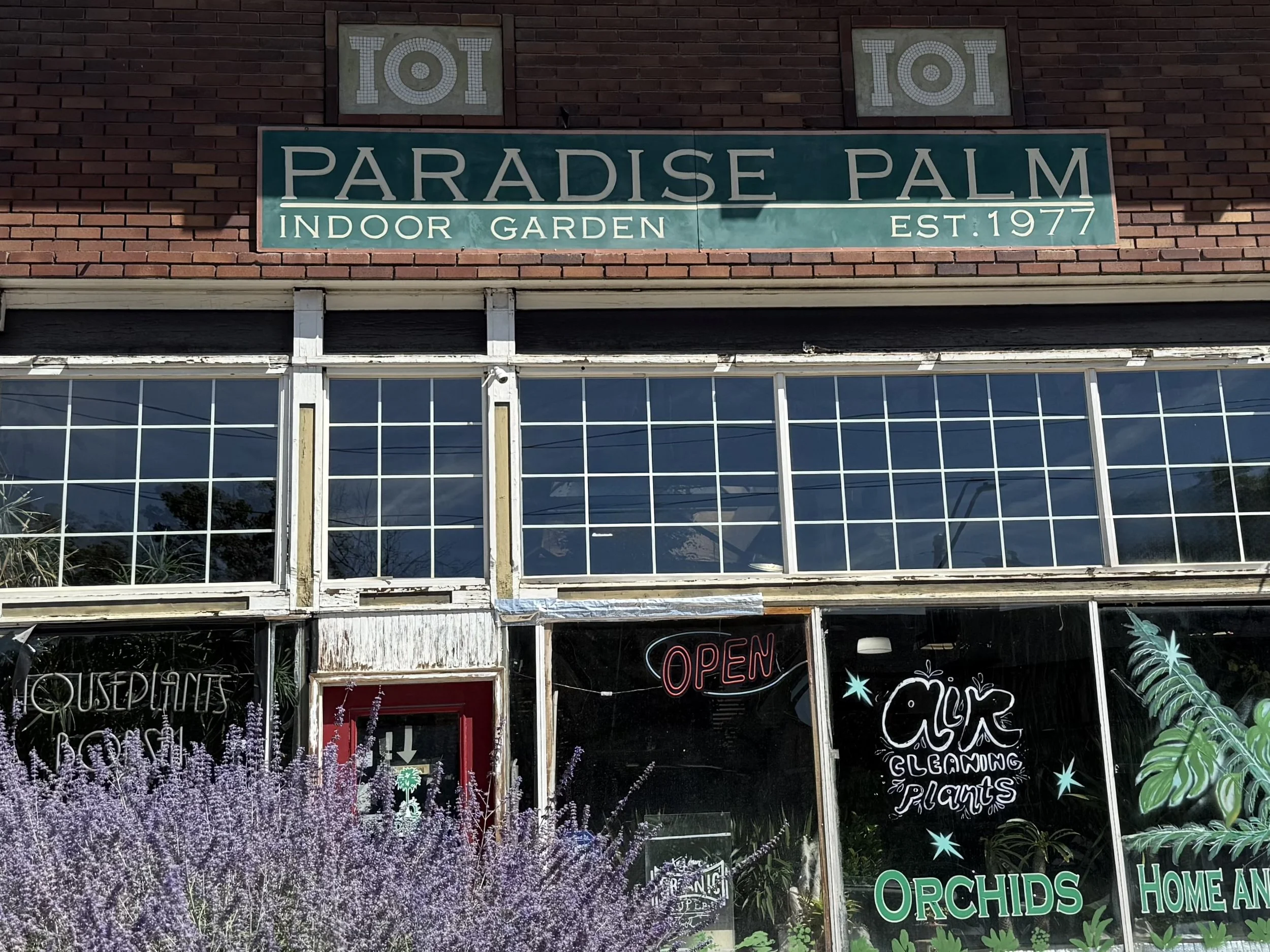
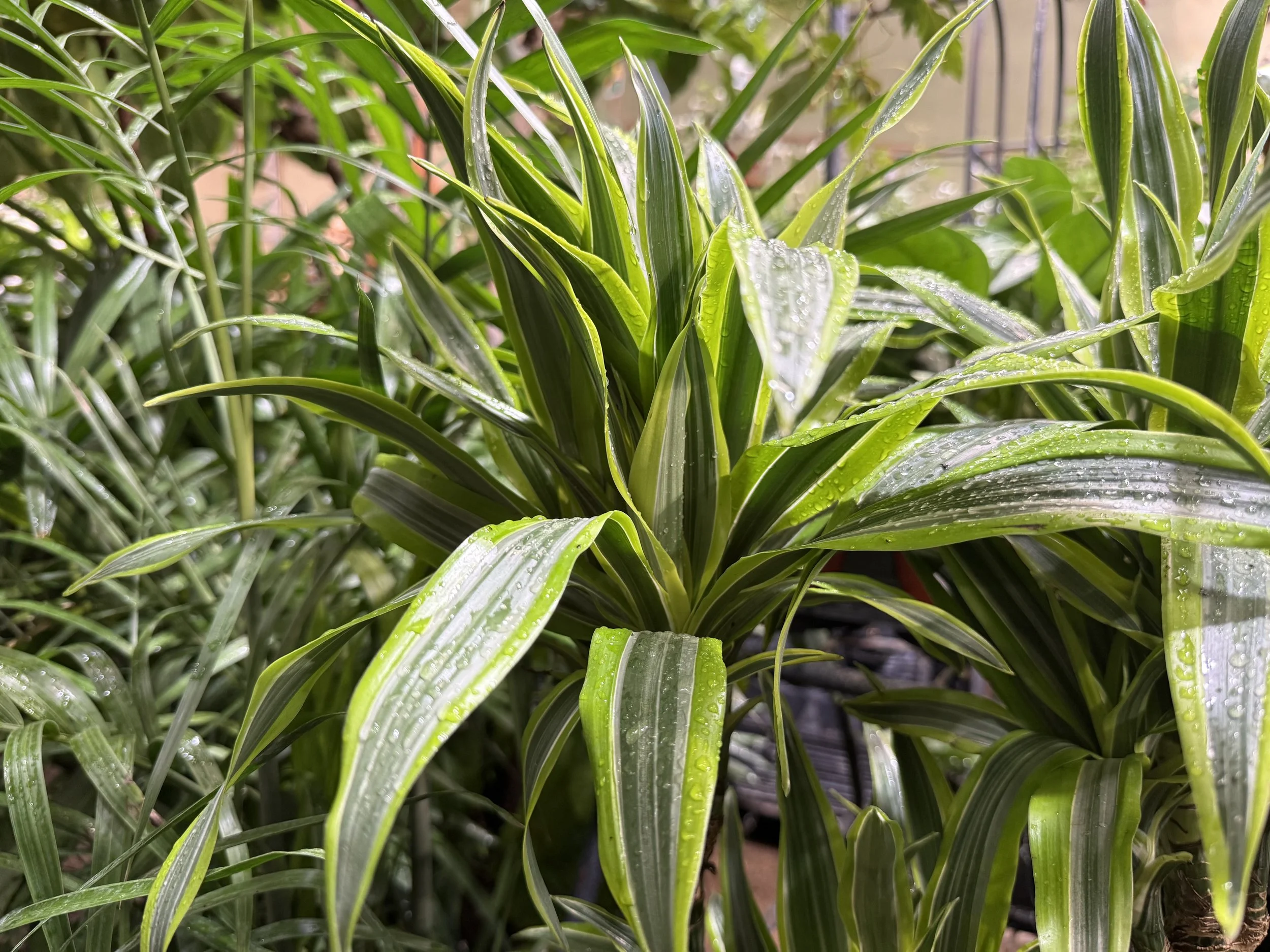
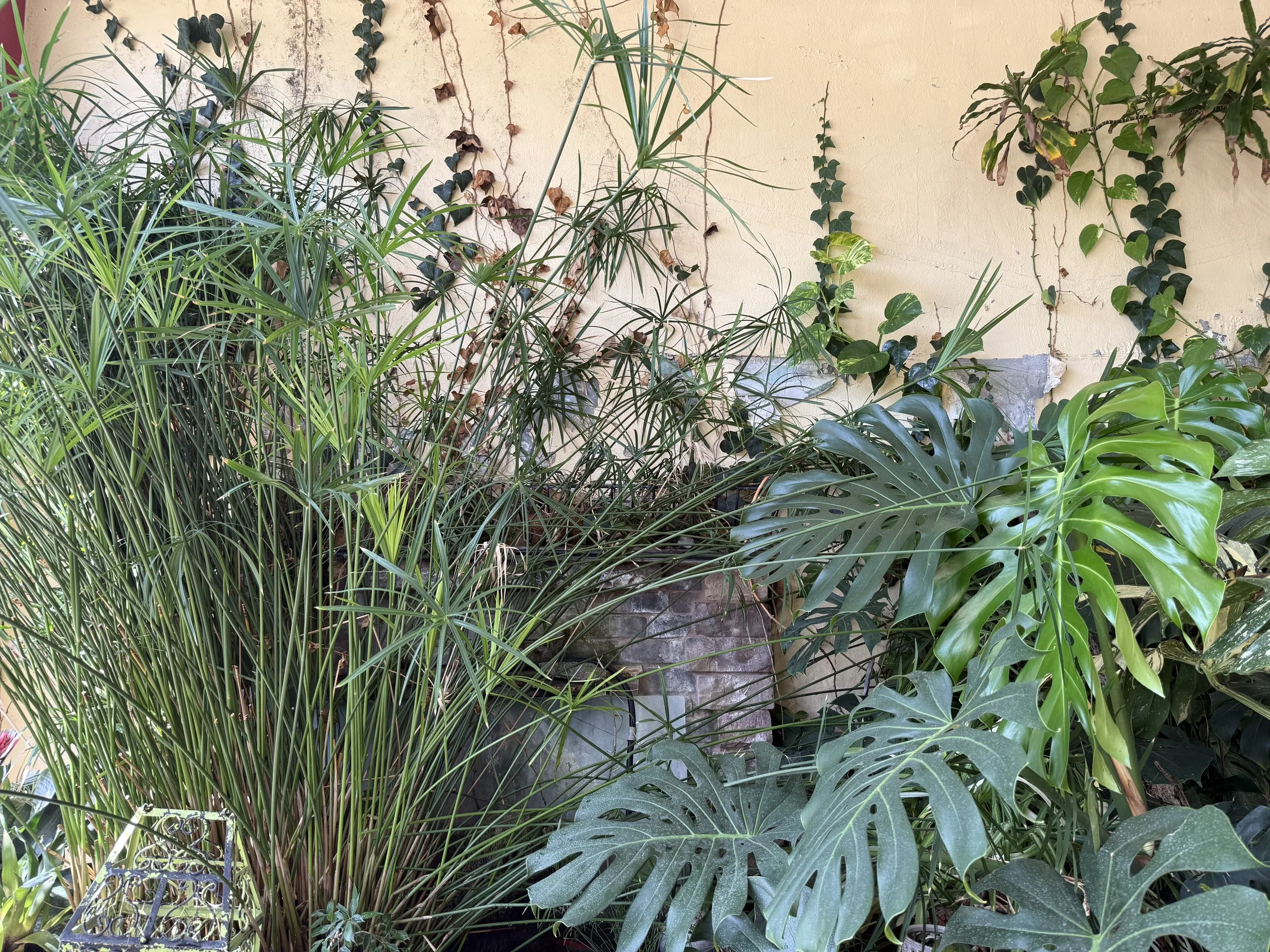
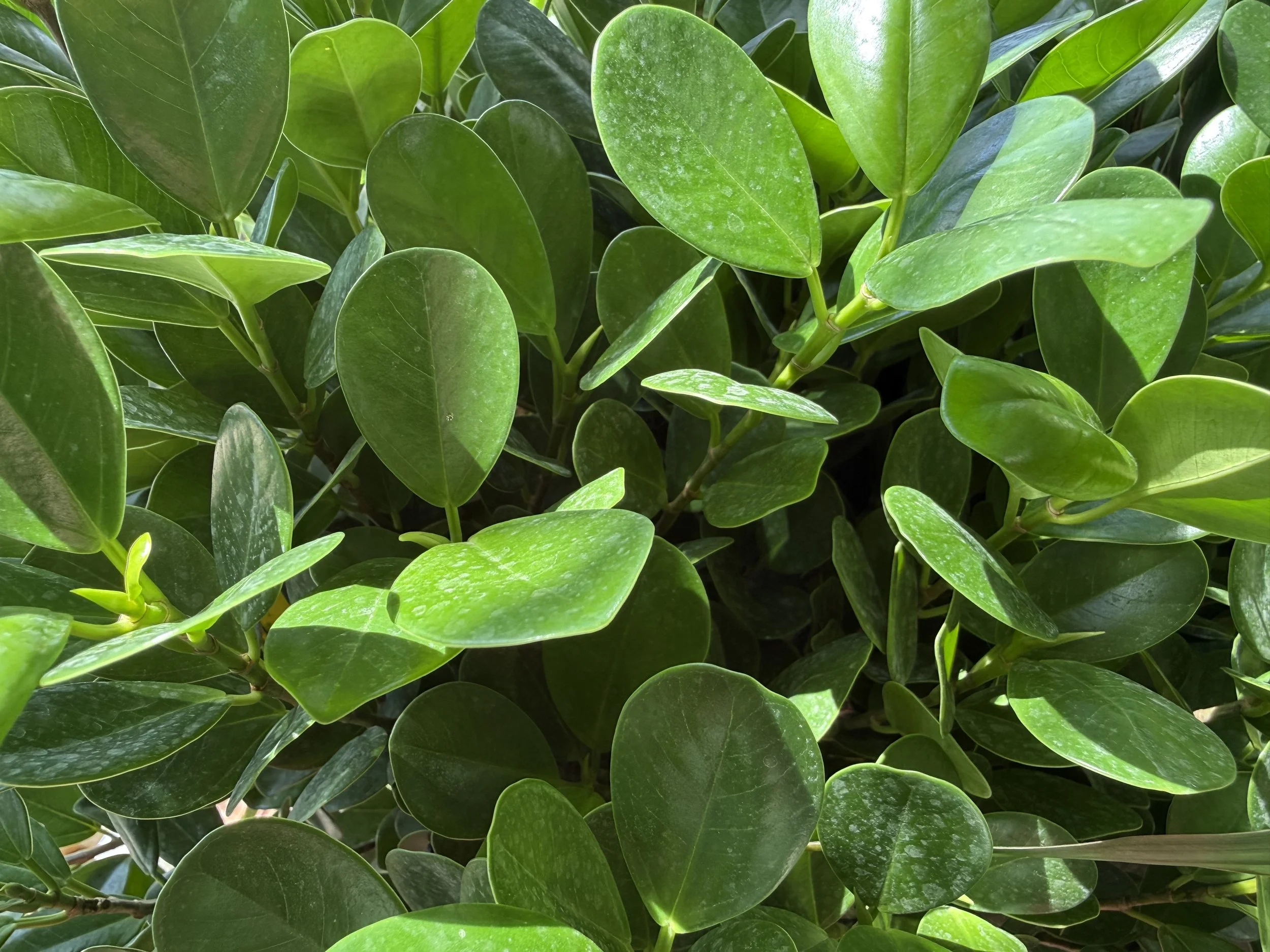
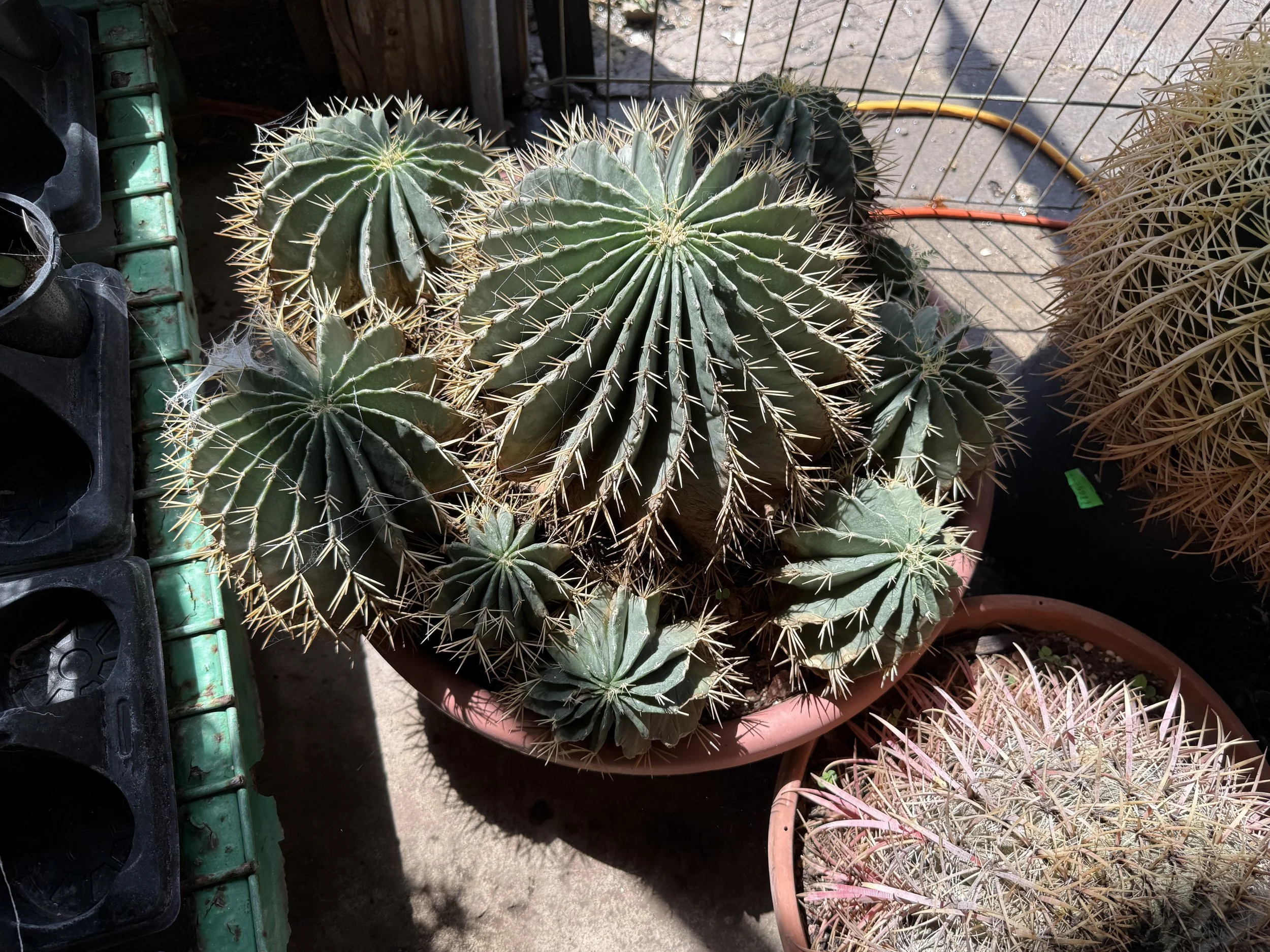
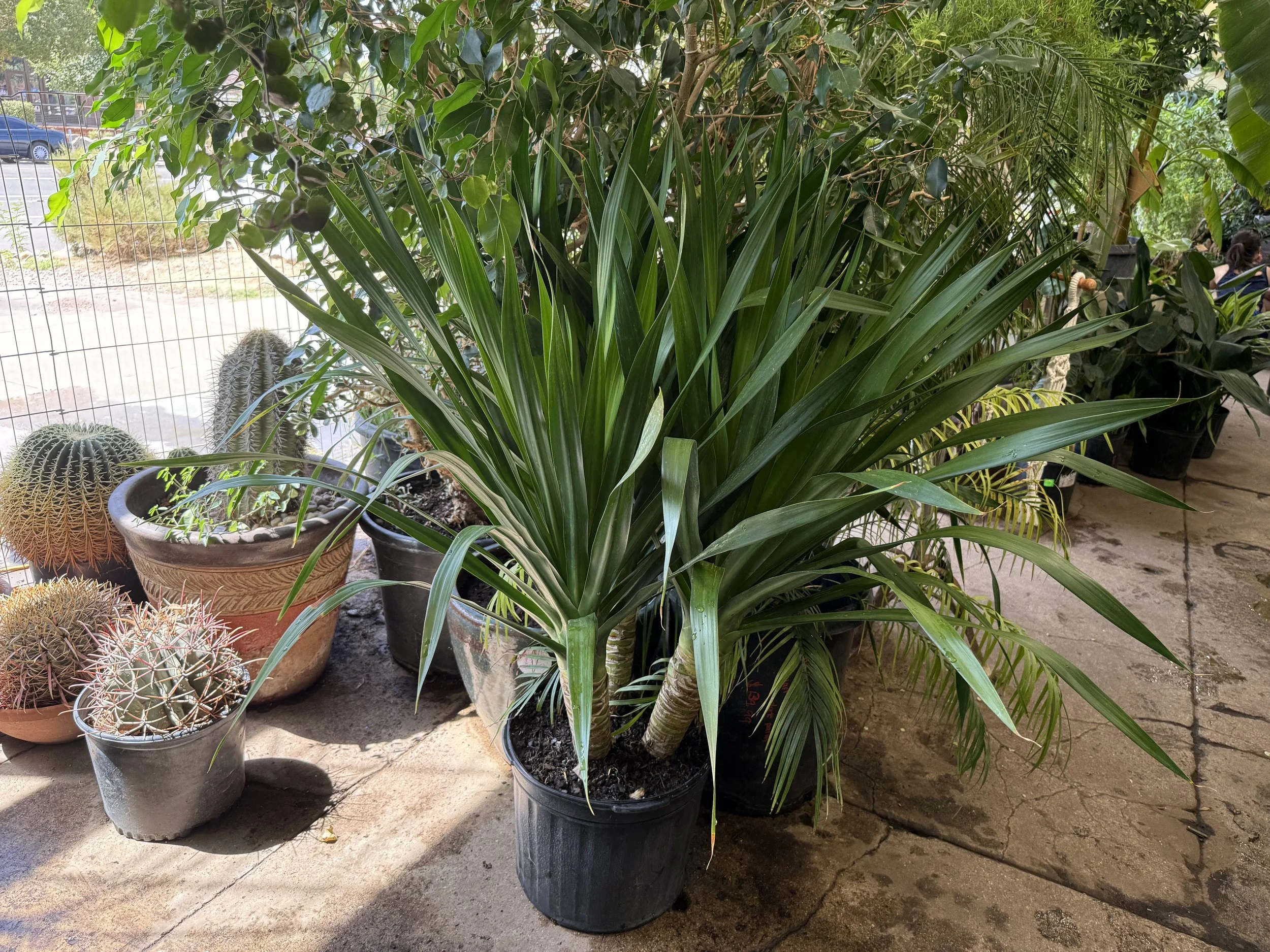
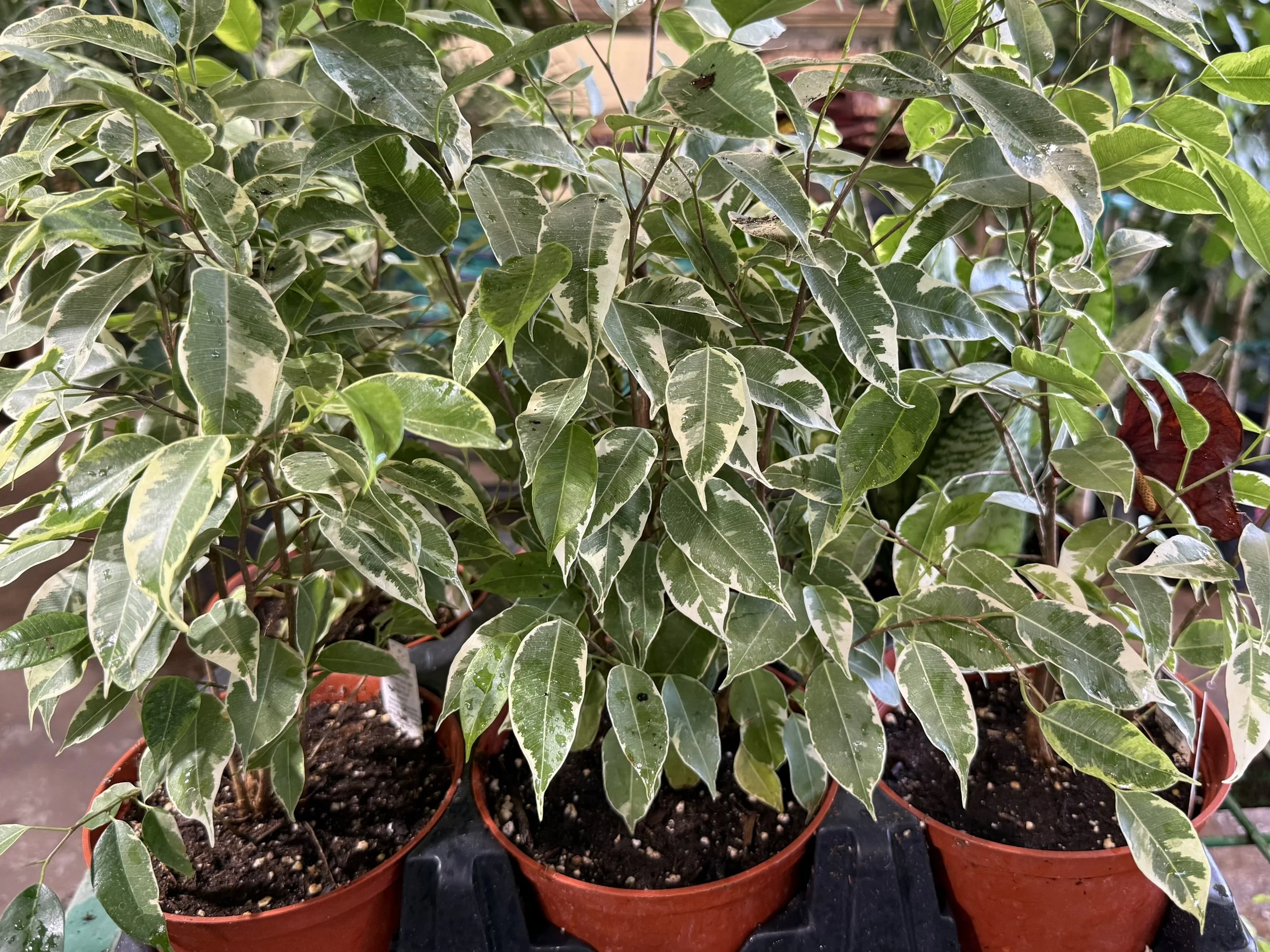
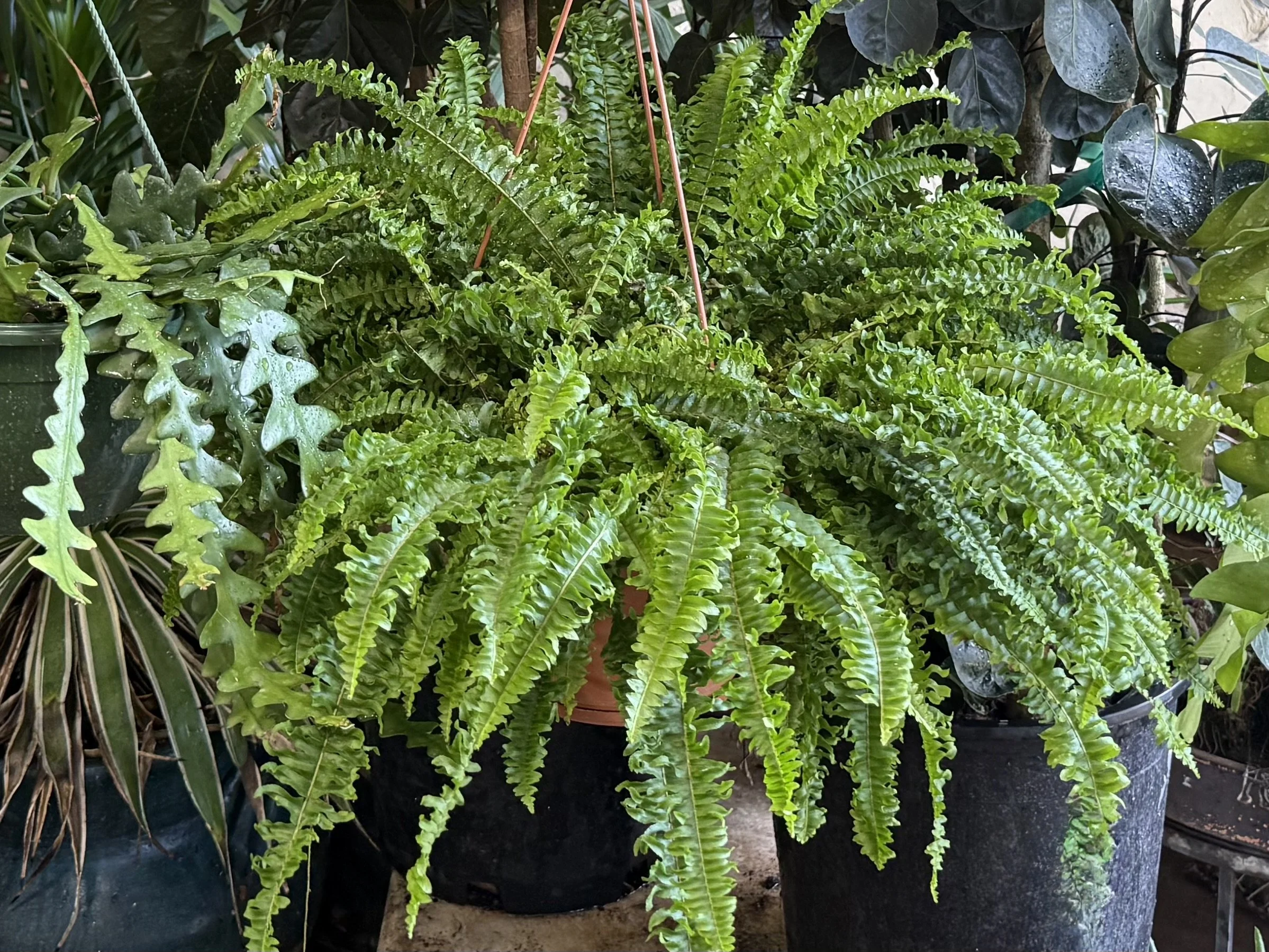
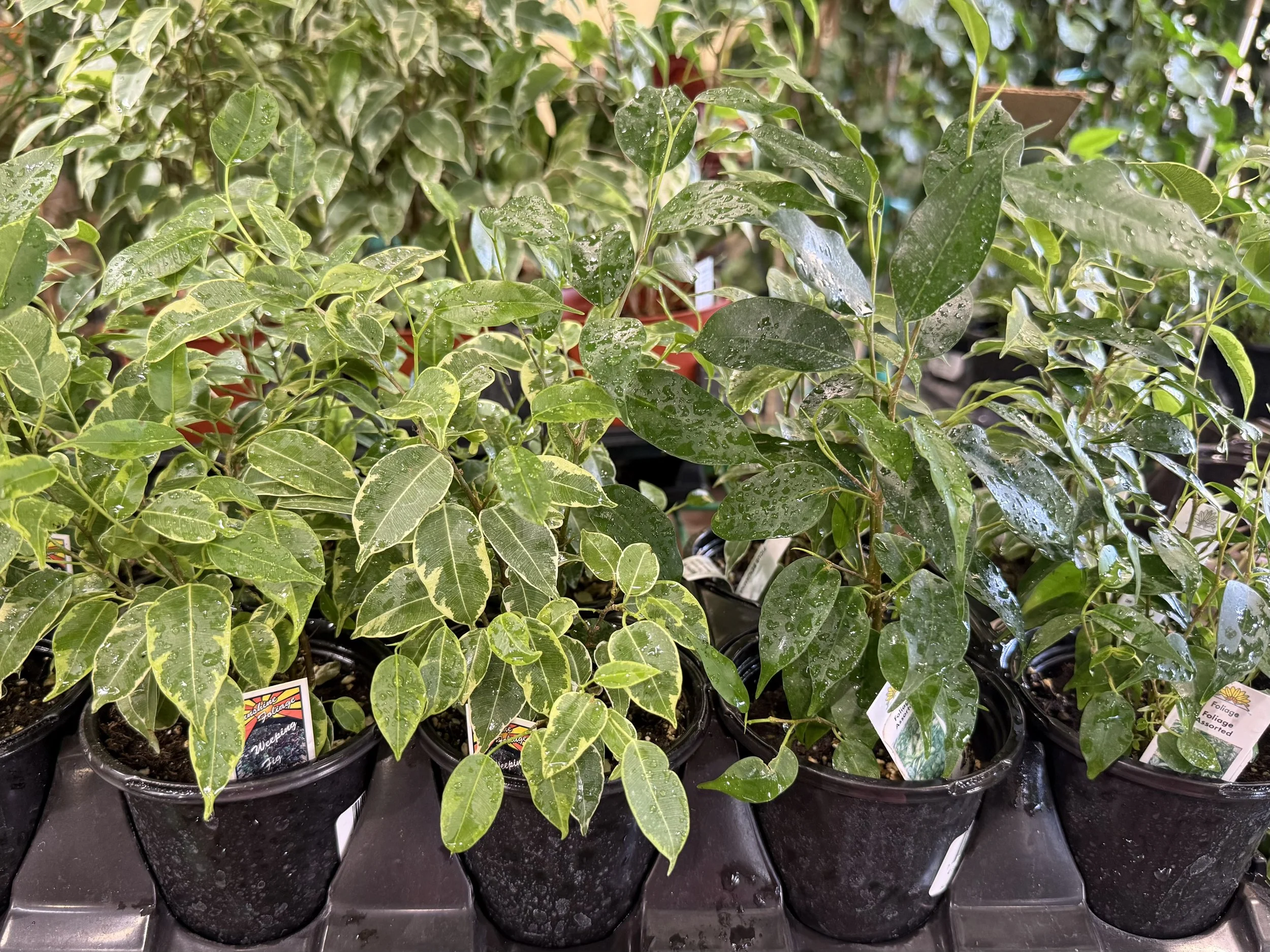
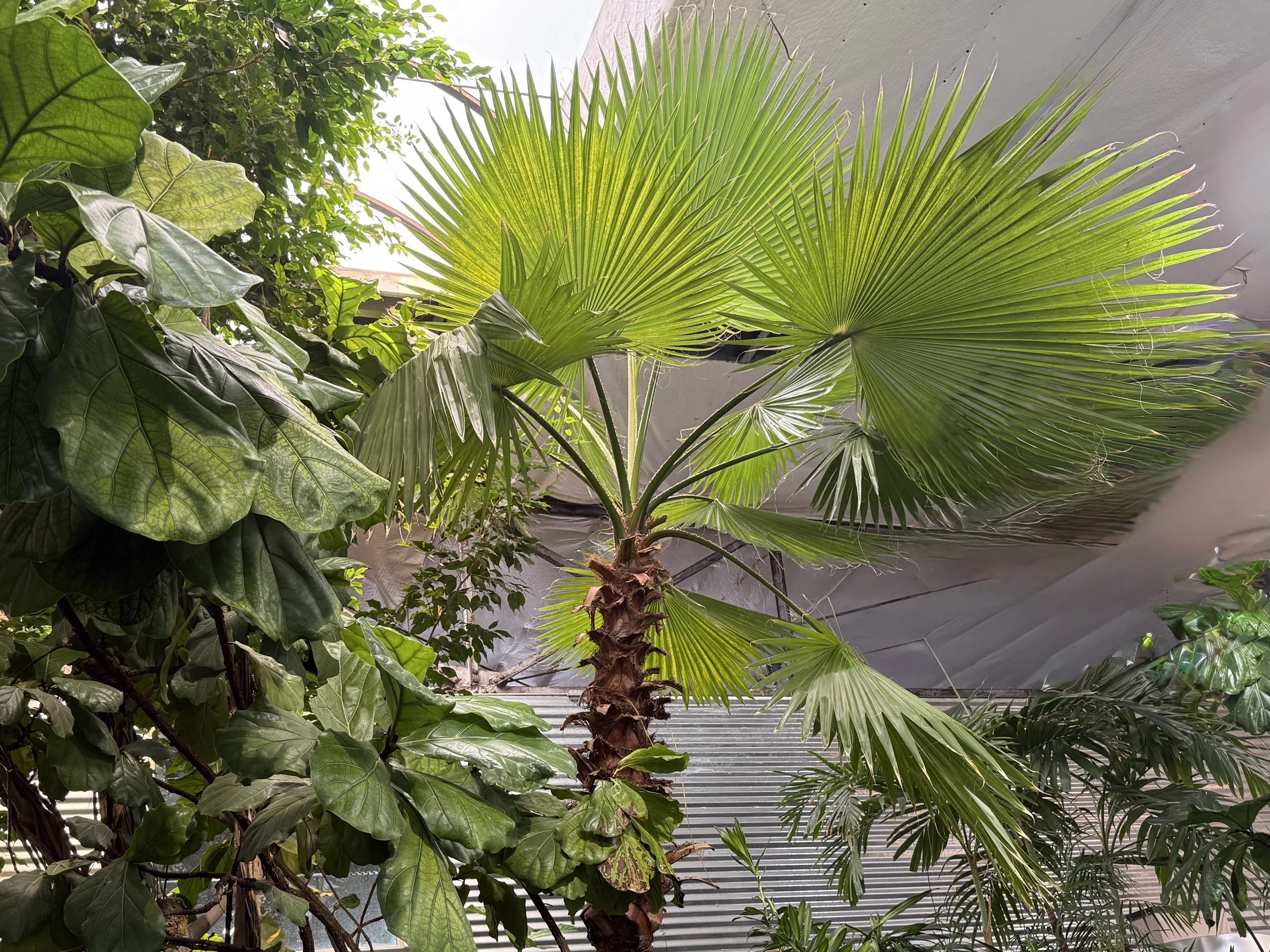
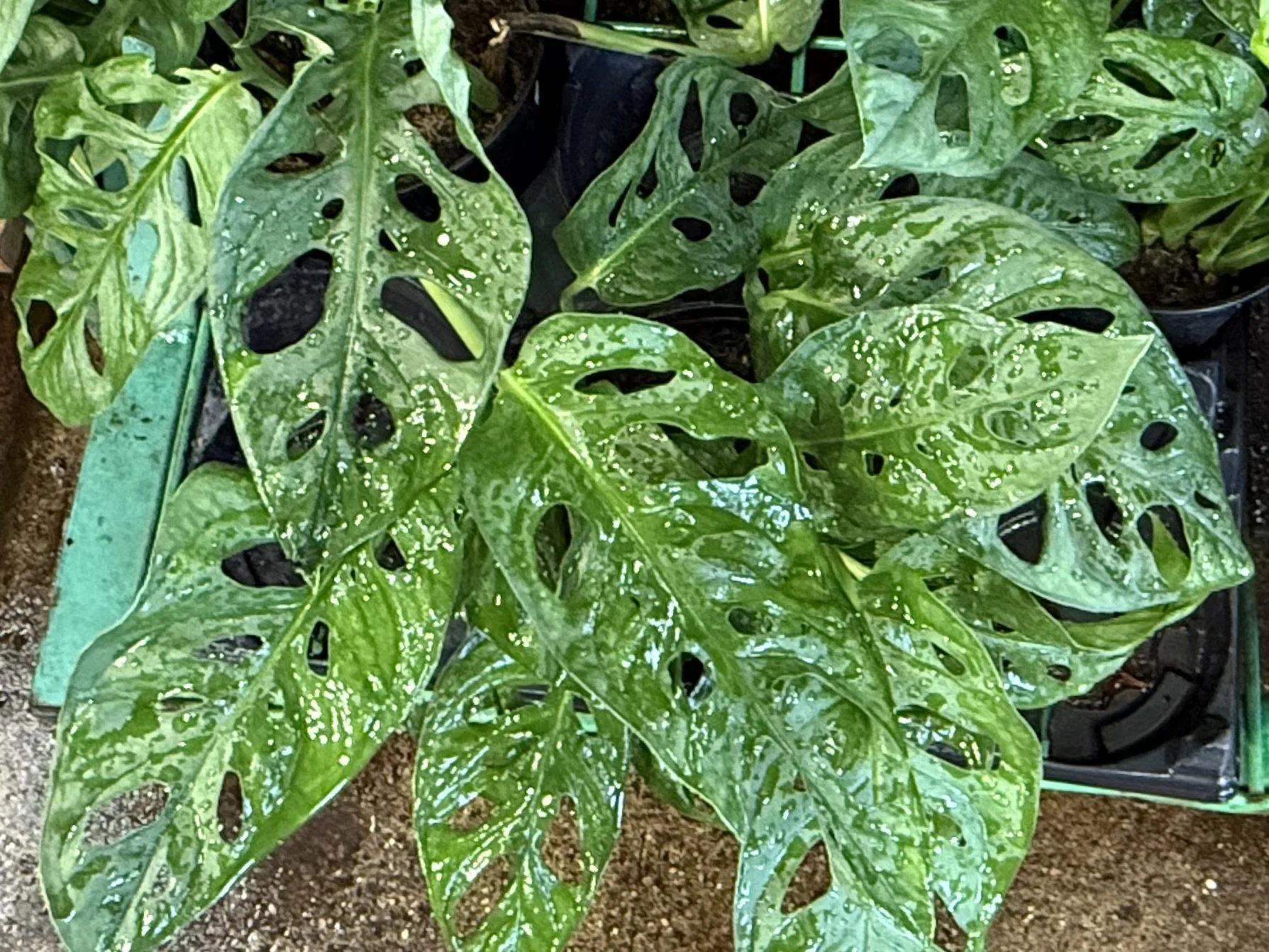
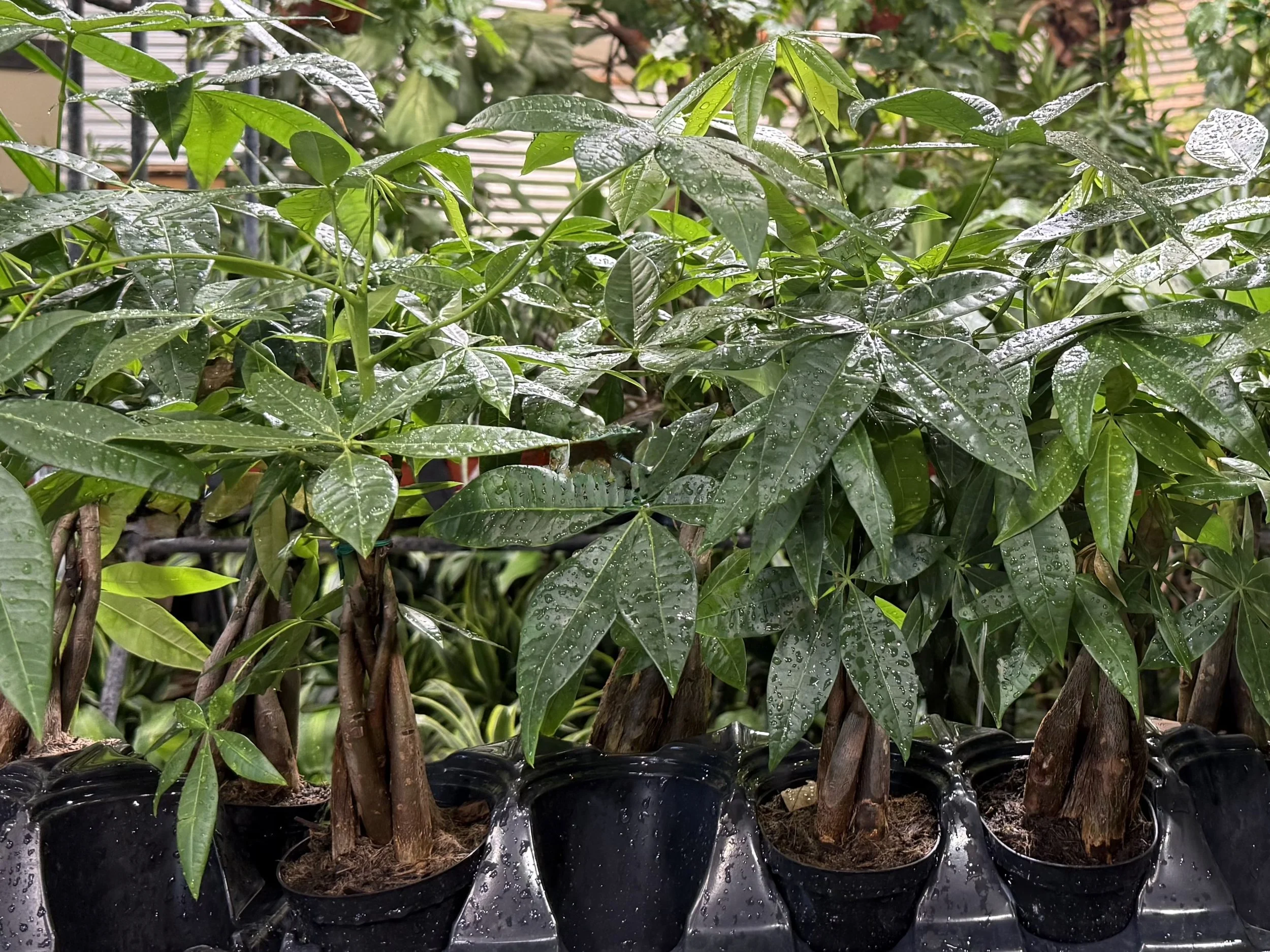
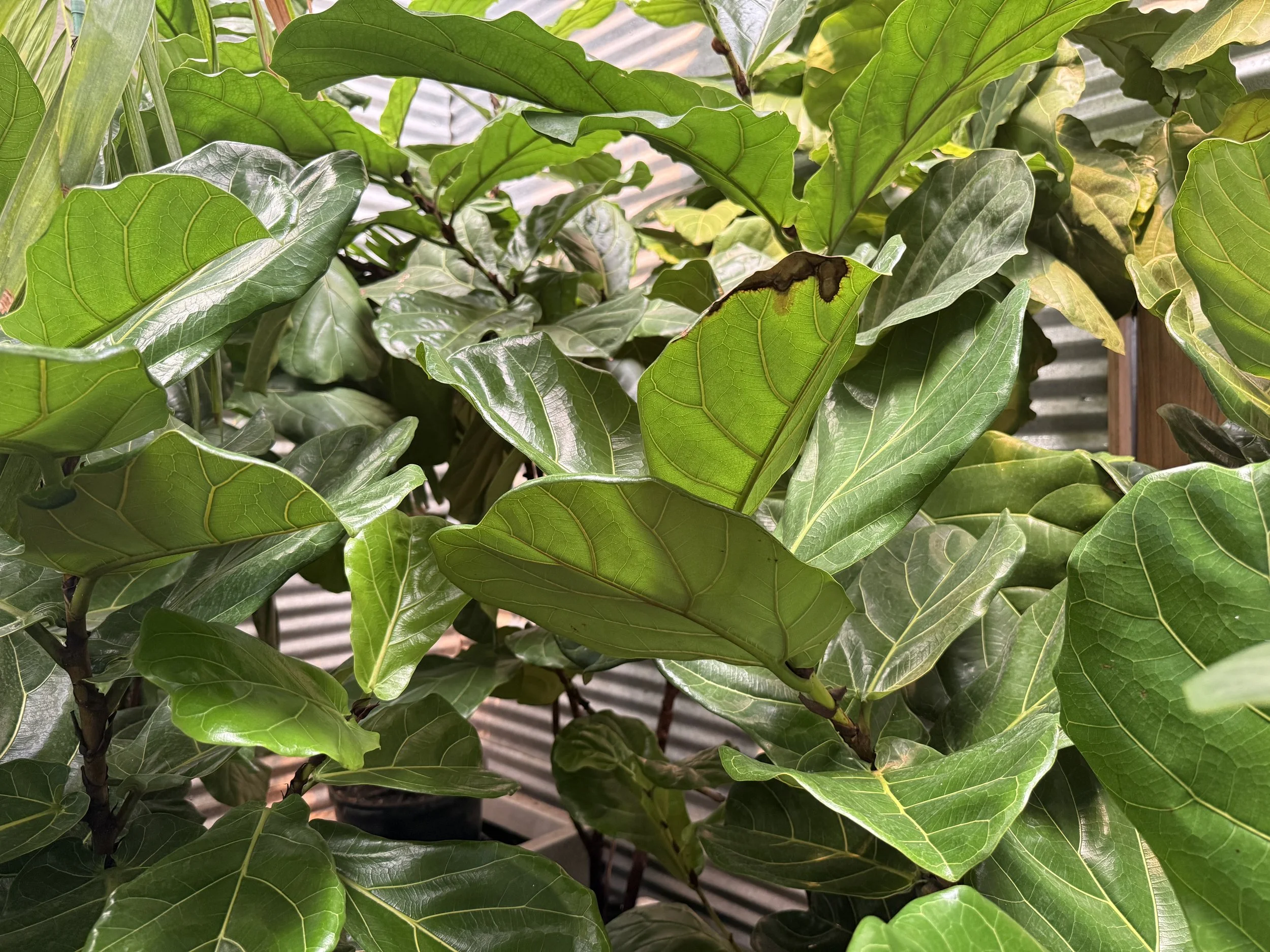
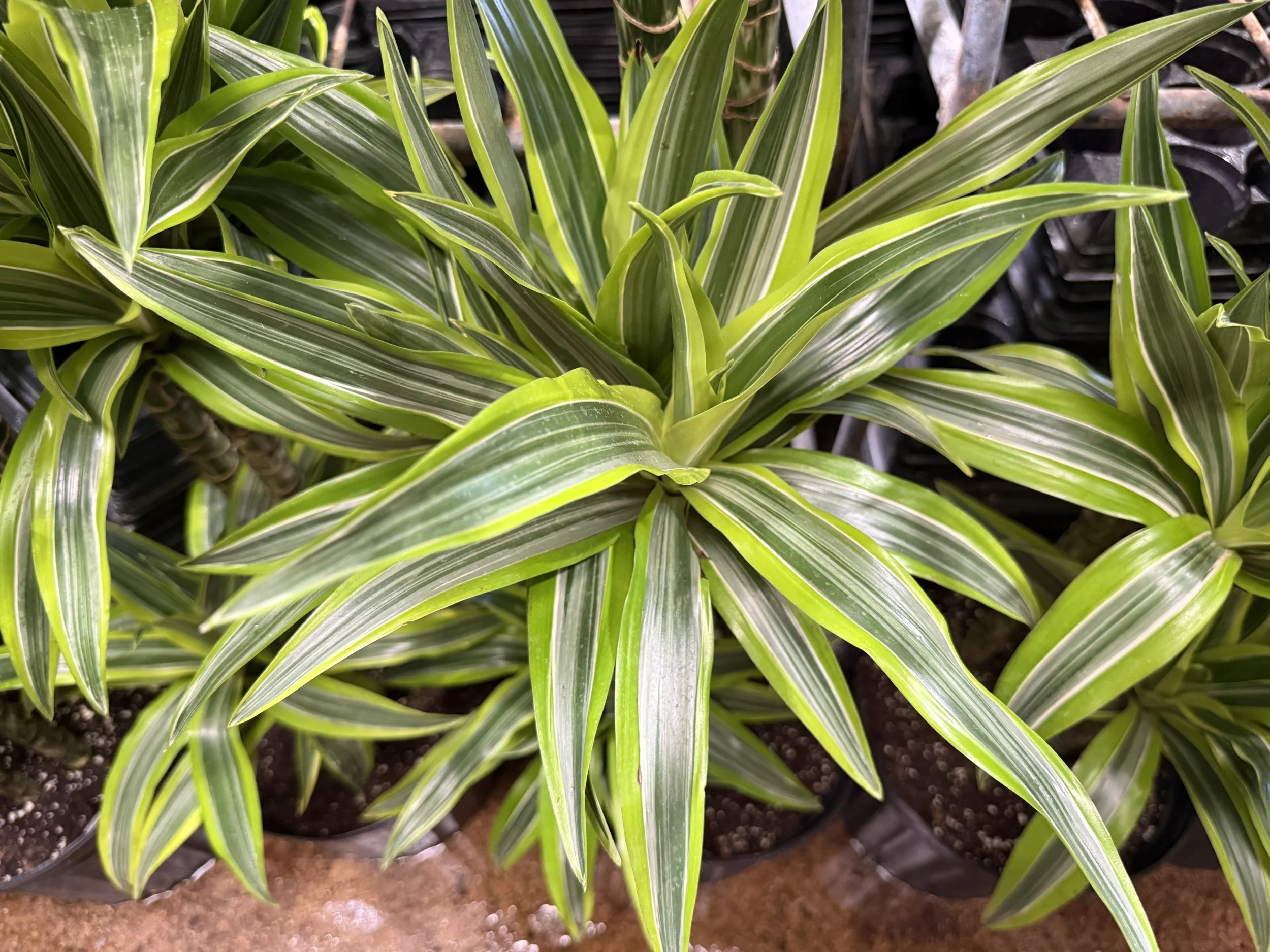
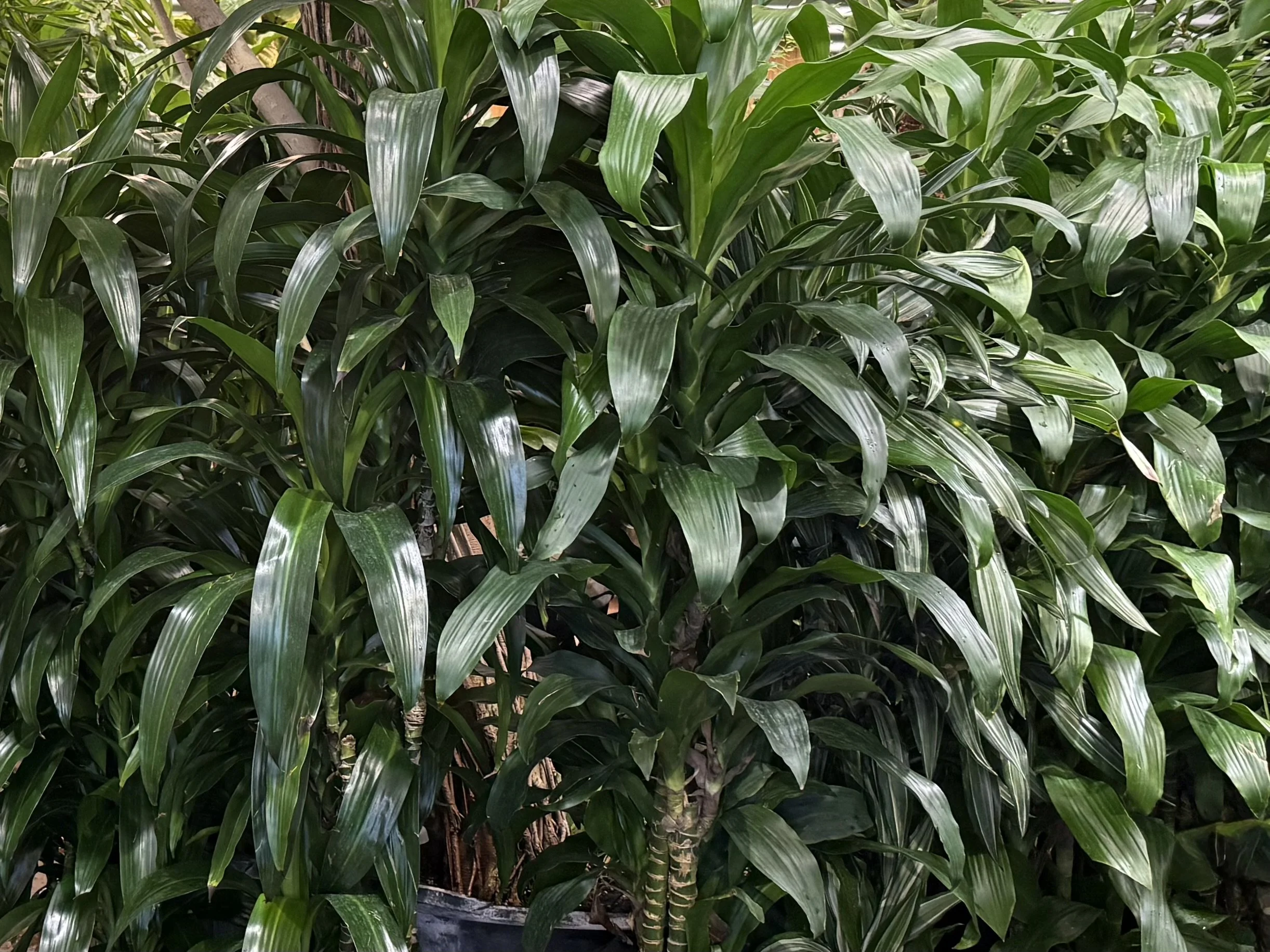
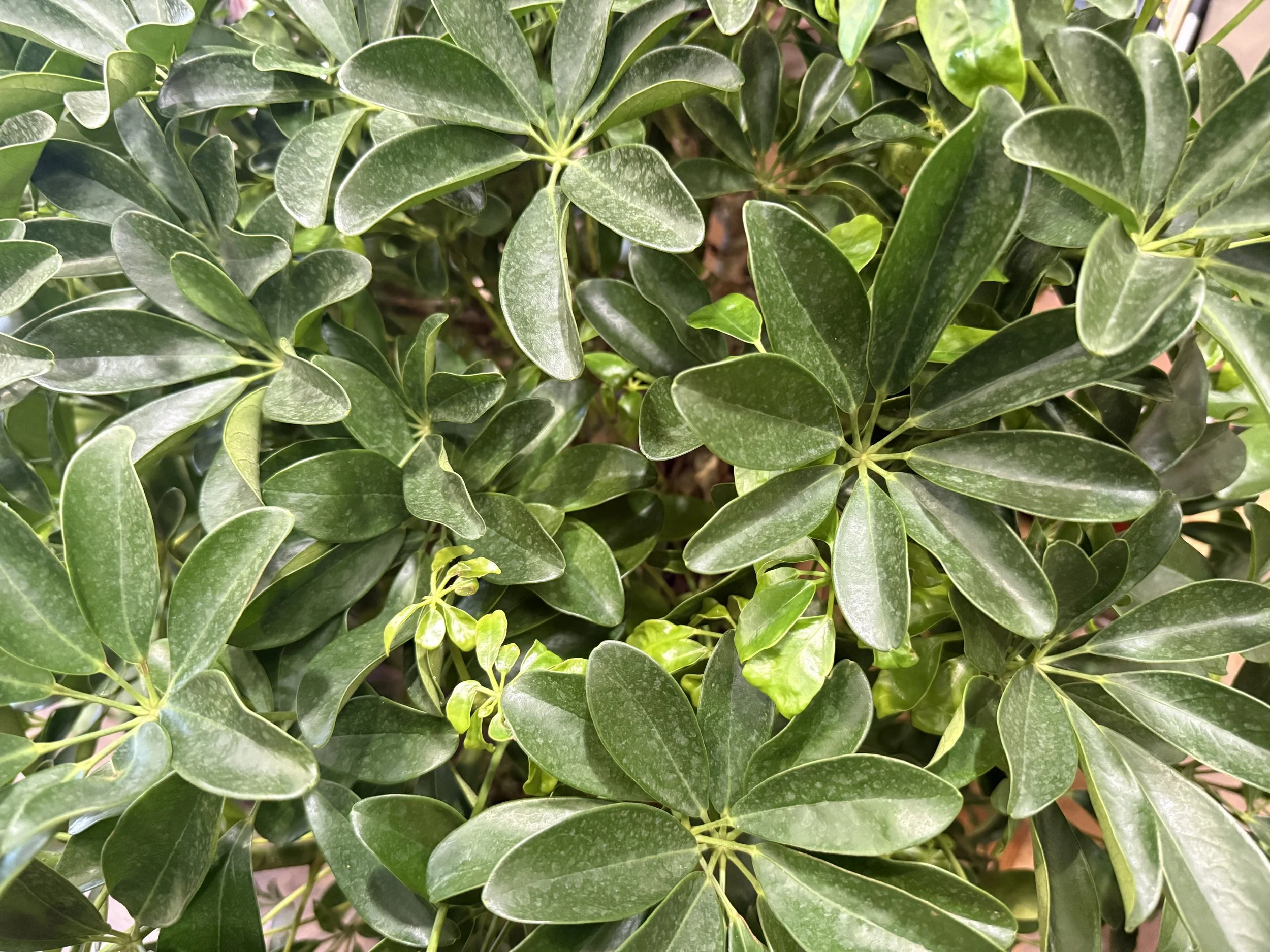
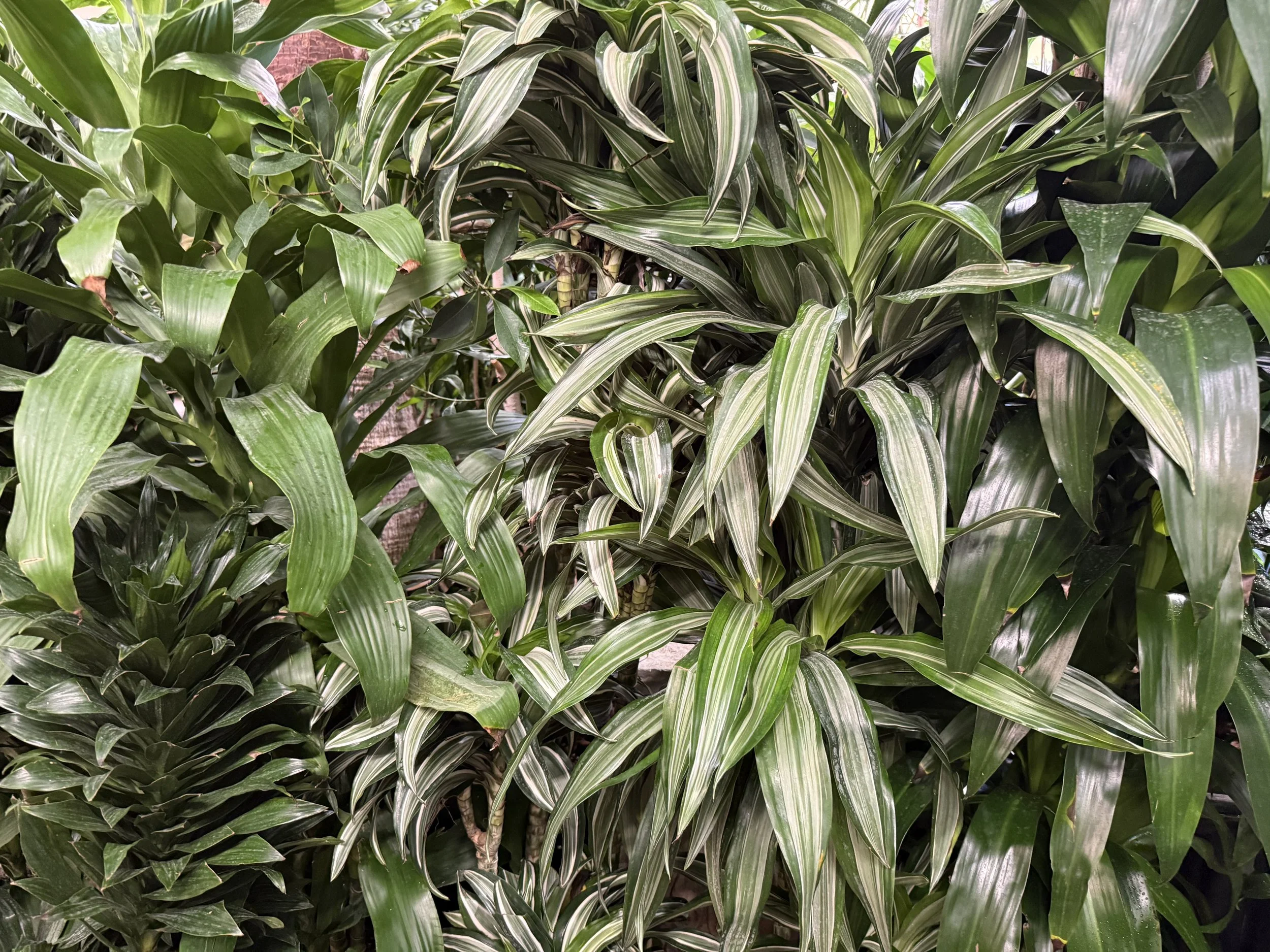
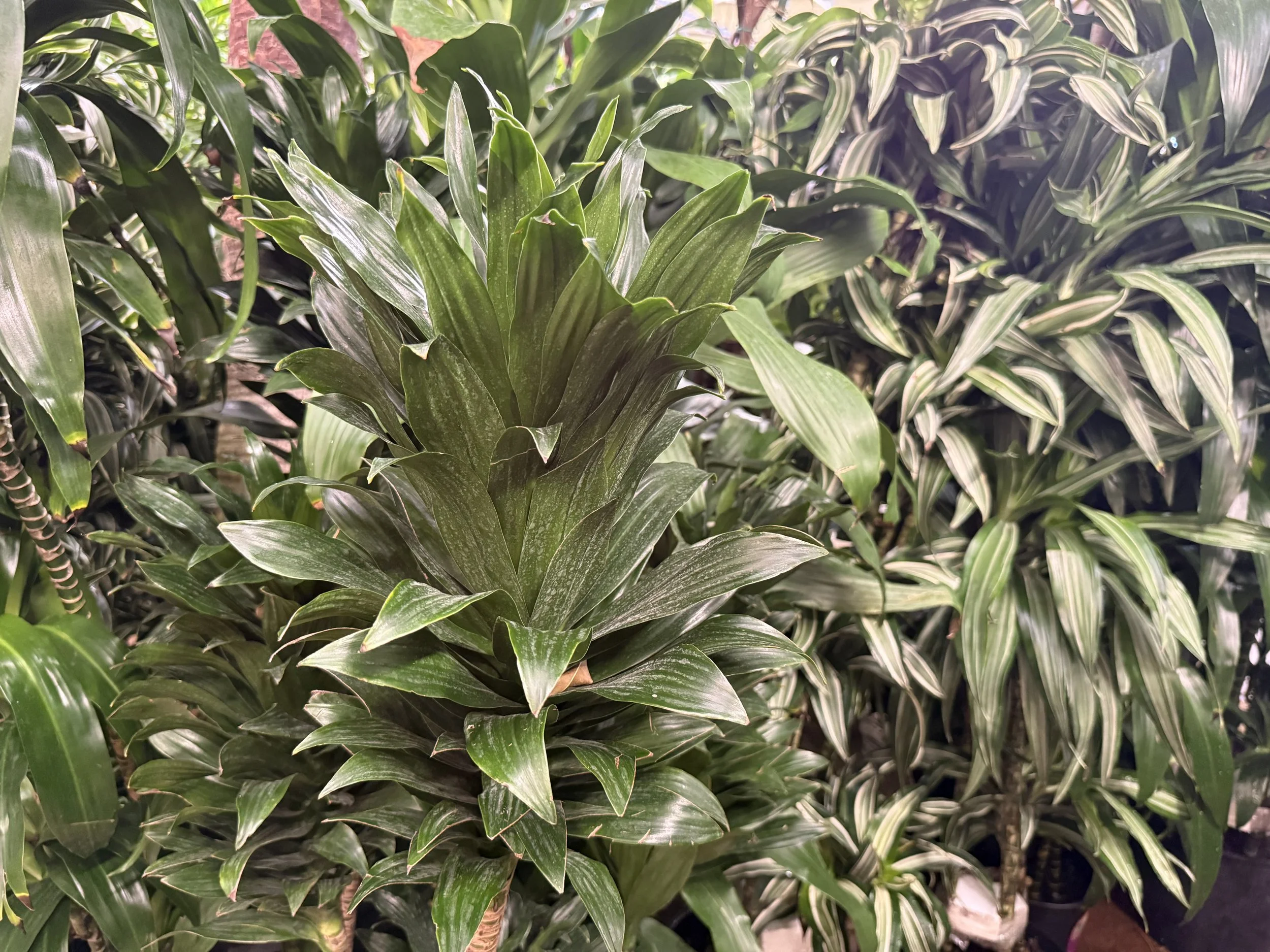
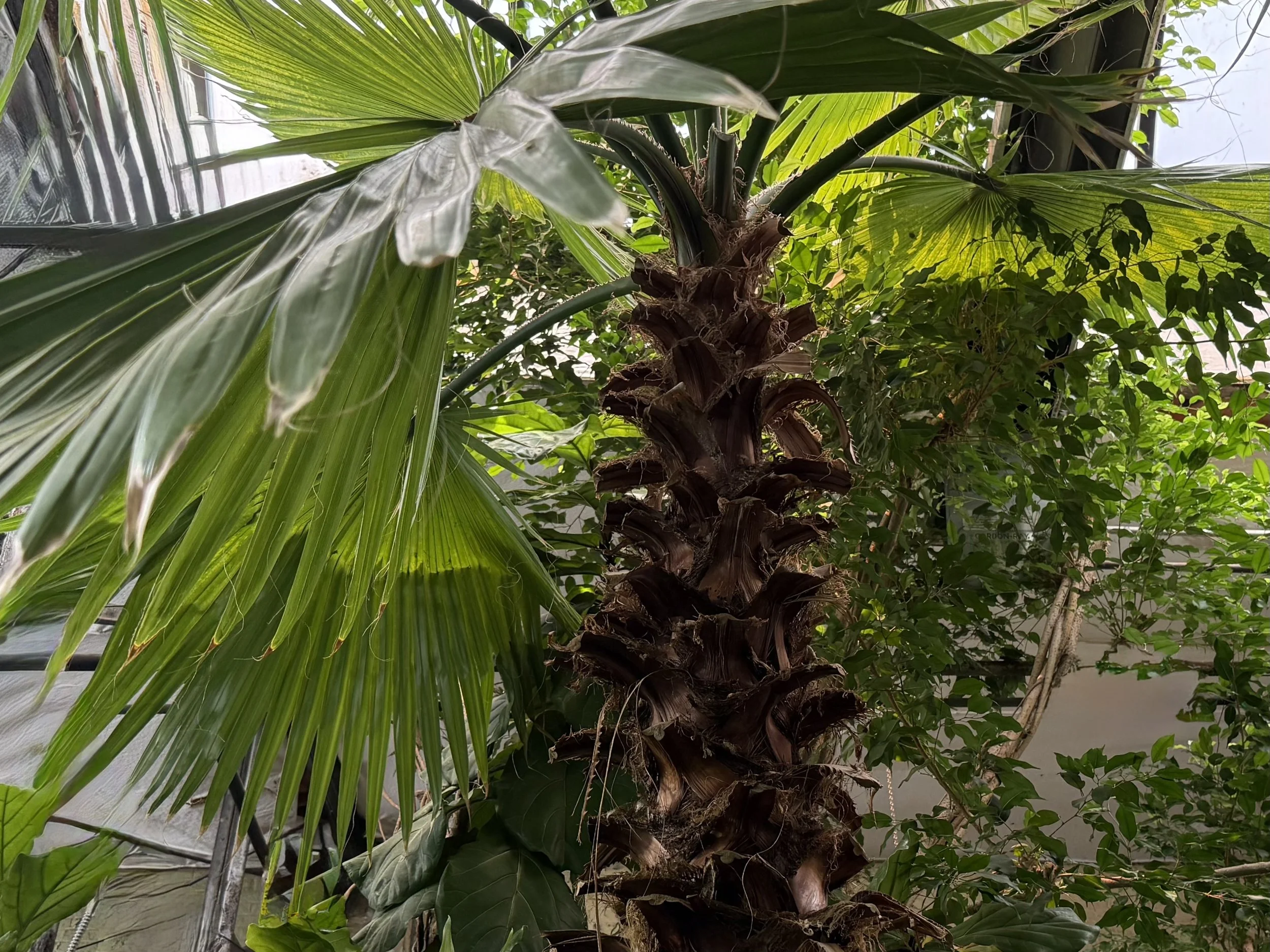
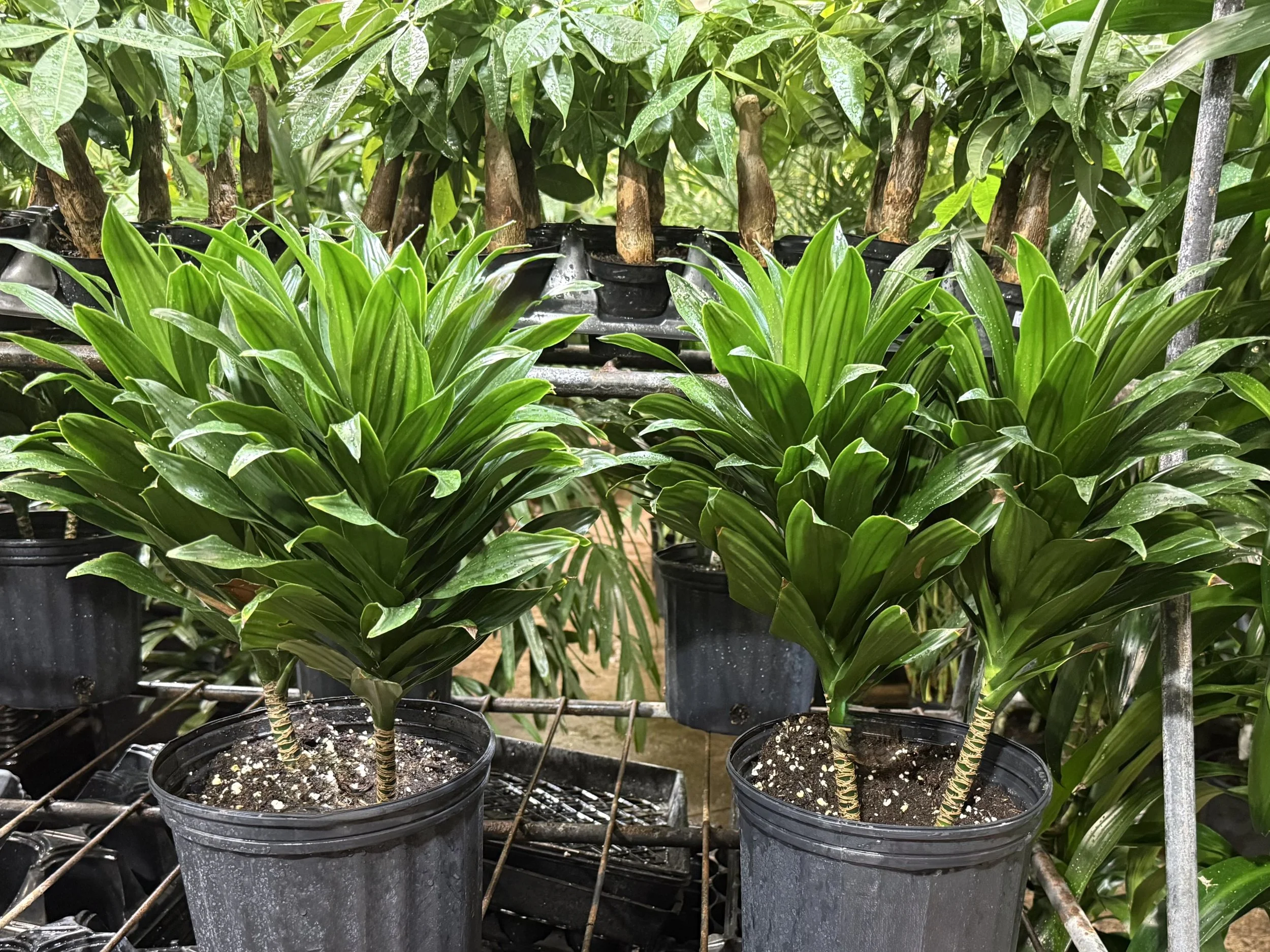
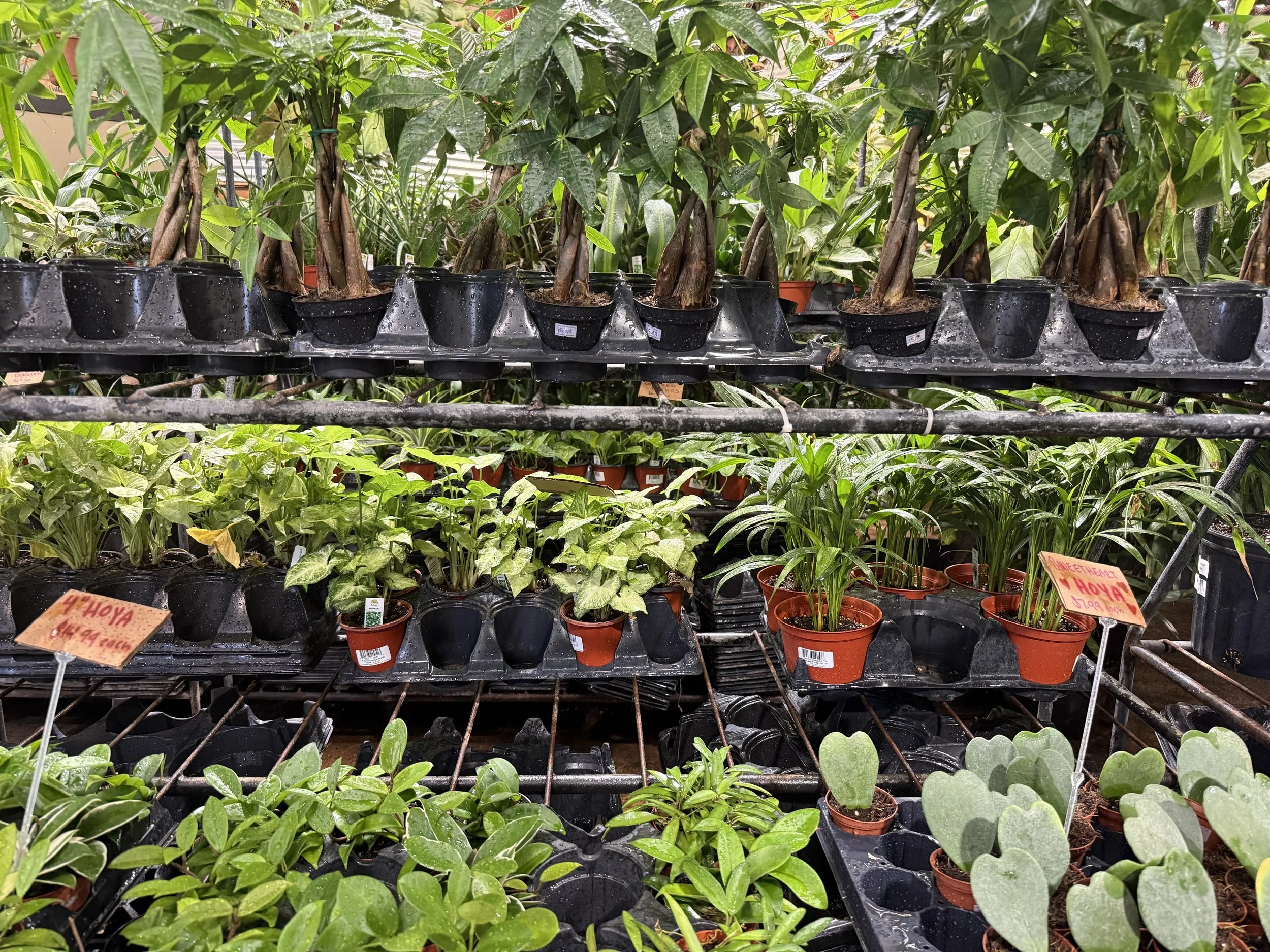
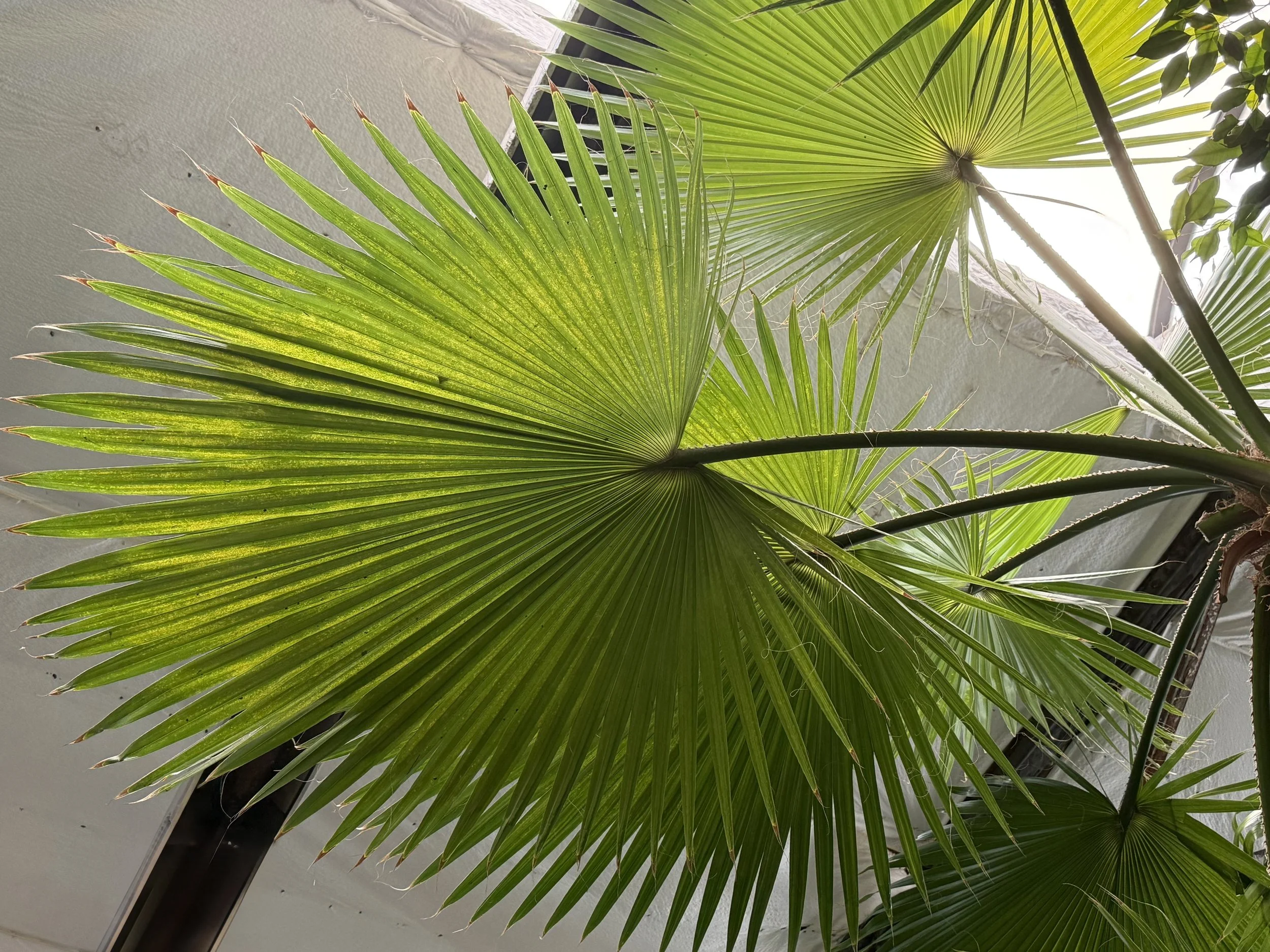
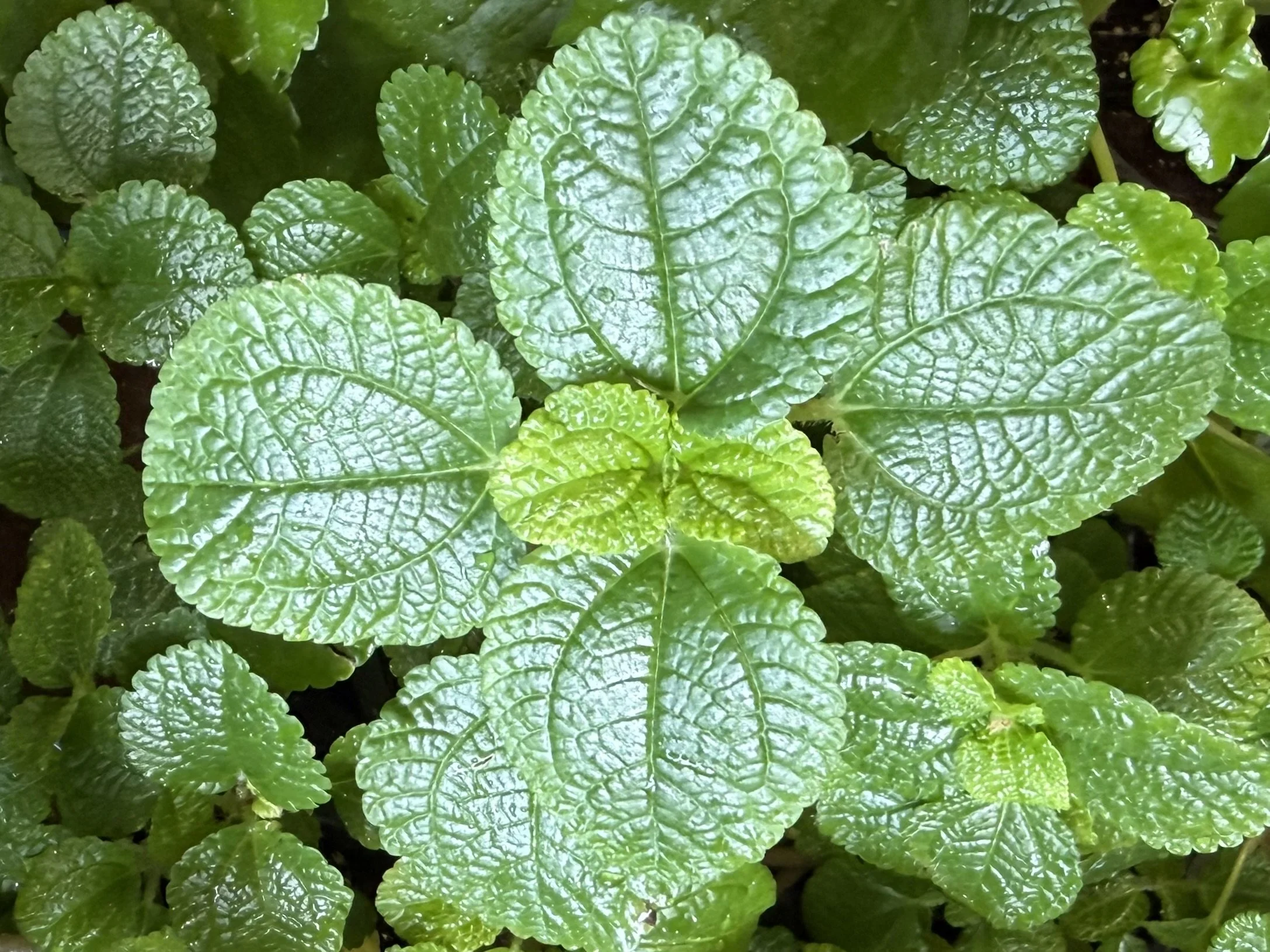
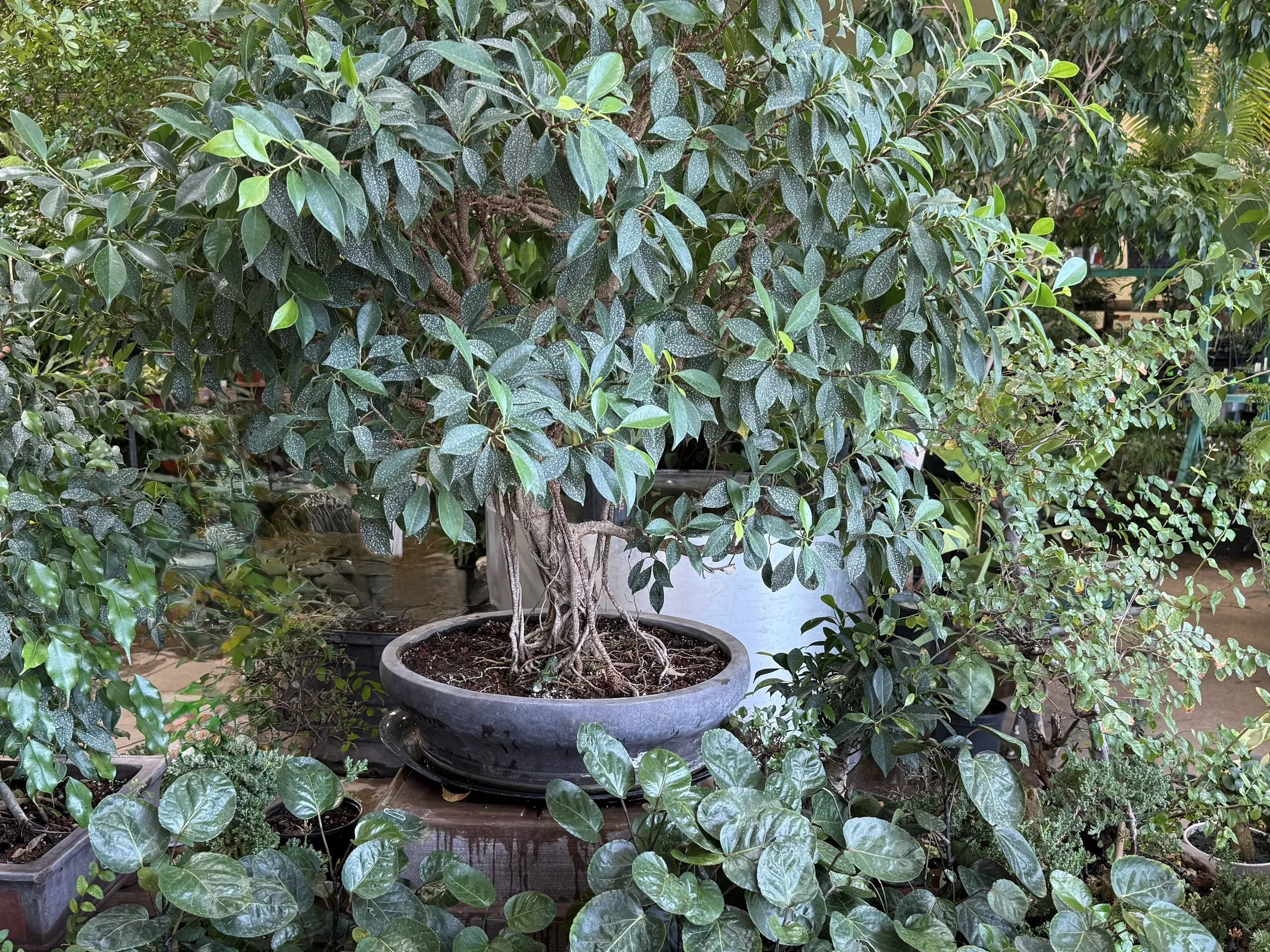
“I’m obsessed with plants, and I always have been.” Walk into Paradise Palm and that becomes immediately apparent. The sprawling space is a green oasis, filled from floor to ceiling with plants of every imaginable shape and size: delicate ferns, unusual philodendrons, snake plants, cacti, towering tropical trees, and decades-old bonsai. Some stretch more than twenty feet toward the skylights overhead. Others are small enough to sit on a windowsill. Together, they create the lush, slightly wild world that owner John Mueller has spent decades cultivating.
John was born in Madison, Wisconsin, but his family moved to Salt Lake City when he was four. His connection to plants appears to have started even earlier. He remembers his mother having a photograph of him at about six months old, sitting in his crib with plants arranged all around him - an image that, in hindsight, feels almost prophetic.
He grew up above East High School near the wooded gully known locally as Hobbitland, with Red Butte Creek running through what felt like an extension of his backyard. “I spent my whole time in this gully with all my friends,” John recalled. Camping, skiing, fly-fishing, and biking were simply part of life, encouraged by parents who believed strongly in getting their children outdoors.
Plants, however, held a particular fascination. By the time John was eleven, he had removed the mattress from a built-in bed that was surrounded by windows in his bedroom and turned the space into what amounted to his own greenhouse. His mother thought he was crazy. John thought he had found his calling.
Beginning around fourteen, nearly every job he held involved horticulture. He worked for local nurseries and interior plant companies, learning about tropical plants and their care before heading to Utah State University where he took environmental studies and journalism after initially pursuing plant science. His path to Paradise Palm came down, remarkably, to a coin toss.
While working a summer Forest Service job near Stanley, Idaho, John was deciding whether to stay there for a long weekend or return to Logan to meet up with his girlfriend and other friends. He flipped a coin and went back to Logan. While there, he spotted a newspaper ad from a company seeking someone with plant experience. John applied and was hired.
Not long afterward, the owner told him he planned to sell the company. John, fresh out of college and with little money, assumed the opportunity was far beyond his reach until his father suggested that he ask whether the owner would finance the sale. With several small loans from his parents and financing from the seller, John managed to buy the business in 1996.
At the time, there was no Paradise Palm storefront. What John purchased was primarily an interior plant-care operation with about sixty commercial accounts. His job was straightforward - to keep the plants healthy, replace those that were declining, and make sure the clients were happy. The replacement plants, however, quickly began taking over his apartment. “There were just plants everywhere.”
A retail space became a necessity rather than a grand business strategy. John found a small location in Sugar House, moved his growing inventory there, and figured that if he already had plants and a storefront, he might as well put up a sign and install a cash register.
Several years later, needing far more room, John discovered the warehouse that Paradise Palm occupies today. The surrounding stretch of Third South was then known largely for antique stores, rug shops, and bookstores, and the building itself was rough around the edges. But John saw twenty-two-foot ceilings, an expansive open floor plan, and, most importantly, a large skylight. He stripped away interior structures, insulated, painted, and slowly transformed the former warehouse into a place where large plants could thrive.
Today, retail is only one part of Paradise Palm. John and his team maintain plants in hundreds of commercial buildings and private homes throughout the Salt Lake Valley, designing and caring for interior landscapes and continuing to replace plants when necessary. They also rent greenery for corporate events and create outdoor container plantings and patio installations.
The scale of the store allows John to do something especially important to him - offer tremendous variety. Plants arrive primarily from Florida, California, and Hawaii, often by climate-controlled truck or air freight. There are familiar varieties alongside rare and unusual specimens, and John deliberately brings in enormous plants that may sit for months before finding the right home. They anchor the space visually, creating what he calls “shock and awe.” “I like people to come in and just wonder, ‘What is going on?’”
At the opposite end of the spectrum, John has a passion for bonsai trees. Some at Paradise Palm are decades old, including trees valued in the thousands of dollars. John dreams of someday helping create a public bonsai garden in Salt Lake where significant trees could have a permanent home, are cared for, and displayed for future generations.
That concern for how plants live within a space extends to nearly everything John does. He continually rearranges Paradise Palm, studying sightlines from the front door and from different angles throughout the store. Move one plant, he explained, and another has to move with it. Before long, the process becomes something like Tetris.
The instinct comes partly from his parents, particularly his mother, who loved art, antiques, architecture, and design. John grew up surrounded by objects chosen because they had meaning, craftsmanship, or a story rather than simply following a trend. Over time, he began applying that same sensibility to plants.
That sensibility also shapes how he helps customers. Someone may walk in saying simply, “I need a plant,” and John begins narrowing the possibilities - tall or short, wide or narrow, tabletop or floor, bright room, or dark corner. The goal is not merely to sell something attractive, but to find a plant likely to flourish once it gets home. People often return later with photographs showing how well their plants are doing. “That’s when work isn’t working, you’re just informing people, and they’re grateful.”
Paradise Palm has also become a family business. John’s older daughter, Bailey, grew up among the plants and today manages much of the operation. His younger daughter, Ainslie, has begun working there as well. John laughs that he now occasionally turns to Bailey with plant questions. Whether either daughter ultimately chooses Paradise Palm as her career is uncertain. John wants them to follow whatever path feels right, but there is undeniable pleasure in watching them develop the same instinctive connection to plants that has shaped his own life. “There’s something in our genetics where we want to know, we need to know, we’ve got to have our fingers in the dirt. It’s not frivolous. It’s a good thing. It’s good for the head.”