A La Mode
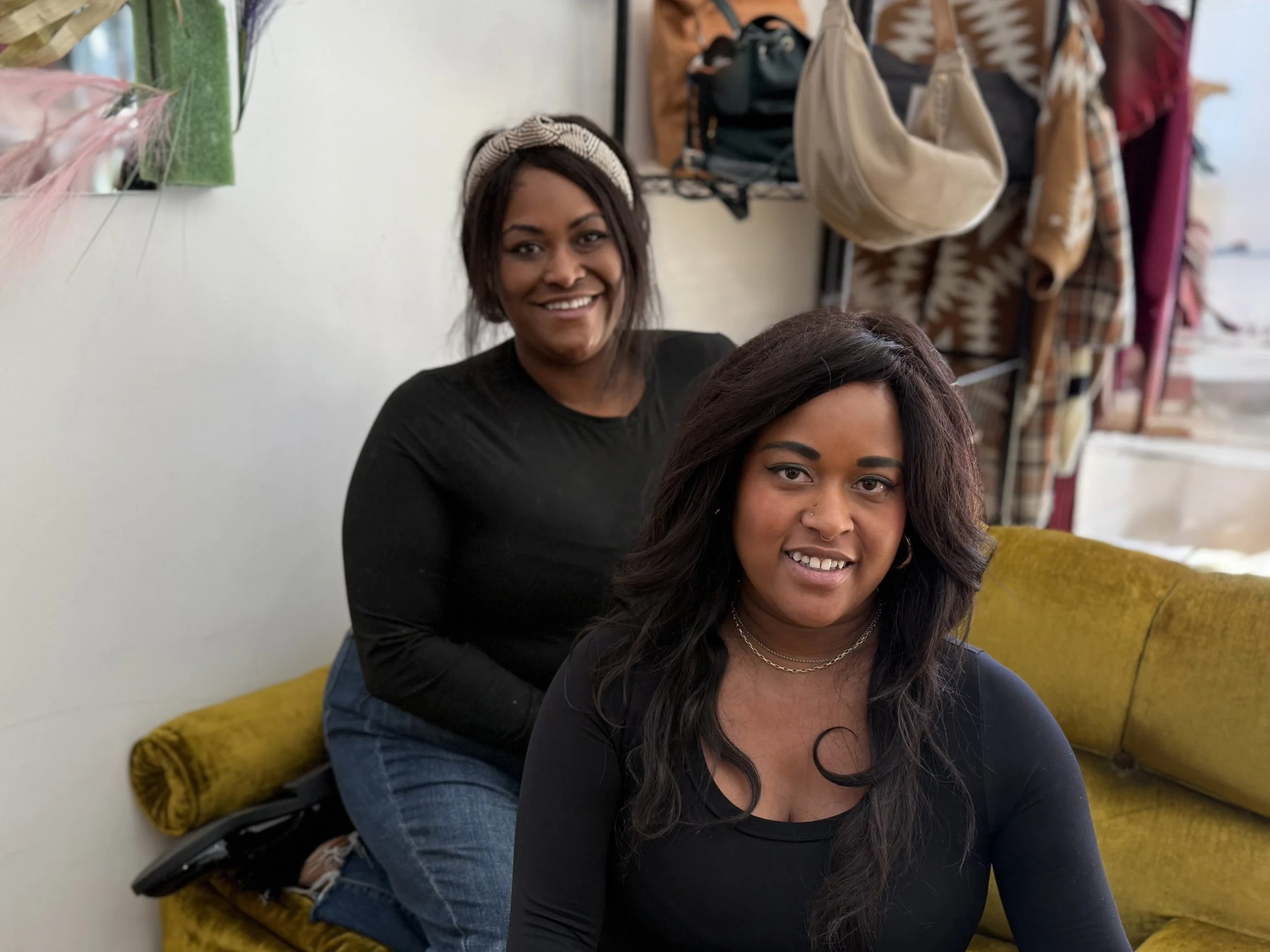
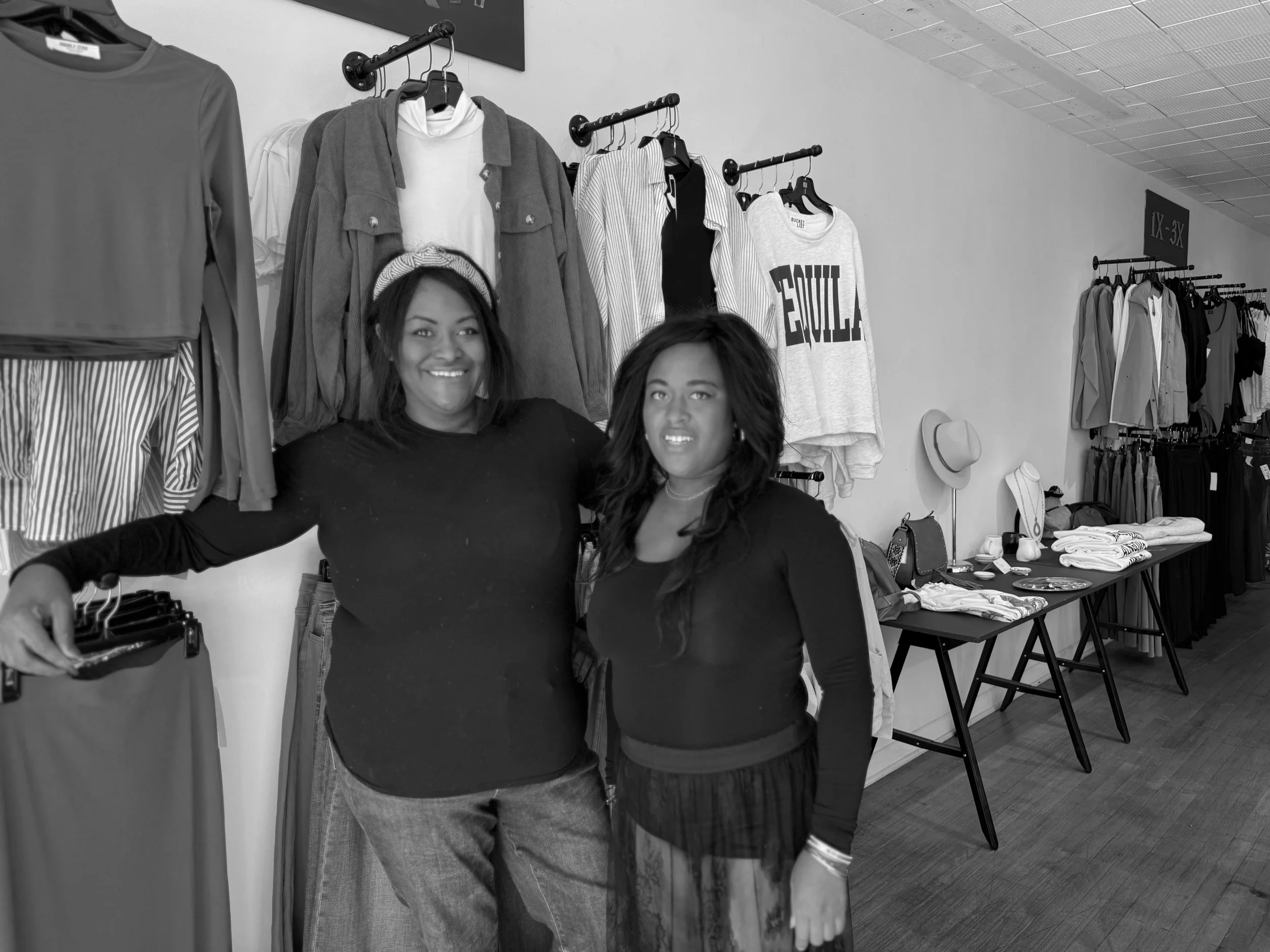
“We have kind of done things together for forever.” Jasmine and Angelique Gordon laugh when they say it, but the line could easily be the tagline for their lives. From growing up in Ogden, Utah with a single mother and two older brothers, to years in the restaurant and bar world, to running a women’s clothing boutique and a bar at the same time, the sisters behind A La Mode in Sugar House have been side by side through all of it.
The Gordons’ story begins in New York, where their mom was living in the city before deciding that raising four young children there would be too hard. She followed family out West - Angelique’s grandmother on her dad’s side had moved to Utah with an uncle who ran a long-haul trucking business, drawn by Ogden’s role as a rail and trucking hub. Utah promised a little more space, a little more affordability, and the chance for their mom to continue her education while raising kids.
The Gordons spent most of their childhood in Ogden, in what Angelique gently calls “humble beginnings where you learned to make a lot out of a little.” Their mom worked long hours, so the kids were often latchkey - getting themselves to school, figuring out lunches and sometimes dinners. That is where their work ethic started - being self-motivated at a young age.
When the Gordon sisters talk about their childhood, however, what comes up just as quickly as hardship is imagination. They remember being outside for hours, riding bikes, running around with neighborhood friends, inventing elaborate back-yard games. Once, with their two brothers, they planned a full circus, complete with acts they had practiced: Angelique walking jump ropes like a tightrope, tickets sold to the neighbors. Even then they were “hustle” kids, dreaming up something from nothing.
Fashion, they say, came straight from their mother. She was, as Jasmine puts it, “a real clothes lady.” Money was tight, but her sense of style never suffered. On Sunday nights, their mom would sit with them and “make outfits for the week,” using an over-the-door shoe bag and collapsible hangers. Shoes and socks went in the pockets, dresses, shirts, and layers were hung together so that on school mornings the girls could simply grab a complete look and go.
“She was always dressed to the nines.” They remember their mom wearing fur coats, leather skirts, meticulous outfits even though she wore little makeup. Closets and closets of clothes, and boxes of shoes downstairs, many still in perfect condition. As they got older, Jasmine admits she “stole her shoes all the time,” and has since had a few of her mom’s dresses altered to fit.
That love of clothes has always been braided with something more challenging. Angelique describes herself as “a little plus size gal” for most of her childhood and teen years. During back-to-school shopping, there were no trendy extended sizes for teenagers; she was sent into women’s sections instead of juniors, trying to make pieces work while watching friends choose the clothes she wanted but could not find in her size. She remembers leaving those trips “very upset by what there was to offer,” and beginning to get creative - learning to style what she could find and, in the process, changing her perspective on clothes and personal style. That frustration would eventually become one of the foundations of A La Mode.
In high school, the sisters’ creative streak exploded in other ways. Both had a punk rock phase - cutting up T-shirts, experimenting with hair color, piercings, makeup - using their bodies as canvases for self-expression. Dance, music and sports all wove through those years. Jasmine danced and played tennis, while Angelique joined the marching band and spent years playing the bagpipes, even performing during the 2002 Winter Olympics.
The girls graduated from high school in 2002 and 2004. Angelique went on to Weber State University, majoring in Communications “for my mom,” she says with a smile, and then to Marinello School of Beauty for cosmetology, which was for herself. Both sisters eventually finished cosmetology school, drawn to the mix of creativity, independence, and the ability to help people feel good in their own skin.
Before they found their long-term path, however, there were many jobs. Between them, Angelique and Jasmine worked in early childhood education, ran kindergarten prep and summer camp programs, served as a Certified Nursing Assistant (CNA), and even became a phlebotomist. One of Angelique’s most meaningful roles was as a Court Appointed Special Advocate (CASA/guardian ad litem) through the Christmas Box House in Ogden, advocating for children who had been removed from their homes and acting as the bridge between the kids and their court-appointed attorneys.
There is no doubt that the sisters were inspired by their mom's work. She spent her career serving young people. She worked for years in youth corrections, ran a gang unit, helped lead an afterschool program at the Ogden City Mall, and threw herself into community work well beyond her job description. She was deeply involved in Kids and Cops programs and ran a large Sub for Santa effort in Ogden. Kids from those programs came to their house. The Gordons grew up watching their mom build community around children who did not have much support. That model - of showing up for people who are overlooked - is one of the clearest threads from their childhood to their lives now.
By their late teens and early twenties, the hours and emotional toll of health care and social work were wearing on them. The schedules were harsh for young women who still wanted to see their friends, and piercings and brightly colored hair were not particularly welcome on night shifts in medical settings. A friend working at Roosters Brewing Co. in Ogden suggested serving might be a better fit. Angelique tried it, discovered she could make good money, and quickly realized she loved much of what came with the hospitality world: connection, stories, the rhythm of a busy room.
Hospitality would become a second education. Angelique spent ten years at Roosters, then followed an opportunity to Salt Lake City. Around 2009–2010, the sisters moved together to the Marmalade neighborhood, knowing almost no one in the city. At first, Angelique hated it and swore she would leave after the first lease ended. Instead, she walked into The Garage on Beck one day, having never been there before, and applied for a one-day-a-week cocktail server job.
That job turned into thirteen years. Angelique worked through the bar’s first fire, a terrifying period when she had almost no income, eating corn dogs while she waited to see if the business would reopen. She stayed, worked every shift she could, and slowly climbed from cocktail server to lead bartender to floor manager. Eventually, under owner Bob McCarthy and with mentorship from figures like Marsha Merrill and local music legend “Bad” Brad Wheeler, she became general manager.
As GM, Angelique ran nearly every part of the operation from managing the kitchen and full staff, to overseeing music booking and payments, handling payroll, and learning cost controls and numbers on the fly. The Garage also gave her a deep appreciation for live music and an entry into Salt Lake’s local music scene. It was there, working seven days a week and caring for their sick mom at the same time, that she realized she did in fact have the skills to run something of her own.
Meanwhile, Jasmine had walked into Lucky 13, the hamburger spot by the ballpark, not long after moving to Salt Lake. The owner, Rob Dutton, was still behind the bar then. She started as a cocktail server and, over time, became one of his key leaders, eventually stepping into the role of COO for his growing restaurant group. Together, they have helped build and manage multiple concepts, including different sides of Lucky 13 and a brewery. Rob, the sisters say, has been mentor, boss, and family all at once - “the kids he never, ever, ever wanted,” they joke - and one of the first people to really insist they were capable of opening a business.
It was actually one of Rob’s regulars, a men’s clothing box service, that sparked the original idea for A La Mode. Around 2015, Jasmine’s then-boyfriend began receiving a subscription box that offered styling and clothing exclusively for men. The concept fascinated the sisters: you filled out a survey, someone shopped for you, a curated box arrived at your door. But as they opened his packages, a few things stood out. Even the simplest items were over one hundred dollars, the service existed only for men, and there was nothing that addressed the realities Angelique had faced for years as a plus-size woman.
At the same time, Jasmine was already shopping heavily online, not in the United States but overseas in Europe and Australia, where brands were beginning to offer stylish, on-trend plus-size clothing. She was used to hunting down pieces that fit and felt current. They realized they could combine all of that knowledge into something new - an affordable, size-inclusive personal styling service for women.
The girls set up racks in the living room of their small apartment over the Gateway Mall and launched A La Mode as a mail-order box company, shipping across the United States. Customers filled out detailed questionnaires, including their budget. The sisters curated pieces that matched each woman’s style and price point and shipped them out. From the very beginning they offered plus sizes, drawing on the brands Jasmine already trusted overseas and the relationships they were building with vendors here. Unlike the big national services popping up at the same time, they were determined to make personal styling accessible, not a luxury just for women who could spend hundreds of dollars per item.
They turned the apartment’s kitchen into a mini boutique, recruited friends as models, and watched the business quickly outgrow the space. Around that time, Jasmine moved into a home in Herriman, and the sisters shifted A La Mode into the attic of her house, transforming it into their second workspace. They operated out of that attic for about a year and a half - all while still working full-time in the service industry and caring for their mother, whose health was beginning to decline - pouring every spare hour into styling, packing boxes, and tracking returns.
Eventually, shipping logistics, damaged returns, and the sheer workload of running a national box service without deep financial backing pushed them to evolve again. At the same time, Salt Lake City itself was changing: personal shoppers, stylists, and urban services like Instacart were becoming more familiar concepts, and people were increasingly willing to invest in themselves. The sisters decided it was time for A La Mode to become a physical boutique.
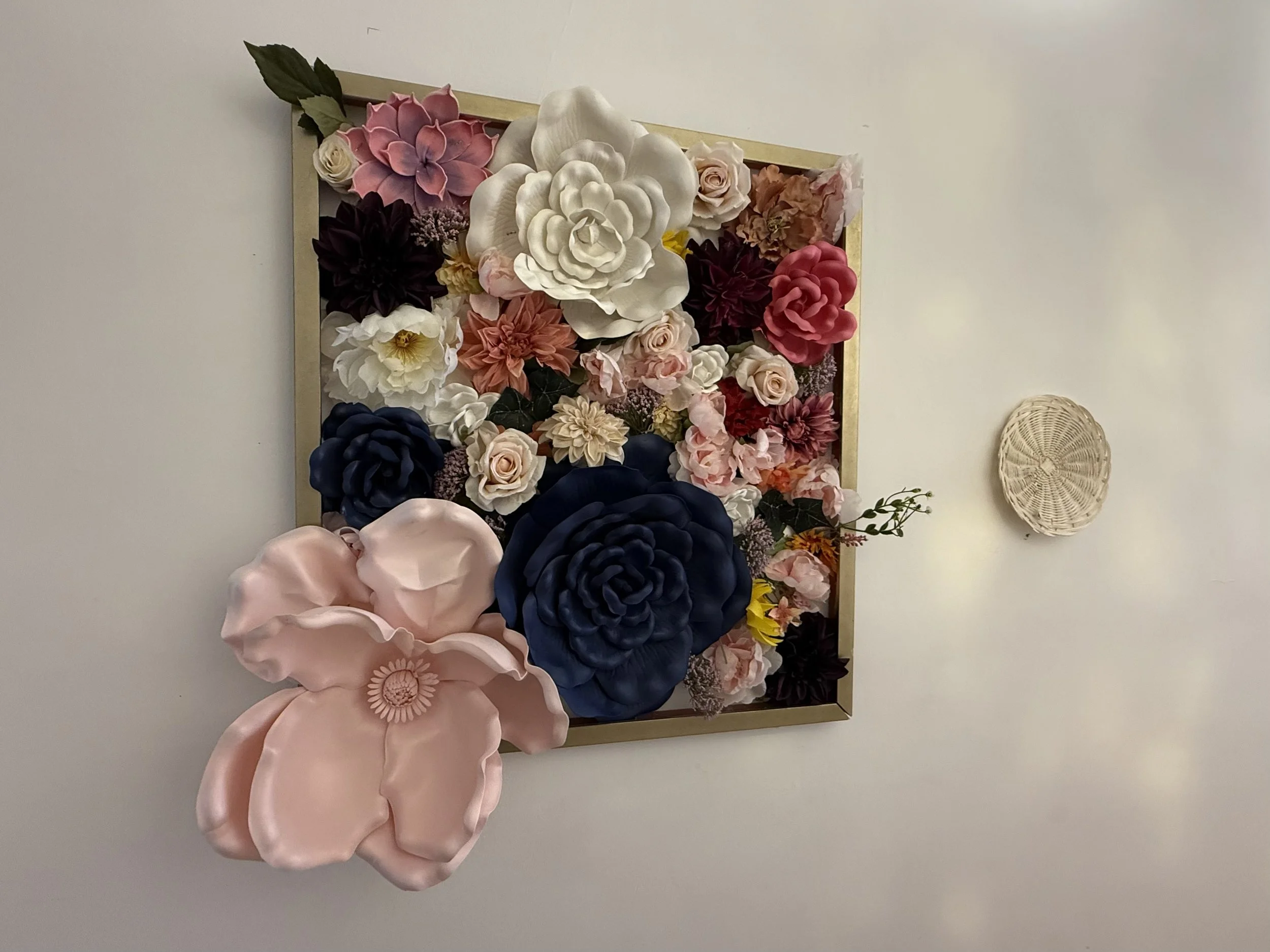
They found a tiny space at 900 South and 300 East, in the Maven District along with a handful of other small shops, and set about transforming it. The build-out was a community project: bar industry friends came after shifts to hang lights and build dressing rooms. Spencer Byrd (who would later become Angelique’s partner at Tailgate Tavern) worked on the space, and servers and bartenders were “paid” in pizza. The little shop, barely bigger than a back room, became a bright, welcoming boutique that doubled as an in-person styling studio.
The sisters stopped shipping boxes and instead focused on one-on-one appointments, closet clean-outs, and styling clients in person. Meeting women face to face allowed them to encourage people to step outside their comfort zones, to try pieces they never would have pulled on their own, and to show them how to mix new items with what they already owned.
Their mother, whose middle name Theodora nearly became the name of the business, was able to see that first brick-and-mortar space before they opened. She walked through, saw racks waiting for clothes, and understood that her daughters’ dream was becoming a reality. She passed away in 2022 but that memory - her seeing that they had done it - is something they carry into every new chapter.
The name they ultimately chose, A La Mode, came on a flight back to New York to visit family. They were brainstorming names when Angelique, whose own first name is French, wrote it down. Besides the dessert meaning, “a la mode” in French also means “in current fashion,” and they loved the dual idea: style and treating yourself. “Those were all of the meanings we looked up, and how we came up with A La Mode.”
After a few years on 900 South, they began looking for a larger space. They had outgrown the one tiny dressing room they had built themselves, and they had heard that major road work was coming to 900 South - the kind of construction that can be devastating for small retail. Around that time, Jasmine went to buy mannequins from another boutique owner, Courtney Gibbs of Urban Blues. They connected instantly. Courtney had run her Sugar House store for more than a decade and was preparing to close. As they talked, she suggested that the sisters take over her space. It would give her customers somewhere kindred to go and give Jasmine and Angelique room to grow.
They applied with the landlords, Sterling Furniture, who have a long history on that block and wanted to keep the spaces locally owned. About two weeks after their mother passed away, the sisters received the call that their offer had been accepted. Instead of slowing down to grieve, they coped the only way they knew how - they threw themselves into building out a new store.
For months they hung lights and racks, painted, moved inventory, and turned the former Urban Blues space on 2100 South into A La Mode’s new home. A few months after they opened, the city began the long-planned reconstruction of 2100 South. Between a brutal winter, torn-up sidewalks, ripped-out parking and heavy equipment out front, they effectively spent nearly two years in a construction zone. The city offered small grants, but not enough to cover even a full month’s rent. Many neighboring businesses, especially on their side of the street, struggled or closed.
Sterling Furniture’s commitment to keeping independent shops in the building and the sisters’ sheer determination kept A La Mode afloat. They shifted their business model, emphasized that there was a full parking lot behind the store, and leaned even harder into community connection and events. They also watched the neighborhood rapidly fill with new apartments and residents and began to imagine what Sugar House could look like once the barriers were finally gone.
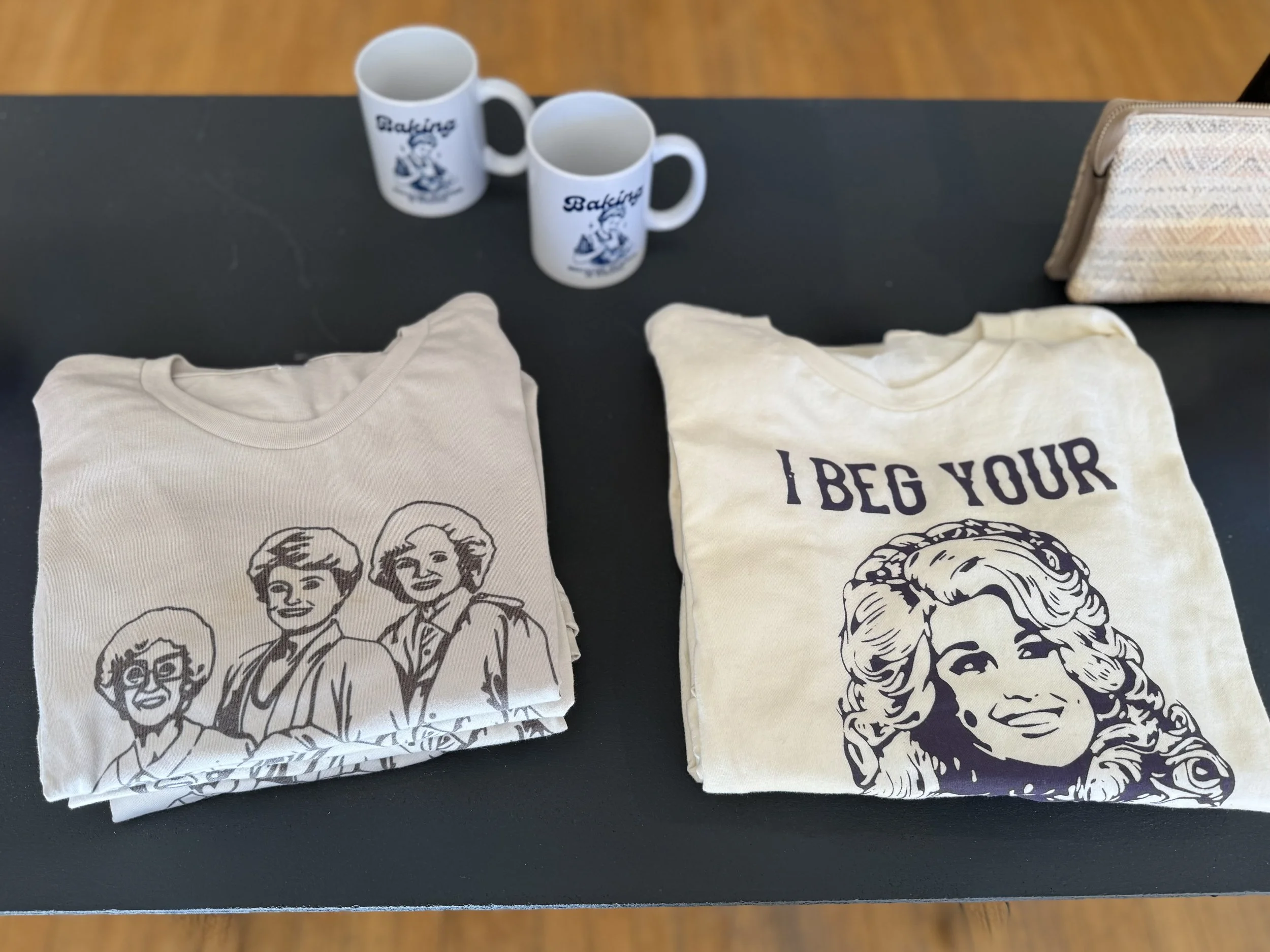
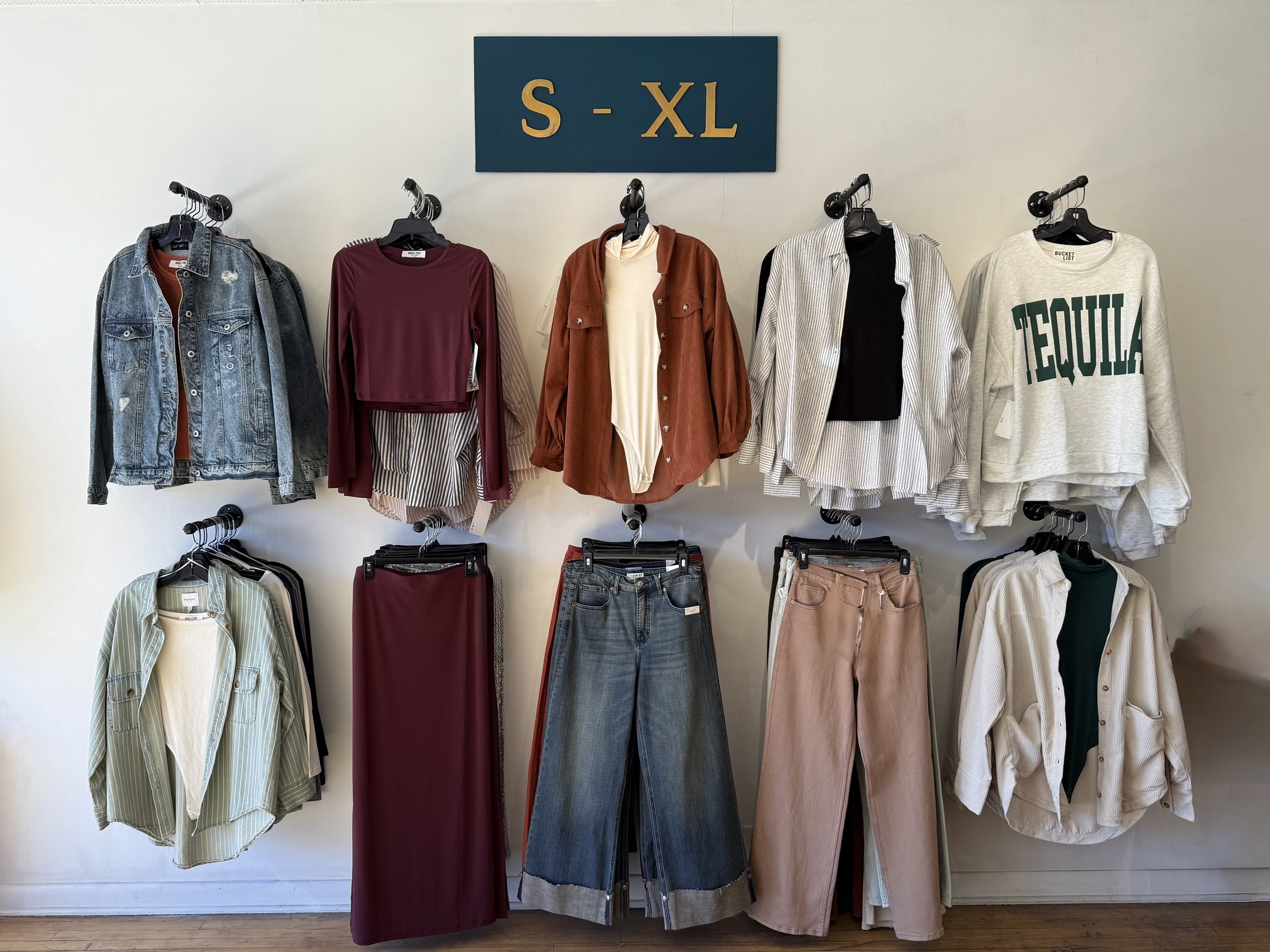
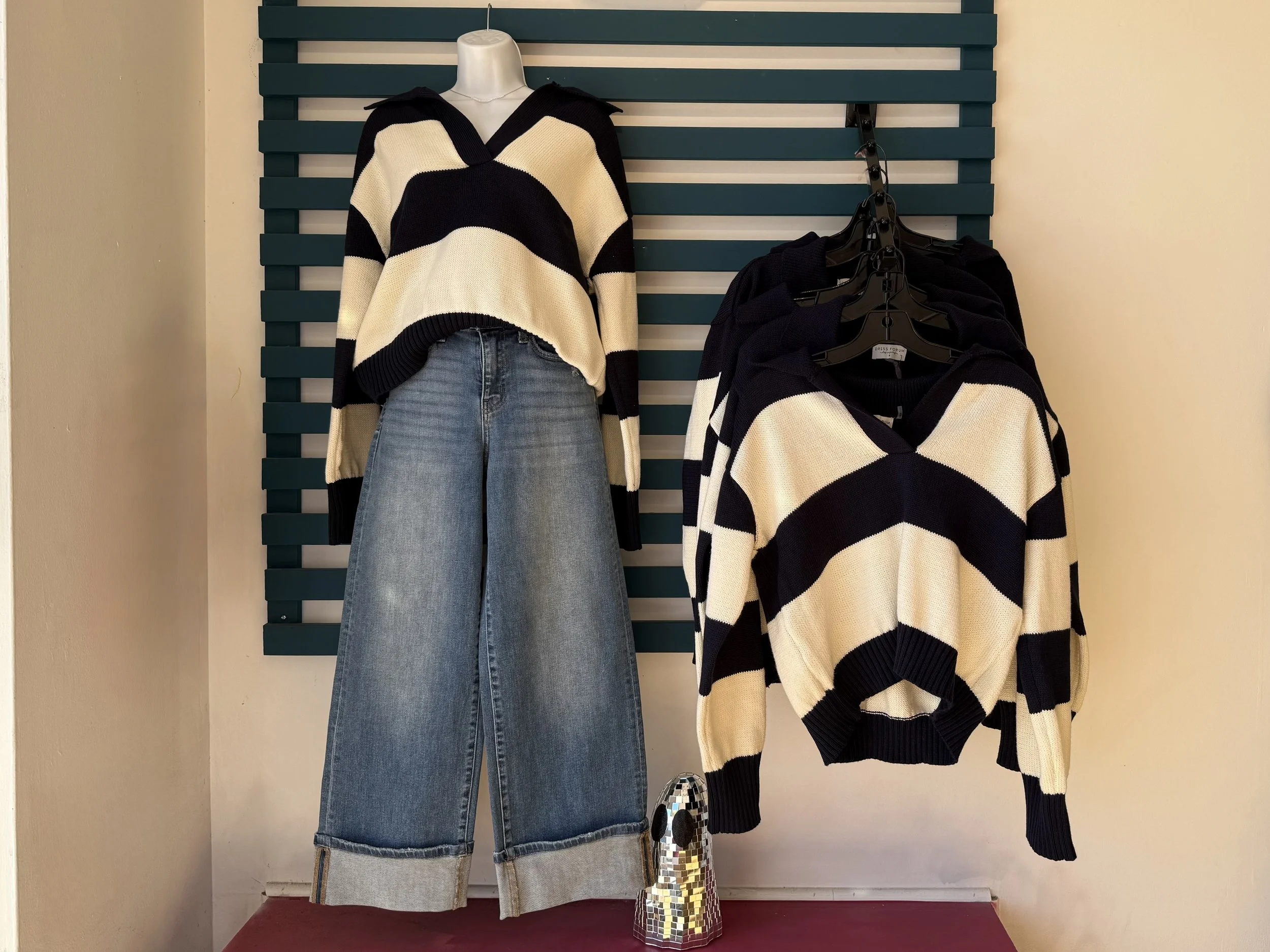
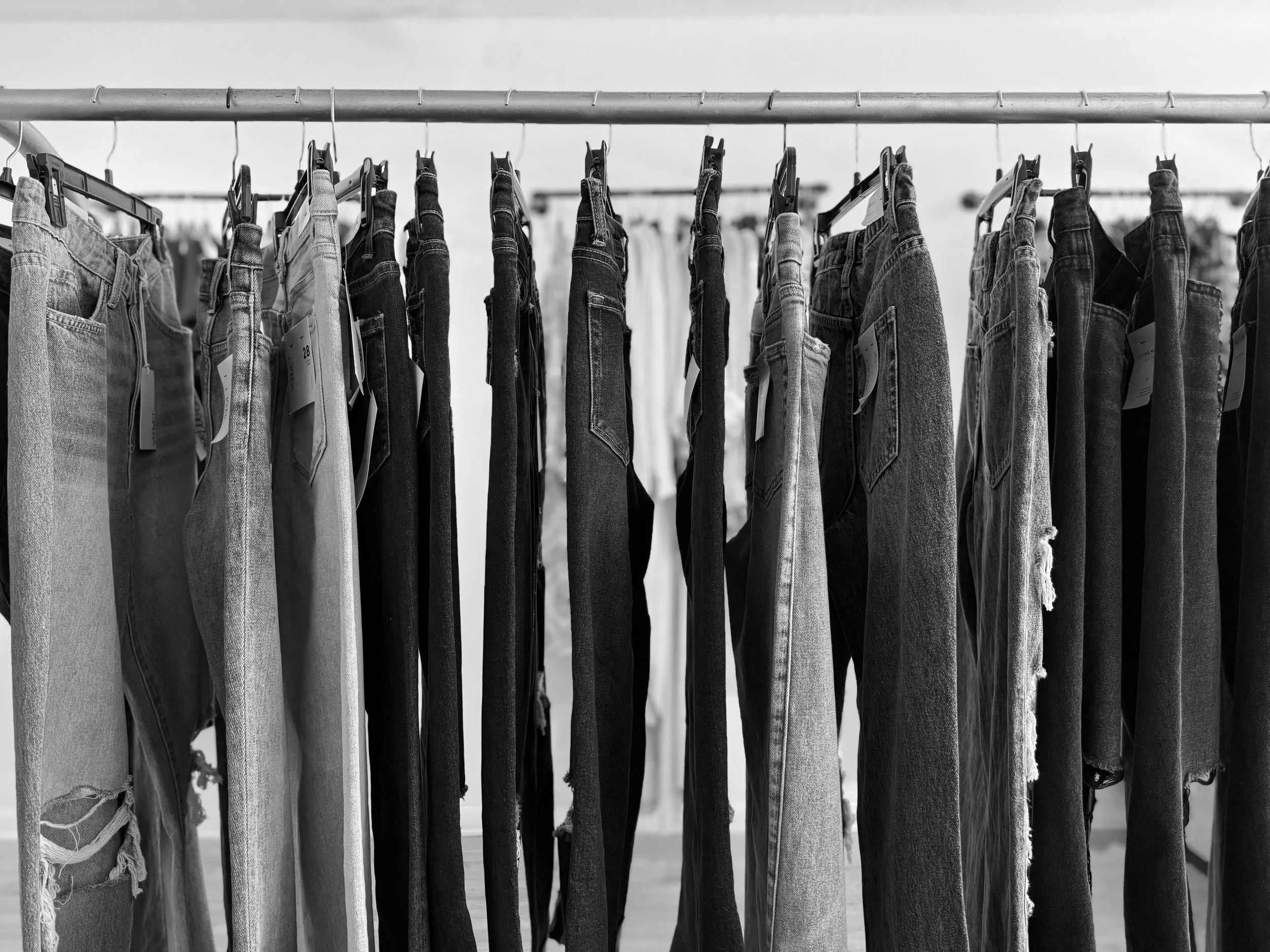
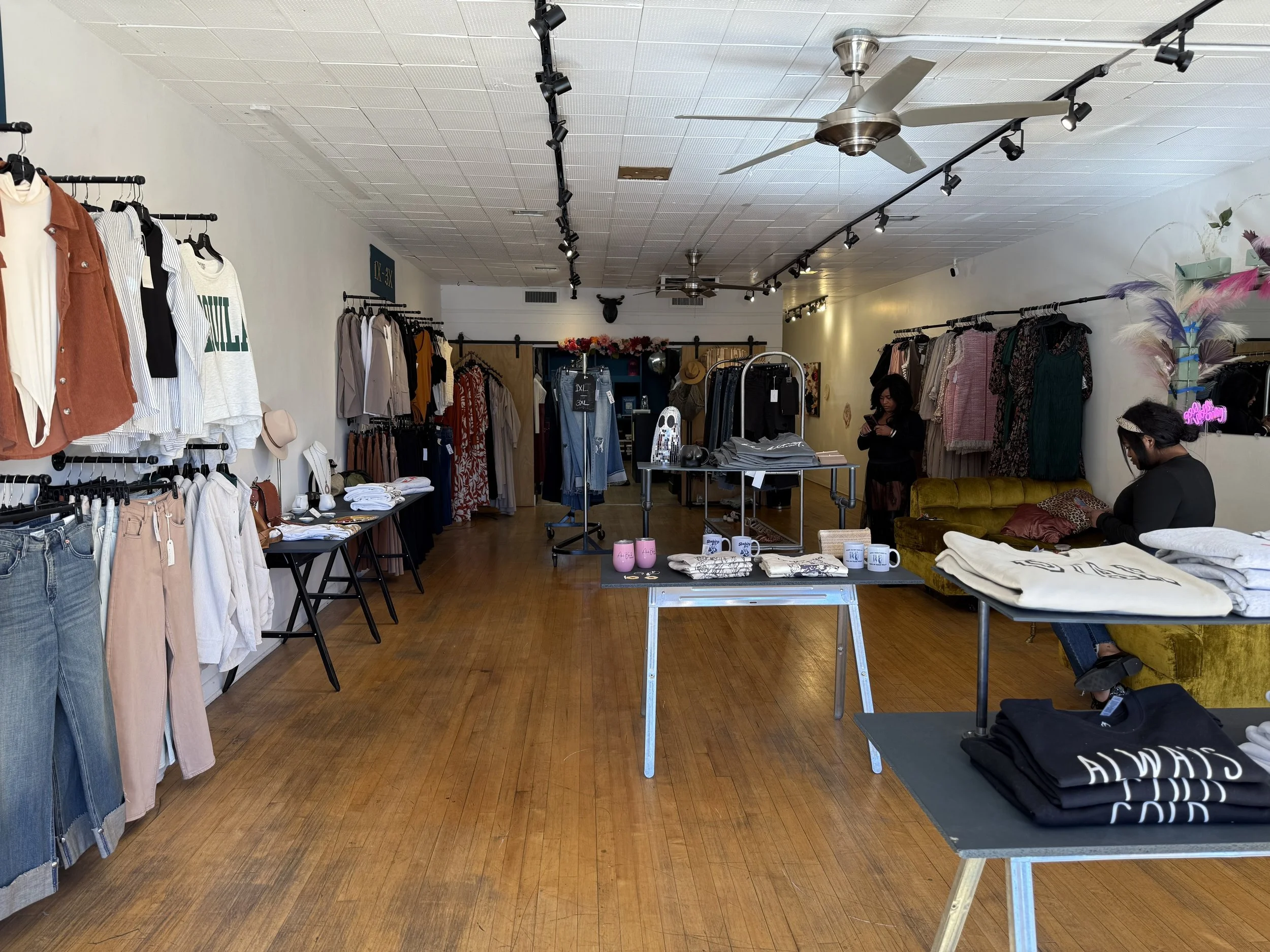
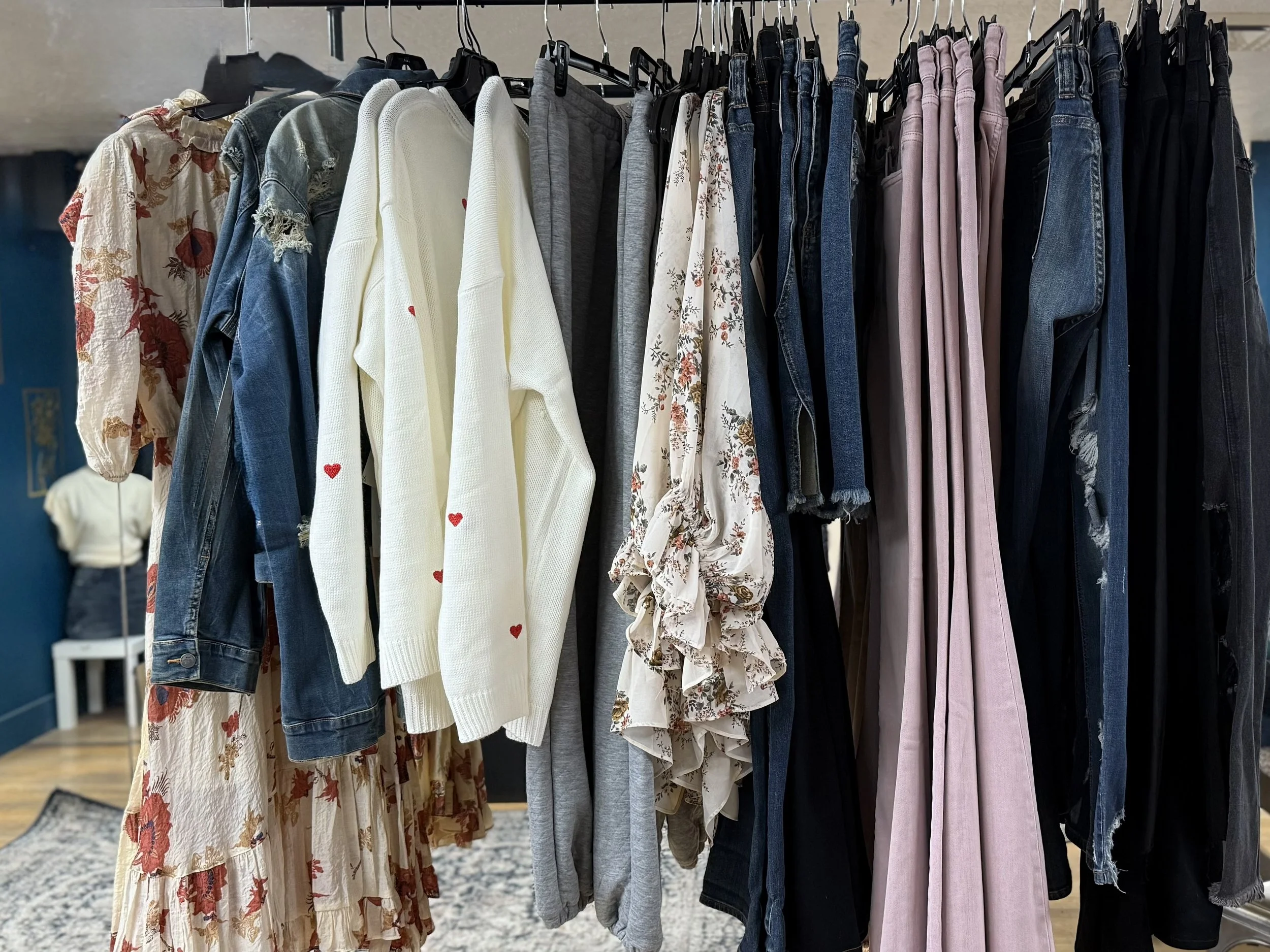
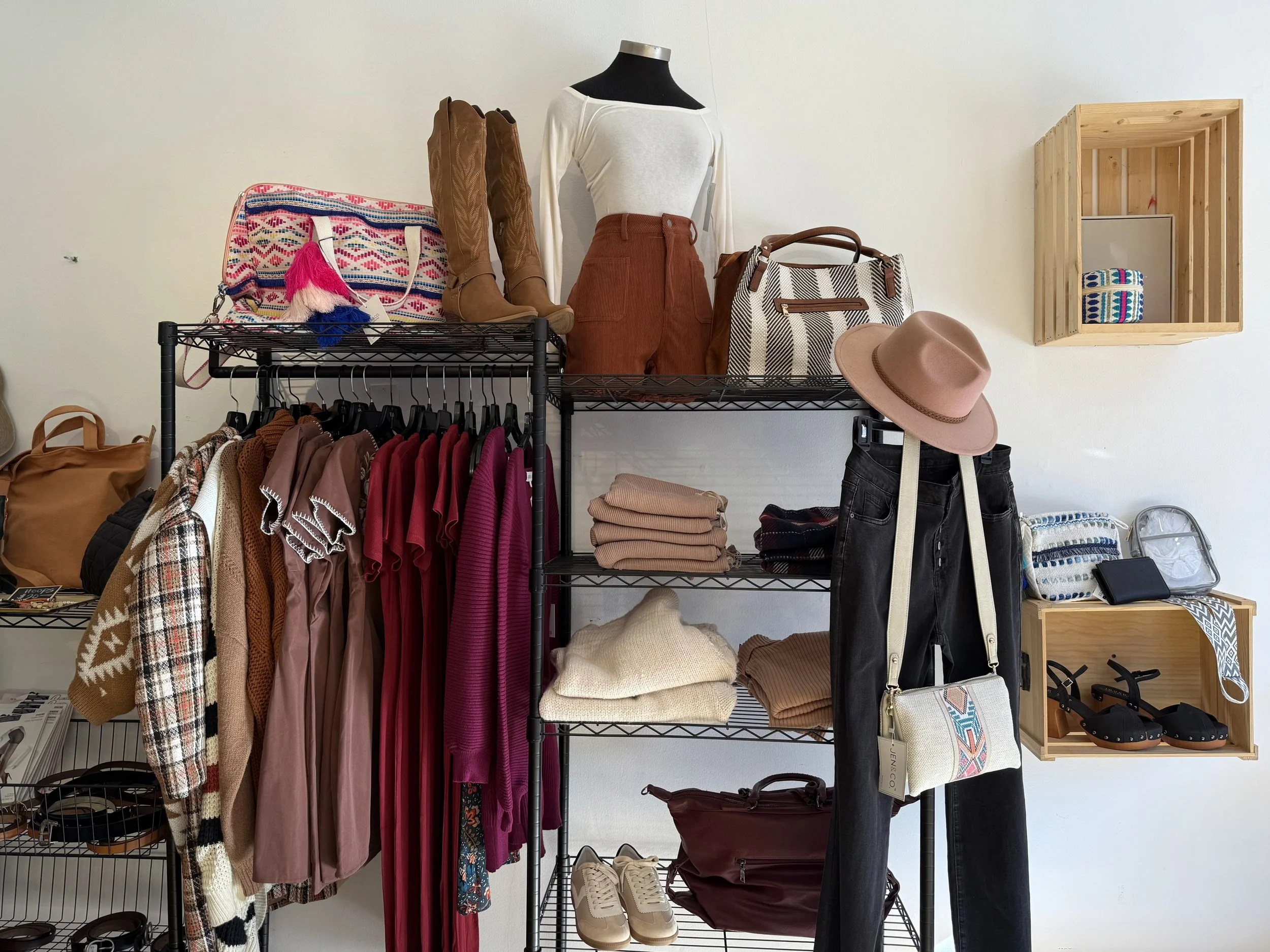
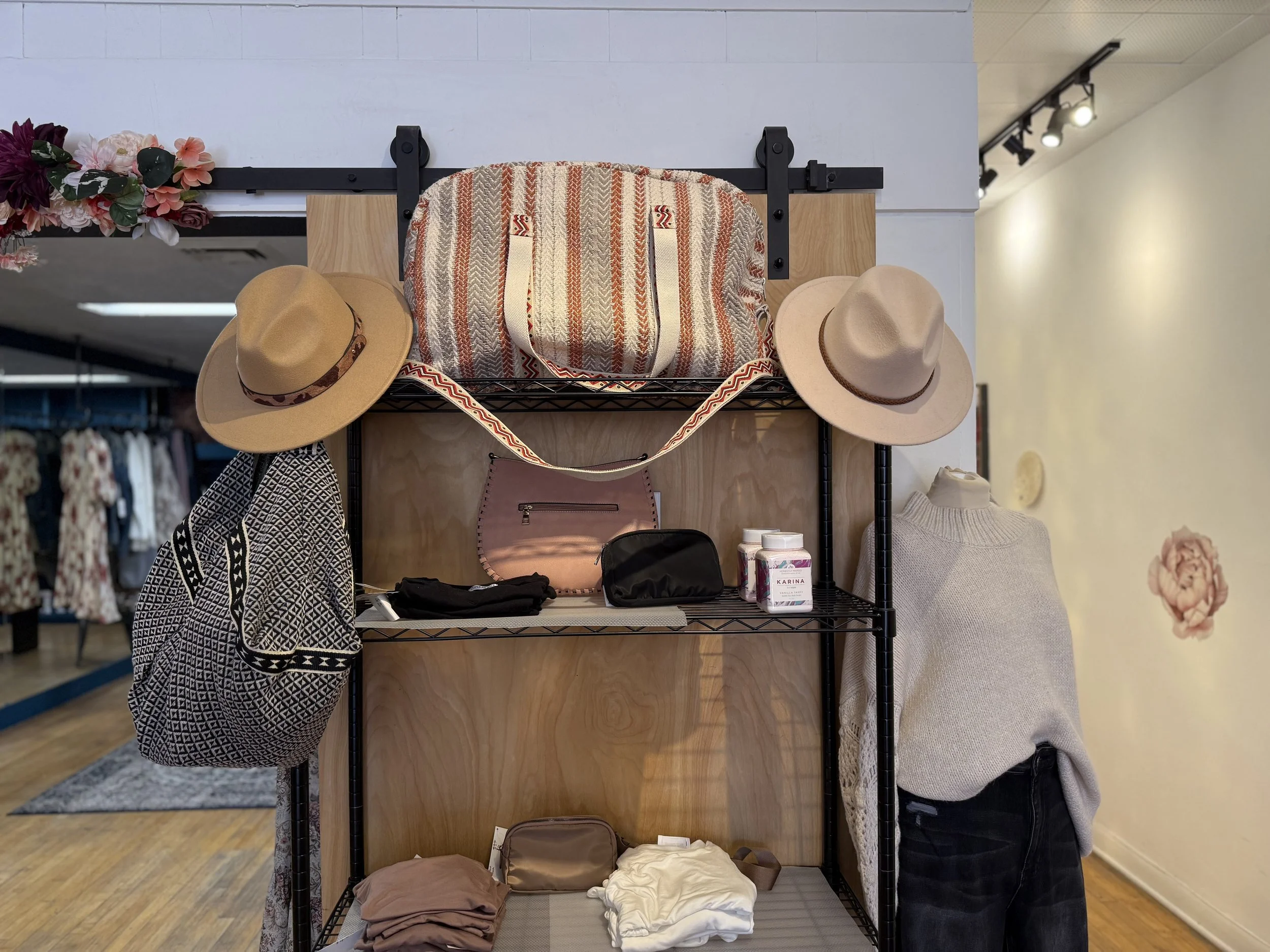
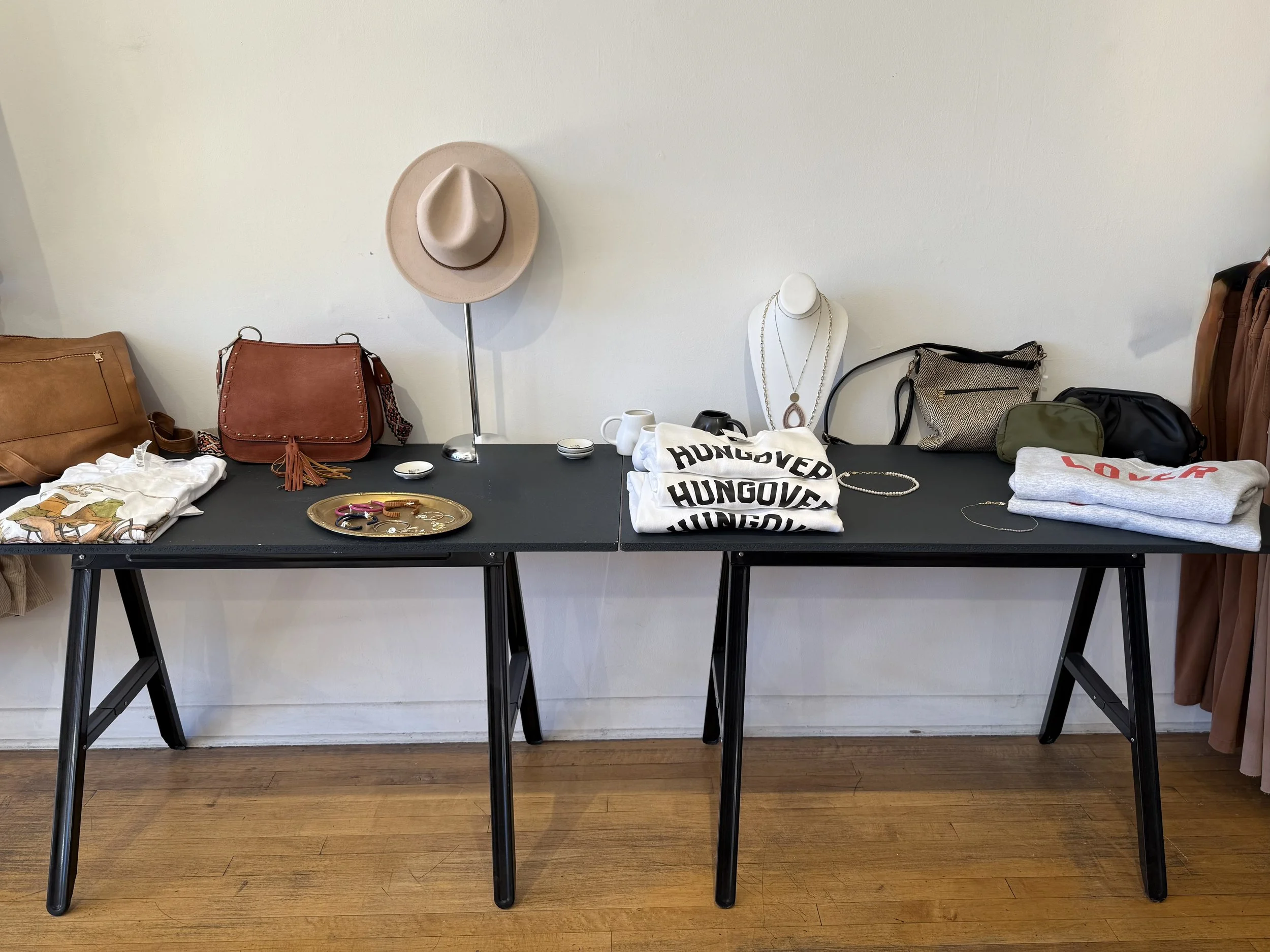
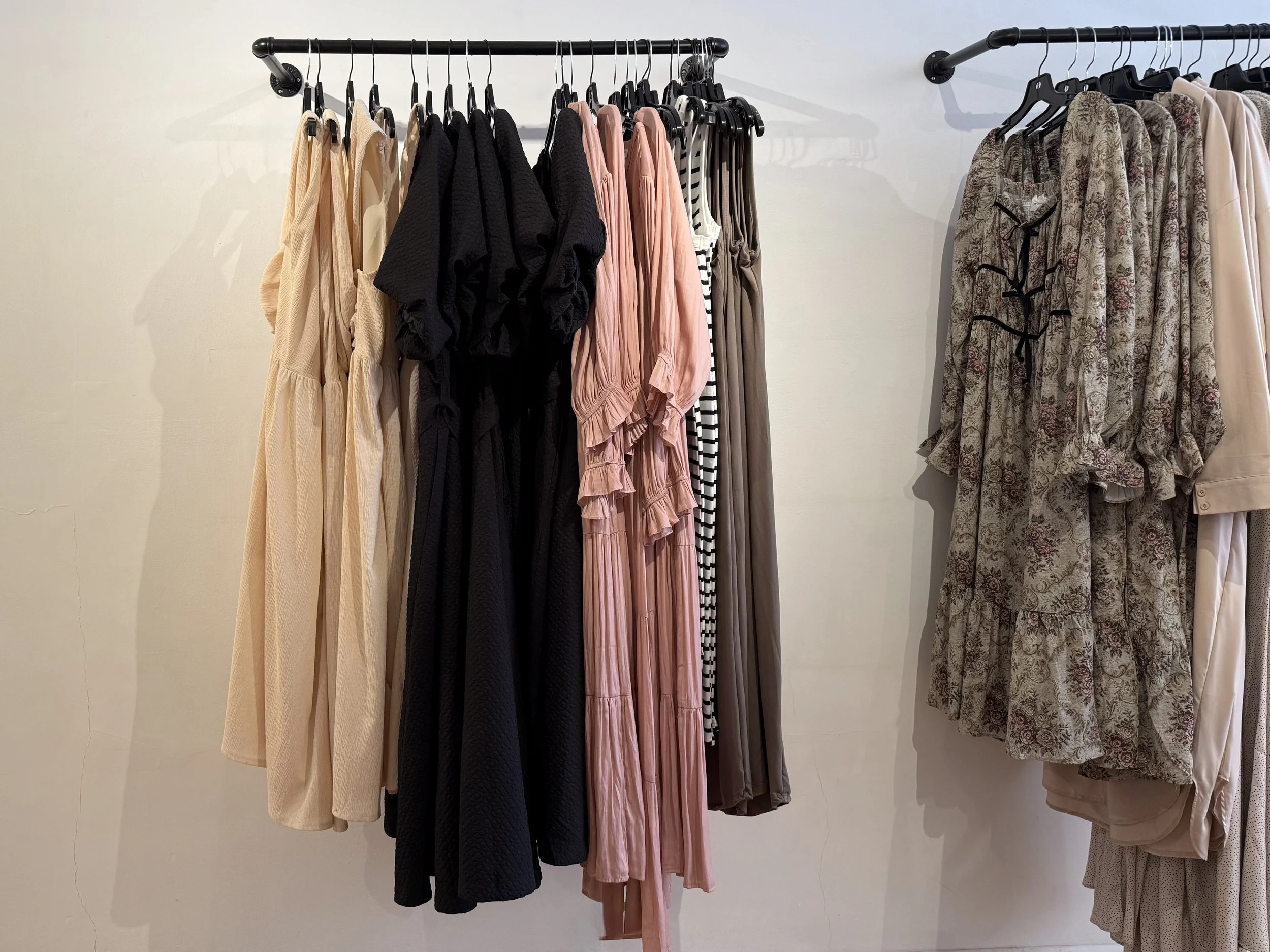
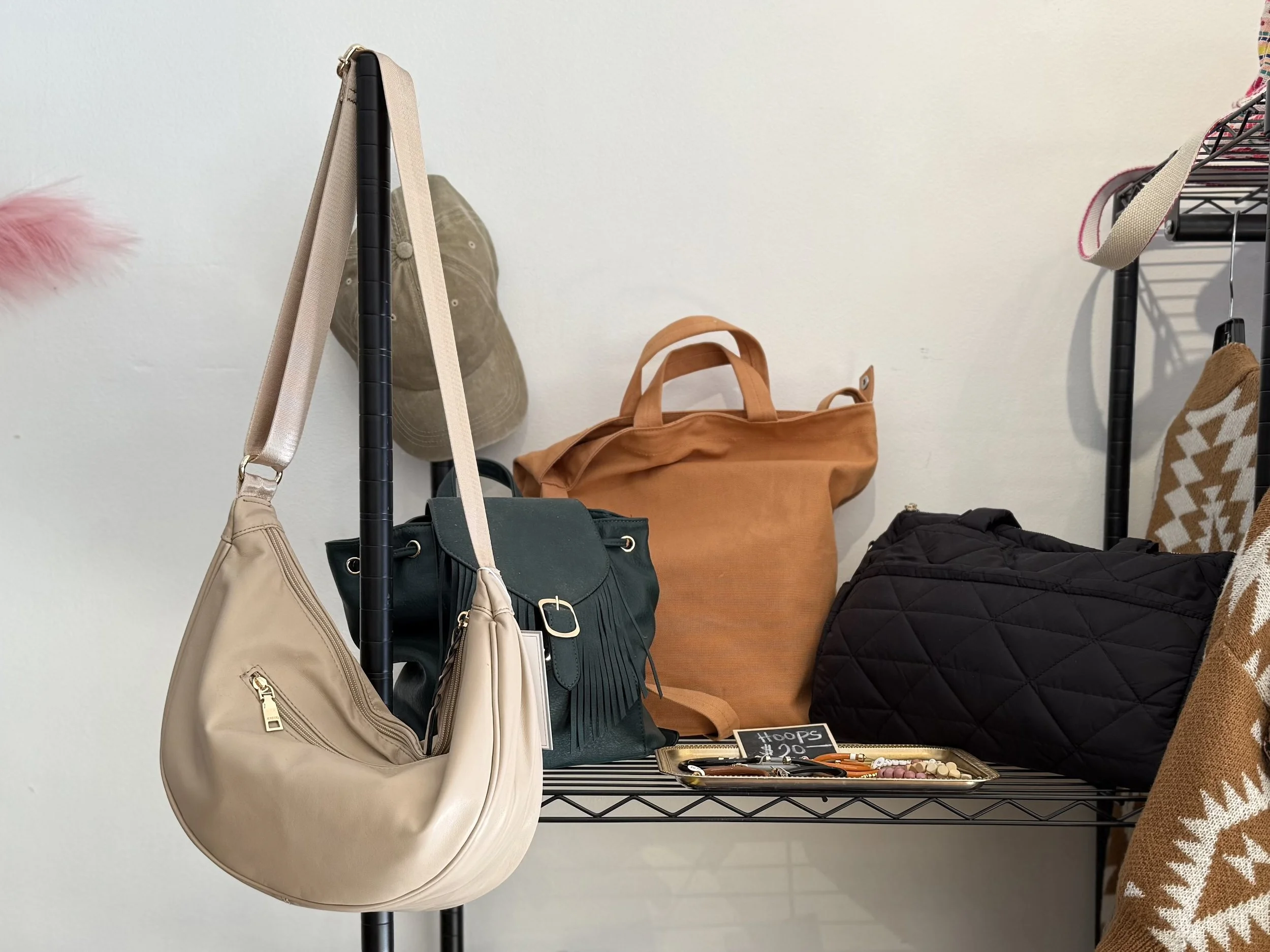
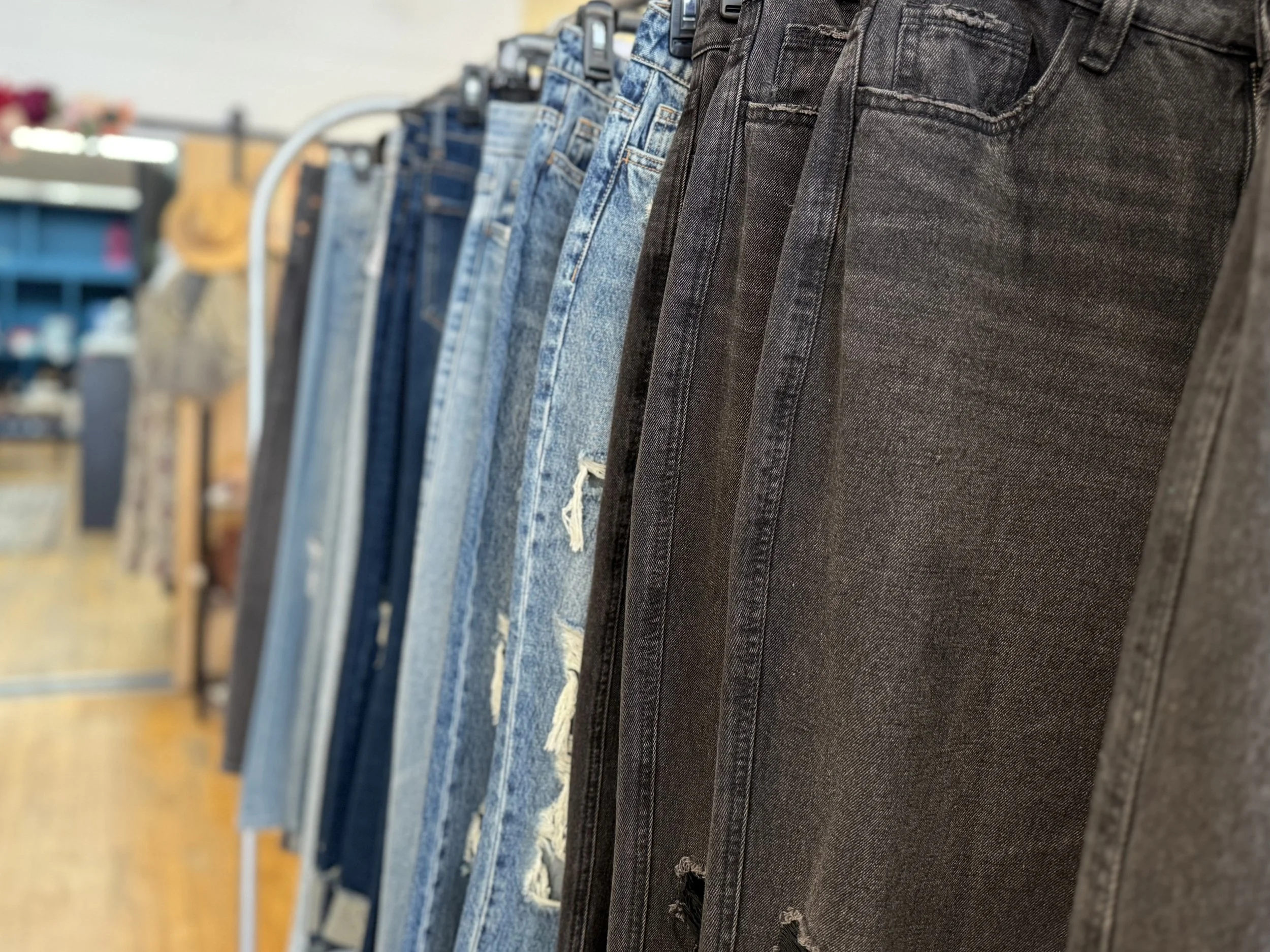
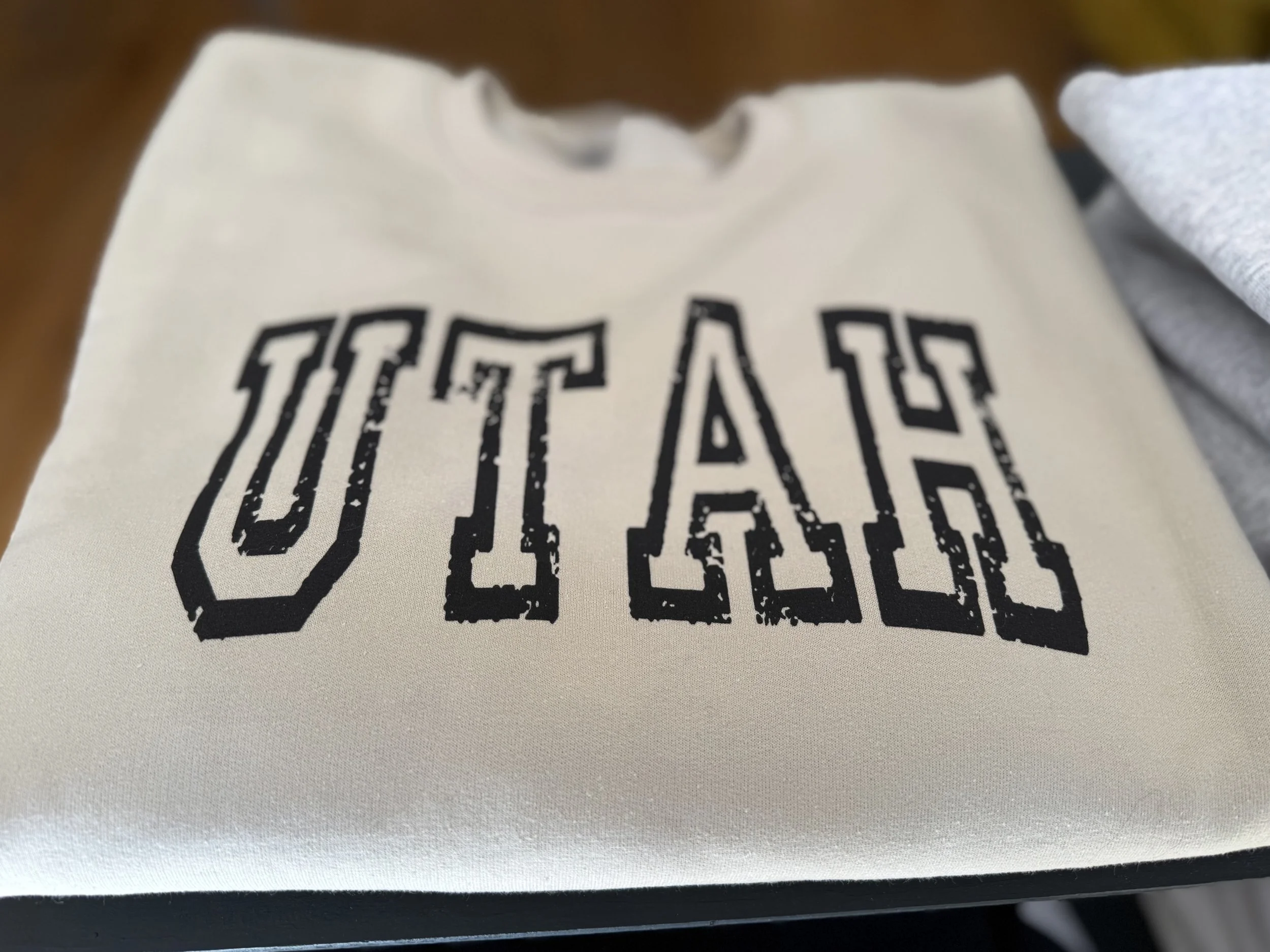
At the end of 2025, when you walk into A La Mode in Sugar House, the space feels like the opposite of exclusive. Racks are easy to move through, and the shop is “absolutely chock full” of pieces that somehow manage to be both special and accessible. Dresses, denim, jumpsuits, sweaters, and tops run from small through 3X, often in the same or similar styles so that friends of different sizes can shop together. There are jeans and cozy sweatshirts for everyday wear, party dresses for big nights out, and polished pieces that work for the office or special occasions.
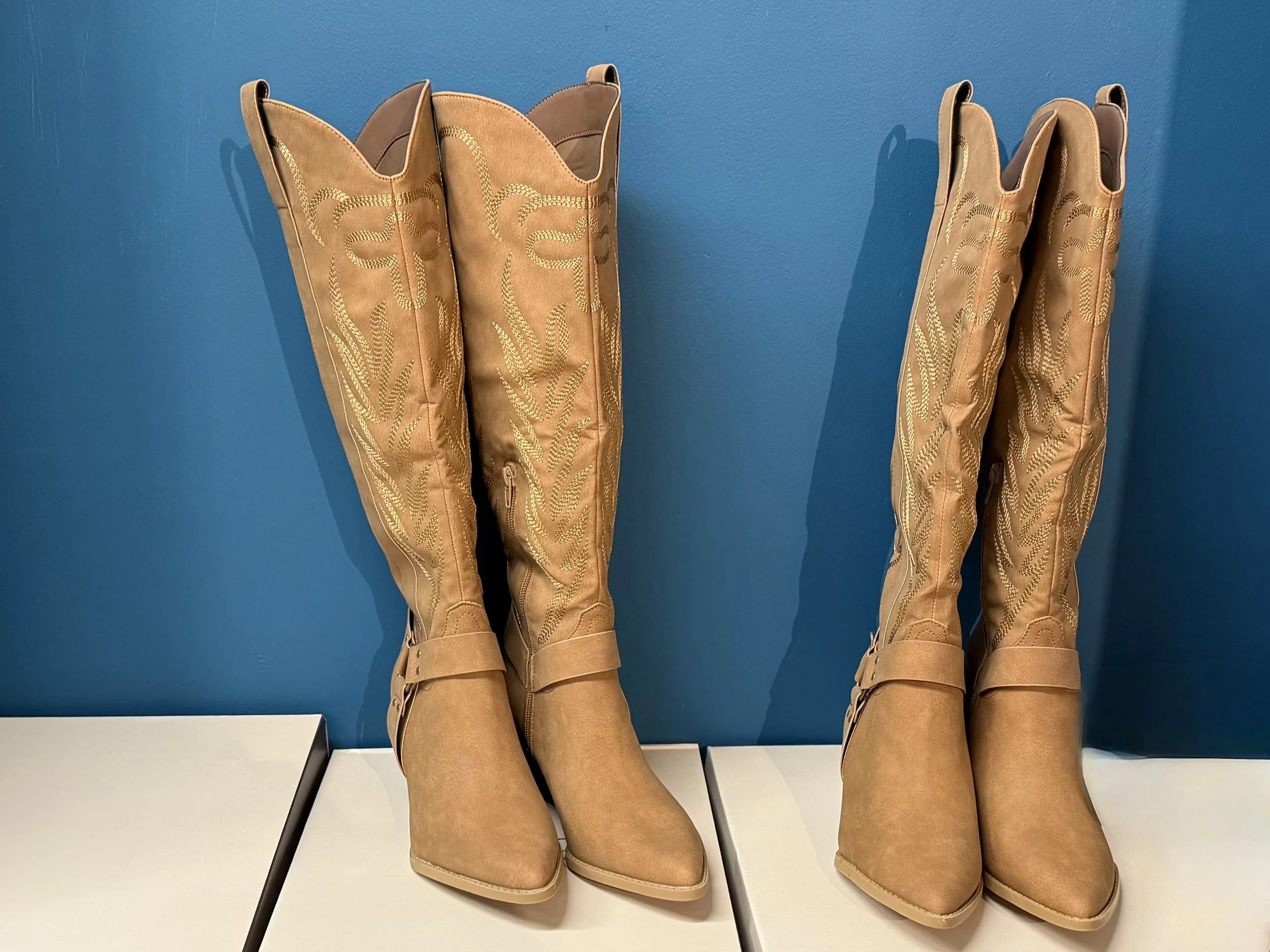
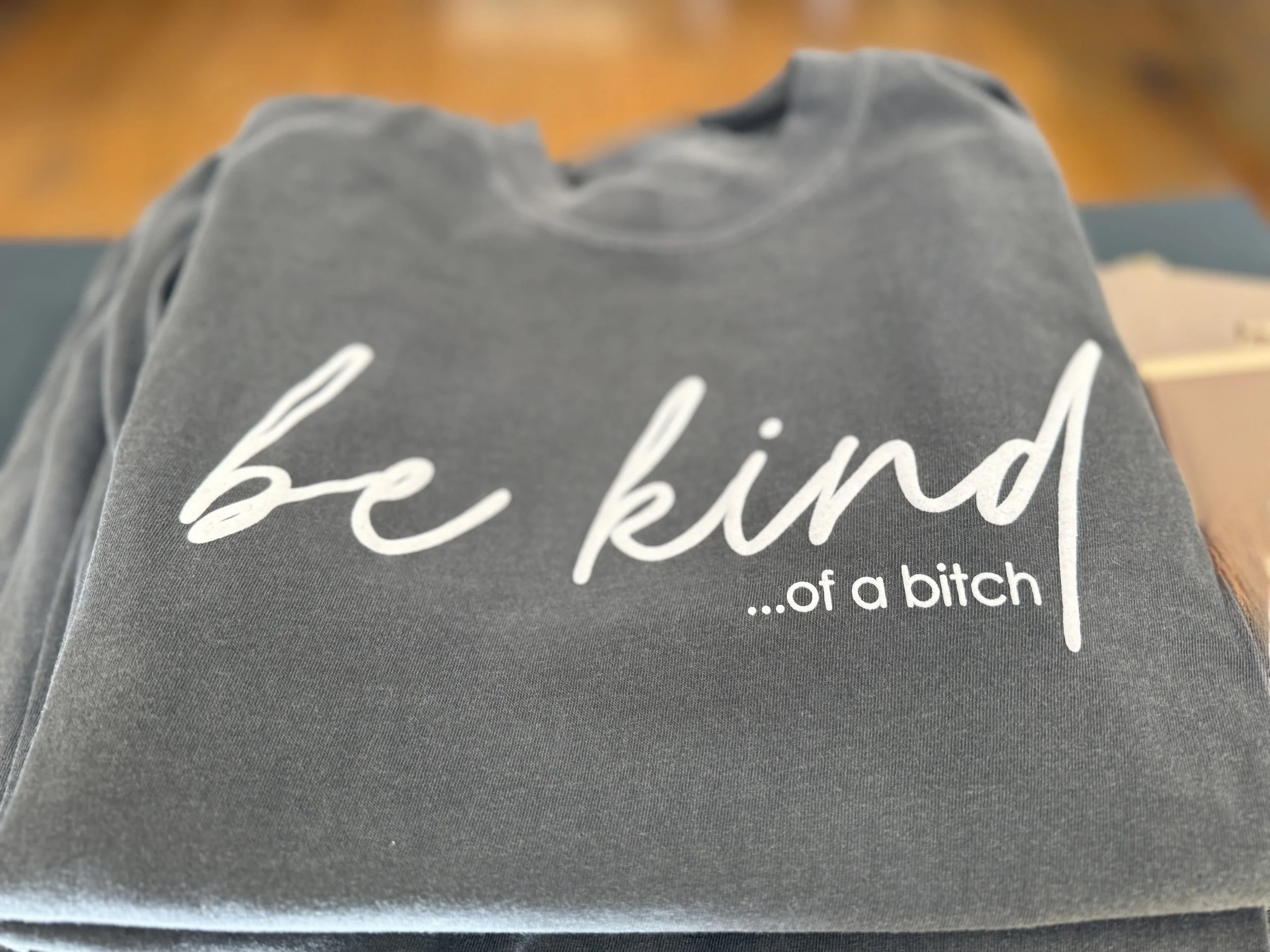
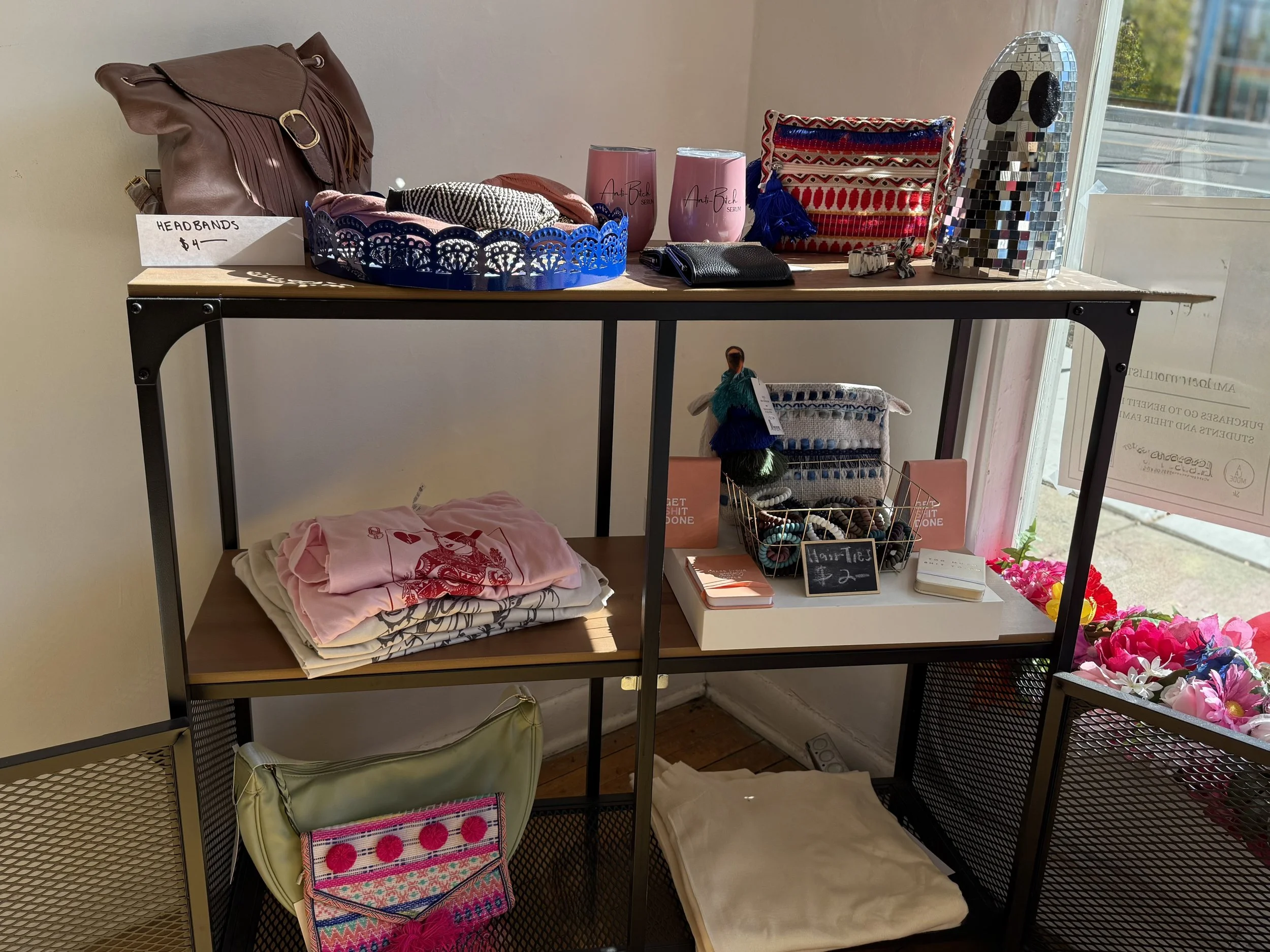
Shelves hold bags, hats, scarves, jewelry, footwear, and small giftable items - a nod to the shoe and jewelry obsession they inherited from their mom. The overall feel is versatile, fashion-forward, and “unique, but still approachable by everyone. It is clothing and accessories that feel a little elevated without requiring a fashion degree to wear."
Most importantly, the shop is size inclusive by design. Very few independent boutiques in Salt Lake run extended sizes on the same racks as smaller ones, and the sisters are intentional about offering as many pieces as possible across their full-size range. For anyone who has ever walked out of a dressing room in tears, their philosophy is simple - everyone, regardless of size or budget, deserves to present their best self to the world and to feel good in their clothes.
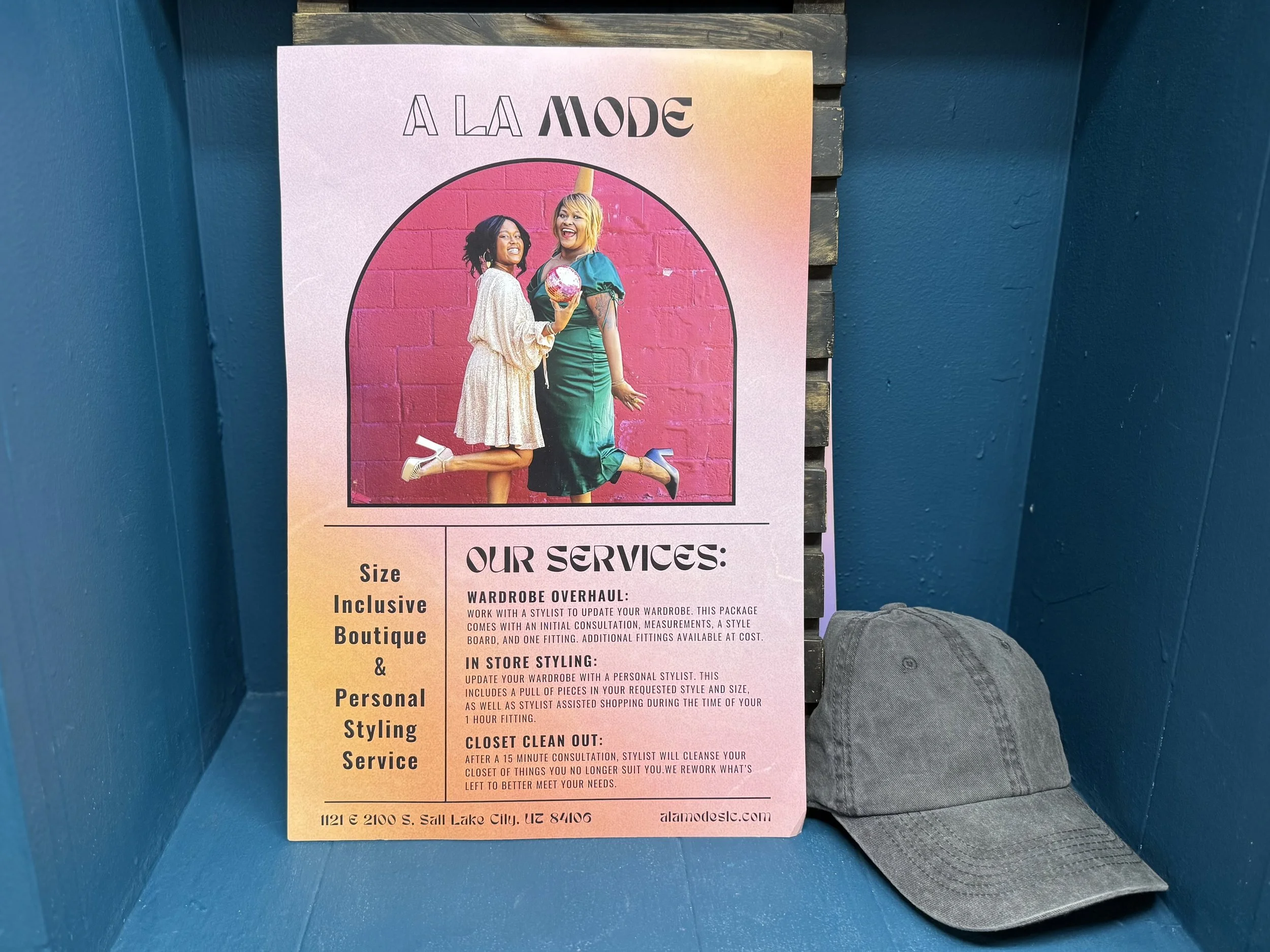
Personal styling remains at the heart of the business. Through their website, customers can book different levels of service: in-boutique styling sessions, where the team pulls looks in advance; and closet consultations, where they go into clients’ homes to help edit wardrobes, create new outfits from existing pieces, and identify what is missing. For other packages, they will shop both within A La Mode and beyond, building complete wardrobes and teaching clients how to mix and match.
Jasmine still works for Rob at Lucky 13, now in a leadership role overseeing multiple locations within his restaurant group. Angelique owns Tailgate Tavern, the neighborhood bar on South State Street that she opened with her business partner, Spencer Byrd, in 2022 after leaving The Garage. Both Tailgate and A La Mode have become extensions of the same mission - to create spaces that feel welcoming, down-to-earth, and deeply rooted in community.
That mission is visible well beyond the fitting room. Through Patricia’s Purpose, the nonprofit they created in honor of their mom, they work with a Utah charter school and Rose Park Elementary to offer a large Sub for Santa program and ongoing support through a school pantry. Last year alone, they supported close to fifty people across multiple families. With help from Rob and the restaurant group, they use A La Mode, Tailgate, and their networks to gather donations, fulfill wish lists, and meet needs long after the holidays have passed.
The sister's platforms also amplify other small businesses, particularly those owned by women and people of color. They host pop-ups in the boutique, highlight fellow women-owned businesses on social media, and use their visibility to draw attention to local entrepreneurs. For years, both sisters have also modeled for their employees and younger colleagues that it is possible to carve out a future beyond whatever circumstances you were born into.
Angelique knows that the bar industry is often male-dominated and that a woman of color running both a bar and a boutique may not fit the assumptions people walk in with. Jasmine knows that a plus-size stylist can be dismissed before she even speaks. Together, they push against those assumptions every day by mentoring their staff, showing up for other businesses, and being honest about how hard and how beautiful building something from scratch can be.
They are well aware what people think. “I often hear people say, from the outside, that we are both kind of intimidating,” Angelique admits. She laughs and shrugs it off. In reality, I am a normal person. I do not have everything put together. I am a mess half the time.”
What they want most is for people to walk into A La Mode or Tailgate and feel like they belong there - whether they are coming in for a first wardrobe overhaul, a last-minute dress, live music, or just a conversation. Their regulars at the bar feel like family. Friends, neighbors, and strangers show up to events at the boutique and end up leaving with new connections as well as new clothes. In the end, what drives the two of them, “We are not better than anybody else or anything else. We care, and we are both very open. Ask us anything.”