Cozy Coffee Lounge
Address: 2580 South Main Street (Cozy Coffee Lounge)
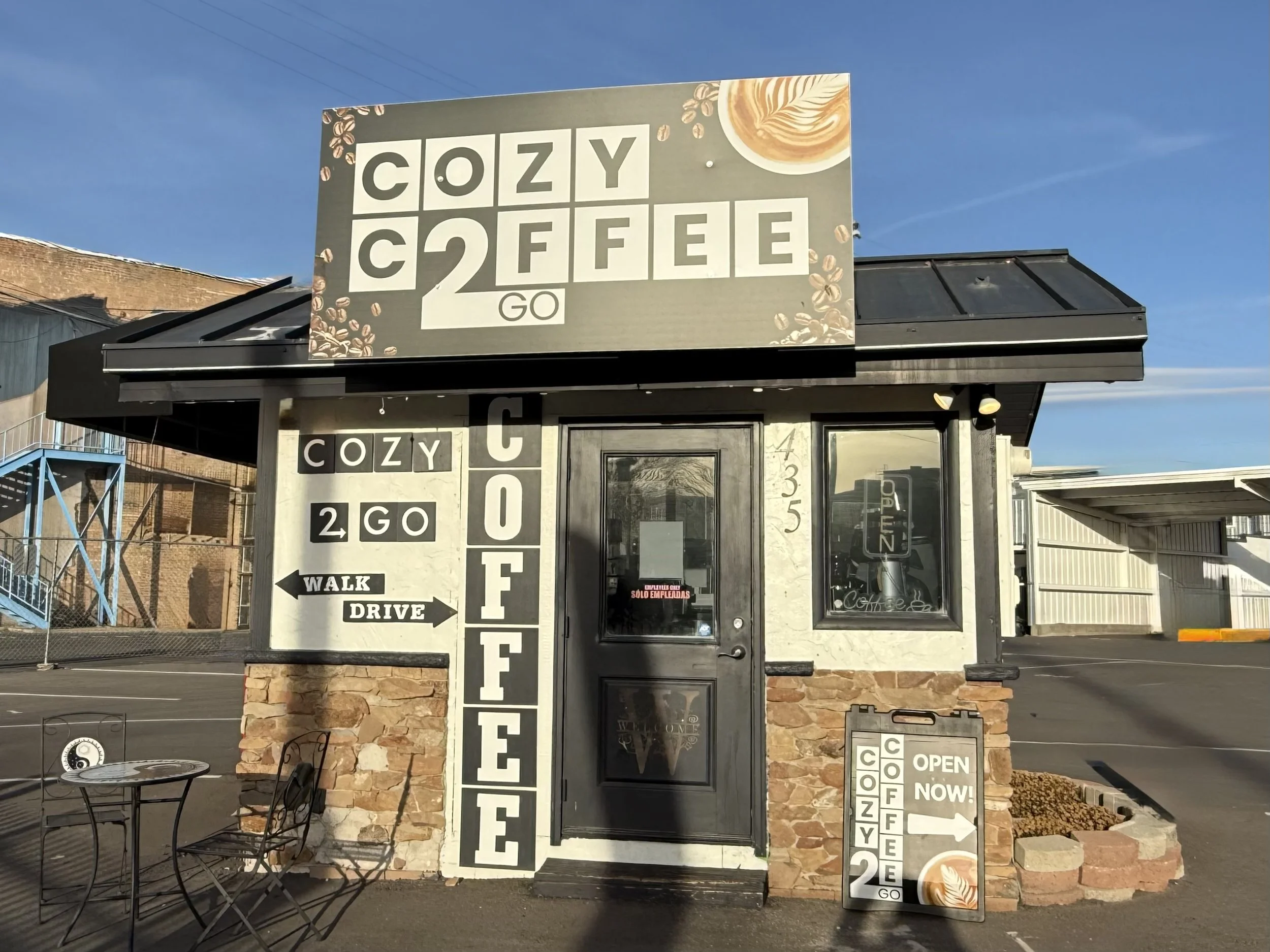
436 West 400 South (Cozy Coffee 2 Go)
Telephone: 385-368-3423
Website: cozycoffeelounge.com
District: South Salt Lake (Cozy Coffee Lounge - see map)
Granary (Cozy Coffee 2 Go)
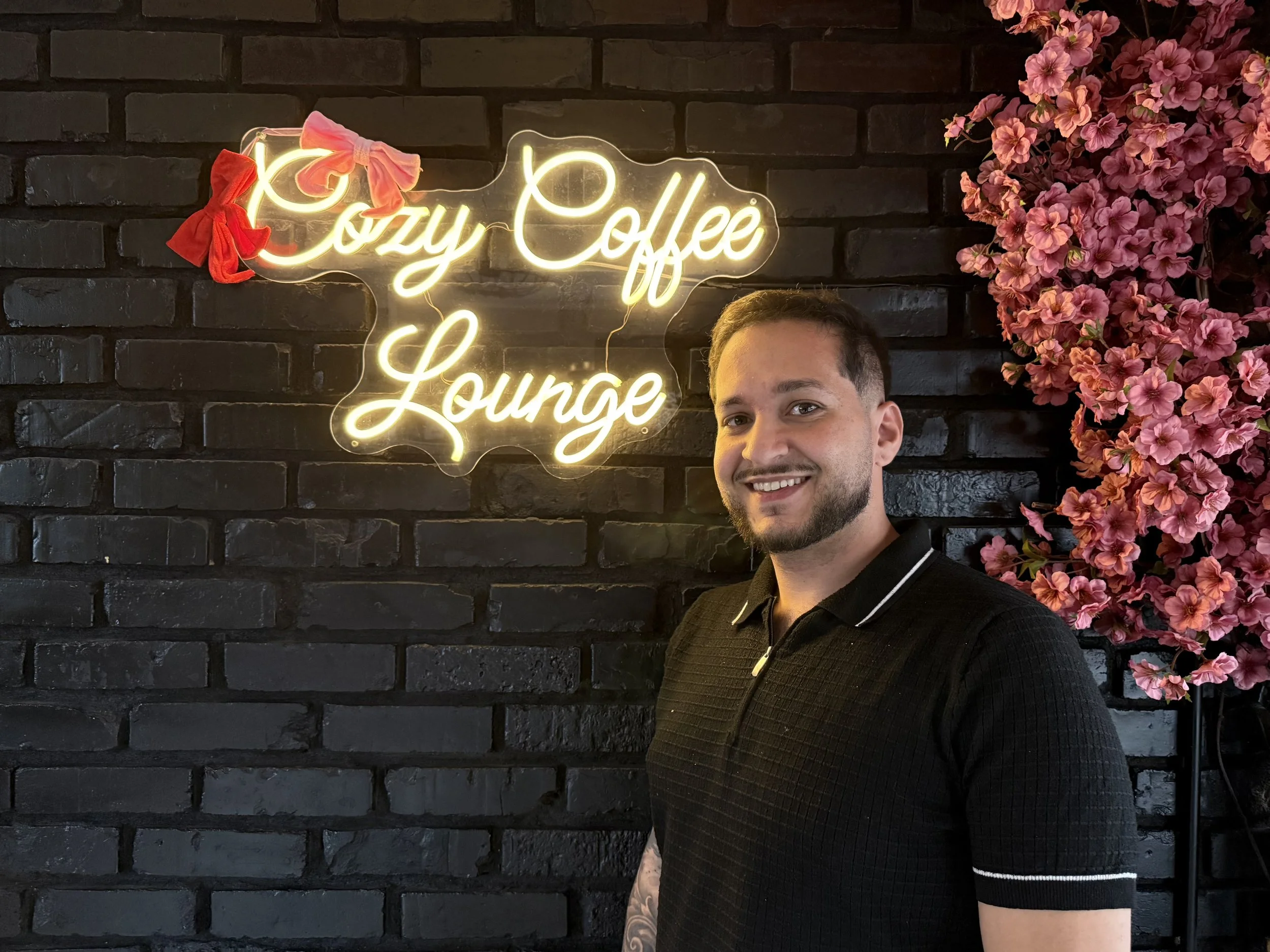
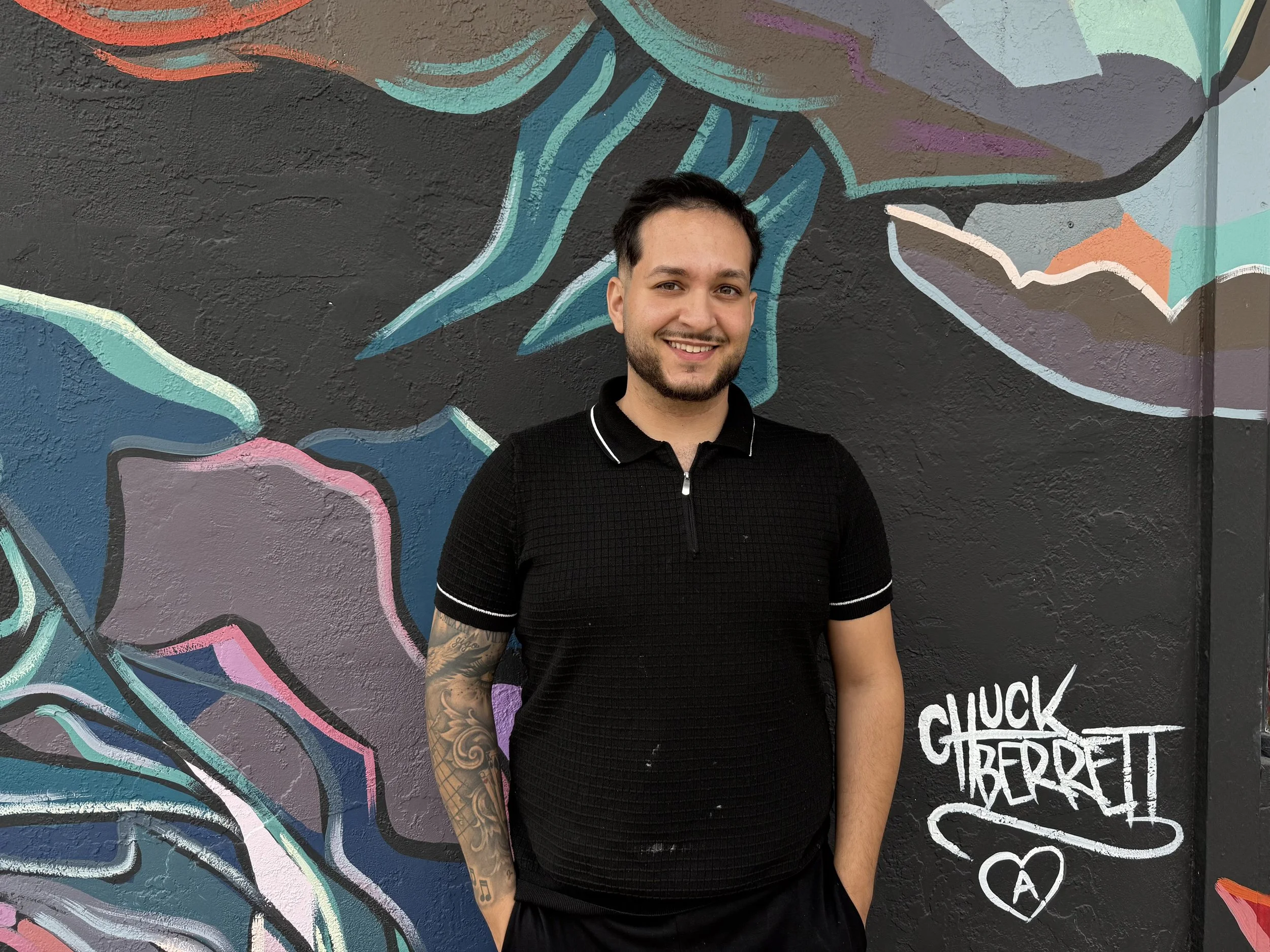
“Cozy Coffee Lounge was built to create a safe space - a community space for gatherings, different ideas to put together.” Before the name existed, before the patio filled on Saturday mornings, before the coffee parties and yoga mats and music nights, there was a young man in Salt Lake City who had been thinking for years about what a coffee shop could be. Dzenef Beganovic does not tell his story for sympathy. He tells it because it explains why he chose to build something that feels like more than a place to grab a drink.
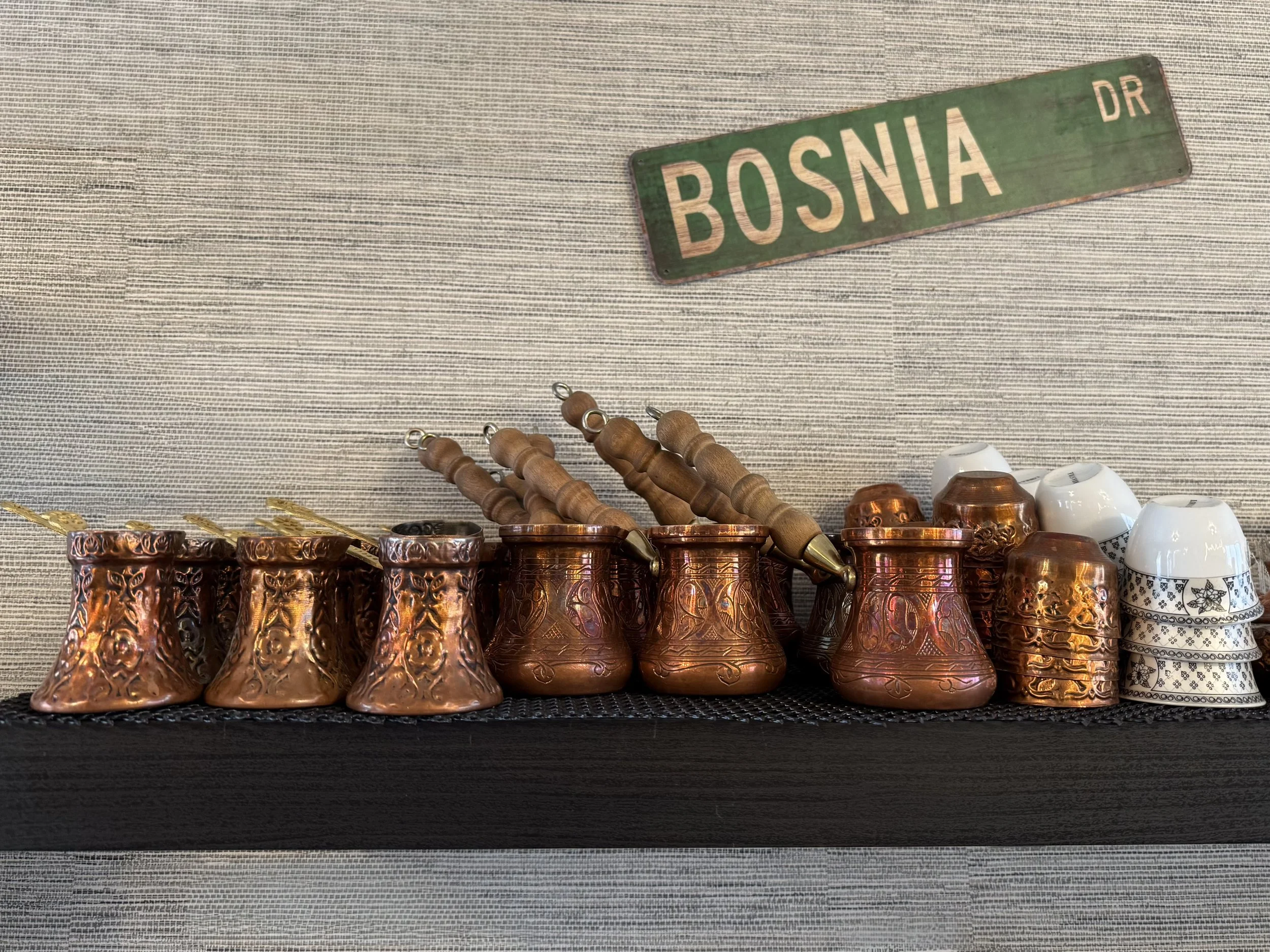
Dzenef’s parents were Bosnian. They married as their country was breaking apart. “The first bomb they heard was at their wedding.” The celebration turned into a decision. They fled Bosnia almost immediately, leaving behind what they could not carry. Austria came first, then Germany when borders opened.
Dzenef was born in Berlin. His older sister was born in Germany too. Like so many refugee families, they kept moving toward stability, following any open door, hoping the next place might finally let life settle. In 1999, when Dzenef was two, they came to the United States. His grandparents arrived first, and his parents followed. Salt Lake City became home.
“Why Salt Lake is what I ask myself all the time,” Dzenef admits, still half-laughing at the randomness of it. From what he understands, missionaries helped his grandparents, and the family gravitated toward what felt safe. “It was what was needed at the time.”
Growing up in Salt Lake meant navigating language and identity at the same time. “English is my third language.” At home, Dzenef’s parents were learning too, so the whole family was rebuilding together, step by step. When he talks about childhood, the details come quickly, like anchors in unfamiliar water. “Reading, coloring books, video games - PS1 – movies, and Christmas.”
Dzenef grew up with a Muslim background, but celebration was never boxed in for him. “People still ask, how come you showcase Christmas if you are Muslim,” he says, then answers it simply. “I grew up with Christmas. I do not see Christmas as religious. It does not have to be unless you see it that way.” He still remembers small European rituals that stayed stitched into him. “In Germany, you put your shoes out and you get a gift in your shoes.”
Every summer, Dzenef’s family returned to Europe. Not just Bosnia - relatives had scattered across borders, so summers were spent moving between Germany, Austria, and wherever family had landed after the war. Every summer was spent in Europe, but living in Salt Lake mattered. “The reason we always lived downtown was it could remind us of home - with the trax, with the busyness, people all around - to give us that European feeling.”
Then, when he was ten, Dzenef’s life changed in ways he does not detail publicly. What matters is what it did to a child, and what it demanded of a family. It was a traumatic experience for a young boy. He lost his dad, and his mother was left paralyzed on her left side. Overnight, Dzenef became, in his words, “the only guy in the household,” and childhood ended early. “Not having family around was no way to grow up. I knew I had to be the man and be there for my mom and two sisters.”
During his mother’s long recovery, a physical therapist became a constant presence in their lives. She worked with his mother week after week, but she also quietly looked out for the family, offering consistency and care during a fragile time. It left a lasting impression on Dzenef, a lesson in how much steady attention and small acts of kindness can matter.
By middle school and high school, the thing that rose to the surface was not only survival, but it was also connection. Dzenef became deeply involved in student government, multicultural projects, and putting events together. He remembers organizing a Balkan dance with a group of students and performing, not as a novelty, but to share pride and culture. The instinct that defines him now showed up early. “I learned that I could create something, come up with an idea, and make it happen.”
The responsibility for his mom and sisters did not harden Dzenef, it clarified him. It pushed him into work, into practicality, into building something that could support the people he loved. At sixteen, he made a decision most teenagers never face. His mom was working in the cleaning business, and Dzenef had a thought that he shared with her. “I always had the idea of, why do we not have our own business,” he remembers. “So, we decided as a family that we were opening up our own cleaning business.”
Diamond Cleaning came first. Aspen Residential Services followed. The work was not glamorous, but it was steady, and it was theirs. Dzenef cleaned businesses all over the city - gyms, studios, downtown spaces - and learned what it takes to keep something running day after day.
Through all of it, one dream stayed constant - a European-style coffee shop that felt like the places he loved overseas. Dzenef continued to build his working life while that vision waited. He spent years in the auto industry, working at Mercedes and BMW as a service advisor. He excelled. “I was top service advisor in the country, because I knew I could sell whatever it was.” He took classes too, shifting from criminal justice to business, and kept doing what he had always done best: organizing people, building momentum, creating community.
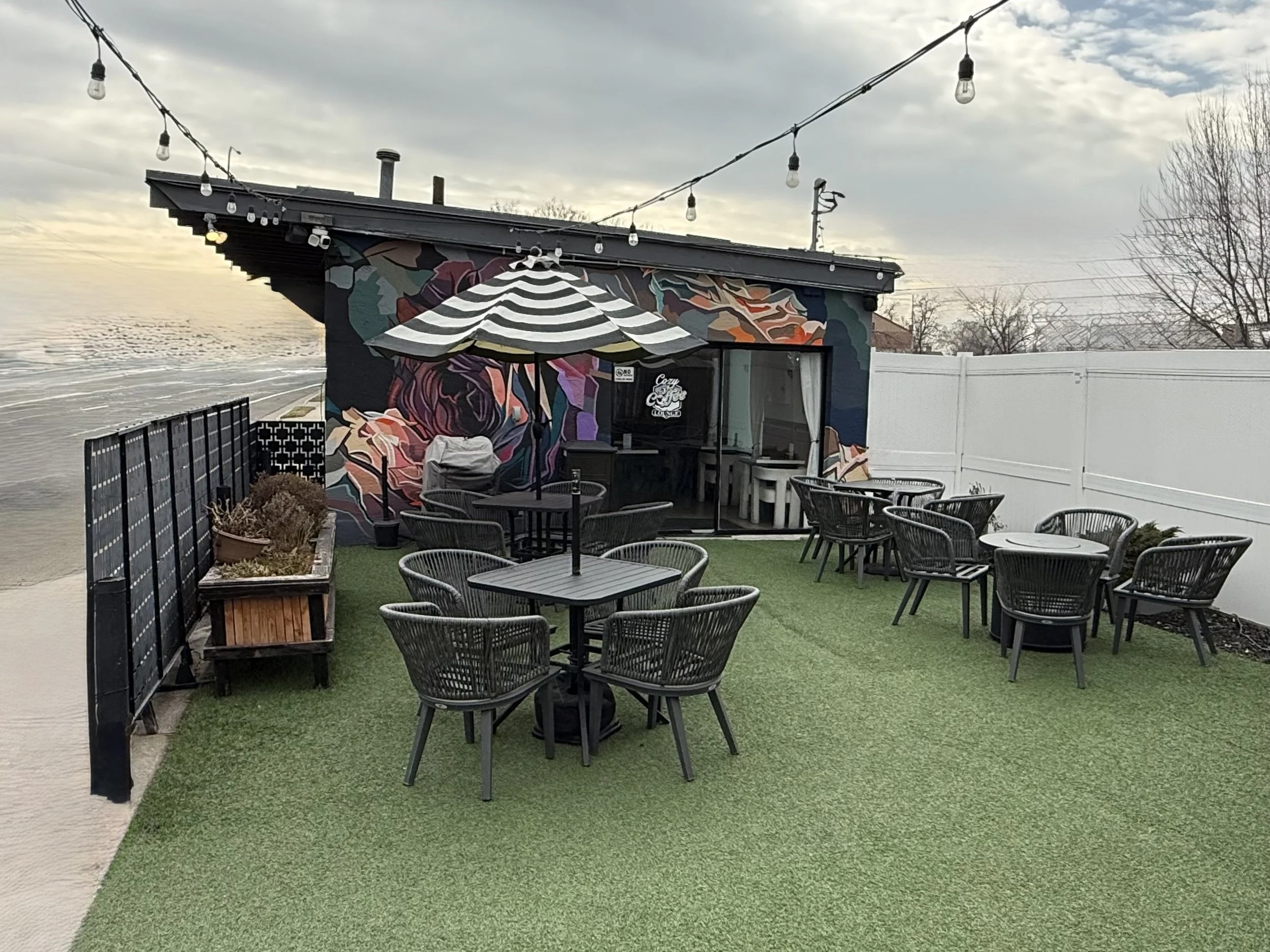
In 2021, Dzenef first tried to make a coffee shop happen in South Salt Lake. Unfortunately, perhaps because he was too young, he received “a hard no” from the landlord of the building he had hoped to occupy. He kept looking anyway, holding tight to what mattered most to him - a patio, room to gather, a vision that could breathe. In 2023, he passed the same building again and saw the sign. “I passed by this location, and I see for lease.” He called the number and asked to speak directly with the landlord he had met two years earlier.
The building was not charming. It was not an easy build. It was a gamble. The city had concerns, and the work required was extensive. “These buildings should have been dropped and rebuilt.” Electrical and plumbing needed to be redone, everything brought up to code. “The only thing holding still is the foundation.” Dzenef took on the cost himself. “I was willing to do whatever it took to make this work.”
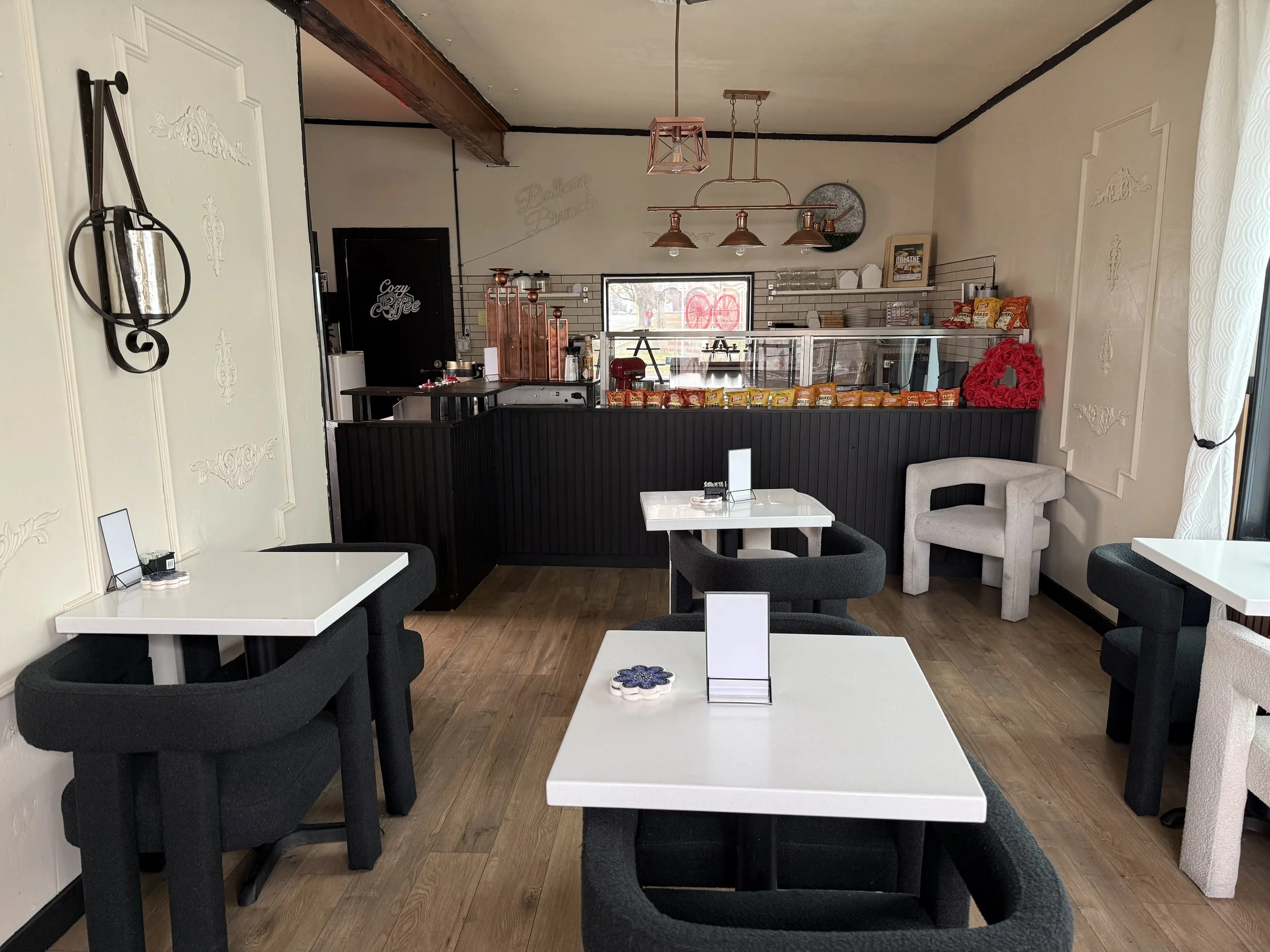
Dzenef signed paperwork in June of 2023 and began building. The name came from a moment that makes perfect sense once you step inside. “I walked in that main building with no plan of Cozy Coffee Lounge happening. And I said, this room looks very cozy. And I already know it is doing coffee, and that is how it happened.”
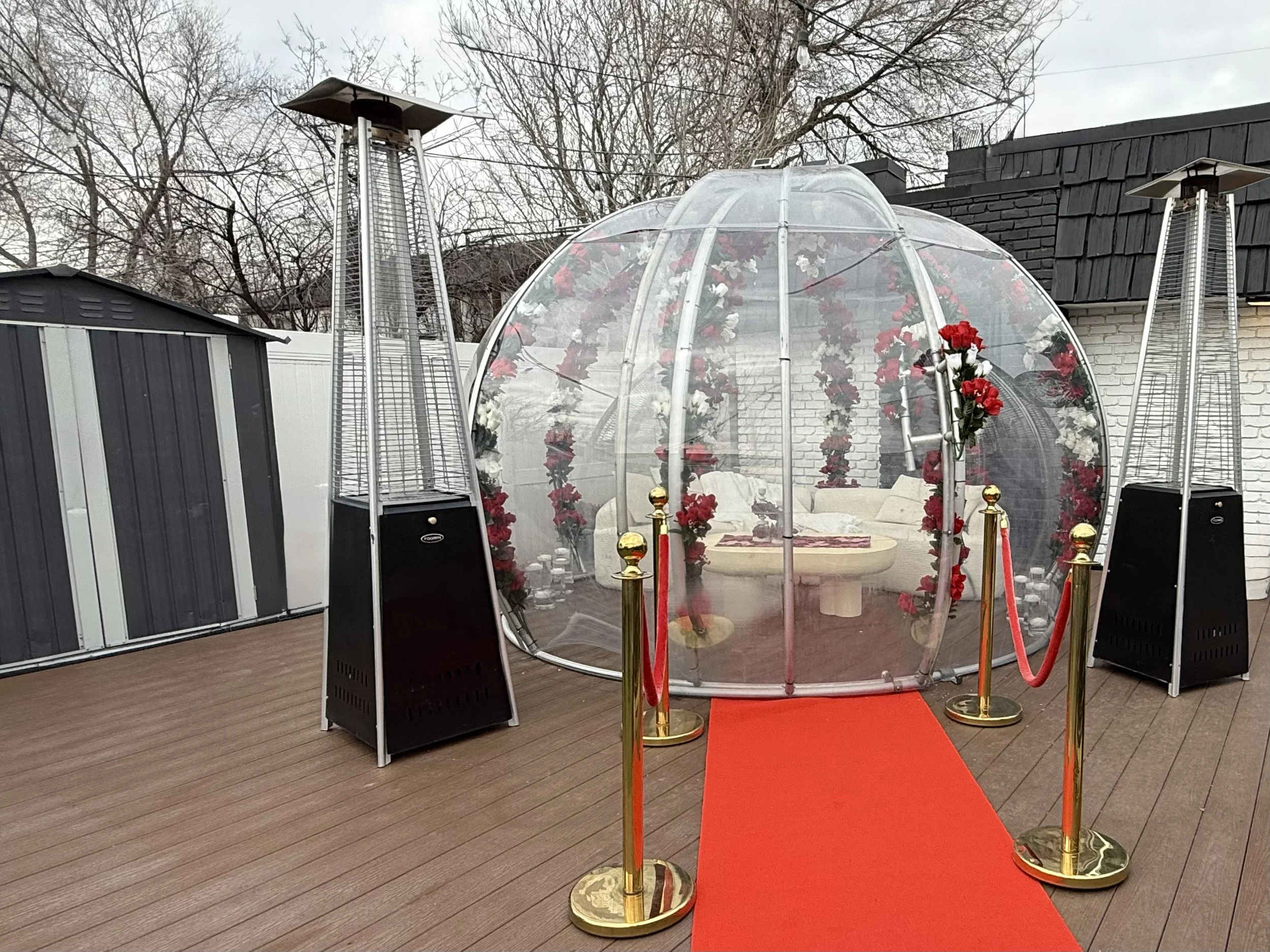
A week before the grand opening of Cozy Coffee Lounge, a second nearby building became available. It had always been part of Dzenef’s vision - one space for studying and quiet, another for conversation and gathering. A place that could hold different moods, the way a neighborhood does. On October 7, 2023, Cozy Coffee Lounge two spaces opened. “We had a grand opening and a massive cars and coffee event with a live DJ on the patio,” he says, still sounding surprised by the scale. “We had over a thousand cars here.” Years of connections from the auto world and the community came together, along with cooperation from the school across the street, turning the opening into something unmistakably his.
Not long after, social media did what it does. A foodie video hit 2.1 million views. Suddenly, the space that felt intimate was packed, the line stretching down the street. Dzenef’s mother, his sister, and the whole family stepped in to help, because that is how their lives have always worked - together.
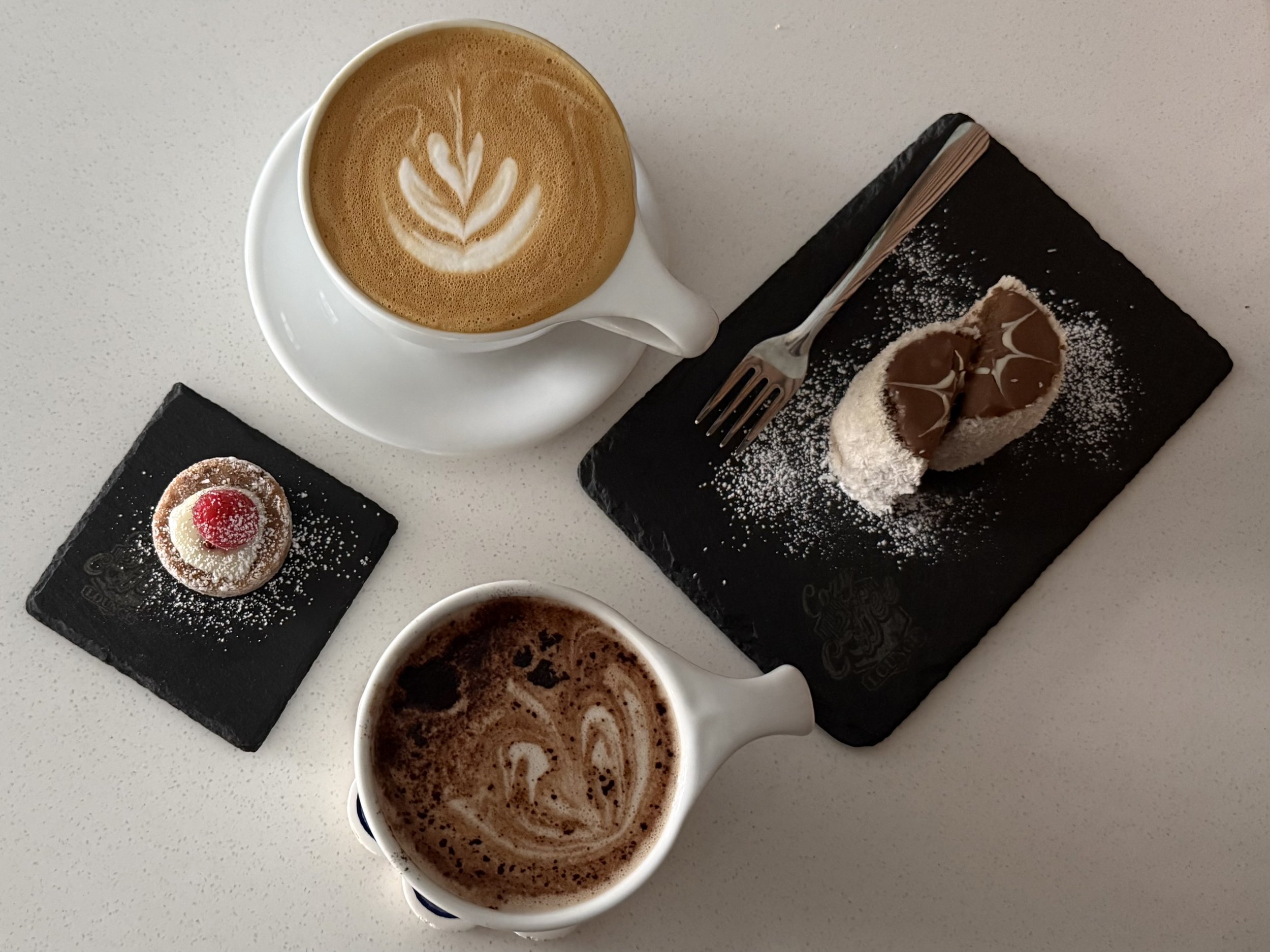
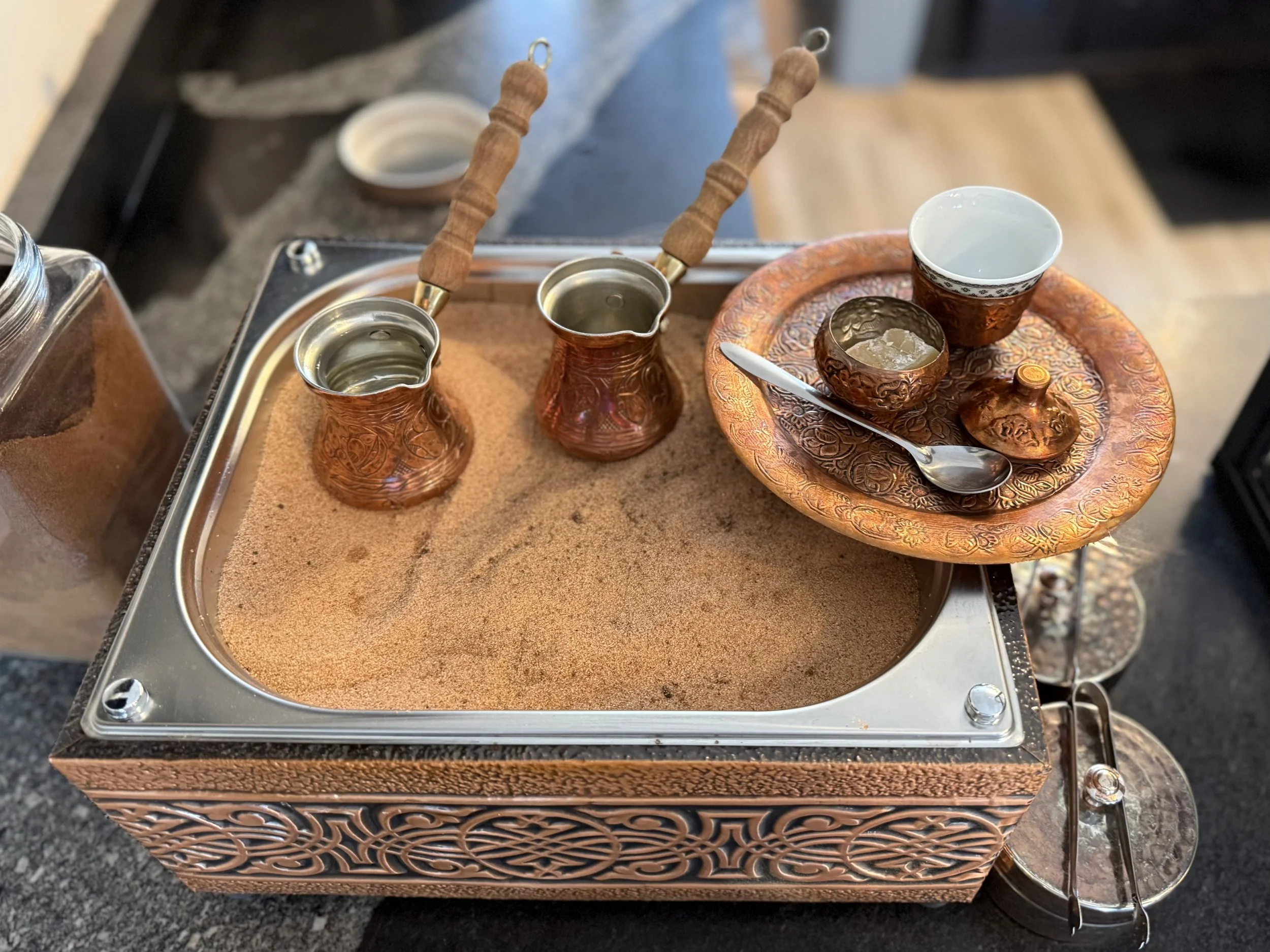
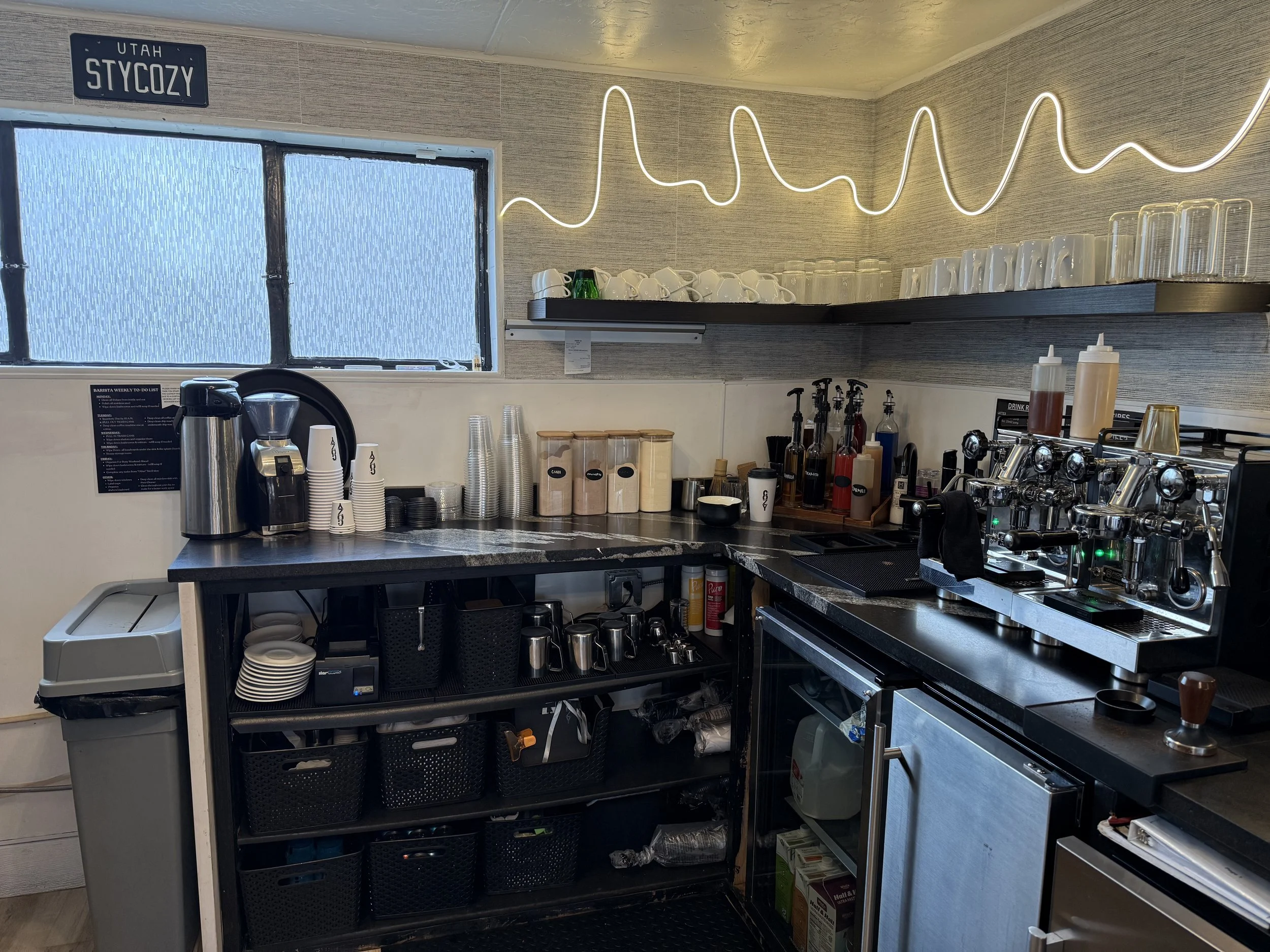
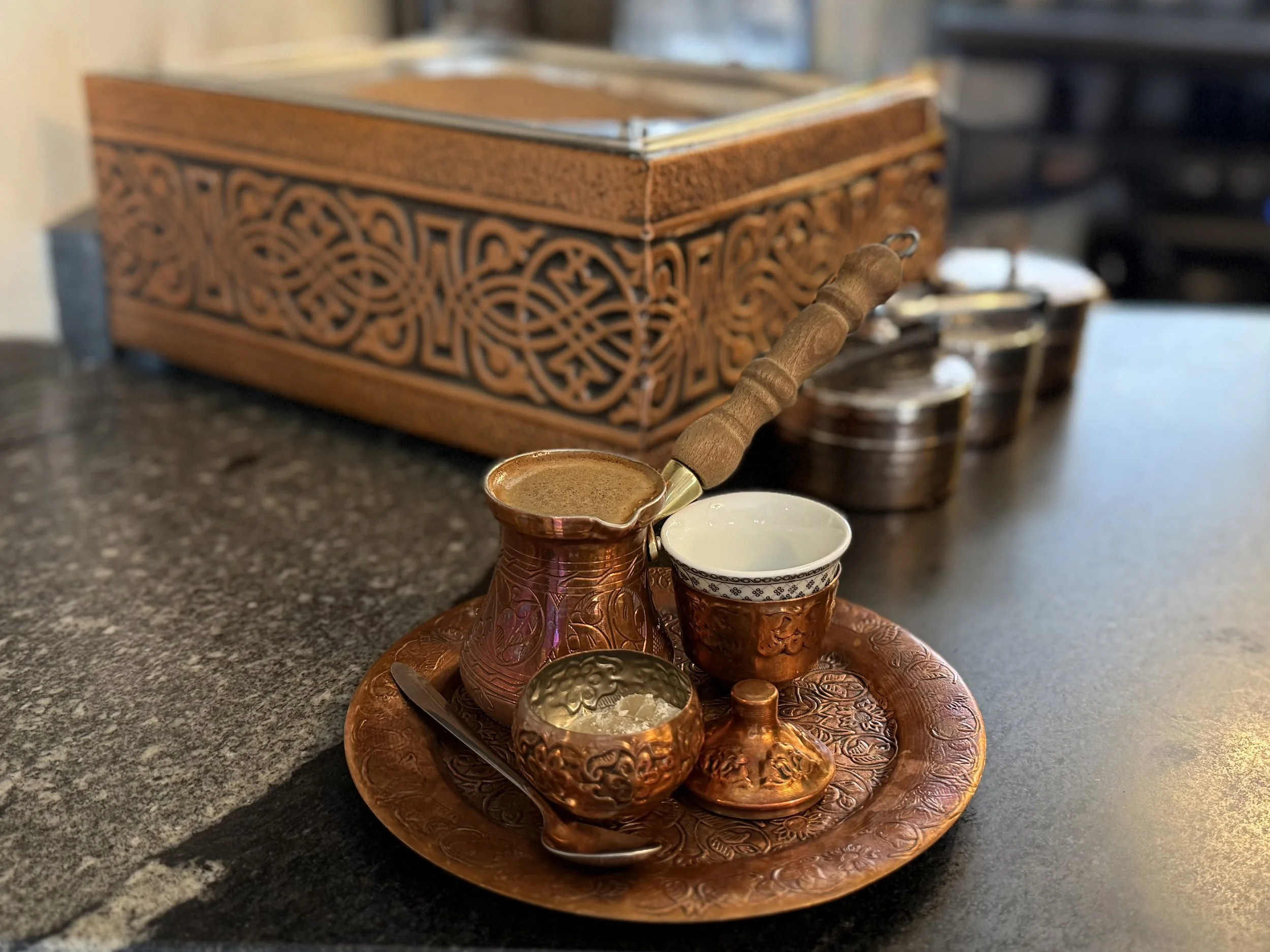
The menu reflects Dzenef’s heritage. Strong espresso and craft coffee, “The kind where you taste the espresso instead of only milk.” Coffee made in hot sand, the way his grandmother made it. A Lino latte made with chocolate imported from Croatia. A Balkan bite with beef sausage and a roasted eggplant and pepper spread he calls their signature. Avocado toast, Belgian waffles, locally sourced matcha, and pastries made in-house - including baklava, raspberry almond bites, and a coconut cream cake with chocolate on top known as the Russian hat.
One of the moments that still surprises Dzenef most happens on Friday mornings. Middle school students from across the street run in for hot chocolate, sometimes thirty or forty at a time. He finally asked why they kept coming back. The answer was simple; they loved it. When community voting rolled around, the kids created a category of their own. Cozy did not win Best Patio like he had hoped. Instead, it was awarded Best Hot Chocolate, a title born entirely out of routine, loyalty, and young customers who felt comfortable walking through the door.
As weekends grew busier and the lounges filled, Dzenef began building a second Cozy experience downtown - a drive-through on 400 West for the people who simply want to grab a cup and go but still want the same quality. It is tucked away, and he will be the first to say that making it work has been hard in a rough economy, but he believes in it long-term. For him, it is not only about convenience. It is also about location, proximity, and using that small window of service to take care of people who are often overlooked.
But if you want to understand the drive-through, it helps to know what he carries with him. Dzenef talks about being “the child who needed help,” and how the smallest gestures can land the deepest. That belief has become part of how he runs his businesses. At the drive-through, leftover pastries are not thrown out. “We give them away.” Sometimes he brings them directly to people he sees outside, asking, “Hey, are you hungry?” He has driven around downtown doing it, passing out food near the places where need is concentrated, because he cannot stand the idea of tossing something that can make someone’s day feel a little less heavy.
During Ramadan, and other times during the year, Dzenef offers free coffee to people experiencing homelessness who come up to the drive-through. They do have to come to the window, but he wants it to be simple - a cup of coffee, no questions, no lecture, just warmth and dignity. The drive-through sits close enough to services downtown that, as he puts it, people will come up and ask, and he wants to be able to say yes.
If you ask whether the dream came true, Dzenef does not hesitate. Yes. But the real proof is not the awards or the crowds. It is that he is still behind the counter every day, greeting people, watching strangers become familiar, and remembering how much it once meant when someone showed up for his family without being asked. Cozy is not built around Wi-Fi or productivity. It is built around people. A place to sit, to talk, to linger, to feel at ease. A space shaped by a life that learned early how much small gestures can mean. “When I say everyone, I mean everyone. Sometimes the smallest things are the ones that matter most.”