The Boob Bus
Address: 434 South 300 West (one of several)
Telephone: 866-747-2662
Website: theboobbus.com
District: Downtown
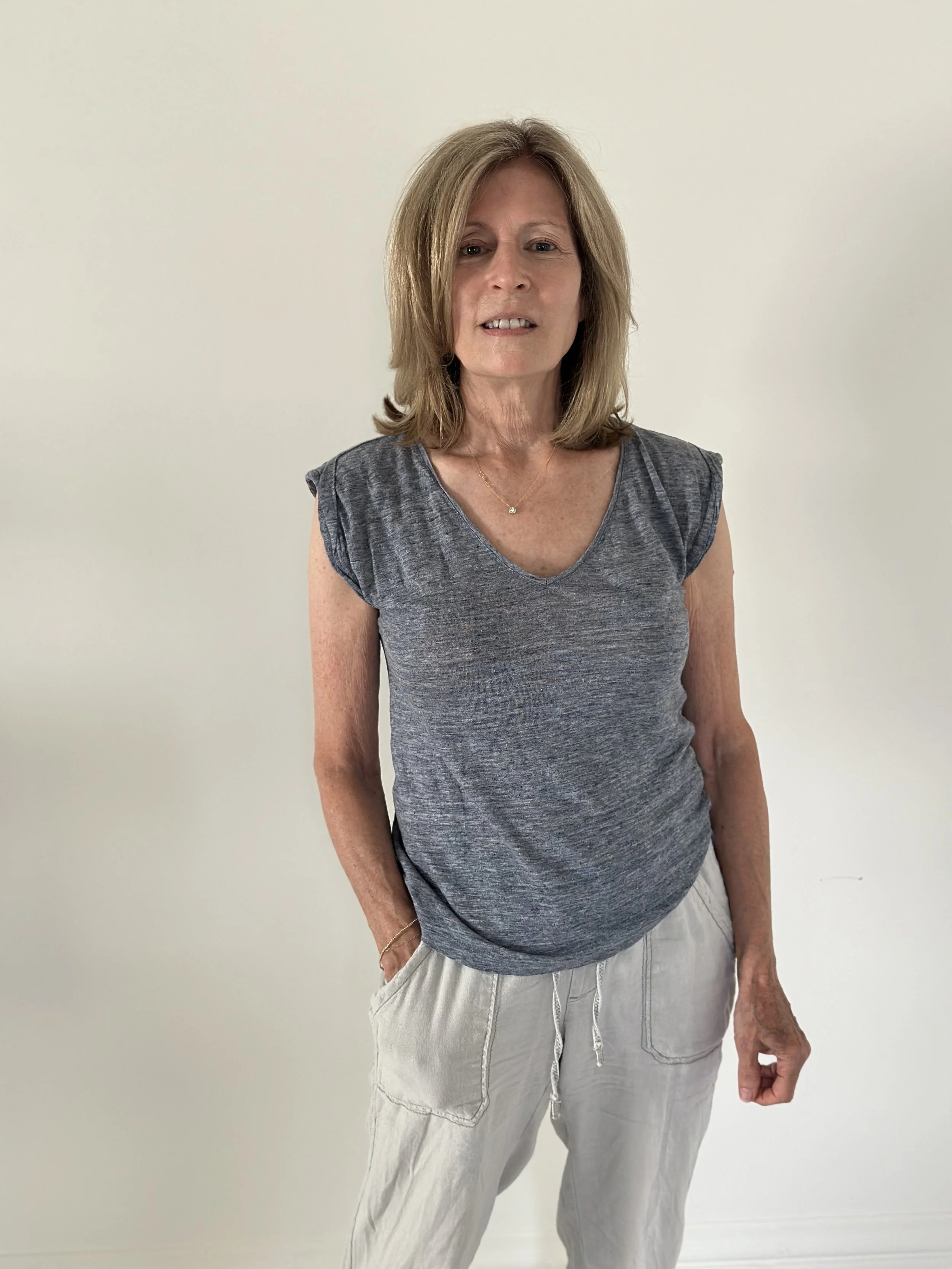
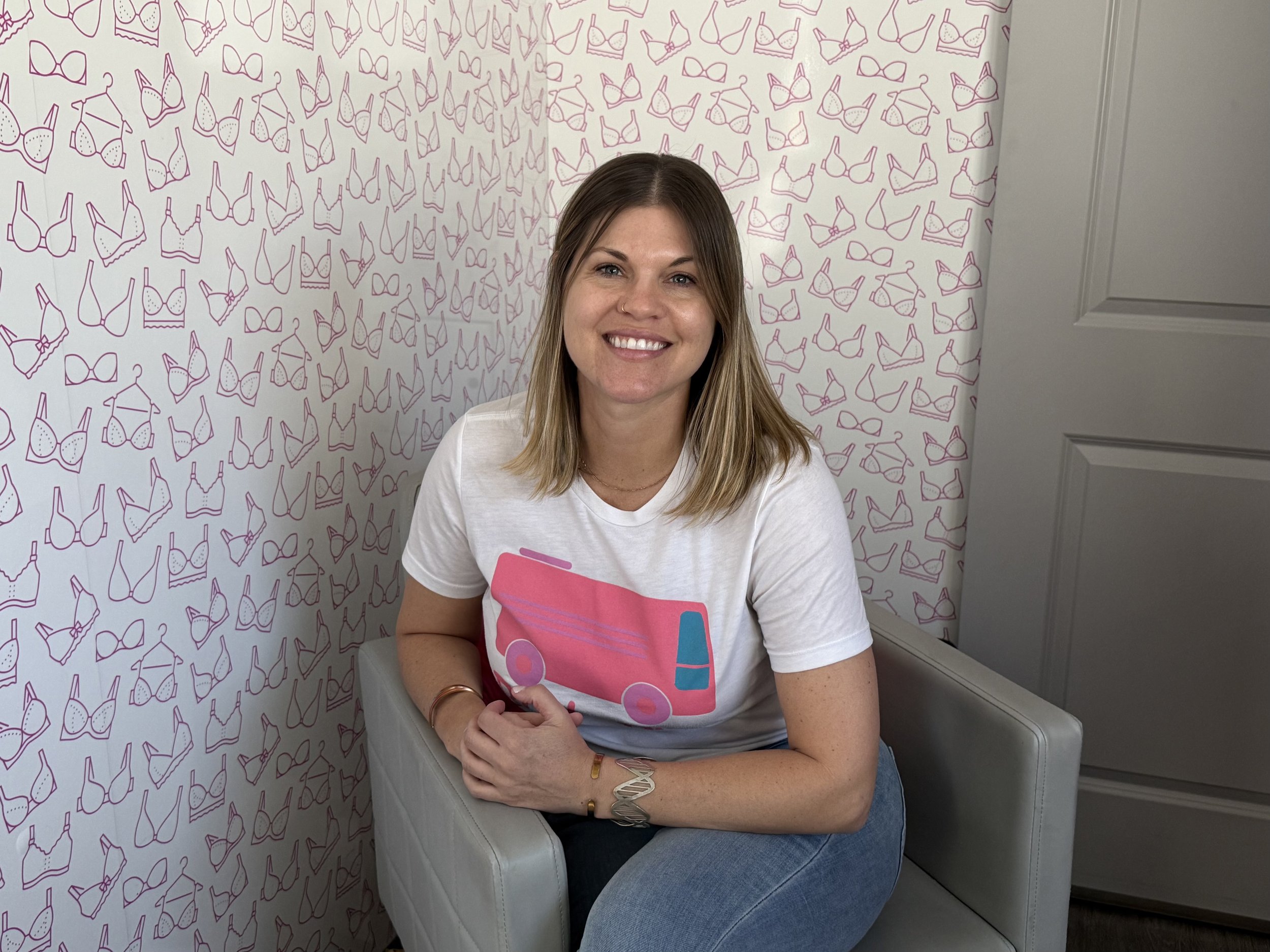
“I do not want breast cancer to be something people stuff in the back of their minds and do not talk about.” That conviction sits at the heart of everything Rena Vanzo is building with The Boob Bus. What she has created is clever, bold, and memorable, but beneath the playful name is a mission born from family history, years in genetics, and a deep understanding of how easily women put themselves last. Rena is working to change that across Utah, taking mammograms directly into communities, removing barriers wherever she can, and trying to make sure that more women catch breast cancer early, when it can be treated and survived.
Rena is originally from a tiny rural town in south central Illinois, a place with a population of about 600. Life there was rooted in the rhythms of a small Middle American community: neighborhood kids outside until dark, baseball in the summer, water balloon fights, dogs roaming free, and a lower middle class upbringing that felt simple and steady. Her mother was a nurse, so medicine was never far from view. Still, it was not until Rena was around ten years old that breast cancer entered her consciousness in a personal way. Her grandmother Doris was diagnosed, and while Rena was too young to fully understand what was happening, she was old enough to know something serious was going on. Doris survived, and the family did not dwell on it. At the time, it seemed like one difficult chapter that had passed.
Meanwhile, even in that small town, Rena discovered something that would shape her future. She took a genetics class in high school and fell in love with it. It fascinated her more than anything else she studied, and that interest carried her to the University of Wisconsin-Madison where she graduated in 2004 with genetics as her focus. Being there also brought her closer to her mother’s side of the family, and as she got to know them better, the story she thought she knew began to widen.
Her grandmother Doris had not been the first woman in the family with breast cancer. There had been others before her - more branches of the family tree touched by it than Rena had realized as a child. One relative had died before turning forty. What once seemed isolated now looked like a pattern.
Even then, Rena’s early career did not point directly toward breast cancer. She pursued a master’s degree in genetics at Indiana University, graduating in 2008, and came to Utah soon after to begin her professional life. Utah, she explained, had become a major center for gene discovery because of its strong medical records and ancestry tracking, making it especially attractive to people in genetics. She first worked in pediatric genetics at the University of Utah and Primary Children’s Hospital, then moved to a genetic testing laboratory called Lineagen, where she stayed for twelve years. There, she was the eleventh employee and the first genetic counselor, building the genetics product and genetics team as the company grew.
During those years, Rena discovered that she did not only love the science. She also loved the intersection of healthcare and business. Then Covid changed everything. Like so many companies, the business where she worked struggled. Leadership shifted. The future felt uncertain. Rena, who had already spent more than a decade in genetics, decided to prepare for whatever might come next and enrolled in the executive MBA program at the University of Utah, beginning in 2020 and graduating in 2022.
It was during that period, while she was in business school, turning forty, and going for her own first mammogram, that family history caught up with her in a new way. Another relative on her grandmother’s side had just been diagnosed with breast cancer, and genetic testing revealed a hereditary gene variant in the family - not BRCA1 or BRCA2, the genes most people have heard of, but a different one called ATM. By then Rena had worked in genetics long enough to know this was not random. This was real. This was moving through generations.
At the same time, Rena’s life was shifting in other profound ways. The company where she worked was being acquired. She was deep in graduate school. She was also going through a divorce and had two young children. And in the middle of all of that, she met Mike Koch in the MBA program. His mother was dying of ovarian cancer. As they talked, Rena explained that breast and ovarian cancer are often related at the genetic level. Those conversations opened the door to something larger. They started looking at the data, and what they found was startling; in the spring of 2022, Utah ranked 48th out of 50 states for mammography screening among eligible women.
For Rena, that was the moment an idea began to crystallize. There was a genuine business opportunity, yes, but far more important, there was a need. Women were skipping mammograms. They were too busy, too far away from care, too overwhelmed, uninsured, underinsured, or simply not making themselves the priority. Utah’s high number of children per household, she believes, adds to that reality. Busy mothers are often taking care of everyone else first. If women were not getting to the mammogram, then perhaps the mammogram had to get to them.
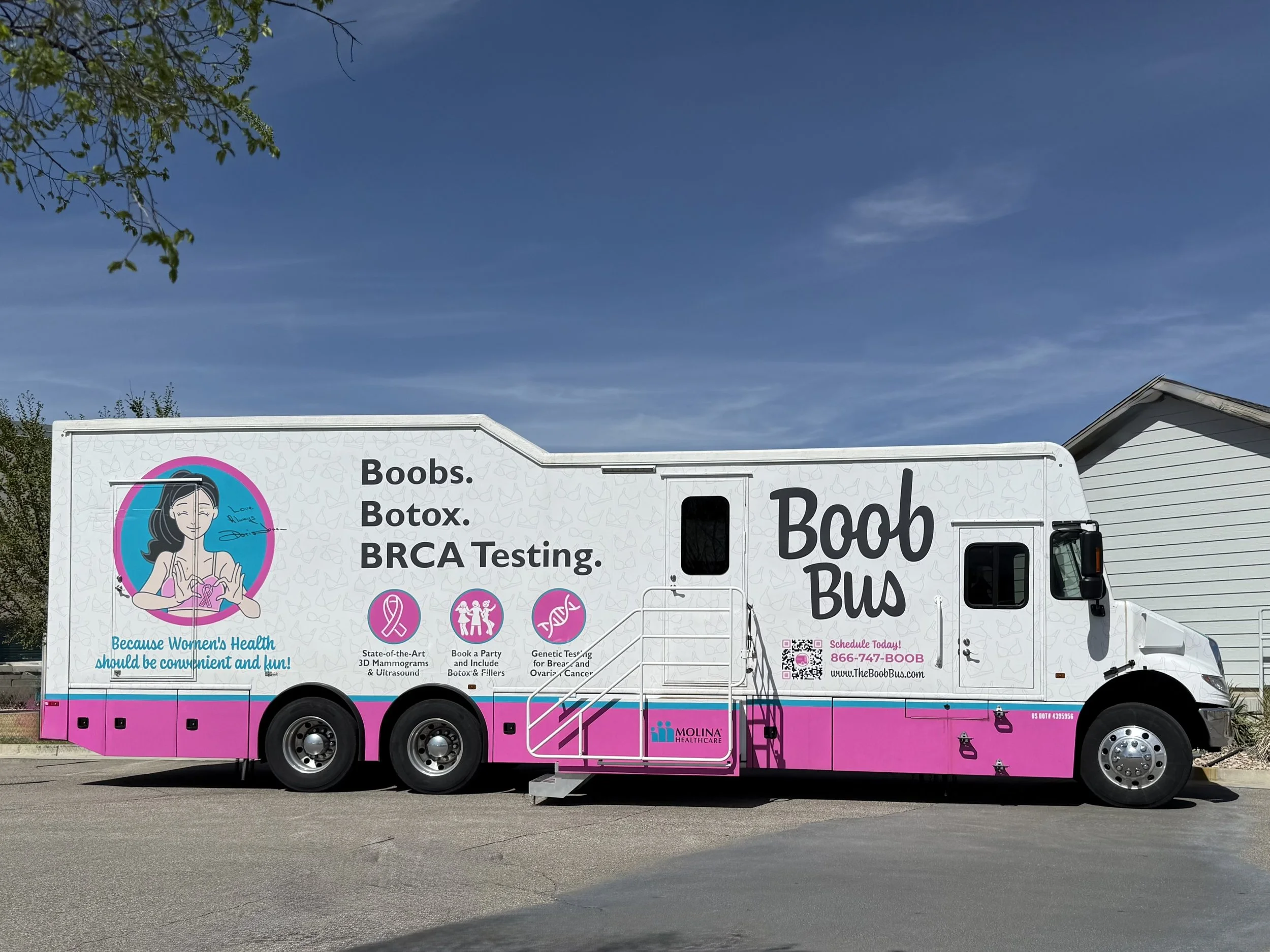
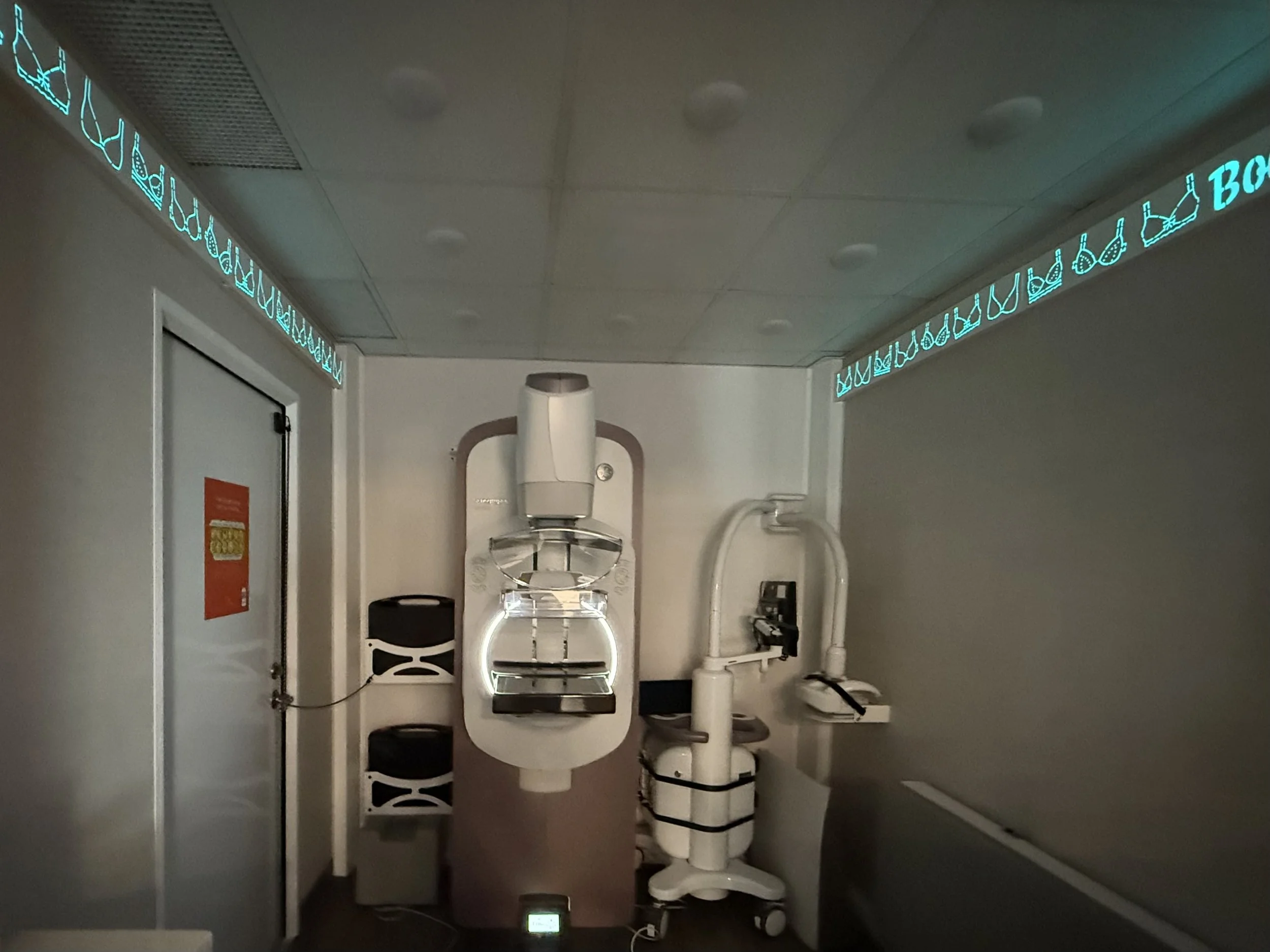
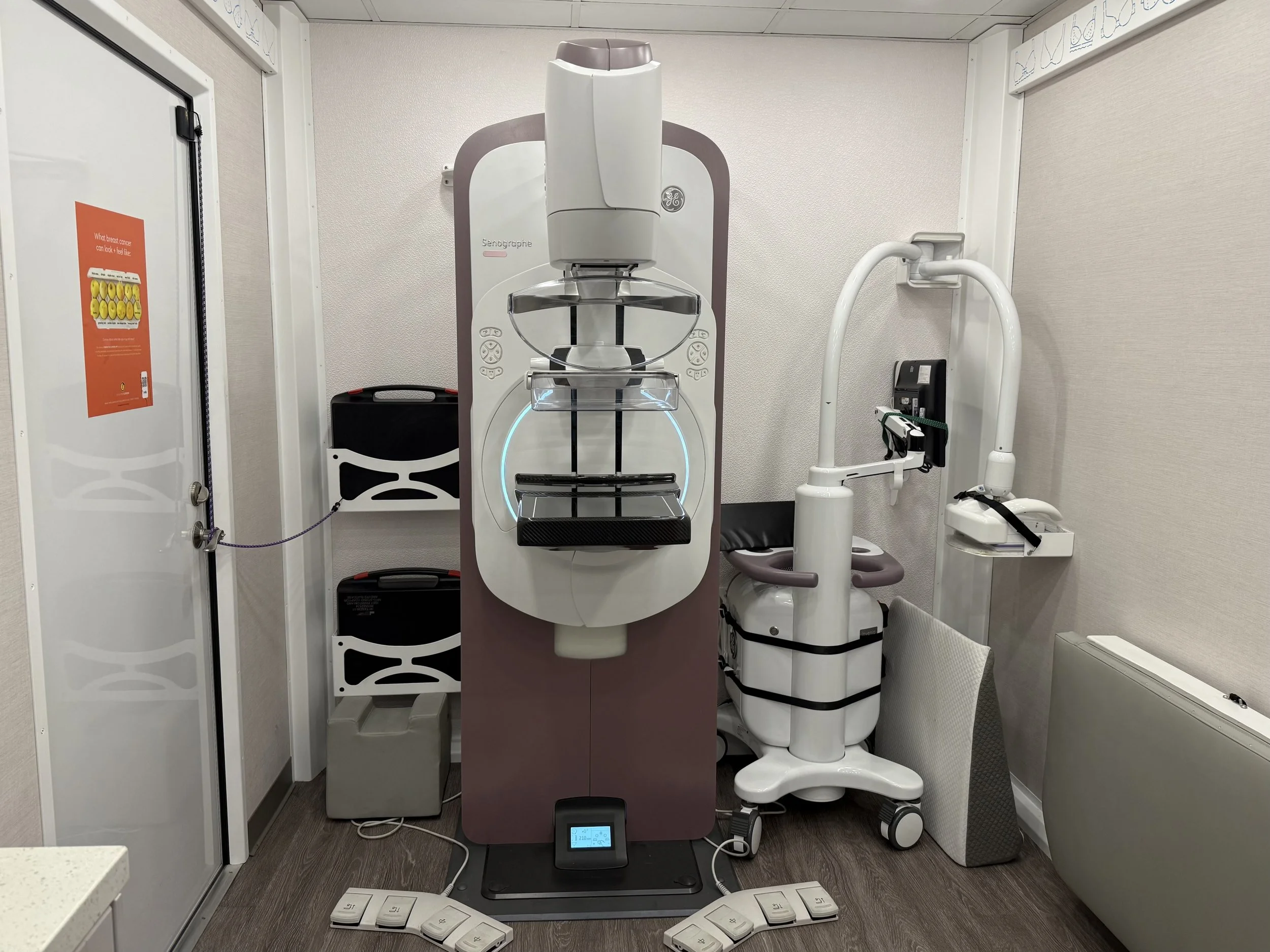
The Boob Bus was conceived from that insight. Rena and her partners - Mike Koch and his wife Kassidy, whose roots in rural Utah made that part of the mission especially meaningful - set out to create something that would feel more approachable, more accessible, and less intimidating than a hospital setting. It would offer screening mammograms on wheels. It would travel not only through Salt Lake City, but out into central and southern Utah as well. It would bring genetic counseling into the same conversation. And it would be designed with women in mind, down to the warm robes and thoughtful details that soften what can be an uncomfortable experience.
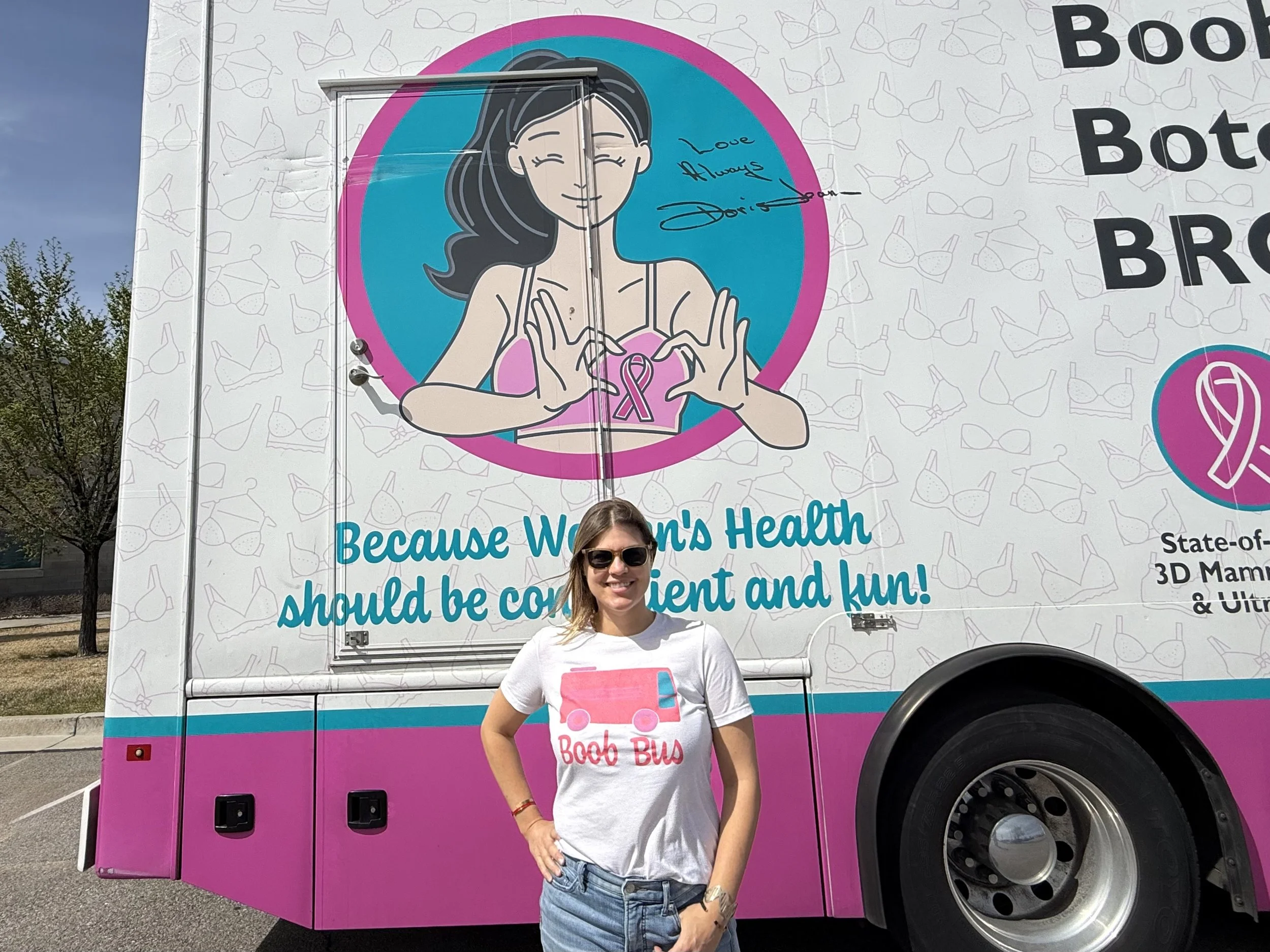
Even the name was part of that thinking. Rena came up with The Boob Bus herself, and it was, by her own telling, “a huge point of contention.” Her partners worried it might be too playful, especially in Utah. But Rena believed the name captured exactly what the brand was trying to do. It was approachable, memorable, impossible to ignore, and rooted in the language people actually use. She wanted something that would make people look twice, laugh a little, remember it, and then act. Market research showed that while some people worried the name might make the business seem less serious, a strong majority responded positively. Rena’s answer was not to abandon the name, but to pair that warmth and humor with rigorous professionalism. The Boob Bus is FDA approved, state approved, and built to meet the many regulatory standards required for mammography. The name may make people smile, but the mission and the credentials are entirely serious. The bus itself is named Doris Jean, after Rena’s grandmother.
Getting it on the road was anything but easy. The business was incorporated in September 2022, and then came the long, difficult process of funding it. The team secured an SBA loan, but because of the unusual nature of a brand new medical mobile business, the process turned into a maze. They needed the bus in order to complete certifications but needed certifications in order to unlock funding. A credit union believed in the vision enough to offer a bridge loan, allowing them to get the bus built, inspected, and approved before the SBA financing finally came through.
Rena did not stop there. Once the commitment had been made, she went back to the University of Utah yet again, this time for a Master of Business Creation program, which she completed in 2024. By then she had three graduate degrees - genetics, business administration, and entrepreneurship. She also took an even more unexpected step; knowing she would need a commercial driver’s license to operate the bus, she went to work for the Utah Transit Authority for six months. She was transparent from the start, telling them she was there to learn how to drive a bus because she was building one of her own. It was a practical, entrepreneurial decision, one more example of how thoroughly she has thrown herself into every aspect of making this work.
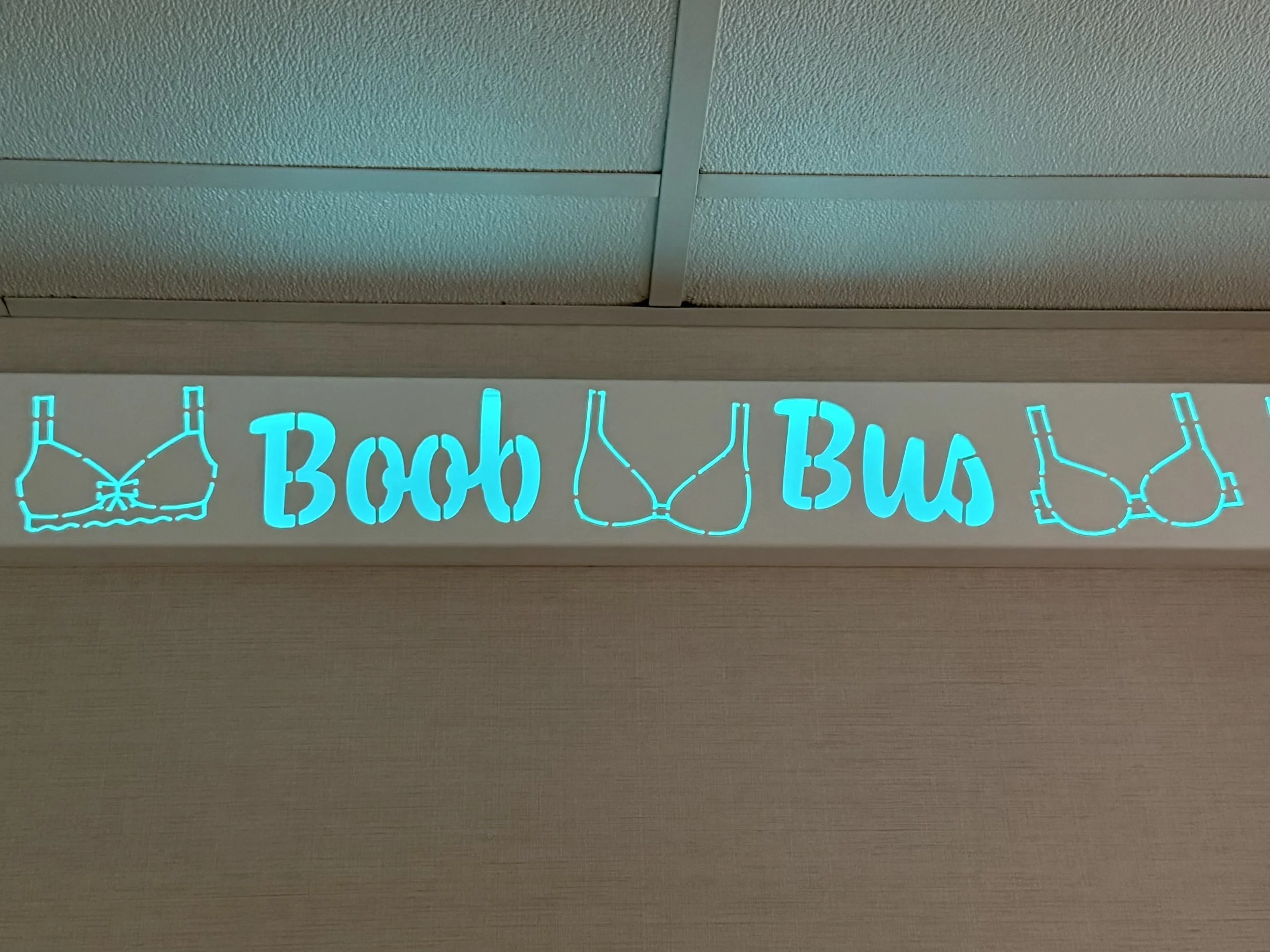
When Doris Jean finally arrived from Arizona in February 2024, it marked the end of one chapter and the beginning of another. Rena had worked with a designer to create the look and feel she wanted - modern, warm, inviting, with details that help the space feel less clinical and more welcoming. Her favorite feature is a kind of selfie wall with a neon light whose color she can change from her phone. She jokes that if there is ever a second bus, it will be named Patsy, after her great-aunt, Doris’s sister. But clearly this is a real dream for the future.
The first major event for the Boob Bus team came at the Maverik Center for Grizz Fight Cancer weekend. Parking the bus outside a hockey game meant people encountered it as they walked in, wondering what this beautiful, eye-catching vehicle was all about. It was a strong debut, a public sign that this thing Rena had imagined through years of upheaval, study, persistence, and risk was now real.
Since then, The Boob Bus has been steadily finding its way across Utah. The team has already served patients in fifteen of Utah’s twenty-nine counties and is determined to reach them all. A third of the women they see come through a state program that helps cover breast and cervical cancer screening for uninsured women below a certain income threshold. They also serve women through employer wellness events, health departments, clinics, private gatherings, and community partnerships. Teachers have become a particularly meaningful group, as have rural communities where access can be especially limited.
Rena is candid about how hard it all is. Insurance has been her single biggest hurdle. Getting contracts in place is slow, fragmented, and often discouraging. One company says its network is closed while another has an exclusivity agreement. The realities of running a medical business on wheels are expensive and relentless. Diesel is costly, the bus has to remain temperature controlled, the equipment requires strict oversight, and maintenance is constant. The business is not yet profitable, and the owners’ homes are collateral on the SBA loan. Grant funding has become essential to keeping it afloat. Kassidy has taken on grant writing, Mike has overseen the new website, and the three partners are working ever more closely as they fight to make the mission sustainable.
What makes Rena’s story so striking is not just the intelligence and tenacity it has taken to build this business, though both are undeniable. It is the way everything seems to converge in this one vehicle: the little girl whose grandmother had breast cancer, the student who fell in love with genetics, the counselor who spent years helping families navigate inherited risk, the businesswoman who understood there had to be a better model, the mother teaching her sons why women’s health matters, and the entrepreneur willing to learn how to drive a city bus if that is what it takes to get care where it needs to go.
Rena speaks often about wanting to make breast cancer a more open conversation. She wants husbands to ask their wives if they have had their mammogram. She wants adult sons to remind their mothers not to put it off. She wants women to stop seeing screening as something to be embarrassed by or afraid of. She wants to meet them where they are - at their workplace, at a school, in a rural town, in a neighborhood parking lot, wherever it takes. Because to Rena, the whole point is mobility. “If it is not on wheels, it does not make sense to me.”
That may be the clearest expression of what The Boob Bus is. It is not just a business, and it is certainly not just a clever name. It is a determination to bring care to women who have often had to work too hard to access it. It is a belief that early detection saves lives and that communities across Utah deserve better than to rank near the bottom. And it is the work of one extraordinary woman who has turned family history, professional expertise, and personal upheaval into something that can truly change outcomes for others. “I do not want breast cancer to be something people stuff in the back of their minds and do not talk about.”