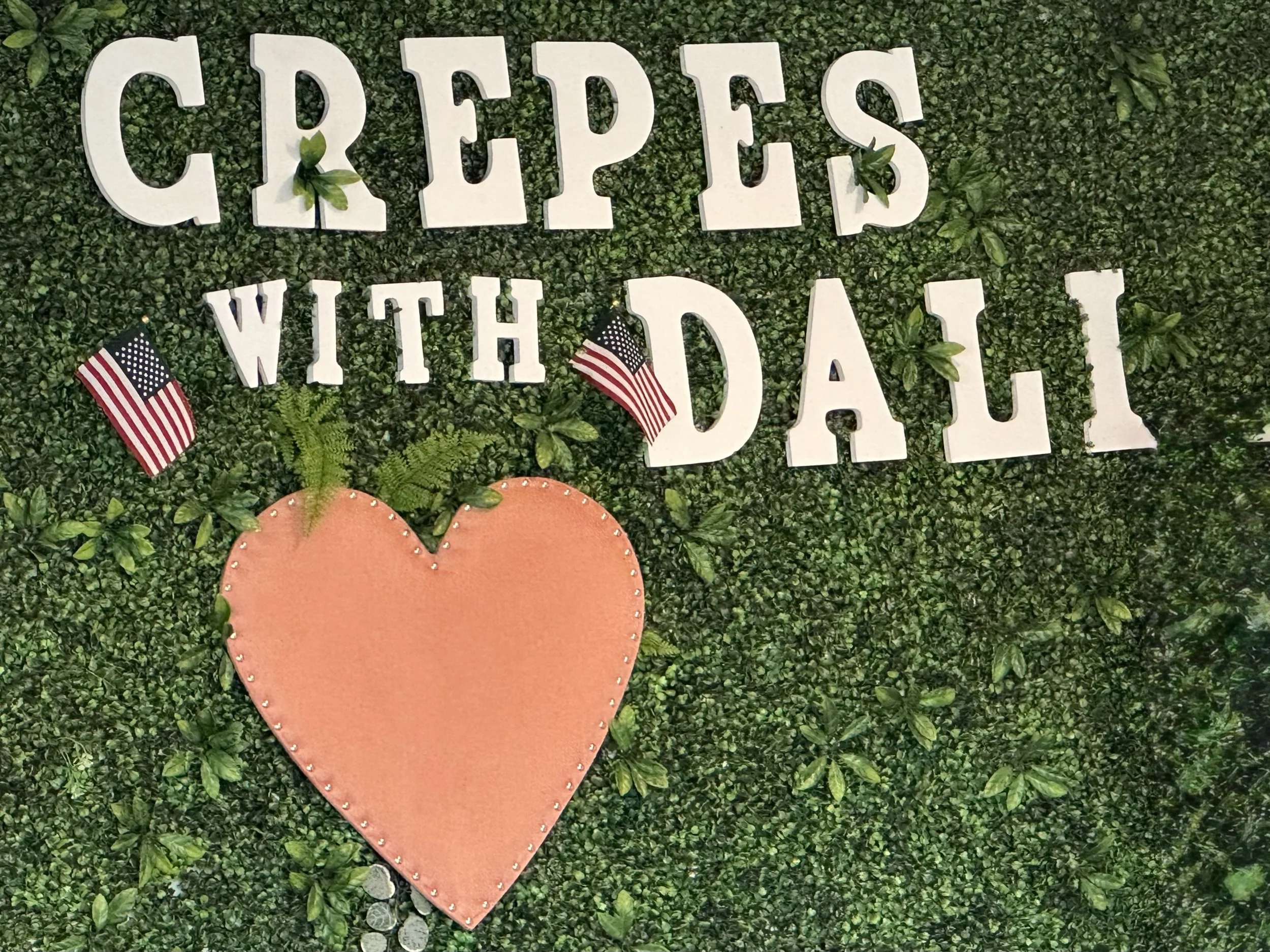
Dali Crepes Catering & Cafe
Address: 2845 South West Temple Street
Telephone: 385-228-4280
Website: dalicrepes.com
District: South Salt Lake
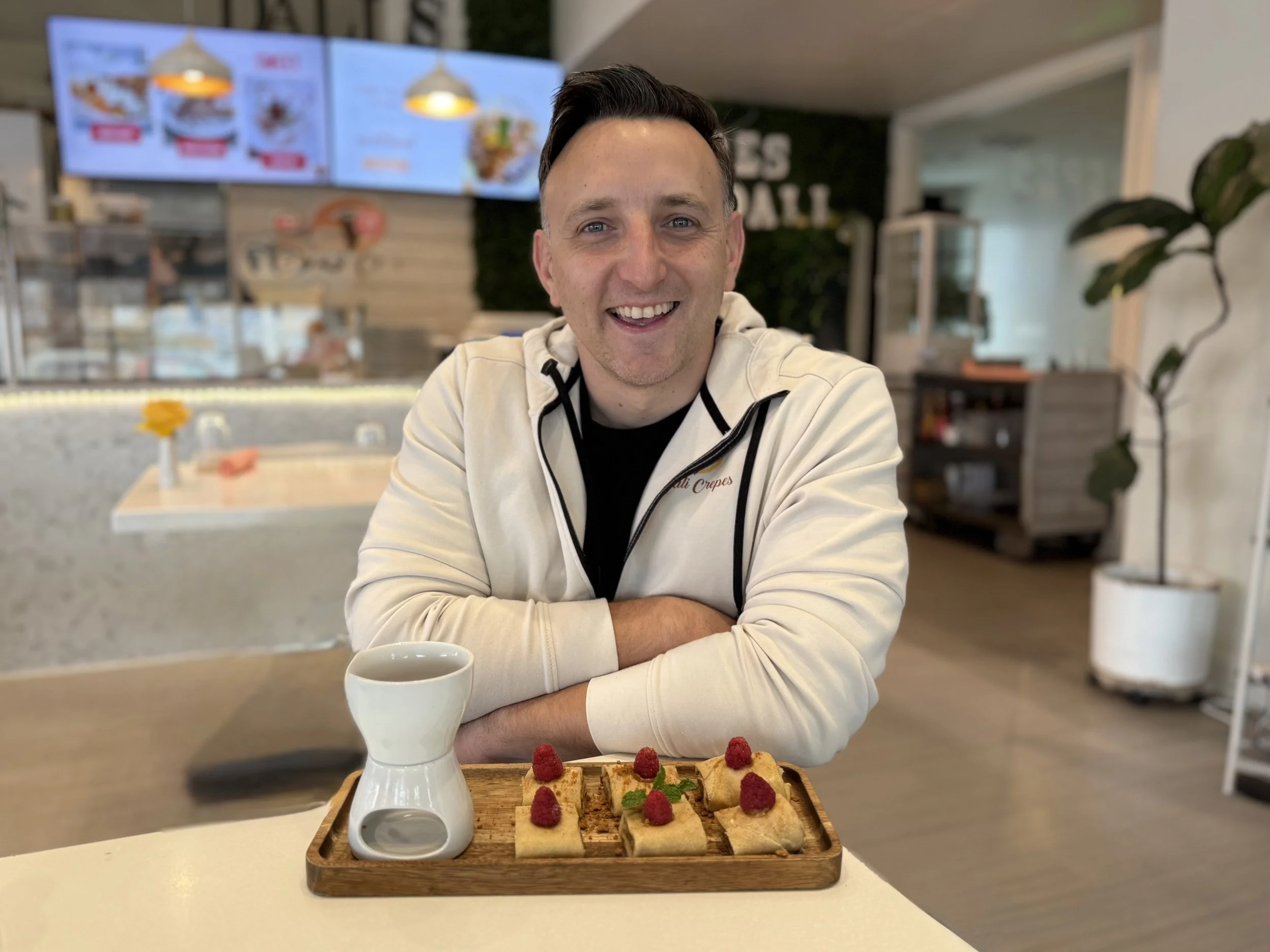
"For me, creating new crepes is something that makes me happy. We are here on this planet to create.” At Dali Crepes, the business that carries his nickname, Dalibor “Dali” Blazic has built a life around that belief, one delicate layer of batter at a time.
Dali grew up in a small village in Serbia where every family had a farm and was connected to the land. His family’s small farm was filled with grapes for wine, plums, cherries, and rows of other fruits and vegetables. There were a few cows, goats, and chickens, just enough to feed the family and have a little left over to sell. Life was busy and practical, but even then, there was a strong culture of hospitality. "When someone came to the house, everything else stopped." The table was laid with meats and breads, and coffee was poured the Serbian way. Guests were meant to feel cared for.
Like many children, Dali once imagined himself flying airplanes or becoming an astronaut, but in Serbia, high school is the moment when a young person must choose a path. Dali chose a new city on the Danube, a popular tourist destination with what he considered the best high school for culinary arts. At fifteen, with no real background in professional cooking, he stepped into a kitchen classroom and found his calling.
The school offered a rigorous blend of academics and hospitality training. There were the usual classes in mathematics and languages, but also courses on sauces, service, and how to welcome guests properly. Students began with the basics: peeling potatoes, chopping onions, understanding food safety. Each year, they learned more techniques and more cuisines, as well as being sent into real restaurants and hotels for hands-on experience. By his third year, Dali competed in a national culinary competition and won a gold medal for Serbian cuisine. It pushed him to imagine himself not just as a cook, but as a chef.
After high school Dali moved to Belgrade, the capital, to study hotel and restaurant management at the university. Summers were spent working along the Adriatic Sea in Montenegro, in hotels and fine dining restaurants. There, he began to understand the rhythm of professional kitchens and the standard of service demanded at that level. Work and study were intertwined, each shift in the kitchen making him more confident and more qualified.
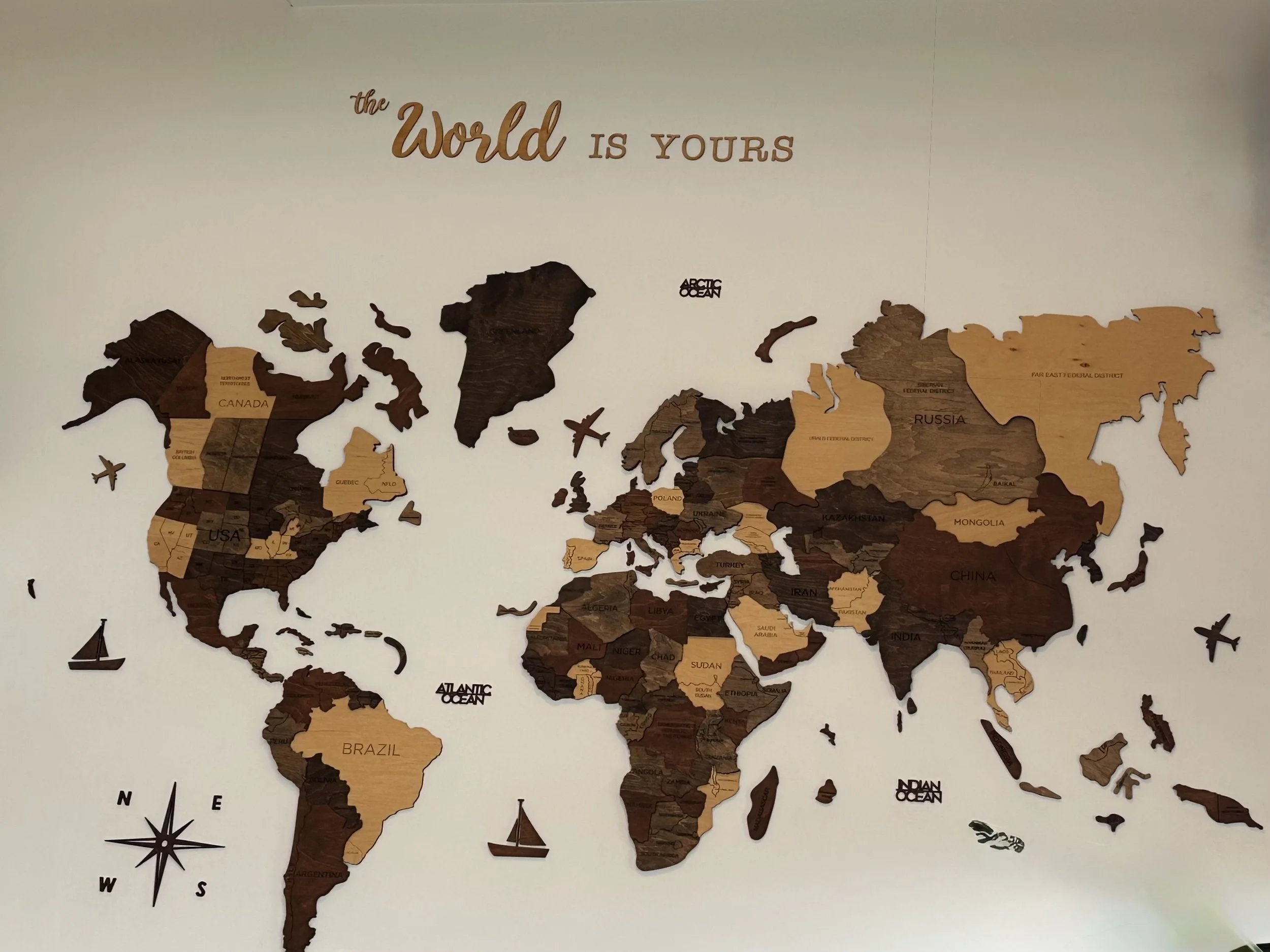
When it was time to look beyond Serbia, Dali followed a familiar immigrant thread - a friend who knew a friend in another country. That chain led to Salt Lake City and a position at The Grand America Hotel in 2011. He arrived hungry to learn and eager to build a life. At the Grand America he did everything, from room service to banquets to kitchen shifts. Over the years he also picked up work at the Radisson, White Horse, and Riverhorse in Park City, sometimes juggling three or four jobs at once. All the while, one idea stayed in the back of his mind.
In Serbia, crepes - palachinke - are everywhere. Families make them at home, sometimes weekly. When Dali came to Utah, he saw big breakfasts and pancakes, but he did not see the kind of crepes that reminded him of home. “Everybody in Serbia eats crepes,” he said. “Every corner has a creperie. Here I did not see it, at least in the way I imagine it. I missed that culture.” That absence slowly turned into an opportunity.
The first chapter of Dali Crepes did not begin with a storefront. In 2013, while still working full time at the hotel, Dali hopped on a small Vespa scooter and took a big risk. For his first festival event in Sugar House on the Fourth of July, he loaded a backpack with flour and eggs, rode to a rented church commissary kitchen to prepare the batter, and then begged rides for himself and his equipment to the park. He worked for days, around the clock. After all the effort, he finished the event with no profit, and on the ride home late that night, his scooter broke down in the middle of the street. It was a discouraging moment, but not enough to make him quit.
Around this time, he crossed paths with Alfonso at Sir Walter Candy Company, who would become, in Dali’s words, his “business father.” Alfonso, who at the time was the owner of Sir Walter Kitchen, handed him a key and offered the factory as a commissary kitchen whenever he was not using it. That gift of trust and space allowed Dali to produce his crepe batter legally and professionally and gave Dali Crepes an early home base. He would work his hotel jobs, then head to Sir Walter’s kitchen to prepare for markets and events.
Catering came first. In 2016, Dali officially registered Dali Crepes as a catering company, determined to “feed” the business with earnings from all his part-time jobs. Farmers markets became an essential testing ground. At the Sugar House and Daybreak markets, and later in Park City, he experimented with menus. He would offer a new crepe, throw it into the crowd, and listen to the feedback. “People would say, ‘Take the arugula out, add spinach here, change the sauce,’” he remembered. He adjusted, tasted, and refined. The lines at his tent grew longer and longer.
Not every opportunity felt comfortable. When someone asked whether he could cater a wedding for two hundred guests, he was not sure how he would manage it but said yes anyway. Eventually, Dali Crepes pulled off events with three hundred crepes made to order, all in front of the guests. He and his team even prepared seven hundred crepes for a Coca-Cola event. Each challenge became another step in his education, this time as an entrepreneur.
For years, Dali balanced the hotel, multiple part-time jobs, farmers markets, and catering, putting all his extra income back into equipment and growth. In late 2018, he finally stepped away from his other positions to focus on Dali Crepes full time. Two years later, as the world shut down, he opened his restaurant.
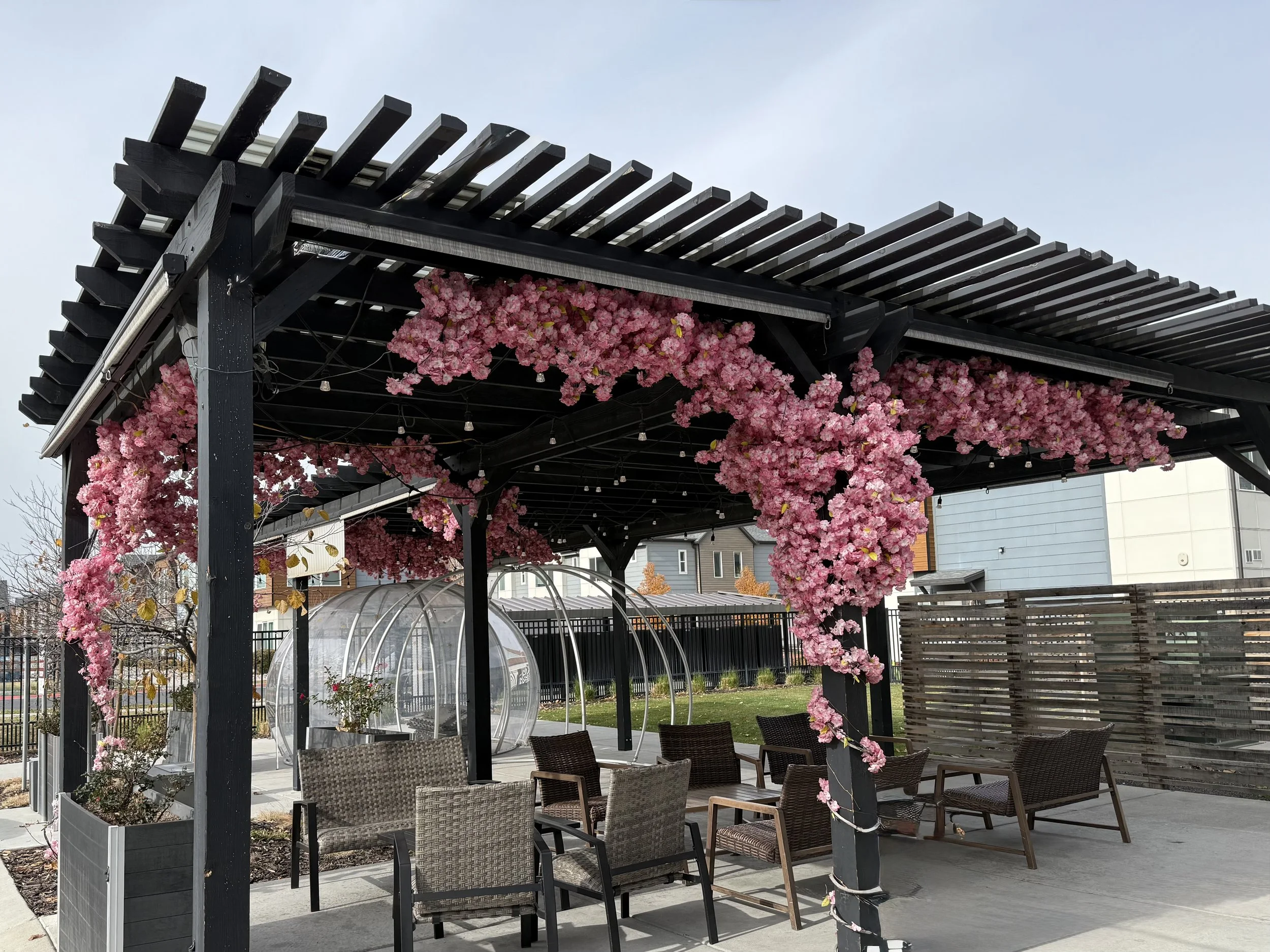
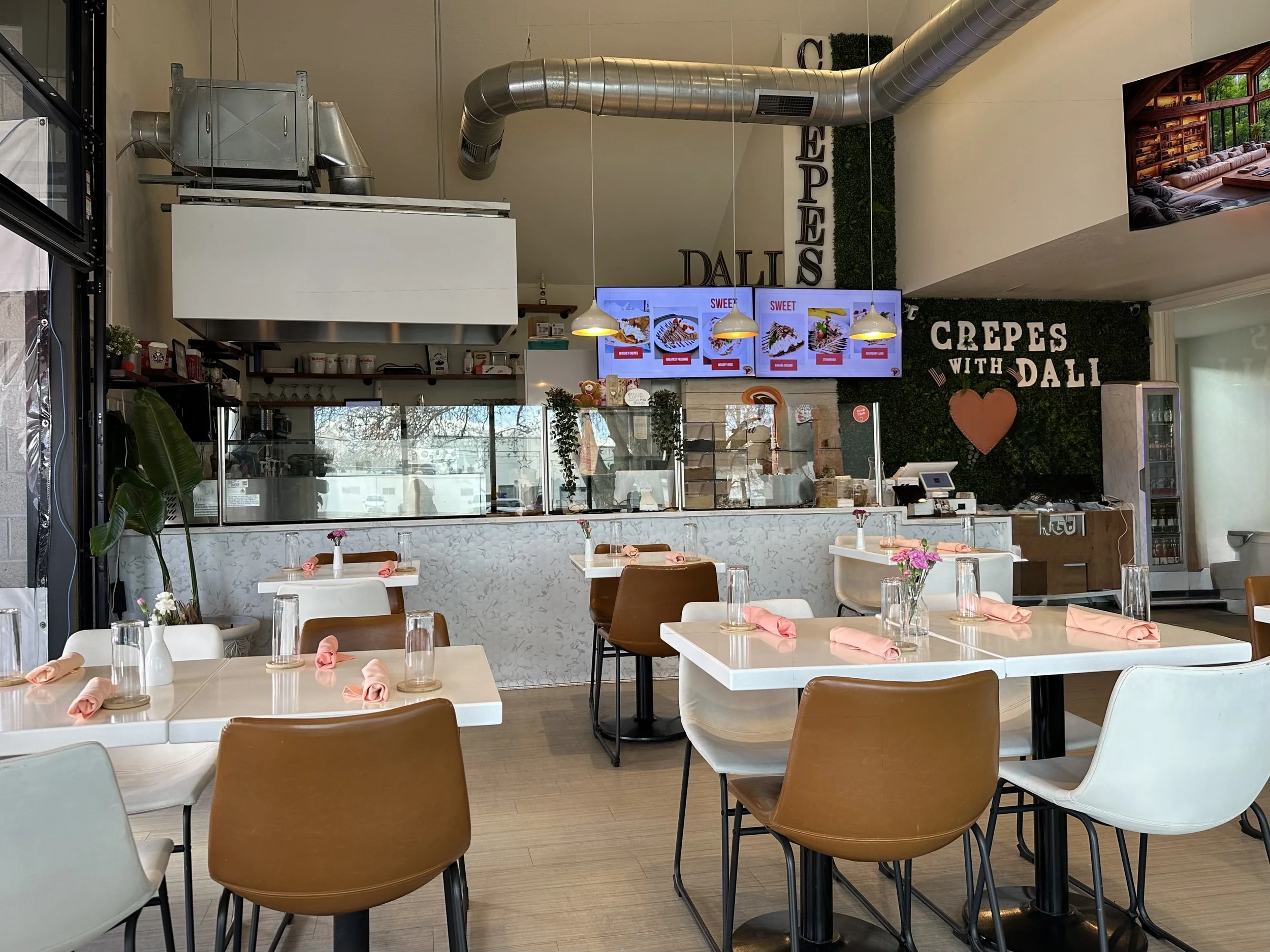
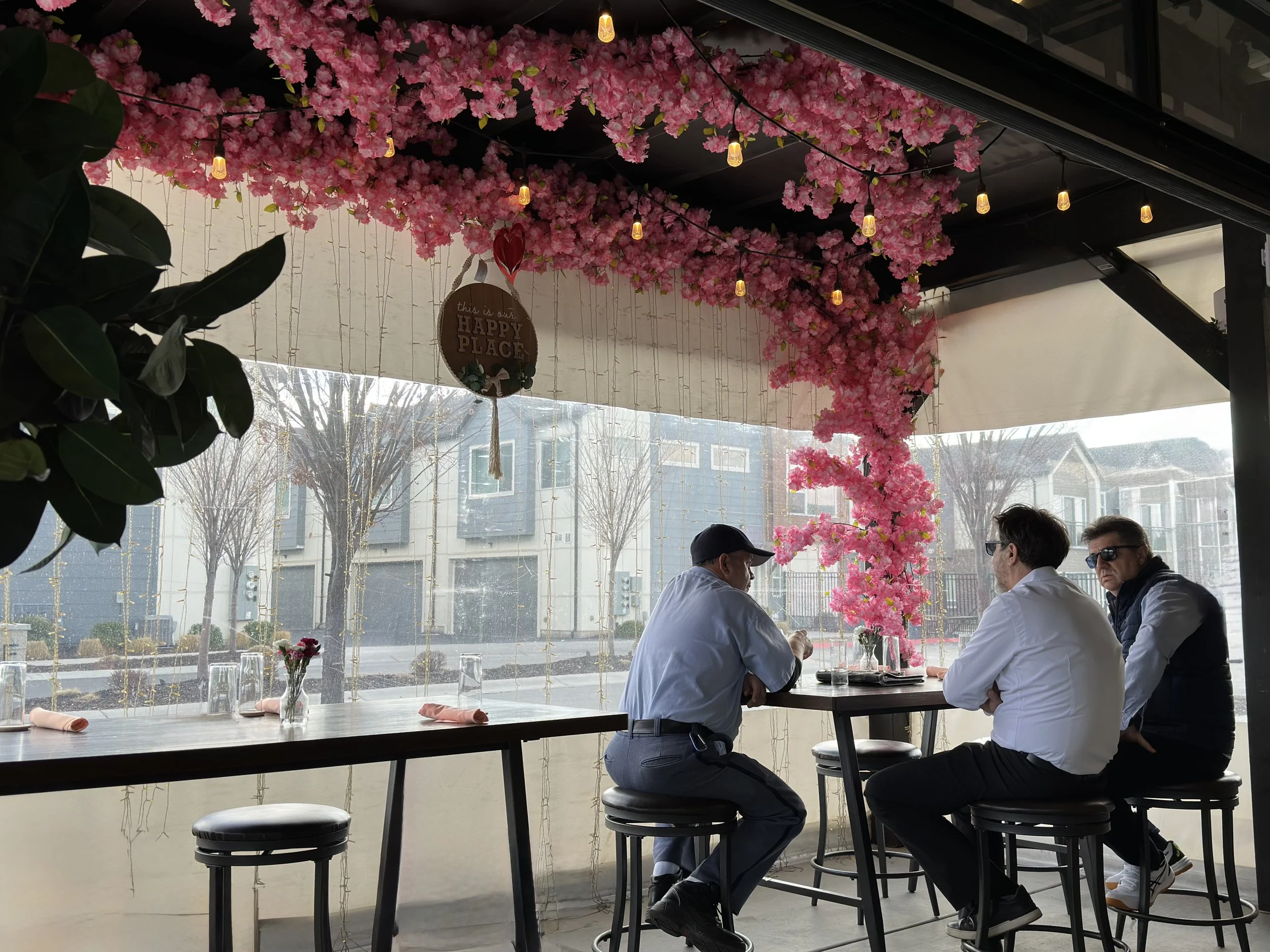
In April 2020, while many places were closing their doors, Dali raised the garage-style door of his new shop and welcomed people inside as safely as possible. Tables were carefully spaced six feet apart. With the garage door open and plastic panels creating sheltered outdoor seating, guests could feel as though they were eating outside. Later, a pergola and umbrellas expanded the patio. Thanks to the loyal customers he had met through catering and markets, people came. Some guests bought two crepes and left a tip that meant the world to a new business that had just refunded a year’s worth of catering deposits.
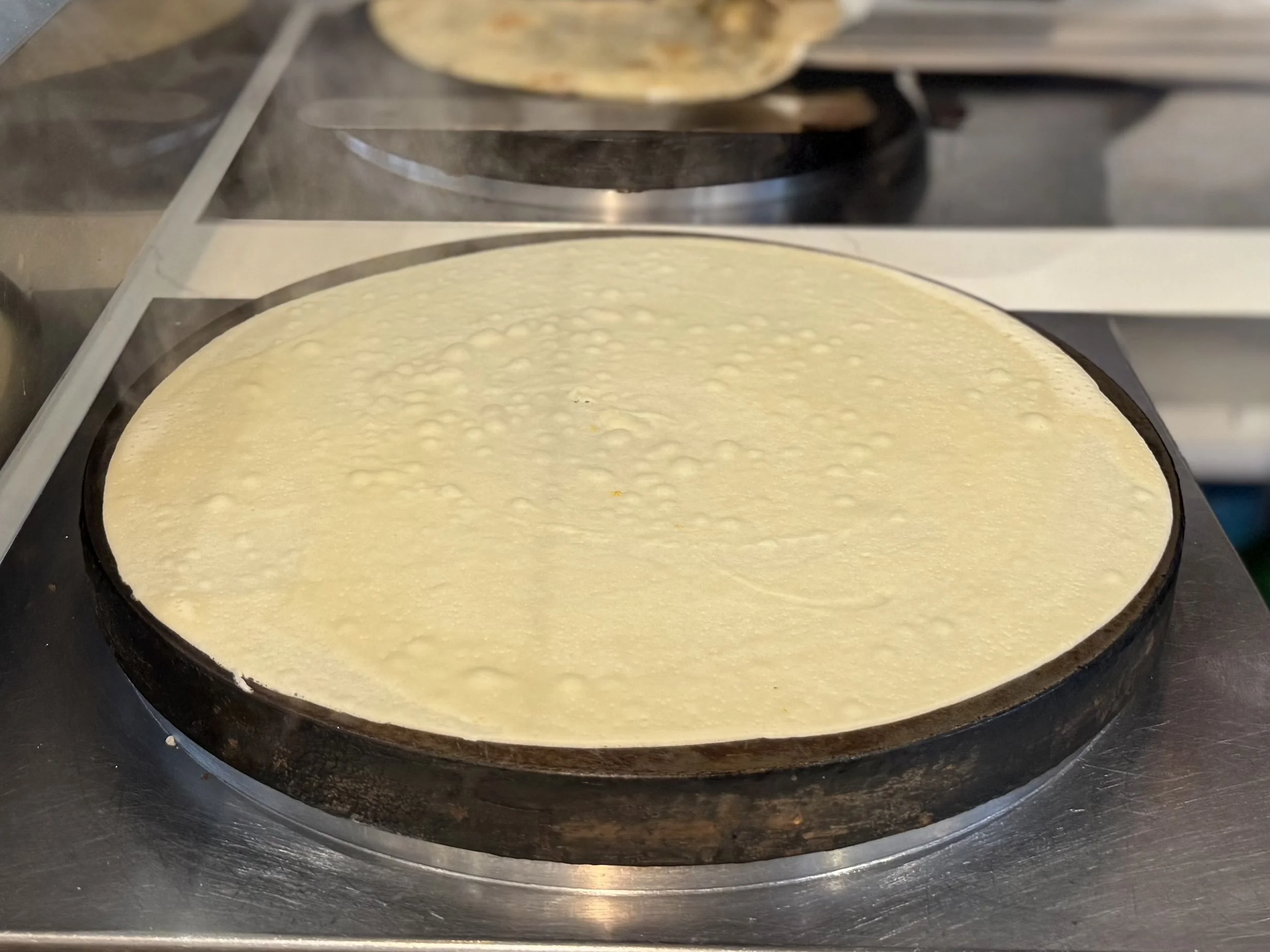
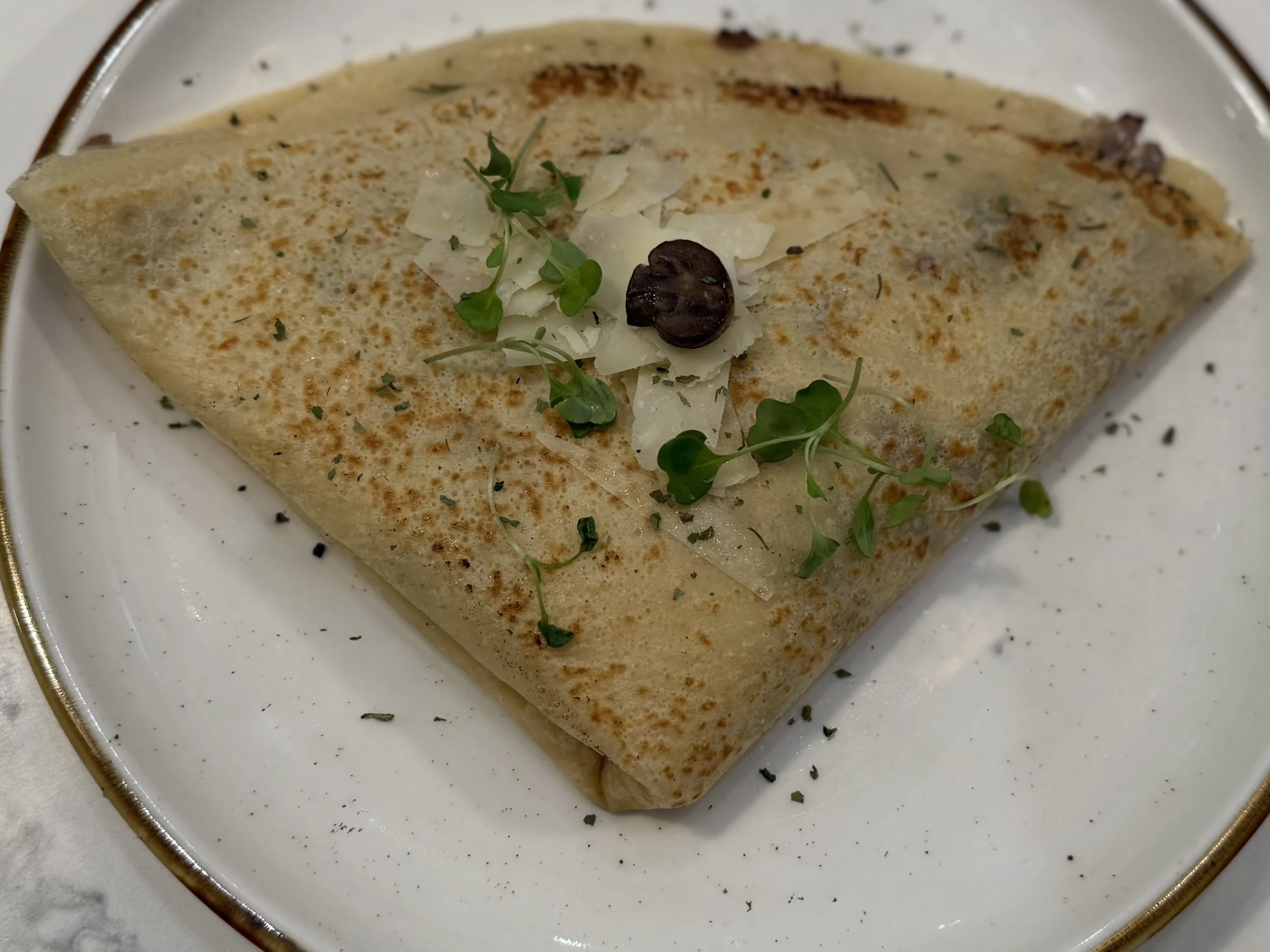
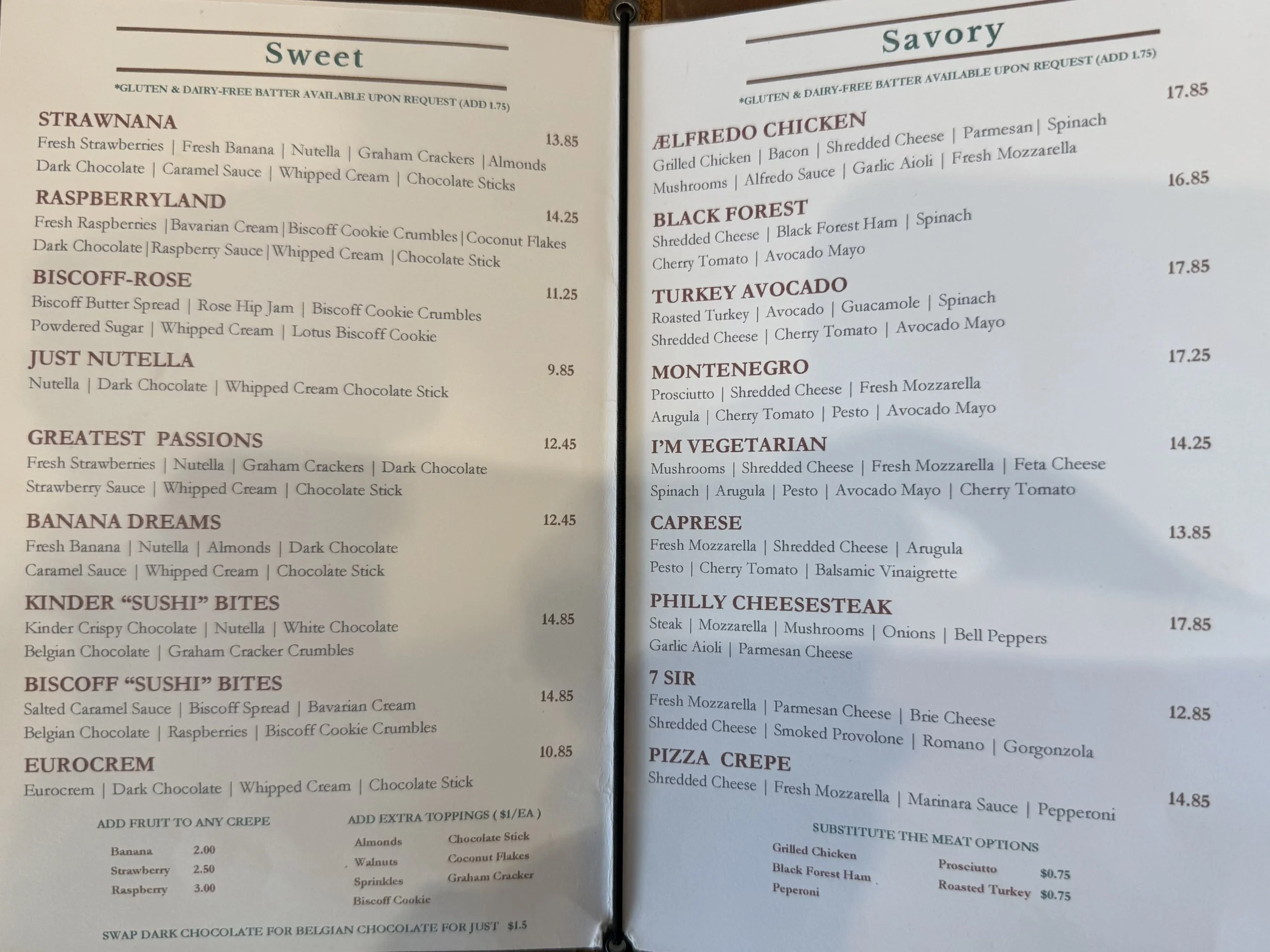
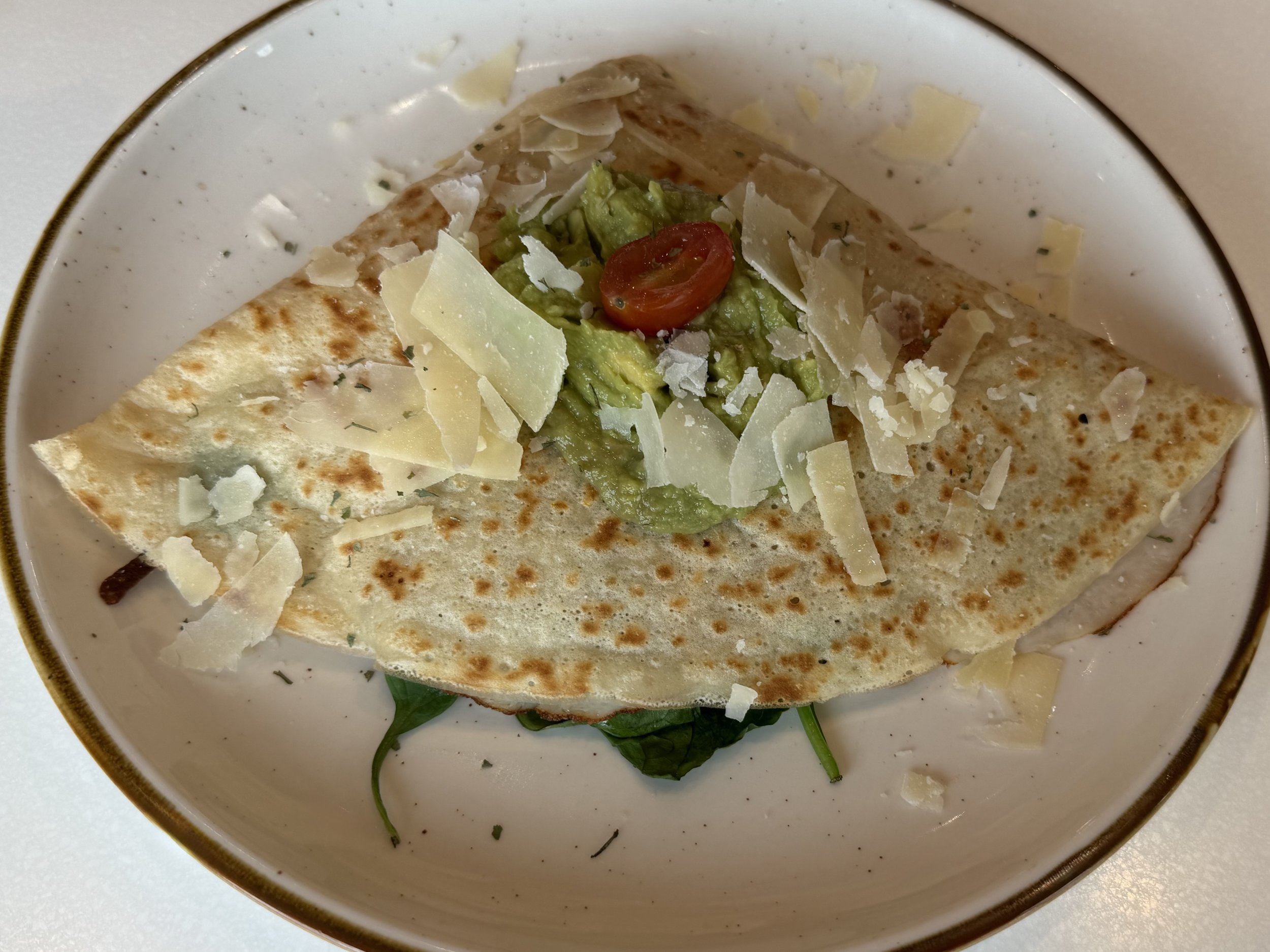
Inside Dali Crepes, everything revolves around the crepe. The menu offers both savory and sweet options, all prepared to order. On the savory side, one of the best sellers surprises even him: the Alfredo Chicken Crepe, filled with chicken, a silky Alfredo sauce, fresh mozzarella, mushrooms, and garlic aioli. Breakfast crepes, such as the Good Morning Crepe, layer eggs cooked directly inside the crepe with cheese, tomatoes, spinach or arugula, and sauce so that every bite holds the flavor of both the filling and the batter.
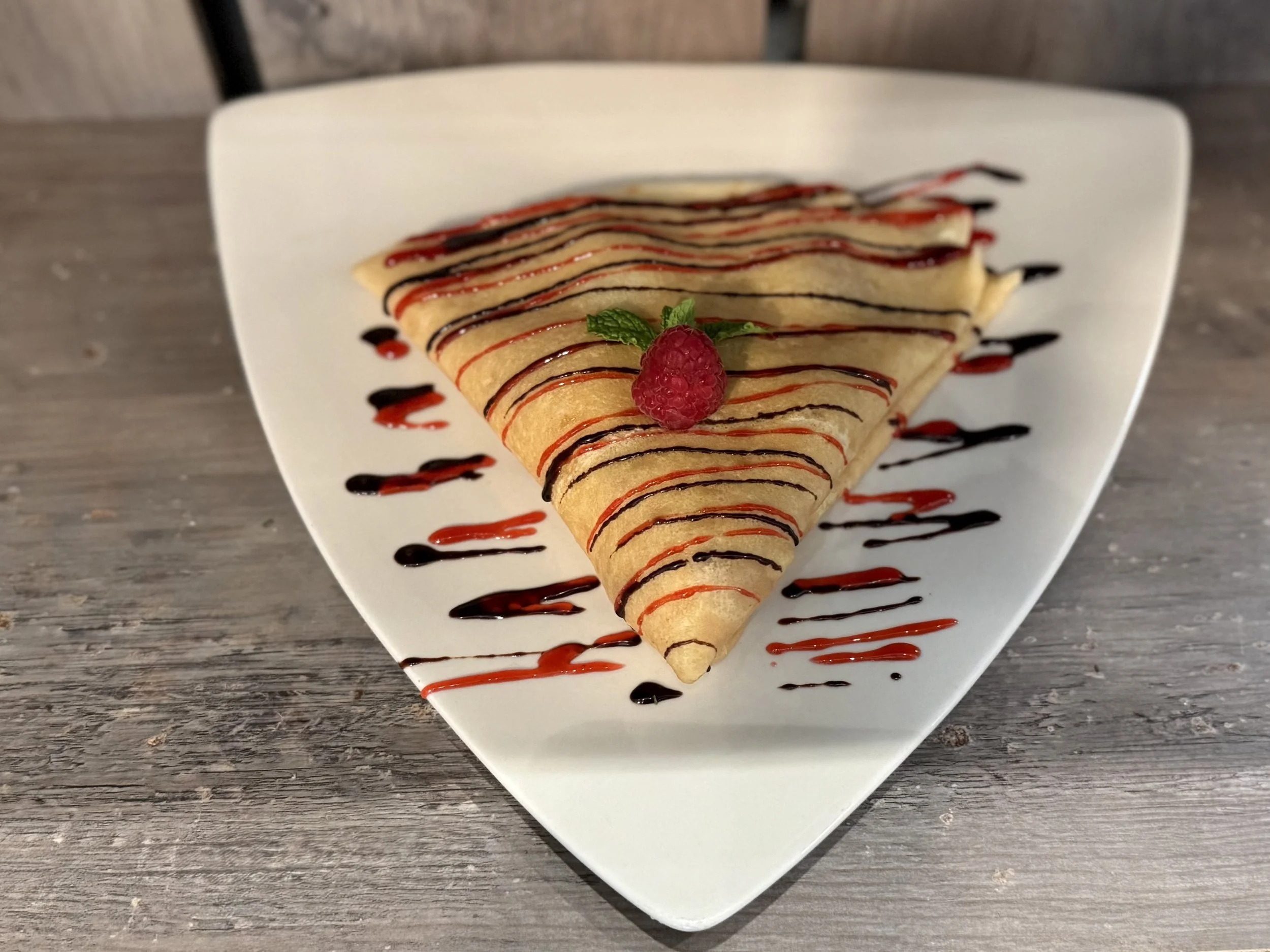
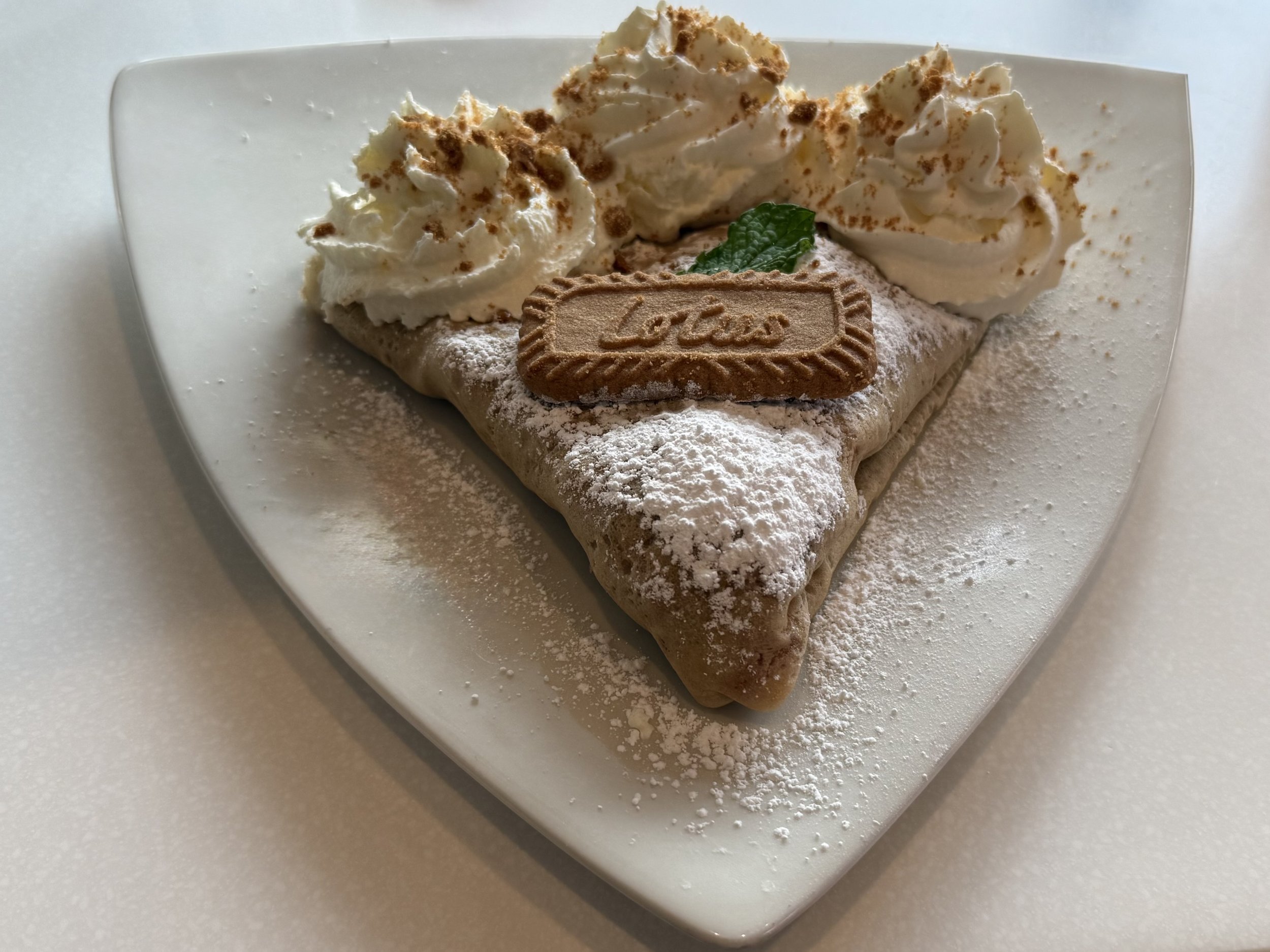
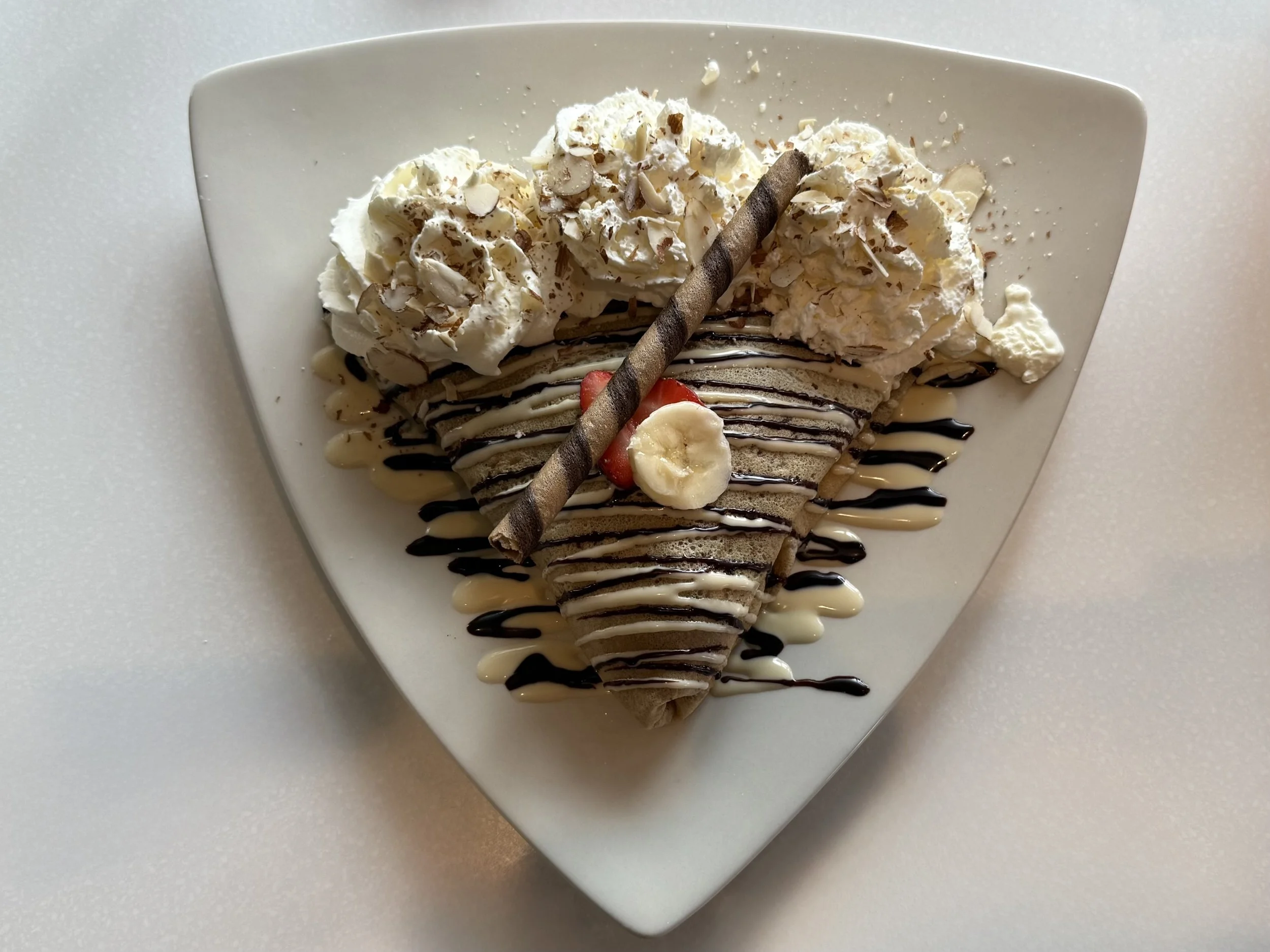
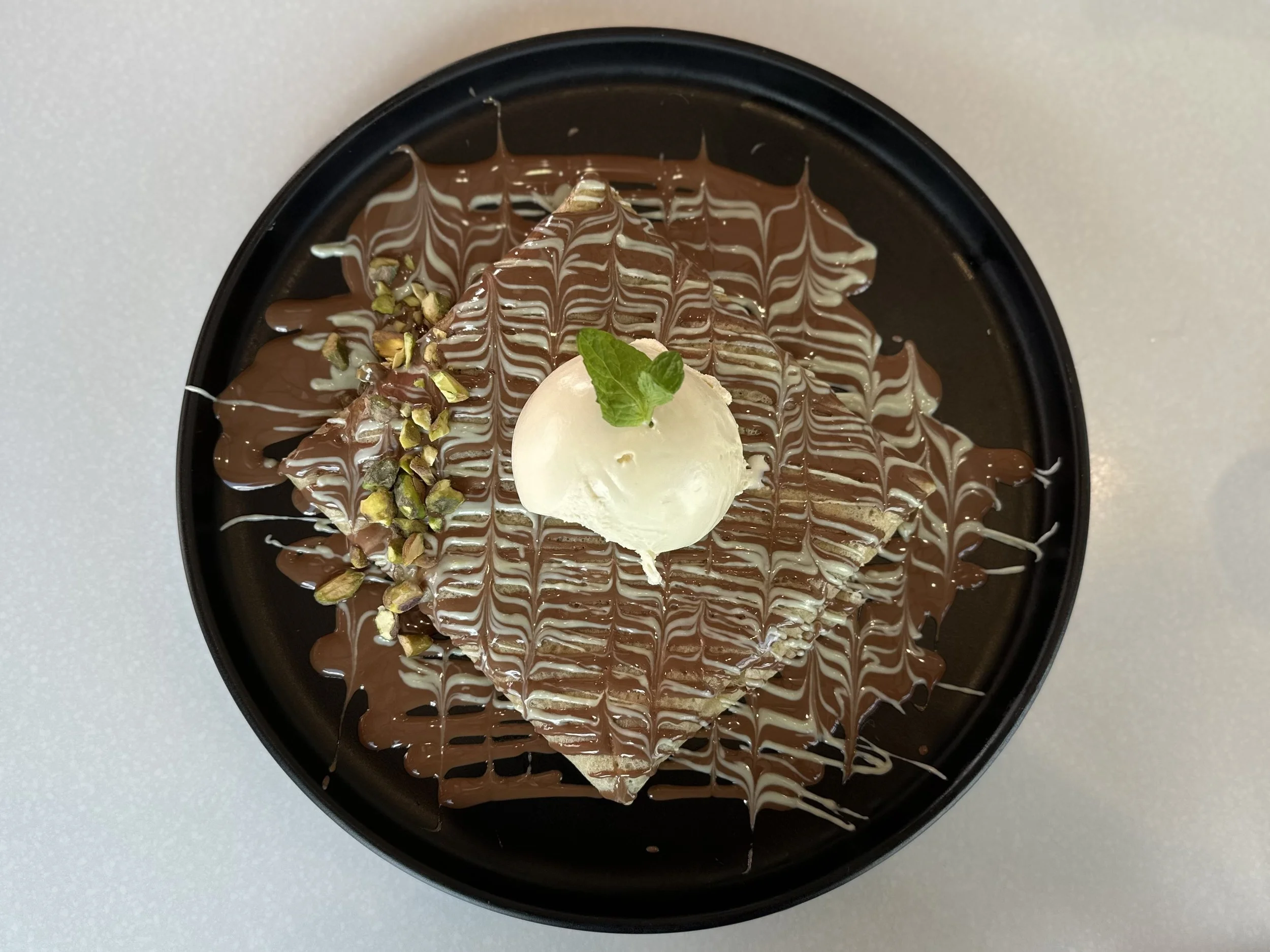
The sweet menu reflects both tradition and innovation. The Tronum Crepe, one of Dali’s all-time favorites, is a classic, made with Nutella, strawberries, bananas, graham cracker crumbs, almonds, whipped cream, and a drizzle of caramel. The graham cracker softens the sweetness of the Nutella while adding crunch, and the strawberries and bananas are a natural pair. There are crepe cakes and crepe cheesecakes, often available by special order, for those who want to take that experience home in layers.
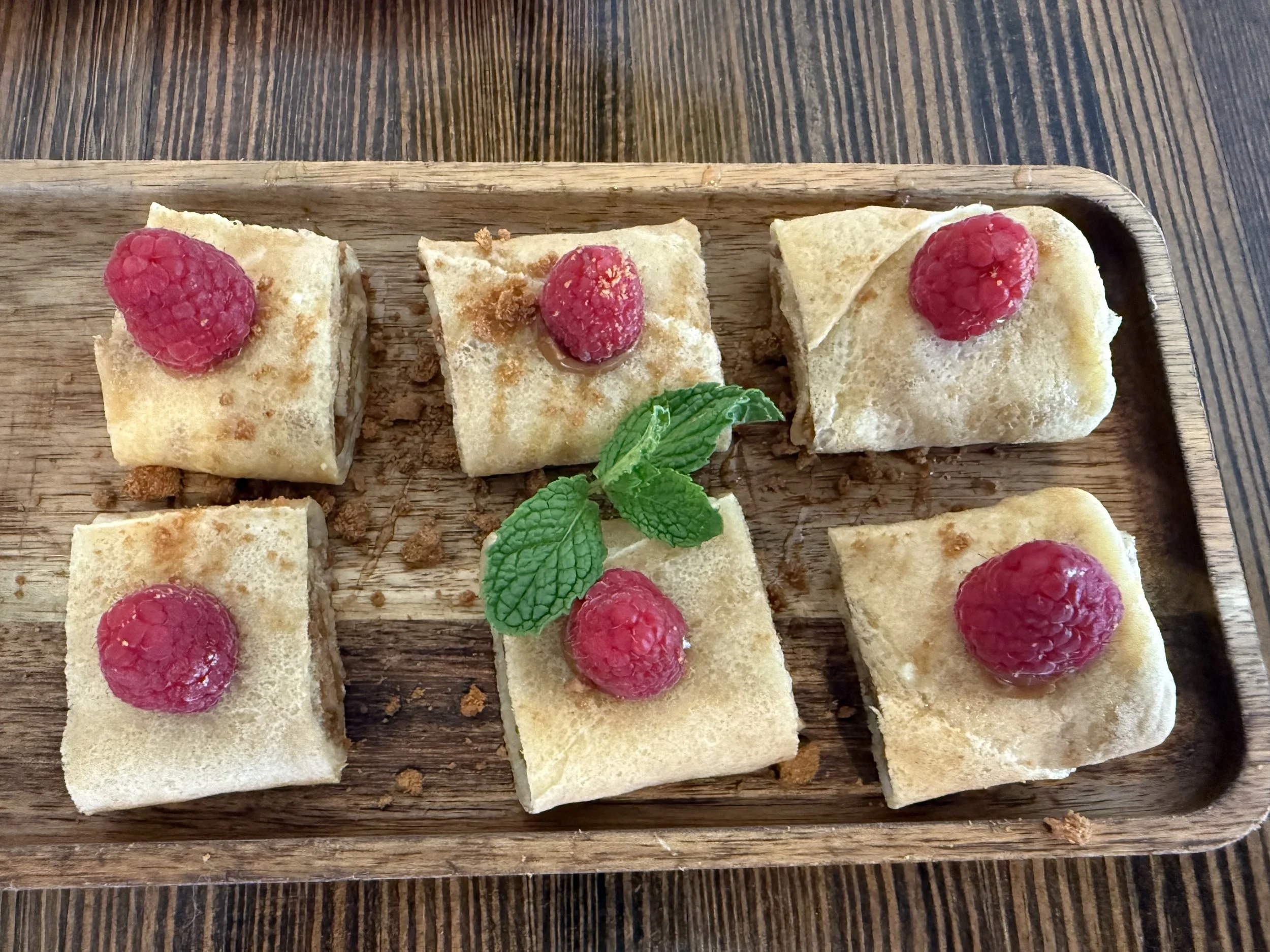
Then there are the playful ideas that have become signatures. “Sushi Crepes” take a chocolate-dipped, beautifully presented crepe and roll it into bite-sized pieces filled with biscuit cookies, fruit, and other fillings, arranged like sushi on a board with Belgian chocolate sauce on the side. Guests first see the presentation, then share the pieces around the table. There are “Footlong Crepes,” slightly smaller than the regular size, created for guests who want something sweet to pair with coffee or tea without overeating. Every detail matters, from the way the crepe is cut to the way the plate looks when it arrives at the table. “If you give something that does not look nice, people decide with their eyes first,” Dali explained. “Taste is important, but the experience is more than taste.”
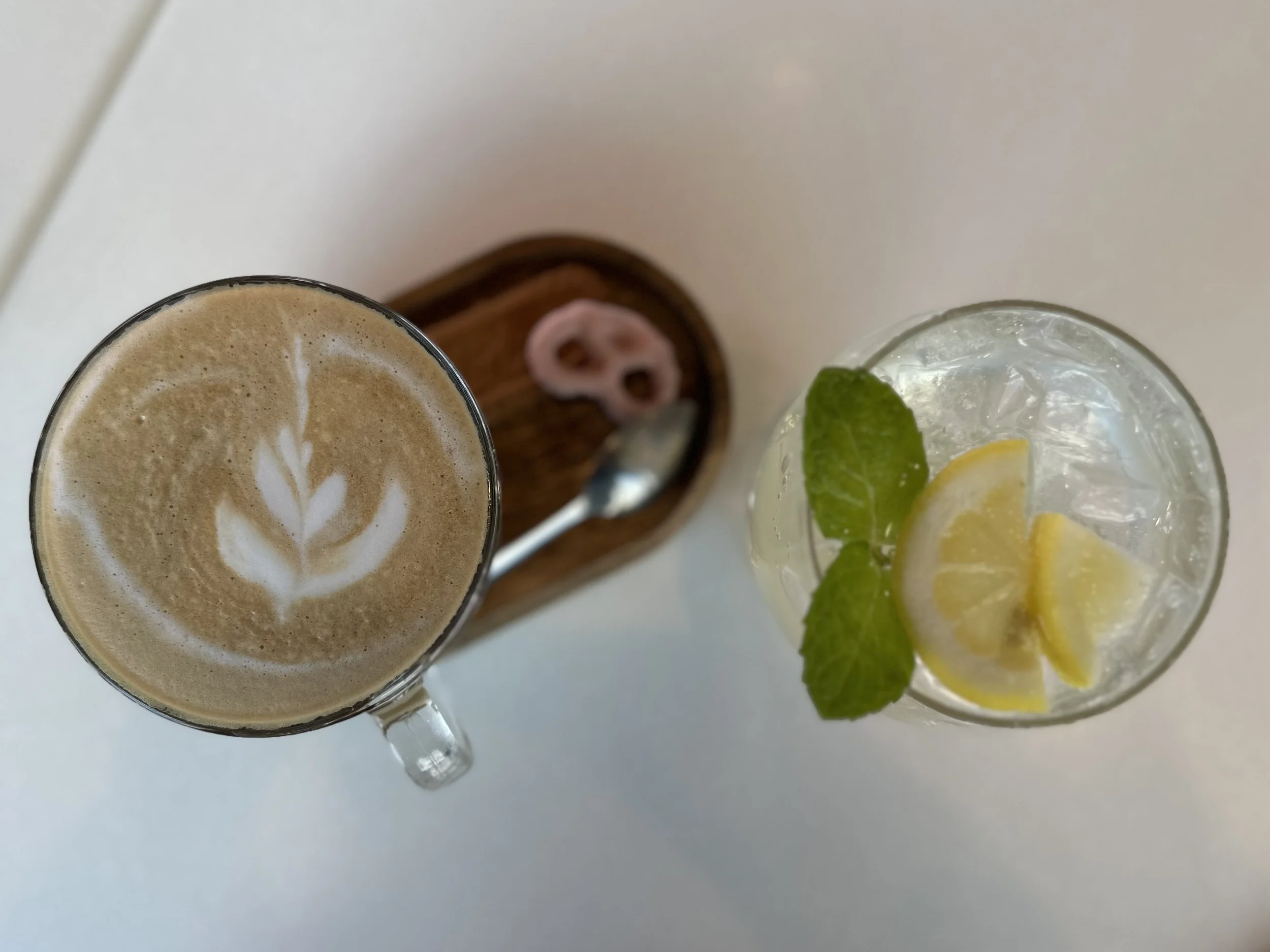
Alongside crepes, the shop serves salads, smoothies, espresso drinks, and lattes, with a rewards program that offers birthday crepes and weekday latte specials for regulars. Many people now choose to celebrate their birthdays at Dali Crepes, receiving a complimentary crepe decorated just for the occasion. In a way, it is an echo of Dali’s childhood home, where every guest was greeted with a full table and something special to eat.
The business has grown from four employees on opening day to a team that can reach twenty-five people, with busy weekend shifts requiring seven to nine staff at a time. That growth brought a new learning curve. The boy peeling potatoes in culinary school has become the chef-owner responsible for managing fifty to sixty people through the years, creating systems, training, and a culture that reflects his values. He still sees himself as being at “the beginning stage,” a mindset that encourages experimentation and keeps him focused on quality.
Dali’s personal life is woven through this story as well. His parents still live in Serbia, and he visits often, sometimes every few months. They have traveled to Utah to see what their son has built and are proud of the life he has created, far from the village farm. His wife, from the Philippines, has been by his side throughout this journey. They met working at the Grand America Hotel, and she has been, in his words, a constant source of support. “Honestly, there would be nothing without her,” he said.
With two other locations, Dali continues to dream of expanding the Dali Crepes brand thoughtfully. He is developing his own hazelnut spread, testing different versions with customers and returning to the farmers markets where so much began. He is determined to keep teaching his staff how to meet his standards, to protect the quality that has always set his crepes apart.
When asked what he would most like people to understand about his journey, Dali paused and returned to the philosophy that has carried him from a small Serbian farm to a bustling crepe shop in South Salt Lake. “I really believe people should always try their best and see how far they can go. He encourages people to do what you love, do what makes you happy, and find something that inspires you every day when you wake up. "For me, creating new crepes is that thing. We are here to create something amazing. Whatever you do, just start to create.”